Best Crappie Jigs for Texas Lakes
Crappie fishing in Texas is an incredibly rewarding pursuit, but let's be honest, walking into any tackle shop and staring at the wall of crappie jigs can feel like trying to decipher a secret code. There are so many options—different colors, shapes, sizes, materials—it's enough to make your head spin! How do you know which one is going to fool those finicky papermouths in our vast and varied Texas lakes? This comprehensive guide is here to cut through the confusion and help you select the best crappie jigs to put more fish in your cooler, no matter the conditions you face across the Lone Star State.
Understanding Crappie Behavior in Texas Lakes
Before we even get to picking out jigs, it's crucial to understand the very fish we're trying to catch. Crappie, whether black or white, are creatures of habit and are heavily influenced by environmental factors. Knowing their typical movements and preferences throughout the year can make all the difference when it comes to jig selection and presentation. This fundamental knowledge is your first step towards becoming a more consistently successful crappie angler.
Seasonal Movements and Depths
Crappie in Texas lakes don't just hang out in one spot all year; their locations change dramatically with the seasons, largely driven by water temperature and spawning cycles. In the dead of winter, say December through February, crappie often retreat to deeper, more stable water. You might find them suspended over old creek channels, deep brush piles, or along ledges in depths of 20 to 40 feet, sometimes even deeper. Their metabolism slows down, and they become less active, preferring to conserve energy.
As spring arrives, typically from late February through April in most parts of Texas, crappie begin their famous migration towards shallower waters for the spawn. They'll move into coves, shallow flats, and areas with submerged timber, lily pads, or reeds, often found in 2 to 10 feet of water. These areas offer protection for their eggs and fry. Once the spawn is over and summer heat sets in, usually from May to September, crappie transition back to deeper, cooler, and more oxygenated water. They often relate to brush piles, standing timber, main lake points, or bridge pilings in 10 to 25 feet of water. During these hot months, they frequently suspend in the water column, often above or within structure. Finally, in the fall, from October to November, as temperatures cool again, crappie become more active and start feeding aggressively. They can be found in a variety of depths, often moving between deeper structure and shallower feeding flats as they chase schools of baitfish, preparing for winter. Understanding these movements is critical because a jig that works well for deep, lethargic winter crappie might be completely ignored by aggressive, shallow-water spawners.
Water Clarity and Forage Preferences
Crappie are primarily sight feeders, meaning what they see plays a huge role in whether they strike your jig. This is where water clarity becomes a game-changer. In clear Texas reservoirs like Canyon Lake or Lake Travis, crappie have excellent visibility. This means your jigs need to look as natural and realistic as possible. Subtle colors, natural profiles, and a lifelike action are often the keys to success in these conditions. On the flip side, in stained or muddy lakes, which are quite common in East Texas reservoirs like Lake Livingston or Toledo Bend, visibility is significantly reduced. Here, crappie rely more on other senses, like the vibration or scent of your bait. Bright, contrasting colors, larger profiles, and baits that create more thumping action or have added scent can be far more effective, helping the fish locate your presentation despite poor visibility.
Beyond clarity, knowing what crappie are eating also influences your jig choice. Their diet primarily consists of small baitfish like shad and minnows, as well as insects and small crustaceans. If you can observe schools of baitfish on your fish finder or see them jumping near the surface, you'll want to select jigs that closely mimic the size, shape, and color of that dominant forage. For example, if the crappie in Lake Fork are keying in on tiny threadfin shad, a small, silver-colored minnow imitation jig would likely outperform a large, chartreuse grub. Conversely, if they're feeding on larger gizzard shad, a bigger profile paddle tail or soft plastic minnow might be the ticket. Paying attention to these details can elevate your crappie game significantly, moving you past generic choices to highly effective, targeted presentations.
Key Characteristics of Effective Crappie Jigs
Once you have a handle on crappie behavior, it's time to delve into the actual jigs themselves. Not all jigs are created equal, and understanding the nuances of jig head design, body style, and color can truly help you narrow down the overwhelming options and make smart choices for your Texas fishing adventures. It's about having the right tool for the job.
Jig Head Design and Weight Selection
The jig head is the foundation of your crappie jig, and its design plays a crucial role in how the bait behaves in the water. The most common is the round head, which offers a simple, versatile presentation and a natural fall. However, you'll also find stand-up heads (like those on Blakemore Road Runners), designed to keep the hook upright when resting on the bottom, which is great for bottom-hugging crappie in areas with sparse cover. Minnow-head jigs or horse-head jigs aim for a more realistic baitfish profile, often paired with soft plastic minnow bodies for a seamless look. Beyond shape, the hook itself is paramount; always opt for sharp, strong hooks, especially if you're targeting bigger Texas crappie.
Weight selection is equally critical. Crappie are notorious for preferring a slow, tantalizing fall. Common weights range from tiny 1/64 oz to 1/8 oz, and sometimes heavier for deep water or strong currents. For shallow water (under 10 feet) or calm conditions, 1/32 oz or 1/48 oz jigs are often ideal, offering that irresistible slow descent. In moderate depths (10-20 feet) or light wind, 1/16 oz is a fantastic all-around choice. When fishing deep structure, dealing with heavy wind, or stronger currents (like below a dam), a 1/8 oz or even 1/4 oz jig might be necessary to reach the crappie quickly and maintain contact with your bait. The general rule is to use the lightest jig head possible that still allows you to feel your bait and reach the desired depth. Using an overly heavy jig will often cause the bait to fall too fast, making it less appealing to crappie.
Body Styles and Profile Considerations
The soft plastic or natural fiber body of your jig is what truly provides the visual appeal and action. There's a vast array of styles, each with its own advantages. Grubs, featuring a single or double curly tail, are perhaps the most popular due to their enticing tail action on the retrieve, mimicking a swimming baitfish or insect. They come in various sizes and tail shapes, offering different thumping and vibrating actions. Tube jigs are another classic, particularly effective for vertical jigging. Their hollow, tentacled design creates a subtle, pulsating motion as they fall or are twitched, often resembling a dying baitfish or even a crawfish.
Minnow imitators like paddle tail swimbaits or fluke-style plastics offer a highly realistic baitfish profile and swimming action. Brands like Bobby Garland’s Baby Shad or the Crappie Magnet's Fin Spin are staples for a reason, excelling when crappie are focused on shad. Spider jigs, characterized by multiple thin tentacles radiating from a central body, create a larger profile and an incredibly slow, undulating fall, making them irresistible to crappie that might be suspended or a bit lethargic. When selecting a body style, consider the crappie's current forage and activity level. If they're aggressive, a lively grub might work. If they're finicky, a subtle tube or slow-falling spider jig could be the key. Don't be afraid to experiment with different profiles, as even slight variations can trigger bites on tough days.
Color Theory for Texas Waters
If there's one topic that sparks endless debate among crappie anglers, it's jig color. While personal preference plays a role, there's a good amount of science and practical experience behind choosing the right hue for Texas waters. Generally, your primary consideration should be water clarity. In clear water, such as you'd find in the deeper sections of Lake Buchanan or the Guadalupe River, natural and translucent colors tend to excel. Think smoke, pearl, clear with glitter, or light greens and blues. These colors blend in naturally and don't spook fish that have excellent vision. Sometimes, a subtle hint of chartreuse or pink can provide just enough pop without being overpowering.
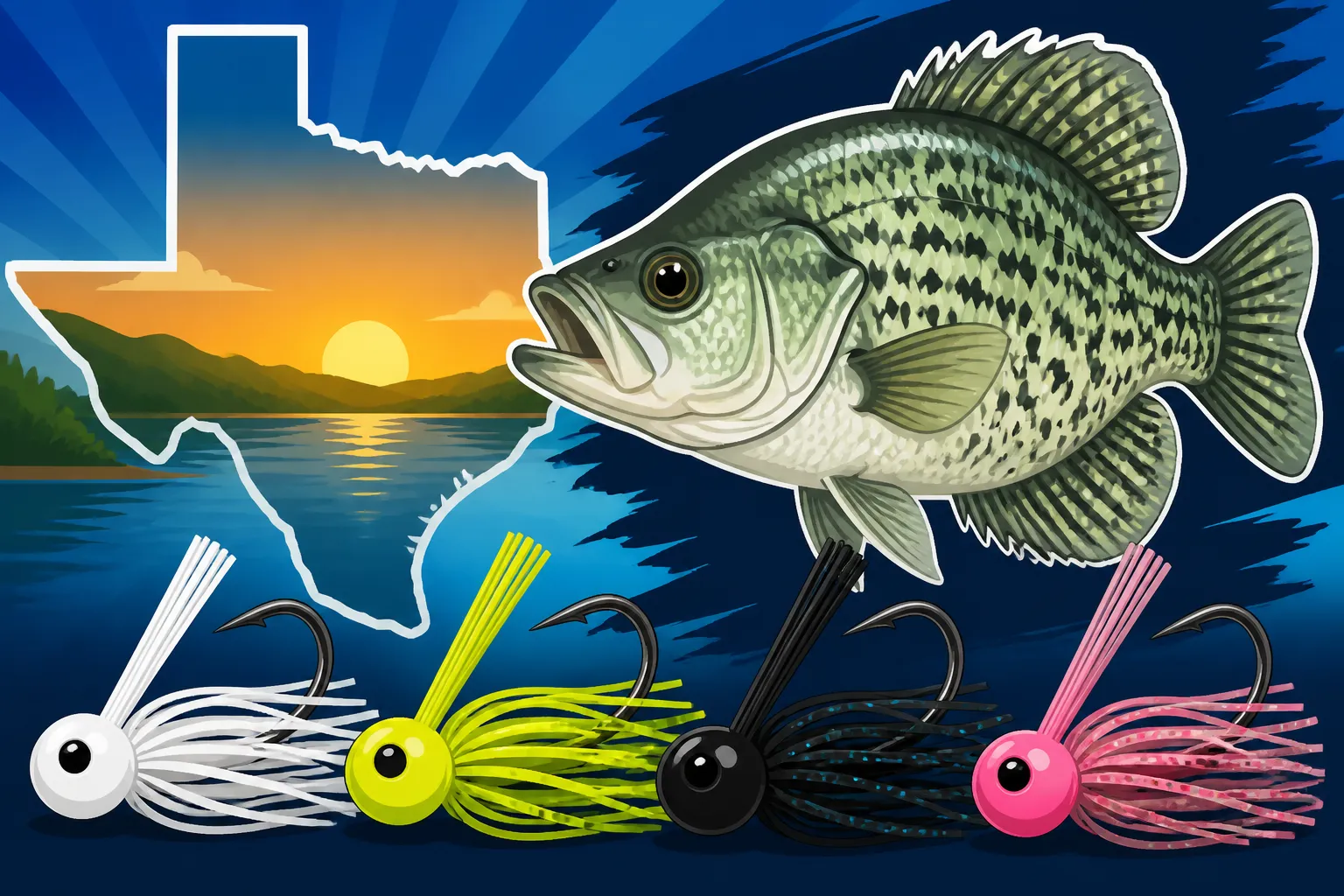
Conversely, in stained or muddy water—common across much of East Texas and after heavy rains—you need colors that create a stark contrast and are easily visible. Chartreuse is undeniably king in these conditions, often paired with black, orange, or pink. Hot pink, bright orange, and even black-and-blue combinations can be incredibly effective. The goal is to create a silhouette and a vibrant flash that crappie can pick up, even with limited visibility. Many anglers swear by jigs with a glow-in-the-dark component for night fishing or extremely deep, dark water. Don't forget the power of two-tone jigs, like a black back with a chartreuse belly, which offer contrast and mimic many baitfish. Having a diverse collection of colors on hand, readily available on sites like Amazon, allows you to adapt to whatever conditions Texas throws your way.
Top Crappie Jig Types for Texas Fishing
Now that we've covered the basics of crappie behavior and jig characteristics, let's dive into some of the most effective and popular crappie jig types you'll want in your arsenal for fishing across Texas. Each type has its own unique strengths and is suited for different scenarios. Building a well-rounded tackle box means understanding what each jig brings to the table.
Soft Plastic Jigs: Grubs, Tubes, and Minnows
Soft plastic jigs are the undisputed workhorses of crappie fishing, and for good reason. They offer incredible versatility, affordability, and come in an endless array of shapes, sizes, and colors. Grubs, with their iconic curly tails, are perhaps the most widespread. A single curly tail grub, like a Mr. Crappie Slab Slasher or a Bobby Garland Itty Bit Slab Smasher, creates a tantalizing swimming action that can entice bites on the retrieve or during a slow fall. These are fantastic for casting to cover, retrieving slowly, or even trolling. Double tail grubs, on the other hand, offer a slightly larger profile and more vibration, often effective when crappie are aggressive or when you want to make a bit more commotion in stained water.
Tube jigs are another staple, especially for vertical presentations. Their cylindrical body and numerous tentacles provide a subtle, pulsating action that mimics a struggling baitfish or a small invertibrate. They fall slowly and naturally, making them deadly when crappie are suspended in brush piles or over deep structure. Tipping a tube jig with a small minnow can be an irresistible combination. Finally, minnow imitators are designed for realism. Paddle tail swimbaits, like the Bobby Garland Stroll'R or similar soft plastics, accurately mimic the profile and swimming motion of shad or other baitfish. When crappie are actively chasing bait, these can be incredibly effective, especially in clearer water. You can find a huge variety of these soft plastics from brands like YUM, Strike King, and Crappie Magnet, often in multi-packs on marketplaces like Amazon, making it easy to stock up on different colors and sizes.
Hair Jigs and Marabou Jigs
While soft plastics dominate, don't overlook the timeless effectiveness of natural materials. Hair jigs and marabou jigs have been catching crappie for generations, and their unique action can outperform plastics, especially in certain conditions. Hair jigs, often tied with squirrel tail or deer hair, offer a subtle, lifelike breathing motion that's hard for crappie to resist. The hair expands and contracts in the water, creating a realistic shimmer that mimics small invertebrates or struggling baitfish. They are particularly effective in colder water when crappie are less aggressive and prefer a very subtle presentation.
Marabou jigs, however, are perhaps the most famous of the natural fiber jigs. Marabou feathers are incredibly soft and pliable, meaning they pulse and "breathe" with the slightest movement of water, even when barely twitched. This continuous, lifelike action makes marabou jigs deadly in cold water or when crappie are highly pressured and finicky. Popular choices include the Blakemore Road Runner, which combines a marabou body with an underspin blade for added flash and vibration, making it a fantastic search bait. Another great option is the Jenko Fishing Slasher Jig. Marabou jigs can be excellent for vertical jigging over brush piles or slow trolling, offering a delicate presentation that often triggers bites when plastics fail. For those days when the crappie seem to ignore everything else, a well-presented hair or marabou jig can often save the day.
Spider Jigs and Double Jigs
Crappie anglers are always looking for ways to present their baits more effectively, and spider jigs and double jig rigs offer unique advantages that can lead to more fish. Spider jigs are distinctive for their multi-tentacled bodies, usually made of soft plastic. These numerous, thin appendages create a large profile in the water while allowing the jig to fall slowly and undulate enticingly. They are fantastic for suspended crappie or when you want to present a bulkier, yet still subtle, offering. The slow fall of a spider jig can be incredibly appealing to crappie that are lethargic or just slightly off the bite. They work well fished vertically over structure or slowly trolled.
Double jig rigs, also known as tandem rigs, involve tying two jigs onto a single line. This setup offers several benefits. First, it allows you to present two different colors, sizes, or styles of jigs at once, letting the crappie "tell you" what they prefer on that particular day. Second, it covers more of the water column, as one jig will be positioned higher than the other. This is especially useful when crappie are suspended and you're trying to pinpoint their exact depth. A common setup involves tying a main line to a small swivel, then using a short leader (6-12 inches) for the bottom jig and a longer leader (18-24 inches) for the top jig, often tied off a dropper loop. This technique is especially popular with anglers who "spider rig" (using multiple long poles from the front of the boat to troll a spread of baits), effectively doubling their chances with each rod. Texas Crappie Bag Limits can still apply when using multiple jigs, so always check local regulations.
Matching Jigs to Texas Lake Conditions
Texas is a huge state with an incredible diversity of fishing environments, from crystal-clear Hill Country reservoirs to tannin-stained East Texas lakes. The key to consistent crappie success isn't just having a variety of jigs, but knowing which ones to use for specific conditions. Matching your jig to the lake's characteristics is a crucial step in putting fish in the boat or on the bank.
Jigs for Clear Water Reservoirs
When you're fishing clear Texas reservoirs like Canyon Lake, Lake Travis, or Lake Texoma, crappie have excellent visibility. This means your jig choices should lean towards realism and finesse. Opt for smaller jig heads, typically 1/32 oz or even 1/48 oz, to ensure a slow, natural fall. The transparency of the water demands natural, translucent, or subtle colors. Think smoke, pearl, clear with silver or black flake, light blues, or shad patterns. These colors mimic the natural baitfish and insects that crappie feed on without appearing too garish or unnatural.
For body styles, smaller grubs, tube jigs, and realistic minnow imitations are often highly effective. A small Bobby Garland Baby Shad in "Blue Ice" or "Stardust" color, paired with a light jig head, can be deadly when fished around docks, brush piles, or standing timber. Hair jigs and marabou jigs in natural colors also shine in clear water, as their subtle, pulsating action is incredibly lifelike. Finesse presentations are key here; subtle twitches, slow retrieves, and gentle vertical jigging will typically outperform aggressive, fast movements. Remember, in clear water, crappie have more time to inspect your bait, so realism and a convincing presentation are paramount.
Jigs for Stained and Muddy Lakes
Moving to the other end of the spectrum, many Texas lakes, especially those in East Texas such as Lake Livingston, Sam Rayburn Reservoir, or Cedar Creek Lake, are often stained or muddy. In these conditions, visibility is reduced, and crappie rely more on sound, vibration, and scent to locate their prey. This means your jig selection should shift dramatically. Forget the subtle natural colors; here, you want bright, contrasting hues that stand out. Chartreuse is the undisputed king, often paired with black (e.g., "Black/Chartreuse"), orange ("Electric Chicken"), or pink. These vibrant colors create a strong silhouette and are more easily detected by crappie in low visibility.
Larger profiles can also be beneficial in stained water, as they create a bigger target. Consider 1/16 oz or 1/8 oz jig heads, allowing for a slightly faster fall and increased vibration. Soft plastic grubs with aggressive tail actions, paddle tail minnows that thump through the water, or spider jigs can be excellent choices. Adding scent attractants, either liquid or gel, to your jigs can further enhance their appeal by giving crappie an olfactory cue to home in on. Brands like Berkley Gulp! Alive! often come pre-scented or can be used as effective tipping baits. Don't be afraid to experiment with brighter, bolder combinations. While some might think "loud" colors are unnatural, in muddy water, they're often the only way to get noticed.
Jigs for Brush Piles and Standing Timber
Brush piles and standing timber are absolute magnets for crappie in Texas lakes, providing both cover from predators and ambush points for baitfish. However, fishing these areas can also be a tackle-eating nightmare. Selecting the right jig and rigging it properly can help you minimize snags while maximizing your catches. When targeting crappie stacked in these intricate covers, the key is often a combination of precise placement and a jig that can navigate snags. Vertical jigging is often the most effective technique for these structures, allowing you to drop your bait directly into the fish's strike zone.
Weedless jig heads are invaluable here, often featuring a wire guard or an upward-facing hook that is less prone to snagging wood. Consider using jigs with stout hooks that won't straighten out if you do get hung up and need to pull hard to free them. Small tube jigs or compact grubs are excellent choices because their streamlined profile makes them less likely to grab branches. Chartreuse, black/chartreuse, or white can be great colors depending on the water clarity within the brush pile. Some anglers opt for a simple single jig presentation to minimize snags. Alternatively, using a float or bobber to suspend your jig just above the brush can be highly effective. Learning How to Catch Crappie around Brush Piles is a skill every Texas crappie angler should master, and the right jig makes a big difference.
Rigging and Presentation Techniques for Texas Crappie
Having the best crappie jigs in your tackle box is only half the battle; knowing how to rig them effectively and present them in a way that triggers strikes is equally important. Crappie can be incredibly sensitive to how a bait moves, and subtle adjustments in your technique can often unlock a productive bite. Experimentation is always key!
Single Jig Rigging
The simplest and most fundamental way to fish a crappie jig is on a single hook. This setup is incredibly versatile and allows for a wide range of presentations. When tying your jig to the line, consider using a loop knot, such as a Rapala knot or a non-slip mono loop knot. This knot creates a small loop at the eye of the hook, allowing the jig to swing freely and exhibit its maximum action. A traditional snug knot will restrict this movement, making the jig appear less lifelike. For line, light monofilament or fluorocarbon in 4 to 6 lb test is generally ideal, offering a good balance of strength and sensitivity. You want something thin enough not to spook wary crappie but strong enough to pull a decent fish from cover.
When fishing a single jig, you can employ several techniques. Vertical jigging is excellent for suspended crappie or those holding tight to brush piles and standing timber. Drop your jig directly over the fish you see on your sonar, and then use subtle lifts and drops of your rod tip to make the jig dance. The "dead stick" method, where you simply hold the rod still with the jig at the desired depth, can also be incredibly effective, especially for finicky fish in cold water. For crappie scattered along shorelines or feeding in open water, casting and retrieving is more appropriate. Experiment with retrieve speeds and pauses. A slow, steady retrieve with occasional twitches often works wonders. The key is to pay attention to where you get bites and try to replicate that depth and retrieve pattern.
Double Jig Rigs and Spider Rigging
Sometimes, one jig just isn't enough, especially when crappie are scattered or you're trying to quickly determine their preferred depth or color. That's where double jig rigs come into play. This setup allows you to fish two jigs at different depths simultaneously, increasing your chances of finding the crappie's sweet spot. A common way to tie a double jig rig is to use a dropper loop knot. First, tie your main line to a small swivel. Then, using a piece of lighter leader material (e.g., 4 lb fluorocarbon), tie one jig to the end and another jig a foot or two above it using a dropper loop or by tying a short tag end directly to the main leader line. This setup allows for different jig colors or styles to be presented, offering crappie a choice. For instance, you could run a natural-colored grub on the bottom and a brighter tube jig on top.
For anglers covering vast areas of Texas reservoirs, spider rigging is an incredibly effective and popular technique. This method involves positioning multiple long rods (often 10-16 feet or more) out from the front of the boat, creating a wide spread of baits. Each rod typically fishes one or two jigs, often tipped with a minnow or a scented soft plastic. The boat is then trolled slowly (usually 0.5 to 1.5 mph) over structure, creek channels, or flats. This allows you to present numerous baits at varying depths and speeds, effectively "sweeping" an area for active crappie. Spider rigging is particularly potent for locating schools of fish quickly and for covering a lot of water, making it a favorite technique on big lakes like Sam Rayburn Reservoir or Lake Palestine.
Jigging, Trolling, and Casting Strategies
Mastering various presentation strategies is essential for consistently catching crappie in diverse Texas conditions. Jigging involves imparting action to your lure with rod movements, typically used vertically or when casting to a specific spot. For vertical jigging, keep your rod tip near the water and make subtle lifts and drops, mimicking a baitfish swimming erratically or struggling. On days when crappie are sluggish, a "dead stick" approach, holding the jig perfectly still at the crappie's depth, can be surprisingly effective. When casting, vary your retrieve speed from slow and steady to stop-and-go, adding occasional twitches to give the jig extra action.
Trolling is a highly effective way to cover large areas and present your jigs to scattered crappie, especially on sprawling lakes like Lake Fork or Toledo Bend. Whether you're slow trolling with a single jig from the back of the boat or spider rigging with multiple rods from the front, consistency is key. Maintain a slow, steady boat speed (usually under 2 mph) and let your jigs run at various depths until you find where the fish are holding. Trolling is especially good for targeting crappie suspended over main lake basins, ledges, or along creek channels.
Casting is your go-to strategy for targeting visible cover like docks, lily pads, submerged brush, or shoreline timber. Make accurate casts, letting your jig sink to the desired depth, then retrieve it with varying speeds and actions. A fan cast, where you cast in a semicircle around your boat, helps you cover a broader area efficiently. For specific targets, pitching or flipping your jig precisely into tight spots can trigger bites from crappie holding deep in cover. Don't be afraid to experiment with how fast or slow you retrieve, how hard you twitch the rod, and how long you pause your jig; crappie often have a very specific preference on any given day.
Essential Jig Accessories and Storage
Beyond the jigs themselves, having the right accessories and a proper storage system can significantly enhance your crappie fishing experience. Nothing is more frustrating than tangled jigs, rusted hooks, or not being able to find the right color when the bite is hot. A little organization goes a long way in ensuring your time on the water is productive and enjoyable.
Jig Boxes and Organization
Effective storage for your crappie jigs is paramount. With the sheer variety of sizes, weights, and colors you'll accumulate, a good organizational system is a must. Regular tackle boxes can work, but specialized jig boxes are often better. These typically feature individual compartments or slotted foam inserts that keep jigs separated, preventing tangles and protecting those tiny, super-sharp hooks from getting dulled or rusting. Brands like Plano offer excellent jig storage solutions, including thin, waterproof boxes that fit easily into a boat compartment or backpack.
Categorizing your jigs by head weight, body style, and color within these boxes will save you precious time on the water. Imagine you're fishing a deep brush pile and need a 1/8 oz chartreuse tube jig immediately. If your jigs are all mixed up, you're wasting valuable fishing time digging through a mess. Moreover, dedicated jig storage protects your investment. High-quality jigs aren't cheap, and keeping them organized and their hooks sharp ensures they're ready for action when you need them. For bank anglers or those who prefer to keep their tackle light, a small, waterproof utility box packed with your go-to crappie jigs can be a lifesaver, easily tucked into a fishing backpack. Checking out popular options and reviews on Amazon can help you find a jig box that suits your style.
Scent Attractants and Tipping Baits
Even the most perfectly presented jig can sometimes benefit from an extra edge, especially when crappie are finicky, the water is cold, or clarity is low. This is where scent attractants and tipping baits come into play. Crappie have a keen sense of smell, and adding a potent scent can draw them in and encourage them to hold onto the jig longer, giving you more time to set the hook. Liquid attractants, gels, and sprays infused with shad, minnow, or garlic scents are widely available. Simply apply a few drops or a thin layer to your jig before casting.
Tipping baits are small natural or artificial baits added to the hook of your jig. The classic choice is a small live minnow, hooked lightly through the lips or back. The natural scent and subtle movements of a live minnow can be irresistible to crappie, especially when fished on a jig head. However, if live bait isn't an option or you prefer artificials, products like Berkley Gulp! Alive! minnows or crappie nibblers are excellent alternatives. These are super-scented, biodegradable soft baits that can be threaded onto your jig hook. They provide both visual appeal and a powerful scent trail. Many Texas anglers swear by tipping their jigs, especially when the bite is tough, turning a curious crappie into a committed one. For a deeper dive into these options, check out our guide on Best Bait and Lures for Texas Fishing.
Disclaimer
Fishing conditions and regulations in Texas can change. Always consult the latest Texas Parks and Wildlife Department (TPWD) regulations before heading out on the water. This guide is for informational purposes only and does not constitute legal advice.