What month do bass spawn in Texas
Figuring out the exact month bass spawn in Texas can feel like trying to hit a moving target. It’s not a simple, one-size-fits-all answer, and many anglers get frustrated when they hear conflicting reports or miss the prime window. This guide is here to unravel the mysteries of the Texas bass spawn, helping you understand the crucial environmental cues, regional differences, and how to adapt your fishing strategies for maximum success during this exciting time of year.
The Allure of the Spawn: Why Timing is Everything
The bass spawn is, without a doubt, one of the most anticipated times of the year for freshwater anglers across Texas. It's when those big, prespawn females are at their heaviest, aggressively feeding before they commit to their nests, and then, during the actual spawn, they're fiercely protective. Missing this window, or misunderstanding it, can mean missing out on some of the best fishing opportunities of the entire year.
For us, the bass spawn isn't just a biological event; it's a fundamental shift in bass behavior that directly impacts how we find and catch these fish. Before the spawn, bass are fattening up, often in predictable staging areas. During the spawn, they're shallow, visible, and can be enticed to strike out of aggression. Afterward, they're recovering, which means they might be a bit lethargic but still catchable with the right approach. Knowing when to expect these phases, even generally, gives you a massive advantage and avoids the disappointment of showing up too early or too late.
The Biological Imperative: Why Bass Spawn
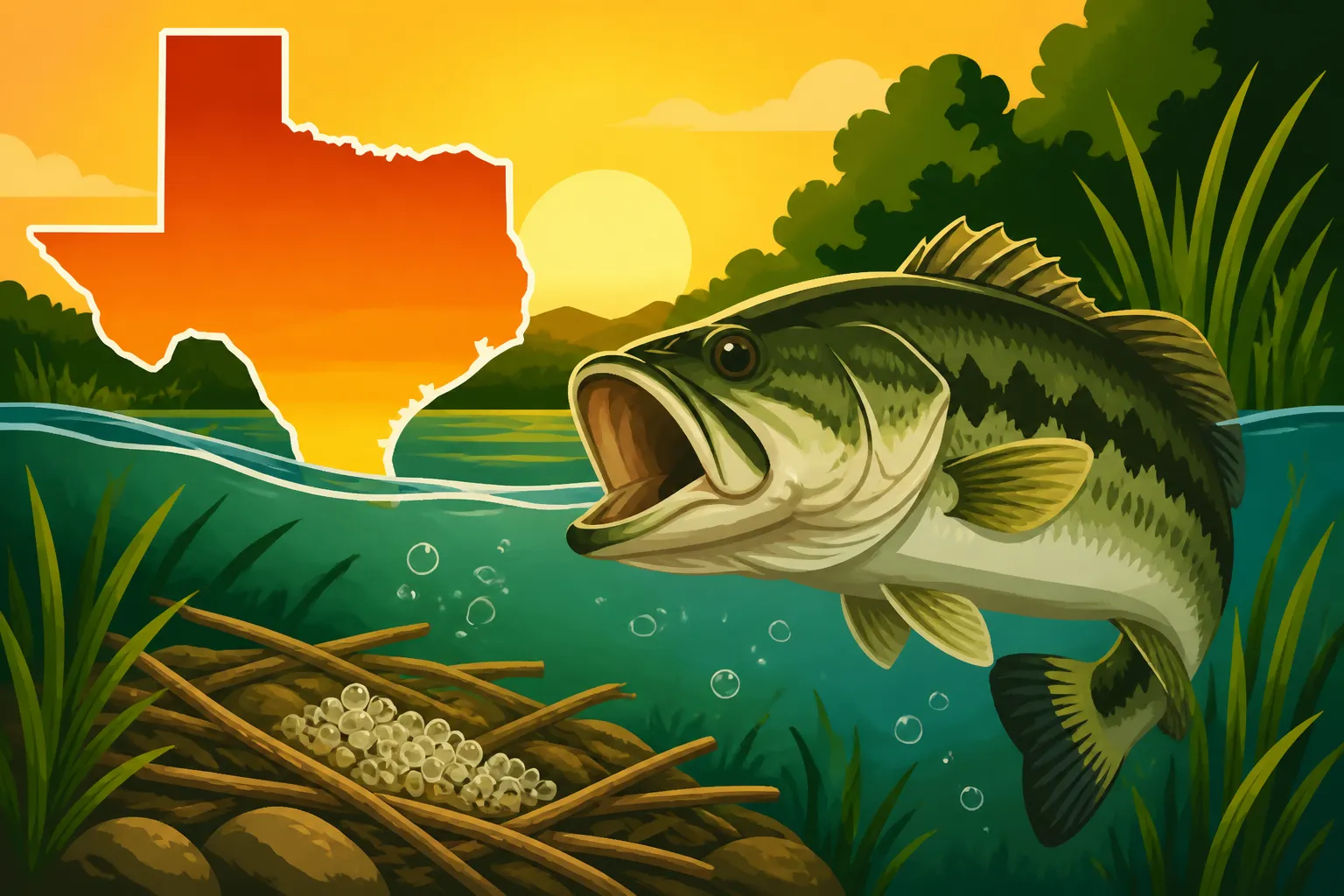
At its heart, the bass spawn is all about reproduction, ensuring the continuation of the species. For largemouth bass, this instinct is incredibly powerful, dictating their movements, feeding habits, and overall disposition for several weeks each year. As the water temperatures begin to rise after the chill of winter, a switch flips in their biological makeup. They start to move from their deeper wintering grounds towards shallower, protected areas where they can build their nests, lay eggs, and guard their fry.
This reproductive drive is why bass become so catchable during the spawn. They're not necessarily "feeding" in the traditional sense when they're actively on a bed, but rather striking at anything they perceive as a threat to their offspring. This aggression makes them vulnerable to various lures and techniques. Understanding this fundamental drive helps us, as anglers, to better predict their behavior and choose the right presentation to elicit a strike, whether it's a territorial nip or a full-on feeding attack.
General Timeline for Texas Largemouth Bass
While the exact dates are never set in stone, most Texans can expect the largemouth bass spawn to kick off sometime in late winter or early spring. Generally speaking, the earliest signs of pre-spawn activity can be seen in South Texas as early as February, sometimes even late January if the winter is exceptionally mild. As spring progresses and warm fronts push northward, the spawn then follows, moving through Central Texas, and finally reaching North and East Texas by March and April.
By May, the spawn is typically winding down across most of the state, with only the very latest spawners or those in deeper, cooler waters still on beds. This general progression gives us a roadmap, but it’s critical to remember that localized conditions can cause significant deviations. It's not uncommon to hear reports of bass spawning in one part of a large reservoir while another part is still in its pre-spawn phase, especially in those massive bodies of water like Lake Fork or Sam Rayburn.
Pinpointing the Prime Spawning Window: Water Temperature and Lunar Cycles
When it comes to the bass spawn, if there’s one single factor that dictates the "when," it’s water temperature. Bass are cold-blooded creatures, and their biological processes, including reproduction, are directly tied to the temperature of their surrounding environment. While we often talk about "spring" as spawn time, it's the thermometer in the water that truly gives us the clearest signal.
Beyond temperature, many seasoned anglers and old wives' tales alike point to the moon's influence, particularly the full moon phase. While not as definitively scientific as water temperature, anecdotal evidence from countless fishing trips suggests there might be something to this celestial rhythm.
The Critical Role of Water Temperature
Largemouth bass typically begin their spawning rituals when water temperatures consistently reach a specific range. For Texas largemouths, that sweet spot is usually between 58 and 68 degrees Fahrenheit. However, it’s not just about hitting that number once; it needs to be sustained. A quick warm-up followed by a harsh cold front can send bass scrambling back to deeper water, delaying the spawn until conditions stabilize again.
Here’s a breakdown of how different temperature ranges generally dictate bass behavior during this period:
- Below 50°F (Wintering): Bass are typically deep, lethargic, and largely inactive. They are not thinking about spawning yet.
- 50-57°F (Pre-Spawn Staging): This is when bass start moving out of their deepest winter haunts and staging in areas adjacent to spawning flats. They're aggressively feeding, trying to pack on calories for the energy-intensive spawning process. This is often an incredible time to catch big fish.
- 58-62°F (Early Spawn / Primary Wave): Once the water hits these temperatures, the first waves of bass, often the smaller, healthier males and some of the smaller females, will move onto beds. They're highly active, clearing nests.
- 63-68°F (Peak Spawn / Major Waves): This is the ideal temperature range where the majority of bass, especially the larger females, will move onto beds. The spawn is in full swing, and you'll see a lot of activity in shallow water.
- Above 68°F (Post-Spawn / Recovery): As temperatures climb past this, most bass have completed their spawning duties. They'll be moving off beds, often resting nearby to recover before returning to more traditional feeding patterns.
It's crucial to pay attention to localized water temperature readings. Your local lake might have warmer shallows than the main lake body, initiating the spawn earlier in those specific coves or protected areas.
The Influence of Lunar Phases
While water temperature is the primary driver, many anglers swear by the moon's influence, particularly the full moon and new moon phases during the optimal temperature windows. The theory suggests that the gravitational pull of these lunar phases might trigger a more concentrated push of bass onto the beds.
During a full moon, the increased light penetration (even through clouds) in shallow water might provide a sense of security for spawning bass. Conversely, some believe a new moon, with its darker nights, could encourage bass to move up, making them more active during daylight hours leading up to and during the spawn.
While scientific consensus on the moon's direct impact on the timing of the bass spawn might vary, its influence on tidal movements in coastal areas is well-documented and can certainly affect bass behavior in brackish waters. For purely freshwater lakes, consider the lunar phase as an additional, subtle clue rather than a definitive trigger. If you have stable water temperatures in that 60-65°F range, and a full moon is approaching, you can bet that a significant wave of spawning activity is likely right around the corner.
Geographical Nuances: Bass Spawning Across Texas Regions
Texas is a massive state, and what holds true for Falcon Lake in South Texas might be vastly different from Lake Meredith in the Panhandle. The bass spawn, therefore, doesn't happen uniformly across the state; it's a rolling progression influenced by climate, latitude, and specific lake characteristics. Understanding these regional differences is key to timing your fishing trips effectively.
South Texas and Coastal Bend Waters
The southern reaches of Texas, with their warmer climate, typically see the earliest bass spawning activity. Lakes like Falcon Lake near Zapata, Choke Canyon Reservoir near Three Rivers, and even some of the private ranches with stock tanks can see pre-spawn action as early as late January, with the main spawn often kicking off in February and extending into March. The warm, mild winters in this region mean that water temperatures rise faster and stay stable earlier in the year. If you're itching to catch those big, heavy females, targeting South Texas in late winter is often your best bet. Keep an eye on the water temps; once they consistently hit the upper 50s, it's game on.
Central Texas Lakes
Moving northward into Central Texas, areas around Austin, San Antonio, and Waco experience a slightly delayed spawn compared to the deep south. Lakes like Lake Travis, Canyon Lake, Lake Belton, and Lake Whitney usually see their primary spawning waves in March and early April. This region is more susceptible to fluctuating spring weather, meaning cold fronts can push the spawn back temporarily. Anglers here need to be particularly vigilant with temperature checks, as a sudden dip can make bass retreat. However, when the conditions align, the fishing can be phenomenal, with bass moving into the ample shallow coves and rocky points these lakes offer.
East Texas Piney Woods Reservoirs
East Texas is famous for its trophy bass lakes, including giants like Lake Fork, Sam Rayburn Reservoir, and Toledo Bend Reservoir (shared with Louisiana). Here, the bass spawn typically occurs from March through April, sometimes stretching into early May, especially on the larger, deeper reservoirs. These lakes often have extensive shallow cover like hydrilla, lily pads, and timber, providing ideal spawning habitat. The sheer size of these lakes means the spawn can be drawn out, with different areas warming up and cooling down at varying rates. It's not unusual to find bass in all three phases – pre-spawn, spawning, and post-spawn – simultaneously across different parts of a lake like Sam Rayburn. For an in-depth look, check out our guide on the Texas Largemouth Bass Spawning Months.
North Texas and Panhandle Lakes
The northernmost lakes of Texas, including those around the DFW Metroplex like Lake Ray Roberts, Grapevine Lake, and Eagle Mountain Lake, generally experience the latest spawn. The main event usually happens in April and can extend into early May. In the more arid Panhandle region, lakes like Lake Meredith have their own unique characteristics, often with shorter, more intense spawning windows due to faster warming and cooling cycles. Winter lasts a bit longer here, so patience is key. The bass in these regions are just as eager to reproduce, but they wait for those consistently warmer days and nights to make their move.
Here's a quick summary table for typical major spawning windows:
| Region | Primary Spawning Months | Typical Water Temp Range | Notes |
|---|---|---|---|
| South Texas/Coastal Bend | February – March | 58-68°F | Earliest spawn, mild winters, can start late January. |
| Central Texas | March – April | 58-68°F | Variable weather, watch for cold fronts delaying. |
| East Texas Piney Woods | March – April (early May) | 58-68°F | Large lakes, extended spawn, diverse habitats. |
| North Texas/Panhandle | April – May | 58-68°F | Latest spawn, colder winters, shorter windows in Panhandle. |
Adapting Your Strategy: Fishing During Pre-Spawn, Spawn, and Post-Spawn Phases
Knowing when bass are spawning is only half the battle; knowing how to fish during these crucial periods is what truly puts fish in the boat. Each phase—pre-spawn, active spawn, and post-spawn—requires a different approach, from bait selection to presentation and even where you target them. Ignoring these subtle shifts is a common mistake that can leave you wondering where all the fish went.
Dominating the Pre-Spawn Period
The pre-spawn phase is arguably one of the most exciting times to target trophy bass. These fish are at their heaviest, actively feeding to build energy reserves for the strenuous spawning process. They'll be moving from their deep winter haunts to staging areas adjacent to potential spawning flats. Think creek channel bends, secondary points, submerged roadbeds, and brush piles in 8-20 feet of water, often near the mouth of coves or protected pockets.
Your goal here is to offer high-protein, easy-meal presentations. Large lipless crankbaits like a Bill Lewis Rat-L-Trap or a Strike King Red Eye Shad, jerkbaits, deep-diving crankbaits, and slow-rolled spinnerbaits are incredibly effective as bass are aggressively chasing baitfish. Don't shy away from bigger profile jigs and Texas rigs with creature baits (which you can easily find on Amazon) fished slowly on the bottom. The bass are still somewhat lethargic from winter but want a substantial meal without too much effort. This is a great time to experiment with different retrieve speeds until you find what triggers them. Our article on How to Catch Pre-Spawn Bass in Early Spring offers even more detailed tips.
Navigating the Active Spawn
During the active spawn, bass are primarily focused on reproduction, not feeding. They'll be found in shallow water (1-5 feet) on hard bottoms like gravel, sand, or shell beds, often near cover like stumps, docks, or submerged vegetation. They become highly territorial, aggressively guarding their nests.
Sight fishing can be incredibly effective if the water is clear enough. Use polarized sunglasses (also readily available on Amazon) to spot beds. Your bait choice should be something that irritates or mimics a threat to the bed. Weightless plastics like a Senko, creature baits, or lizards are excellent choices. Pitch them directly onto or just past the bed and let them sit or twitch them subtly. The key is patience and persistence. You're trying to provoke a reaction strike, so don't expect a hard bite. Sometimes it’s just a "thump" or the line moving sideways. Remember to practice ethical fishing during the spawn; if you catch a bass off a bed, release it quickly to give it the best chance to return and protect its eggs or fry.
Conquering the Post-Spawn Lull
The post-spawn period can be a challenging time for anglers, as bass are exhausted from spawning and often retreat to nearby cover to recover. This phase typically occurs when water temperatures climb above 68-70°F. The bass aren't as aggressive as in pre-spawn, nor as territorial as during the spawn. They might be suspended near deeper structure, under docks, or in shady areas.
Focus on lighter presentations and finesse techniques. Shaky heads, drop shots, and weightless flukes can be very productive. Bass are still feeding, but often on smaller, easier prey. Topwater lures can also work well, especially during early mornings or late evenings, as recovering bass might be looking for an easy meal on the surface. Target shaded areas, deeper grass lines, and points leading out of spawning coves. As they recover, they'll gradually move back to more traditional feeding patterns. If you're struggling, consider focusing on techniques described in How to Fish for Bass in Hot Texas Summers for some helpful insights.
Dealing with the Unexpected: Factors That Can Shift the Spawn
Even with all our planning and understanding of typical patterns, Mother Nature often throws a wrench into the works. The Texas bass spawn, while generally predictable within a window, can be significantly influenced by a variety of factors that can either accelerate, delay, or spread out the activity. Real-time adaptability is your best friend when you're out on the water.
Unpredictable Weather Patterns
Texas weather is notoriously fickle, especially in spring. A sudden, strong cold front can drop water temperatures by several degrees overnight, effectively shutting down spawning activity. Bass that were just moving onto beds might retreat to deeper water, suspending until the water warms back up. This can result in a frustrating "post-front" bite where fish are sluggish and difficult to entice. Conversely, an unusually long stretch of warm weather can cause the spawn to start earlier than expected.
Heavy spring rains can also impact the spawn, especially if they cause significant flooding and increased water flow in rivers and creeks feeding into lakes. Murky water, debris, and fluctuating lake levels can make it difficult for bass to find and maintain beds, sometimes forcing them to move to different, clearer areas or delay their efforts. Monitoring local weather forecasts and recent rainfall amounts is just as important as checking water temperatures.
Lake Depth and Water Clarity
The specific characteristics of a lake can also influence spawning timing. Shallower lakes or lakes with extensive shallow flats tend to warm up faster, often initiating the spawn earlier than deeper, larger reservoirs. For example, a shallow, stained lake might see bass on beds earlier than a deep, clear lake in the same region because the shallow water absorbs heat more quickly.
Water clarity also plays a critical role. In extremely clear lakes, bass might spawn slightly deeper or seek out more cover to protect their nests from predators and bright sunlight. In very stained or muddy water, they might rely more on temperature and feel to select beds, and sight fishing becomes impossible. This means you'll need to adapt to blind casting techniques, relying on feel and electronics to locate fish. If the water is muddy, try using lures with more vibration or scent, and don't be afraid to go with darker colors like black and blue.
Drought Conditions and Water Levels
Texas is no stranger to drought, and prolonged periods of low water levels can dramatically affect the spawn. When lake levels drop, prime spawning areas might become dry land, forcing bass to seek out new, potentially less ideal locations. This can concentrate fish in fewer areas, but it can also make finding established patterns challenging. On the flip side, extremely high water levels due to heavy rains can inundate new areas, spreading bass out into newly flooded vegetation, making them harder to locate. Checking current lake levels and recent drawdowns or rises is a crucial piece of pre-trip research. Websites like Texas Parks and Wildlife Department (TPWD) often provide up-to-date lake information.
Ultimately, the Texas bass spawn is a dynamic event. While water temperature is your primary guide, always consider the unique conditions of the specific lake you’re fishing, recent weather, and historical patterns. Be flexible with your approach, and you'll increase your chances of connecting with those spawning bass, no matter what surprises Texas weather throws your way. Remember, tools for monitoring local conditions, from good thermometers to detailed fishing maps and guides, are readily available, even through a quick search on Amazon, which can give you that edge.
Disclaimer
Fishing conditions and regulations in Texas can change frequently. Always consult the official Texas Parks and Wildlife Department (TPWD) website or their current Outdoor Annual for the most up-to-date information on fishing licenses, bag limits, length limits, and any other specific regulations for the body of water you plan to fish. This guide is for informational purposes only and should not replace official sources.