How to Fish the Texas Flounder Run
There's a special kind of magic, and a whole lot of anticipation, that comes with chasing Texas flounder, especially during their famous "run." For many coastal anglers, that brief window when these delicious flatfish migrate out of the bays and into the Gulf is the Super Bowl of fall fishing. But if you've ever tried to target them without a solid plan, you know it can quickly turn into a frustrating quest. This comprehensive guide is here to demystify the flounder run, giving you the knowledge, gear tips, and techniques you need to make the most of this exciting, albeit short, season.
Decoding the Texas Flounder Run Phenomenon
The Texas flounder run is one of the most exciting and talked-about events in coastal fishing, yet it’s often shrouded in a bit of mystery for newcomers. It’s not just a casual migration; it’s a critical biological event that brings these normally elusive fish into more predictable, albeit crowded, patterns. Understanding why and when it happens is the first step to successful angling.
What Exactly Is the Flounder Run?
At its core, the flounder run is the annual migration of mature Southern Flounder from the shallower bay systems and estuaries out into the deeper waters of the Gulf of Mexico to spawn. As the water temperatures begin to drop in the fall, usually around October and November, an instinctual urge kicks in for these flatfish. They start making their way through bayous, channels, and passes, all heading towards the Gulf. Think of it as their version of a highway rush hour, but instead of cars, it's a mass movement of flounder. This migration makes them much more concentrated and therefore easier to intercept, which is why anglers get so incredibly excited about it. The window for this intense activity is notoriously brief, typically peaking in November before they disperse to their offshore spawning grounds.
The sheer volume of fish moving during this period is what makes it so special. You're not just hoping to stumble upon one or two; you're often looking for a veritable parade of them. This is the time when seasoned anglers can fill their limits relatively quickly, and it's also a fantastic opportunity for those new to flounder fishing to experience a truly unique Texas fishing phenomenon. However, because it's such an intense period, the Texas Parks and Wildlife Department (TPWD) has implemented specific rules to ensure the sustainability of the species.
Why the November Closure?
One of the biggest frustrations for many Texas anglers is the annual closure of the Southern Flounder season, specifically throughout the entire month of November for recreational and commercial fishing. This regulation often sparks conversations and grumbles on the docks, but it's crucial for the long-term health of the flounder population. The closure is a direct conservation effort by the TPWD to protect the Southern Flounder during their peak spawning migration. By prohibiting harvest during this critical reproductive period, the goal is to allow as many mature fish as possible to successfully spawn, thereby replenishing the population for future generations.
The Southern Flounder species has faced conservation challenges over the years, with populations sometimes struggling due to various factors, including habitat loss, fishing pressure, and environmental changes. The November closure, along with specific Texas Flounder Minimum Length Limit and bag limits, is designed to give the species the best chance to recover and thrive. While it means anglers miss out on what could be the absolute peak of the run, it's a necessary trade-off for sustainable fishing. Understanding this rationale helps us appreciate the importance of these rules, even when they cut into our prime fishing time. For more details on the exact reasoning behind this, you might want to look into Why is Texas flounder season closed in November.
Prime Timing and Environmental Cues
Successfully intercepting the flounder run isn't just about showing up in November (though that's a big part of it!). It's about paying attention to Mother Nature's signals. The timing of the flounder run is heavily influenced by environmental factors, with dropping water temperatures being the primary trigger. As the first strong cold fronts of fall sweep through Texas, typically in October, the bay waters begin to cool. When bay temperatures consistently drop into the low to mid-70s and then into the 60s Fahrenheit, the flounder start to get serious about their migration.
Beyond temperature, strong outgoing tides associated with falling barometric pressure and new or full moon phases can supercharge the migration. These factors create stronger currents that help flush flounder out of the bay systems and provide excellent ambush opportunities for anglers waiting in strategic locations. Anglers often look for those crisp, clear fall days right after a cold front, especially when the winds shift to the north, pushing water out of the bays. This combination of cooling water, strong tides, and clear conditions creates the ideal scenario for a productive flounder run. Keeping an eye on weather forecasts and tide charts is just as important as having the right gear.
Essential Gear for the Flounder Hunter
Having the right tackle can make all the difference between a frustrating outing and a successful day on the water during the Texas flounder run. Flounder fishing isn't necessarily about heavy-duty gear, but rather about sensitivity, stealth, and using the right presentations to entice these bottom-dwelling ambush predators.
Rod, Reel, and Line Setup
When it comes to selecting your rod and reel for flounder, sensitivity is key. You're often feeling for a subtle "thump" or slight resistance as a flounder picks up your bait from the bottom. A medium-light to medium power spinning rod, typically 6'6" to 7'6" in length, with a fast action tip is usually ideal. The fast action allows for good casting distance and provides the sensitivity needed to detect those light bites, while still having enough backbone to handle a good-sized flounder. Pair this with a reliable 2500 to 3000 series spinning reel. Many excellent options can be found online, and an "Amazon" search will yield plenty of highly-rated spinning reels that fit the bill without breaking the bank.
For line, a braided main line of 10-15 lb test is a fantastic choice due to its superior sensitivity and minimal stretch, which transmits even the lightest tap directly to your hands. Braid also helps with casting distance, which can be crucial when trying to cover wider areas from the bank or while wading. Always tie a fluorocarbon leader of about 15-20 lb test, roughly 2-3 feet long, to your braided main line. Fluorocarbon is nearly invisible underwater, more abrasion-resistant, and has a good stiffness that helps with bait presentation, especially when dragging jigs or live bait across the bottom.
Baits, Lures, and Rigs
Flounder are opportunistic predators, and their diet during the run consists primarily of small fish and crustaceans. Therefore, your bait and lure selection should mimic these natural food sources. Live bait is often king for flounder, with finger mullet (2-4 inches), mud minnows (killifish), and live shrimp being top contenders. You can rig these on a simple Carolina rig or a popping cork setup in certain situations. For artificials, soft plastics are incredibly effective. Gulp! scented baits, like the 3-inch or 4-inch "swimming mullet" or "shrimp" imitations, rigged on a jig head, are perennial favorites. Z-Man soft plastics, with their durability and lifelike action, are also excellent choices.
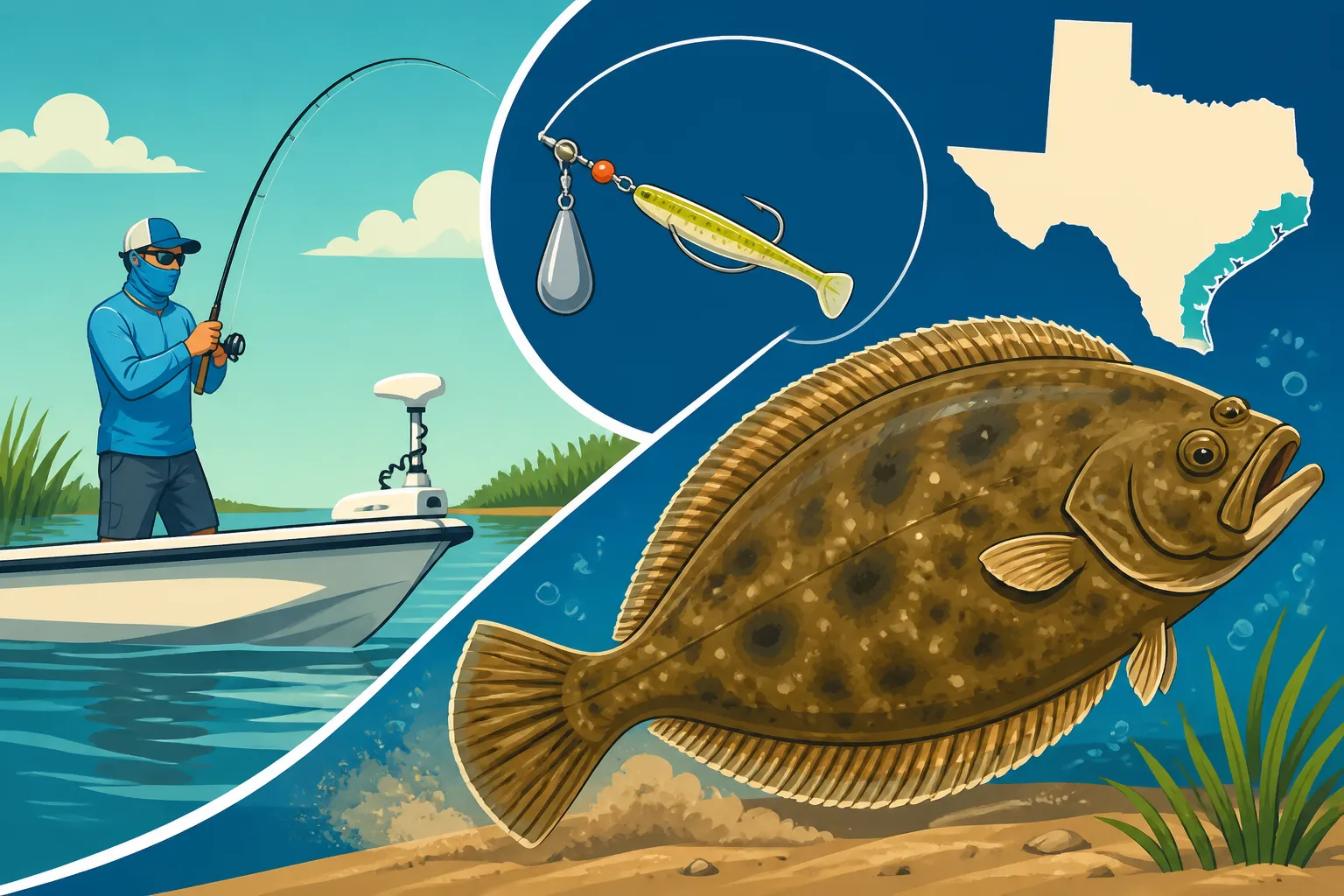
When it comes to rigs, the Carolina rig is arguably the most popular and effective for flounder. This rig consists of an egg sinker (1/2 to 1 oz, depending on current and depth) threaded onto your main line, followed by a small bead, a barrel swivel, and then a 12-18 inch fluorocarbon leader tied to a worm hook or J-hook (sizes 1/0 to 3/0). This setup allows your bait to tumble naturally along the bottom, which is exactly where flounder are hunting. Another effective setup is a simple jig head (1/8 to 1/2 oz) with a soft plastic tail, which you can bounce or drag along the bottom. For a deeper dive into specific setups, check out Best rigs for flounder fishing.
Wading Gear and Accessories
Flounder fishing, especially during the run, often involves wading in shallow bay waters, so having the right wading gear is crucial for comfort and safety. Chest waders are a must, particularly as the water cools in the fall. Choose breathable waders for warmer days or neoprene for colder conditions. Pair these with sturdy wading boots that offer good ankle support and grip on muddy or shell-strewn bottoms. A wading belt is essential not only for preventing water from filling your waders if you stumble but also for attaching important accessories.
Other indispensable items include a sturdy stringer to keep your catch fresh (a large fish basket works well too), a pair of quality pliers for hook removal, and a long-handled landing net, which makes securing a flopping flounder much easier, especially if you're gigging. If you plan on trying your hand at flounder gigging, a powerful headlamp or dedicated gigging light is absolutely necessary for illuminating the shallow bottom at night. For those who prefer to stay dry, a comfortable and well-organized fishing backpack from "Amazon" can carry all your lures, snacks, and extra gear, keeping everything easily accessible while on the move.
Mastering Flounder Fishing Techniques
Flounder are ambush predators, often lying camouflaged on the bottom, waiting for an unsuspecting meal to pass by. Therefore, your fishing techniques need to focus on presenting your bait naturally and thoroughly covering potential hiding spots.
Wade Fishing Strategies
Wade fishing is perhaps the most popular and effective way to target flounder during their run. It allows you to move silently through shallow areas that boats can't easily access, getting you right into the flounder's habitat. The key to successful wade fishing for flounder is a slow, methodical approach. Instead of rushing, take your time, shuffling your feet occasionally to stir up the bottom, which can attract curious flounder. Fan cast your bait, making casts to your left, straight ahead, and to your right, working your way around before taking a few steps forward and repeating the process. This ensures you cover a wide swath of water.
The retrieve is equally critical. Whether you're using live bait on a Carolina rig or a soft plastic on a jig head, keep your retrieve slow and steady, maintaining constant contact with the bottom. Flounder rarely chase fast-moving baits. They prefer to ambush. A gentle drag, punctuated by short hops or pauses, often triggers a strike. Focus your efforts around natural drains, cuts, tidal creeks, and the mouths of bayous where water is flowing out of the marshes. These are natural funnels for migrating flounder. Pay attention to subtle changes in depth, shell points, or grass lines, as these often hold fish. The stealth you gain by wading allows you to sneak up on these wary fish. You can learn more about general wade fishing principles in Texas Saltwater Fishing Techniques.
Boat and Kayak Approaches
While wading offers stealth, boats and kayaks provide access to deeper channels, larger bay systems, and the ability to cover more ground, especially crucial during the widespread migration of the flounder run. If you're in a boat, focus on drifting or slow-trolling parallel to known migration routes such as ICW (Intracoastal Waterway) cuts, ship channels, and the deeper edges of bayous leading to passes. Positioning your boat upstream from a likely ambush point, like a submerged structure or a channel bend, and letting the current carry your bait naturally into the strike zone can be highly effective. Anchoring on the edge of a channel or near a pass with a strong outgoing tide can also produce excellent results, allowing you to cast and retrieve through the productive current seam. If you're considering a boat specifically for this, research into Best Boats for Texas Saltwater Fishing could be beneficial.
Kayakers have a distinct advantage in their ability to quietly navigate shallower water, much like a wader, but with less physical exertion over long distances. Utilize your kayak to explore marsh edges, shallow drains, and the backside of islands that bigger boats can't reach. Drifting silently along these areas, casting soft plastics or live bait, can be incredibly productive. Pedaling kayaks can offer even greater control in currents, allowing for precise bait placement. Remember that stability is important when fishing from a kayak, especially if you're sight fishing or reeling in a strong flounder. Many anglers look for robust models, and "Amazon" offers a range of accessories to outfit your fishing kayak perfectly. You might find some excellent options if you're looking for Best Kayaks for Texas Saltwater Flats.
Flounder Gigging: A Nighttime Adventure
Flounder gigging is a unique and thrilling way to target these flatfish, especially popular during the run. It’s a nighttime activity where anglers use powerful lights to spot flounder lying camouflaged on the shallow bottom and then use a multi-pronged gig (spear) to harvest them. The best conditions for gigging are clear, calm nights with low tides. Clear water allows your light to penetrate effectively, while low tides concentrate the flounder in shallower areas, making them easier to spot. New moon phases are often preferred because the darker conditions enhance the effectiveness of your lights.
You can gig from a boat equipped with elevated platforms and bright lights, or by wading with a headlamp and handheld gig. When wading, move slowly and deliberately, scanning the bottom just ahead of you. Flounder will be lying perfectly still, often partially buried in the sand or mud, making their eyes or the outline of their body barely visible. It takes a keen eye and some practice to spot them. Once spotted, approach quietly and, with a swift, decisive motion, gig the fish. Always be aware of your surroundings, and never gig near swimming areas or in areas with submerged hazards. Remember to always respect the legal requirements for gigging; for more in-depth information, including licensing and specific rules, consult How to gig flounder legally in Texas.
Locating Flounder Hotspots Across the Texas Coast
Knowing where to fish is just as important as how to fish for flounder during their run. The Texas coast offers a vast array of productive bay systems, each with its unique characteristics, but all funneling flounder towards the Gulf.
Bay Systems and Estuaries
The entire Texas coast, from Sabine Lake in the east to the Lower Laguna Madre in the south, experiences the flounder run, with certain bay systems gaining legendary status. Sabine Lake, bordering Louisiana, is a known hotspot, particularly around the causeways and channels that lead to the Gulf. Further south, Galveston Bay offers numerous opportunities in its passes, jetties, and major bayous like Galveston Channel and Rollover Pass (though Rollover Pass no longer exists as a pass, the surrounding areas remain important). Anglers often find success near the jetties where the bay meets the Gulf. For specifics, look into Galveston Bay Fishing Spots.
Matagorda Bay and Aransas Bay are also prime locations, with their complex networks of marsh drains, guts, and passes providing excellent ambush points. The "mud cut" areas and channels leading out of West Matagorda Bay are particularly productive. For more detailed information on specific areas, you can check out Matagorda Bay Flounder Fishing Spots. In these estuaries, look for areas where water is actively moving, creating current. Flounder use these currents to ambush baitfish, and the drains themselves act as highways for their migration. The beauty of these bay systems is their sheer diversity, offering opportunities for both boaters and waders.
Channel Markers and Structure
Flounder are structure-oriented fish, and during their migration, they often use man-made structures and natural bottom features as navigational aids and ambush points. Channel markers, especially those along the Intracoastal Waterway (ICW) and various bay channels, create current breaks and eddies that flounder love. The pilings themselves can hold baitfish, attracting flounder to the vicinity. Docks and piers, particularly those that extend into deeper water or are near channels, offer similar advantages. The pilings provide cover, and the dock lights can attract baitfish at night, making them excellent spots for both rod-and-reel fishing and gigging.
Natural structures like oyster reefs, shell pads, and even subtle changes in bottom contour (e.g., a drop-off from a shallow flat into a deeper gut) are also prime locations. Flounder will often lie on the down-current side of these structures, waiting for bait to be swept past them. During the run, fishing around the mouths of major passes and jetties is especially productive. The jetties themselves, with their rocky structure and deep channels, are funnel points where flounder will congregate before heading offshore. These areas can be crowded, but for good reason – the fish are there.
Tides and Current: The Flounder's Highway
Understanding tides and current is paramount to successful flounder fishing, especially during the run. Flounder are heavily influenced by water movement, using currents to their advantage for both migration and feeding. Generally, an outgoing tide is considered the most productive for flounder during the run. As the water recedes from the shallow marshes and bayous, it flushes out baitfish and shrimp, creating a natural buffet line that flounder readily exploit. The flounder themselves also use these outgoing currents to assist in their journey towards the Gulf.
Focus your efforts on the last few hours of a strong outgoing tide, particularly around choke points where the water is concentrated, such as narrow bayou mouths, cuts, and the entrances to major passes. These areas act as natural bottlenecks, funneling both bait and flounder, making them prime ambush locations. Conversely, a weak tide or slack water can make flounder fishing challenging, as the fish become more dispersed and less actively feeding. Keeping a close eye on your local tide charts and understanding how different wind conditions affect water levels and current strength will significantly increase your chances of success. A northerly wind, for instance, often pushes water out of the bays, enhancing outgoing tides and making fishing these key areas even better.
Maximizing Your Catch and Ensuring a Sustainable Future
Landing a flounder is a thrill, but it's important to approach the experience with an eye toward conservation and proper handling to ensure both your enjoyment and the health of the fishery.
Understanding Bag and Length Limits
Compliance with regulations is non-negotiable for any angler in Texas. For Southern Flounder, the rules are very specific and subject to change, so always double-check the latest Texas Parks and Wildlife Department (TPWD) Outdoor Annual before you head out. Generally, during the open season (which excludes the entirety of November), recreational anglers are allowed a daily bag limit of five flounder per person. However, during specific periods, like the first two weeks of December, the daily bag limit often reduces to two fish per person as the season reopens after the November closure, before returning to five fish per person for the remainder of the year. The minimum length limit for Southern Flounder is 15 inches.
It's crucial to measure your catch accurately as soon as it's landed. A measuring device, readily available from "Amazon" or any tackle shop, should always be part of your gear. Release any undersized flounder gently and quickly to maximize their survival chances. These regulations are in place to ensure that enough flounder reach maturity and have the opportunity to spawn, contributing to the overall health and sustainability of the population. Ignoring these rules not only risks hefty fines but also compromises the future of this fantastic fishery. You can find detailed and up-to-date information on Texas Flounder Season and Limits and general Texas Saltwater Bag Limits by Species.
Handling Your Catch
Once you’ve successfully reeled in a legal-sized flounder, proper handling is key to preserving its quality for the dinner table. Flounder are known for their delicious white, flaky meat, but only if handled correctly. The first step is to quickly dispatch the fish. A sharp rap to the head or a swift cut behind the head will humanely kill the fish and prevent it from flopping around, which can bruise the meat.
Next, get your catch on ice as soon as possible. A good quality cooler filled with ice is indispensable for any Texas fishing trip, especially in our warm climate. The colder the fish, the better the quality of the meat will be. Many anglers use a stringer while actively fishing, but once you've accumulated a few fish or are moving to a new spot, transferring them to a cooler full of ice is the best practice. This rapid cooling halts bacterial growth and rigor mortis, ensuring your flounder tastes as fresh as possible when you cook it.
Conservation Best Practices
Every angler has a role to play in conservation. Beyond adhering strictly to bag and length limits, practicing responsible angling contributes significantly to the health of the flounder fishery. When releasing undersized fish or those you don't intend to keep, do so with care. Minimize handling, especially avoiding touching their gills or eyes. If a fish has swallowed a hook deep, consider cutting the line close to the hook rather than trying to remove it, as this often causes less trauma.
Reducing your overall impact on the environment is also vital. Avoid leaving trash, discarded fishing line, or plastics on the coast or in the water. Properly dispose of bait containers and packaging. Education is another powerful tool; share your knowledge of regulations and best practices with fellow anglers, especially newer ones. By embracing these conservation best practices, we ensure that the thrilling Texas flounder run remains a cherished tradition for generations of anglers to come.
Flounder Fishing vs. Flounder Gigging Comparison
| Feature | Rod and Reel Fishing | Gigging |
|---|---|---|
| Primary Method | Enticing fish with bait/lures | Spotting and spearing fish |
| Time of Day | Primarily daytime, but also dawn/dusk | Exclusively nighttime |
| Visibility | Less dependent on water clarity | Highly dependent on clear water |
| Gear Required | Rod, reel, line, bait/lures, terminal tackle | Gig, powerful light source, waders/boat |
| Skill Set | Casting, retrieving, feeling bites, setting hook | Spotting camouflage, precise gigging, stealth |
| Physical Demand | Moderate (wading, casting) | Moderate to high (wading in dark, carrying light) |
| Seasonality | Throughout open season, peaks during run | Peaks during run, favorable in fall/winter |
| Conservation | Catch & Release easier to practice | Primarily harvest, less C&R opportunity |
| Challenge | Feeling subtle bites, matching bait/lure | Eyeing camouflage, precise aiming |
Disclaimer
Fishing regulations and conditions in Texas can change frequently. Always consult the latest Texas Parks and Wildlife Department (TPWD) Outdoor Annual or their official website for the most up-to-date information on licenses, bag limits, length limits, and closures before heading out. This guide is for informational purposes only and should not replace official sources.