Best depth to find crappie in summer
Finding crappie in the scorching Texas summer can feel like an impossible puzzle, leaving many anglers scratching their heads as the fish seem to vanish into thin air. You've battled the heat, the bright sun, and probably a few misfires trying shallow brush piles, only to come up empty-handed. But don't despair! This comprehensive guide is here to unravel the mystery of summer crappie depths, giving you the knowledge and techniques to consistently put slabs in your livewell, even when the mercury is soaring.
Understanding Crappie Behavior in Texas Summers
The key to consistently catching crappie when the Texas heat is on is understanding how these fish adapt to warmer water temperatures and intense sunlight. They aren't just lounging around; they're actively seeking comfort and sustenance, and that usually means moving deeper.
The Impact of Water Temperature on Crappie
Crappie are cold-blooded creatures, meaning their body temperature mirrors that of the water around them. As surface temperatures climb into the 80s and even 90s during a typical Texas summer, these fish become stressed and seek refuge in cooler environments. Imagine trying to run a marathon in a heavy coat on a 100-degree day – that's how a crappie feels in warm, shallow water!
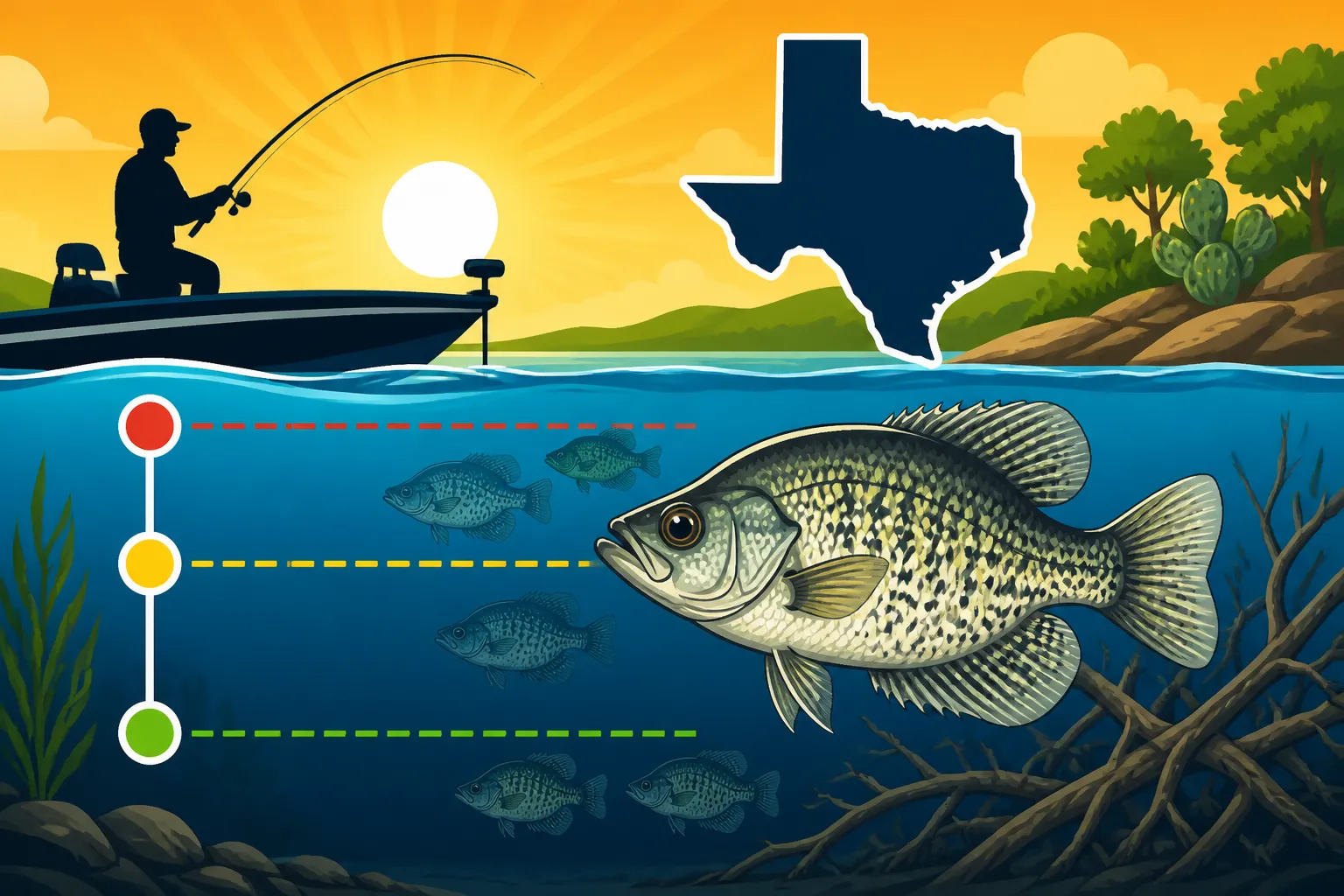
What they're really looking for is the thermocline. In many Texas lakes, particularly the deeper reservoirs, a distinct thermocline forms in summer. This is a layer of water where the temperature drops rapidly with increasing depth, creating a clear boundary between the warmer surface water and the cooler, deeper water. Above the thermocline, oxygen levels are usually good, but it's too warm. Below it, the water is cool, but often, oxygen becomes depleted, making it uninhabitable for fish. The sweet spot for crappie, and often their primary baitfish like shad, is right at or just above this thermocline, where they can find both cooler temperatures and sufficient oxygen. If you're struggling to locate them, remember, their comfort zone shifts dramatically with the seasons.
Crappie Feeding Habits and Cover Preferences
Even in summer, crappie are ambush predators, and they love to relate to structure. The problem is, that structure is often much deeper than what you might target in spring or fall. Instead of the shallow reeds or newly flooded timber, they'll be congregating around submerged brush piles, old creek channels, underwater humps, bridge pilings, and even deep-water docks with shade. These structures provide them with protection from predators, a break from the direct sun, and a prime ambush point for baitfish.
Think of it like this: in the scorching heat, crappie aren't going to chase individual baitfish around open water for long. They'll conserve energy by holding tight to cover, waiting for schools of shad or other small forage to pass by. This means if you can find the right deep structure in the right temperature zone, you're likely to find a concentration of crappie. The denser the cover, the more crappie it might hold, as it offers a greater sense of security.
Prime Depths for Summer Crappie Fishing in Texas
So, now that we know why crappie go deep, let's talk about how deep that usually is in Texas, and where exactly to look for them once you're there. There's no magic number, as every lake is different, but there are definitely general ranges and specific types of spots that are almost always productive.
Targeting the Thermocline Sweet Spot
As mentioned, the thermocline is your best friend in summer. In many larger Texas reservoirs like Lake Palestine, Lake Conroe, or Cedar Creek Reservoir, you'll often find this comfortable layer somewhere between 10 to 25 feet deep. However, this is just a general guideline; it can vary dramatically based on the lake's depth, recent weather patterns, and even the time of day. On shallower, turbid lakes, a strong thermocline might not even form, forcing crappie to rely more on deep cover and shade.
The absolute best way to locate the thermocline is with a good fish finder. Most modern units will show a distinct band where the temperature changes rapidly. You'll often see baitfish schools suspended right on top of this line, and guess what? Crappie won't be far behind. Sometimes the fish will be directly in the thermocline, other times they'll be just above it in a slightly warmer but oxygenated zone. Your goal is to drop your bait right into that specific zone. This is where those high-quality Best Fishing Electronics for Texas Anglers truly earn their keep. Without them, you're essentially fishing blind.
Deep Structure and Cover as Crappie Magnets
Once you've identified the optimal depth range, you need to find the structure within that range. Crappie aren't just going to be suspended in open water; they'll be relating to something. Here's what to look for:
- Submerged Brush Piles: These are classic crappie hideouts. Anglers often sink brush piles specifically for crappie, and they can be found anywhere from 10 to 30 feet deep. If you've ever thought about making your own, remember to check local regulations first!
- Old Creek Channels and Roadbeds: In reservoirs, these historical features become underwater highways for fish. Crappie will often stage along the edges or inside the bends of these channels. A good contour map or GPS on your fish finder will reveal these hidden gems.
- Bridge Pilings and Trestles: Bridges offer vertical structure and deep shade, making them magnets for crappie. The fish will often stack up on the leeward side (away from the current) of the pilings.
- Deep Docks and Marinas: Many deep docks, especially those with brush piles or submerged artificial attractors around them, can hold crappie. The shade provided by the docks themselves also acts as a drawing card.
- Ledges and Drop-offs: Crappie will position themselves on the deeper side of ledges, waiting for baitfish to move up and down the break. These are often overlooked but incredibly productive spots.
On Lake Fork, for instance, known for its incredible bass fishing, the deep submerged timber and creek channels are also prime crappie territory in summer. Similarly, on Sam Rayburn Reservoir, finding those deep brush piles along main lake points or inside major creek arms is critical. Remember, these spots aren't always easy to find, but once you do, they can produce consistently.
Essential Techniques for Reaching Summer Crappie Depths
Knowing where the crappie are is only half the battle; the other half is getting your bait down to them effectively. Summer crappie fishing often requires different tactics than the shallow water finesse of spring.
Vertical Jigging and Dropping Baits
When crappie are stacked tight on a specific piece of cover or holding precisely at a thermocline depth, vertical jigging is incredibly effective. This method involves positioning your boat directly over the fish or structure and dropping your bait straight down.
- Baits of Choice: Small jigs (1/16 to 1/8 ounce are common, but go heavier in wind or current) tipped with soft plastics like Bobby Garland's Baby Shad or a live minnow are irresistible. You can find a huge variety of Best Crappie Jigs for Texas Lakes on platforms like Amazon.
- Technique: Drop your bait to the depth where you're seeing fish on your electronics. Then, subtly lift and drop your rod tip, imparting a gentle jigging motion. Don't overdo it; sometimes the slightest quiver is all it takes. Pay close attention to your line for the faintest tap or change in tension. Using a sensitive rod, like those discussed in Best Fishing Rods for Texas Anglers, will significantly improve your bite detection.
- Setup: A light to medium-light action spinning rod with a fast tip, paired with a small spinning reel spooled with 6-8 pound monofilament or fluorocarbon line, is ideal. Many anglers will purchase their entire setup from Amazon for convenience.
Spider Rigging and Slow Trolling
When crappie are a bit more scattered along a ledge, creek channel, or large brush pile, or if you want to cover more water, spider rigging (also known as tight-lining or slow trolling) is a fantastic strategy. This involves running multiple rods (often 4-8) out of the front or sides of your boat, each rigged with a different depth or bait.
- The Setup: Long rods (10-16 feet) are positioned in rod holders, fanning out around the boat. Each rod will have a weight (sinker or jig head) and a bait (minnow or jig) set at a specific depth. This allows you to present baits at various depths simultaneously, helping you pinpoint the crappie's preferred level.
- Slow Movement: You'll typically use a trolling motor to move very slowly, often less than 1 mph, along contours, channel edges, or over vast brush fields. This subtle movement makes your baits appear natural and allows you to cover a wide area efficiently.
- Bait Presentation: Experiment with different jig colors, sizes, and bait types on each rod until you find what the crappie are hitting. You might discover they prefer a chartreuse jig at 15 feet and a live minnow at 18 feet on the same day. This technique is particularly effective for those bigger slabs that might be suspended a bit away from the tightest cover.
Using Electronics Effectively
A high-quality fish finder isn't just a luxury; it's a necessity for successful summer crappie fishing. Modern electronics can revolutionize your approach by showing you exactly what's beneath your boat.
- 2D Sonar: This traditional view is excellent for showing fish arches, baitfish schools, and the general depth of the bottom. You can often see the thermocline clearly as a distinct layer.
- Down Imaging/Side Imaging: These technologies provide photographic-like images of the structure beneath and to the sides of your boat. With side imaging, you can scan wide areas to locate brush piles, old foundations, or creek channels that you might otherwise miss. Down imaging helps you interpret exactly what that structure looks like and if crappie are holding tight to it.
- GPS and Mapping: Mark your productive spots! Once you find a brush pile holding fish, save it as a waypoint. This allows you to return to it again and again, and even come back to it next year. Detailed lake maps, often available pre-loaded on units or as external cards, are crucial for identifying contours, channels, and humps. If you're looking for new gear, many anglers check out what's available for Best Fishing Electronics for Texas Anglers on Amazon.
Remember, understanding how to read your electronics takes practice, but it's an invaluable skill that will dramatically increase your success, especially when you're trying to find fish that are holding deep.
Factors Influencing Crappie Depth Beyond Temperature
While temperature and structure are paramount, other variables can subtly shift where crappie decide to hang out. Being aware of these additional factors can give you an edge on those tougher summer days.
Time of Day and Weather Conditions
Crappie, like most fish, are influenced by light levels. In summer, the intense midday sun pushes them deeper into darker, cooler water and thicker cover.
- Early Morning and Late Evening: During these low-light periods, crappie might move slightly shallower, especially if there's an abundance of baitfish pushing up. You might find them suspended a few feet higher in the water column or relating to cover that's not quite as deep as their midday haunts. This can be a great time to target fish that are actively feeding before the sun gets too high or after it starts to drop.
- Cloud Cover and Wind: Overcast days or windy conditions can also make crappie more active and allow them to roam a bit more freely, potentially venturing slightly shallower than on a calm, sunny day. The chop on the water surface breaks up direct sunlight penetration, making shallower areas more comfortable for longer. Strong winds, however, can also create current that pushes baitfish and crappie to the leeward side of structures.
- Cold Fronts: A sudden cold front can put crappie in a funk, often pushing them even tighter to cover and making them less willing to bite. It might also cause them to drop a few feet deeper temporarily.
Lake-Specific Variations and Local Knowledge
While we've discussed general principles, every Texas lake is its own unique ecosystem. What works perfectly on Lake Sam Rayburn Reservoir might need tweaking for Lake Texoma or Falcon Lake.
- Water Clarity: Clearer lakes, like many of the Hill Country reservoirs, often see crappie holding deeper than in stained or turbid lakes. In clear water, light penetrates further, driving fish deeper for comfort and camouflage.
- Forage Base: The predominant baitfish in a lake will influence crappie location. If shad are holding at a certain depth, crappie will likely be nearby.
- Lake Depth and Structure: A shallower lake with limited deep water will have crappie concentrated in the deepest available cover, whereas a very deep lake might have them at different depths across various sections.
- Local Reports and Bait Shops: Don't underestimate the power of local knowledge! Before heading out, check recent How to Read a Texas Lake Fishing Report for the specific lake you're targeting. Chat with folks at local bait and tackle shops; they often have the most up-to-date information on where the fish are biting and at what depth. These folks live and breathe the local waters and can offer invaluable insights that can save you hours of searching.
By combining an understanding of these factors with your deep-water techniques, you'll be well on your way to a successful summer crappie season in Texas. Don't forget to check the latest Texas Crappie Bag Limits before you go, so you know exactly what you can keep.
Here's a quick reference table to summarize typical summer crappie depths and tactics:
| Factor | Typical Depth Range (Feet) | Key Locations | Recommended Tactics | Gear & Notes |
|---|---|---|---|---|
| Thermocline | 10-25 (Varies by Lake) | At or just above the thermocline | Vertical jigging, Slow trolling | Fish finder crucial; target suspended baitfish. |
| Brush Piles | 12-28 | Submerged brush, timber | Vertical jigging, Spider rigging | Use electronics to pinpoint structure; jigs or live minnows. |
| Creek Channels | 15-30 | Along channel edges, bends | Slow trolling, Spider rigging | Follow contours with GPS; cover varying depths. |
| Bridge Pilings | 10-25 | Leeward side of pilings | Vertical jigging | Focus on shade and current breaks; tight-line minnows. |
| Deep Docks | 10-20 | Underneath docks, nearby brush | Vertical jigging | Look for docks with deep water access and shade. |
| Ledges | 15-30 | Deeper side of drop-offs | Slow trolling, Vertical jigging | Utilize contour maps; work both top and bottom edges. |
| Time of Day | Shallower (dawn/dusk) | Slightly higher in water column | All methods | Crappie may be more active feeders in low light. |
| Water Clarity | Deeper (clear lakes) | More pronounced depth seeking | All methods | Adjust depth for light penetration; consider darker lures in clear water. |
Disclaimer
Fishing conditions and regulations in Texas can change frequently. Always consult the latest Texas Parks and Wildlife Department (TPWD) guidelines and local signage before heading out. This guide is for informational purposes only and does not constitute official legal advice.