Best bait for crappie in cold water
It's incredibly frustrating when the weather turns cold, and suddenly your favorite crappie spots seem to dry up. Those once-aggressive bites become finicky nudges, and finding slabs feels like an impossible task. This guide is here to demystify the art of catching crappie when the water chills, focusing on the absolute best baits that entice even the most lethargic fish in Texas's cooler waters.
Understanding Crappie Behavior in Cold Texas Waters
When the mercury drops, both in the air and in the water, crappie undergo a significant change in their behavior. It's not just about them being "cold"; it's a physiological response that dictates where they go, what they eat, and how they eat it. Understanding these shifts is the first step to choosing the right bait and presentation.
The Impact of Water Temperature on Crappie Metabolism
Think about it: just like us, crappie are cold-blooded creatures, meaning their body temperature mirrors the water around them. As the water cools, usually below 55-60 degrees Fahrenheit, their metabolism slows down drastically. They don't need to eat as frequently, and they certainly don't expend a lot of energy chasing down fast-moving prey. This is why those speedy retrieves that worked wonders in the summer will often leave you empty-handed in winter. Their movements become sluggish, and they prefer to ambush easy meals rather than chase.
In many Texas lakes and reservoirs, you'll find crappie moving deeper as the surface water cools. They seek out more stable temperatures, often congregating around submerged brush piles, timber, creek channels, and even bridge pilings. They want cover and structure, especially vertical structure, where they can suspend in a comfortable temperature zone. Finding these thermal refuges is absolutely critical to locating them, and once you do, you'll often find them schooled up tightly. You might want to learn more about How to Catch Crappie in Cold Water for a comprehensive understanding of their cold-weather habits.
Seasonal Shifts and Crappie Location
While this guide focuses on cold water, it's worth noting the seasonal transition. In late fall and early winter, as temperatures first start to dip, crappie will often feed aggressively to put on fat reserves. This can be a fantastic time for action. However, as winter truly sets in, say from December through February in many parts of Texas, their activity slows considerably. They'll hold tight to structure, sometimes suspended right in the middle of a brush pile, and can be incredibly finicky.
You'll find them concentrating in certain areas:
- Deep channels: Crappie often relate to the edges of old creek and river channels in reservoirs.
- Submerged timber and brush piles: These are classic crappie hideouts year-round, but especially in winter as they offer both cover and stable temperatures.
- Bridge pilings and docks: Vertical structure can hold crappie at various depths, allowing them to adjust with temperature changes.
- Standing timber: In newly flooded reservoirs, standing trees provide excellent vertical cover.
Knowing where they are is half the battle; the other half is presenting a bait they can't refuse.
Top Baits for Cold Water Crappie Success
When crappie are lethargic in cold water, your bait needs to be enticing, subtle, and easy for them to grab. This typically means smaller profiles, natural colors, and slow, deliberate movements. Let's dive into the heavy hitters.
Live Minnows: The Undisputed King
There's a reason live minnows are a go-to for crappie anglers, and in cold water, they become even more effective. Nothing beats natural movement and scent. A lively minnow, hooked correctly, provides constant, subtle action that can tempt even the most inactive crappie.
Why they work:
- Natural attraction: Minnows are a staple food source for crappie.
- Subtle movement: Even when crappie are sluggish, the natural swimming action of a minnow can trigger a strike.
- Scent trail: The natural scent can draw crappie in from nearby cover.
Rigging and presentation:
The most common and effective way to fish a live minnow in cold water is under a slip bobber or tight-lining.
- Slip Bobber Rig: This allows you to easily adjust your depth, which is crucial for finding the crappie's thermocline. Use a small, light bobber that offers minimal resistance when a crappie bites. A small #1 or #2 Aberdeen hook is ideal to avoid hindering the minnow's movement. You want the minnow to swim naturally, not be weighted down. Place a small split shot about 6-12 inches above the hook. You can find excellent slip bobber kits and hooks on Amazon.
- Tight-Lining/Spider Rigging: If you're fishing multiple rods from a boat, spider rigging with several rods tipped with minnows at varying depths can be incredibly effective. This allows you to cover a wide range of the water column until you find where the crappie are holding. Keep your boat speed almost imperceptible – just enough to move your baits a few feet per minute.
Remember, the goal is a natural, slow presentation. Let the minnow do the work.
Tiny Jigs: Mimicking Natural Forage
While live bait is king, artificial jigs come in a very close second, especially when you can precisely control their depth and action. The key here is small and slow. Crappie in cold water aren't looking for a big meal; they're looking for something bite-sized and easy to inhale.
The Best Tiny Jigs:
- Marabou Jigs: These are soft, subtle, and have incredible action even with minimal movement. The natural fibers breathe and pulsate in the water, mimicking small invertebrates or fry. Colors like black, white, chartreuse, or combinations are often effective.
- Hair Jigs (like Bucktail or Squirrel Tail): Similar to marabou, these offer a more durable option with excellent action. They are particularly good for vertical jigging.
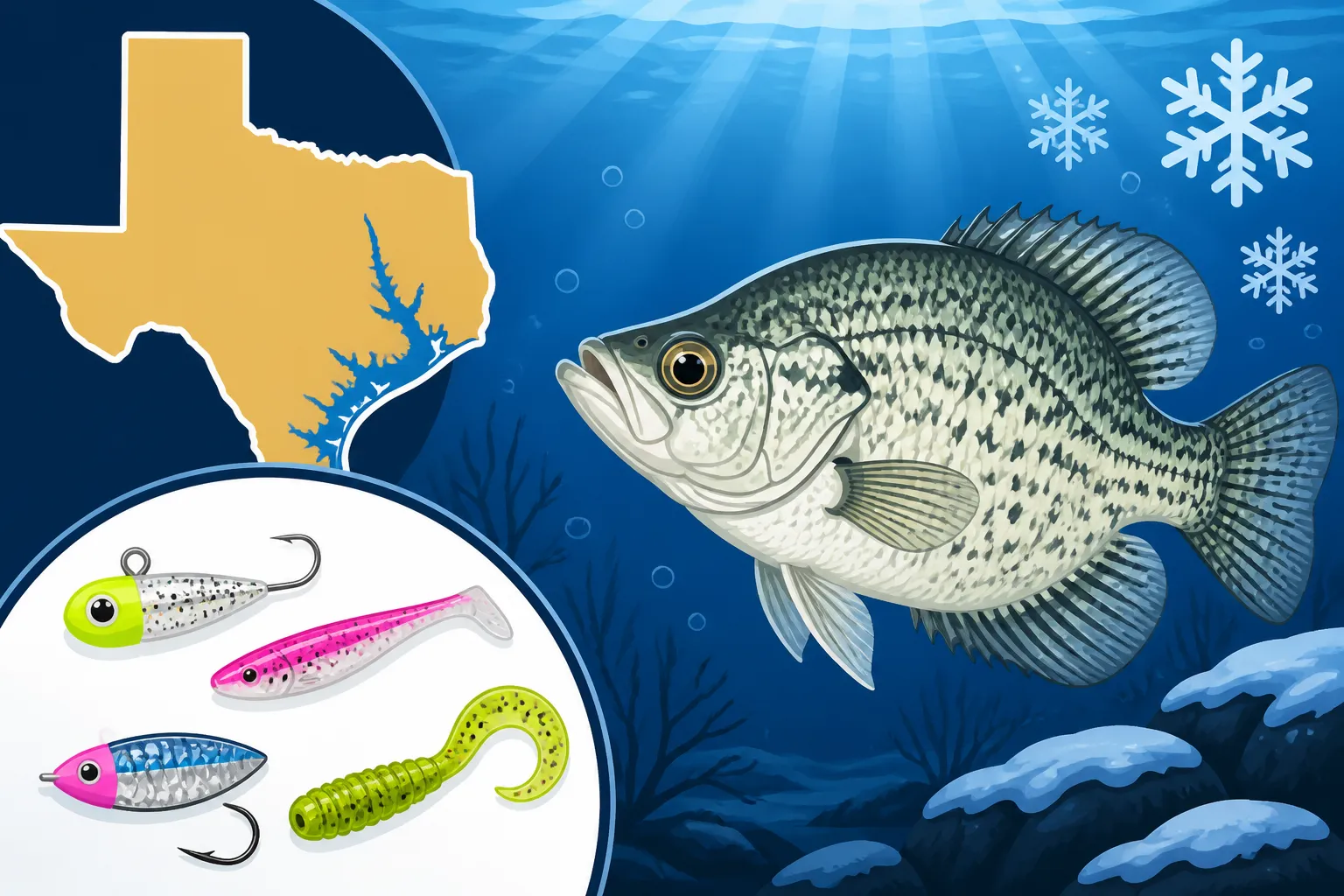
- Small Plastic Grubs and Tubes: Look for tiny 1-inch or 1.5-inch grubs or tube baits. The soft plastic provides a natural feel, and the tails offer subtle vibration. Colors are critical here; opt for natural shades like smoke, clear, or pumpkinseed, but don't shy away from some chartreuse or electric chicken if the water is stained. Brands like Bobby Garland's Baby Shad or Kalin's Triple Threat Grubs are perennial favorites. You can explore a wide variety of these jigs and soft plastics on Amazon.
- Micro Spoons: These ultralight spoons flutter enticingly on the drop, mimicking a dying baitfish. They are excellent for vertical jigging directly over crappie schools.
Weight and Presentation:
The most crucial aspect of jig fishing in cold water is using the lightest possible jig head you can get away with. We're talking 1/32 oz, 1/16 oz, or even 1/24 oz. This ensures a slow, natural fall.
- Vertical Jigging: This is the bread and butter. Position your boat directly over the crappie you've located on your fish finder. Drop your jig directly down to their depth and use a very subtle lift-and-drop motion. Think tiny twitches, not big jerks.
- Slow Trolling/Drifting: If you're covering water, slow-troll these tiny jigs behind the boat, sometimes called "pushing" or "pulling" jigs. Again, the speed should be minimal. For more artificial bait insights, check out Best Crappie Jigs for Texas Lakes.
Small Spinnerbaits (Trout Magnets and Panfish Spinners)
While not a traditional "cold water" bait for crappie, certain micro-spinnerbaits can be surprisingly effective, especially on slightly warmer winter days or if you're trying to cover a bit more water. These aren't your bass spinnerbaits; we're talking about tiny, ultralight versions.
Why they work:
- Flash and vibration: The small blade provides just enough flash and vibration to attract attention without being overly aggressive.
- Compact size: They maintain a small profile, which is key for lethargic crappie.
Examples and Rigging:
- Trout Magnets: While designed for trout, these tiny jigs with a small plastic body and often fished under a float, can be deadly for crappie. The subtle darting action is irresistible.
- Panfish Spinners: These typically combine a small jig head with a tiny spinner blade, creating a compact package of flash and subtle movement.
- Presentation: A slow, steady retrieve is usually best. Don't burn them back. Think about a barely perceptible crawl, just enough to get the blade spinning. You can also fish them with a slow lift and fall, much like a jig, allowing the blade to flutter on the drop.
Crappie Fishing Bait Comparison Chart
Here's a quick look at the pros and cons of these top cold-water crappie baits:
| Bait Type | Pros | Cons | Ideal Conditions |
|---|---|---|---|
| Live Minnows | Natural scent & action, highly effective | Can be expensive, require careful handling, storage | All cold water, especially finicky fish, vertical fishing |
| Marabou Jigs | Subtle action, natural look, versatile | Can foul easily, not as durable | Clear to stained water, vertical jigging, slow retrieve |
| Plastic Grubs/Tubes | Durable, variety of colors, good vibration | Less natural scent, requires angler to impart action | Stained to clear water, vertical jigging, slow retrieve |
| Micro Spoons | Excellent flash on drop, good for deep schools | Requires precise depth control, less effective for casting | Deep water, locating tightly schooled fish |
| Small Spinnerbaits | Good for covering water, subtle flash | Less effective for extremely lethargic fish | Slightly warmer winter days, searching for active fish |
Presentation is Key: Slow and Steady Wins the Race
Having the right bait is only half the battle. How you present that bait in cold water is arguably even more critical. Crappie aren't chasing; they're ambushing. Your goal is to put the bait right in front of them and keep it there long enough for them to make a decision.
Mastering the Slow Retrieve
Forget fast jerks and rapid reeling. In cold water, your retrieve should be glacial. If you think it's slow, slow it down even more.
- Vertical Jigging: This means barely moving your rod tip. A small lift of just a few inches, followed by a controlled fall, is often all it takes. The bite will often come on the fall, so pay close attention to your line for any twitch or hesitation. Using a light jig head (1/32 oz to 1/16 oz) enhances this slow, natural fall.
- Casting and Retrieving: If you're casting, use a very slow, steady retrieve. Experiment with pauses. Let your jig sink, reel it a few feet, pause, let it sink again. The "tick-tick-pause" method can be deadly. The colder the water, the longer the pause.
- Spider Rigging/Trolling: When slow trolling with multiple rods, your boat speed should be just fast enough to impart a very subtle action to your baits. Often, this is barely 0.5 to 1 mph.
Many anglers find success by learning to read their fish finder not just for fish, but for how they react to the bait. If fish are present but not biting, adjust your depth, retrieve speed, or even bait color slightly.
Depth Control and Precision
Crappie in cold water often suspend at very specific depths. Finding that sweet spot is crucial. Your fish finder is your best friend here.
- Finding the Crappie: Use your electronics to locate schools of crappie, brush piles, or submerged timber. Pay attention to the depth at which the fish are suspended.
- Targeting the Depth: Once you find them, present your bait precisely at that depth. This is where a slip bobber for minnows shines, or simply counting down your jig after each cast. If you're using a spinning reel, consider marking your line at various depths to help you return to the strike zone quickly.
- Experimentation: Start by fishing above the crappie, then directly in them, then below them. Sometimes they'll look up for a meal, other times they prefer it right at eye level. Don't be afraid to adjust your depth by a foot or two at a time. The article How to Find Crappie in Cold Water could offer further tips on locating these fish.
Essential Gear and Tips for Winter Crappie Anglers
Beyond baits and presentation, a few other elements can significantly improve your cold-water crappie game. Having the right tools and knowing a few tricks can make all the difference between a frustrating day and a successful outing.
Rods, Reels, and Line for Cold Water
Your tackle setup can have a big impact on your ability to detect those subtle cold-water bites.
- Light Rods: Opt for ultralight to light action spinning rods, typically 5 to 7 feet long. These rods have sensitive tips that will telegraph even the slightest tap. A fast action tip is ideal for detecting bites and setting small hooks.
- Small Spinning Reels: Match your rod with a small, lightweight spinning reel (500 or 1000 size). A smooth drag system is always important, but particularly when using light line with finicky fish.
- Light Line: This is paramount. Most experienced crappie anglers use 4 to 6 lb test monofilament or fluorocarbon. Monofilament has some stretch, which can be forgiving, while fluorocarbon offers excellent sensitivity and is nearly invisible underwater. Some anglers also use a very thin braided line with a fluorocarbon leader for maximum sensitivity, but braid can sometimes be more challenging to manage in freezing temperatures if ice forms on the guides. Light line also allows your tiny jigs to fall more naturally.
Reading the Water and Conditions
Crappie fishing in winter isn't just about the baits; it's about being an observant angler.
- Water Clarity: In colder water, clarity often increases. This means crappie can be more wary, making natural colors and lighter line even more important. If the water is stained or murky, brighter colors like chartreuse or orange can sometimes stand out better.
- Wind and Current: A slight breeze or current can be your friend, as it imparts natural action to your bait. Too much wind, however, makes boat control difficult and line management a nightmare. Try to position your boat so the wind or current drifts you slowly over the structure you're targeting.
- Barometric Pressure: Often, crappie will feed more actively when the barometric pressure is stable or falling. After a strong cold front moves through and the pressure is high and stable, fishing can be tougher.
- Time of Day: While crappie can bite all day in winter, often the warmest part of the day (late morning to mid-afternoon) can be most productive, especially if the sun has had a chance to warm the shallows or radiate heat into brush piles. However, if you're targeting specific deep structures, consistency might be more important than time of day. You might find useful information in Best time of day to catch crappie.
The Importance of a Fish Finder and GPS
I cannot stress this enough: a good fish finder is an absolute game-changer for cold-water crappie fishing.
- Locating Fish: Use your down imaging and side imaging to pinpoint schools of crappie and the brush piles they are hiding in. Once you find them, mark them on your GPS.
- Depth Management: Your sonar will tell you exactly what depth the fish are holding at, allowing you to present your bait accurately.
- Spot-Lock Trolling Motors: If you have a trolling motor with GPS spot-lock, it's an invaluable tool for holding your position precisely over a brush pile or along a channel edge. This allows you to focus on fishing rather than constantly adjusting your boat. Brands like Minn Kota and Garmin offer excellent options with these features, and many accessories can be found on Amazon.
Remember, winter crappie fishing requires patience and persistence. The bites can be extremely subtle – sometimes feeling like just a slight weight or a spongy feeling on the line. Pay close attention, stay warm, and enjoy the challenge of chasing those cold-water slabs!
Disclaimer
Fishing regulations and conditions can change rapidly. Always consult the latest Texas Parks and Wildlife Department (TPWD) regulations before heading out. Fishing is an outdoor activity with inherent risks; always prioritize safety.