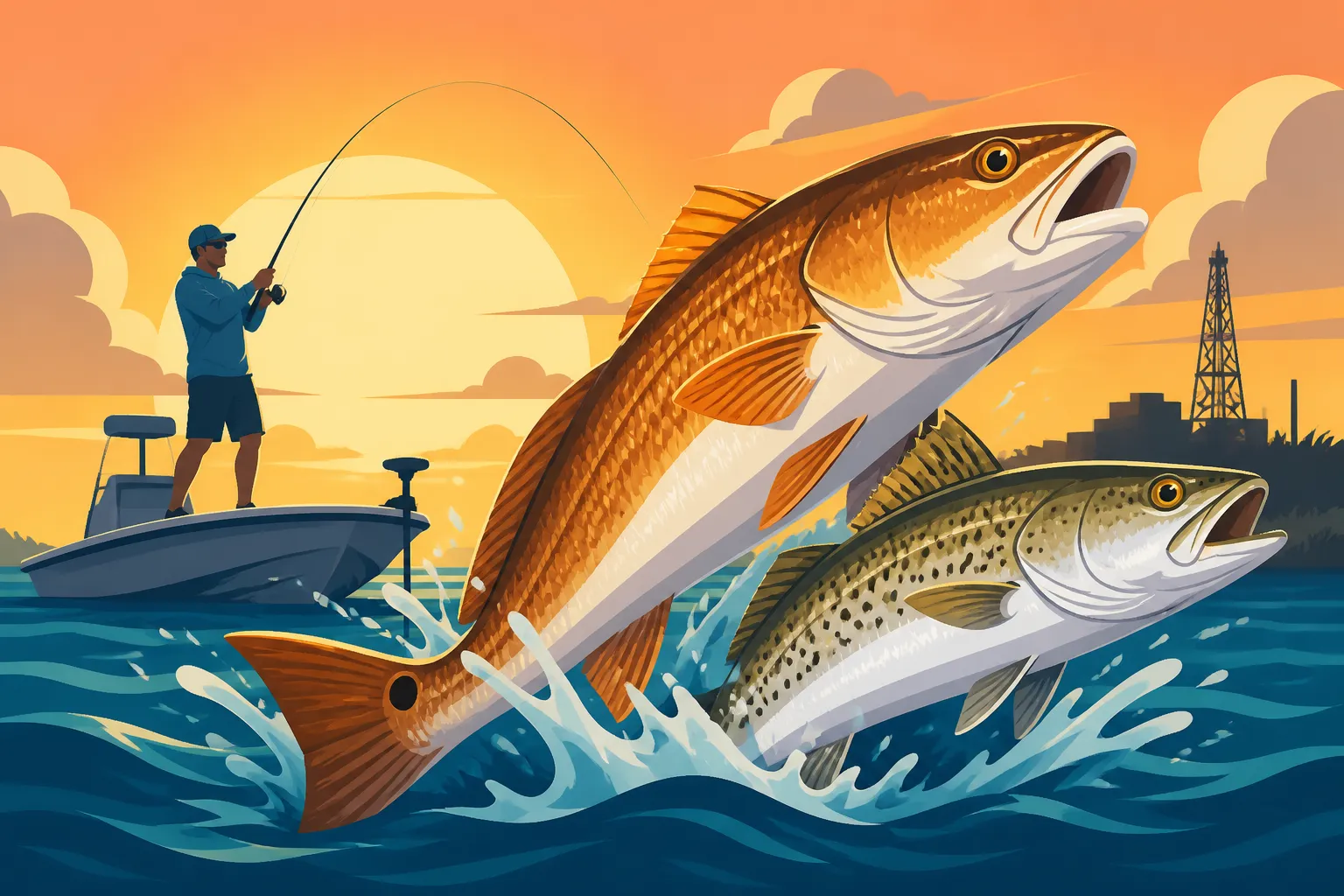
Sabine Lake redfish and trout fishing
Sabine Lake, straddling the Texas-Louisiana border, is a true gem for anglers, but trying to figure out the best spots and tactics for its prized redfish and speckled trout can feel like navigating a maze. Its unique blend of freshwater influx and Gulf tides creates ever-changing conditions that can be daunting for even experienced fishers. This guide is here to untangle that complexity, offering comprehensive insights into how to successfully target both redfish and trout in the rich waters of Sabine Lake.
Understanding Sabine Lake's Unique Ecosystem for Redfish and Trout
Sabine Lake isn't your average bay system; it's a dynamic, brackish estuary that serves as a vital nursery and feeding ground for a myriad of species, most notably redfish and speckled trout. Its connection to both the mighty Sabine River and the vast Gulf of Mexico creates a fascinating environment where freshwater and saltwater species coexist, and the game fish we love thrive.
The Dynamics of Sabine Lake's Brackish Waters
Imagine a colossal mixing bowl where the freshwater flow from the Sabine River, along with other smaller bayous and drains, meets the salty embrace of the Gulf of Mexico through Sabine Pass. This constant ebb and flow creates a vast expanse of brackish water, meaning its salinity can fluctuate significantly depending on rainfall, river discharge, and tidal cycles. This is absolutely crucial for understanding where redfish and trout will be holding. High freshwater runoff might push fish closer to the pass or into deeper, saltier pockets, while drier periods could see them venture further up into the lake's northern reaches.
These changing salinity levels dictate the distribution of baitfish, which in turn dictates where our target species will congregate. Redfish, for instance, are incredibly adaptable and can tolerate a wide range of salinities, often chasing bait far up into marsh systems. Speckled trout, on the other hand, generally prefer slightly higher salinity, so you'll often find them closer to the passes and main bay in the colder months. This constant shift is why flexibility and paying attention to recent weather patterns and tide charts are paramount when fishing Sabine Lake.
Key Forage and Habitat for Game Fish
What makes Sabine Lake such a productive fishery? It boils down to an abundance of food and diverse habitat. The lake is teeming with the primary forage species that redfish and speckled trout absolutely gorge themselves on:
- Shrimp: Both brown and white shrimp are a staple, especially during their migratory periods.
- Mullet: Various sizes of mullet are constantly present, offering a hearty meal.
- Menhaden (Pogies): These oily baitfish draw in predatory species in large schools.
- Crabs: Small crabs are an easy target for redfish rooting around the bottom.
These baitfish and crustaceans seek refuge and food within the lake's rich habitats. Expansive marsh grass beds, particularly along the eastern and western shorelines, provide excellent cover for juvenile fish and shrimp, creating prime ambush points for redfish and trout. Oyster reefs, often submerged and sometimes exposed at low tide, are magnets for bait and larger predators alike. These reefs not only offer structure but also act as filters, improving water quality and attracting more life. Additionally, the numerous bayous, cuts, and the main shipping channel (the Sabine Neches Waterway) offer deeper water, current breaks, and migration routes that fish utilize throughout the year. Knowing these habitats and what forage they hold at different times is key to unlocking Sabine Lake's fishing potential.
Prime Redfish Fishing Strategies and Hotspots in Sabine Lake
Redfish in Sabine Lake are powerful, aggressive, and an absolute blast to catch. Whether you prefer sight casting in skinny water or battling bruisers in deeper channels, Sabine has something for every redfish enthusiast. Understanding their habits and preferred hangouts is the first step to a successful trip. You'll also want to be mindful of the current Texas Redfish Size and Bag Limits before you head out.
Targeting Redfish in the Flats and Shorelines
When the water is clear enough and the tides are right, nothing beats the thrill of targeting redfish on the shallow flats and along the grassy shorelines of Sabine Lake. This is where you'll often find them "tailing" as they root through the mud and grass for crabs and shrimp, or cruising in search of baitfish.
For this type of fishing, wade fishing is incredibly effective, allowing for stealthy approaches. Look for areas with a mix of mud, sand, and submerged grass. Excellent spots include the shallow fringes of Keith Lake, the shorelines around Pleasure Island, and various points and coves along the Texas side of the Intracoastal Waterway. When the sun is high, redfish often move into the shaded pockets or deeper grass lines.
Your lure selection for shallow water reds is crucial. Spoons, particularly gold or copper colored ones, are classic choices that mimic baitfish and crabs. They cast far and have a great flash and wobble. Soft plastics, rigged on a weedless hook or a light jighead, are also incredibly effective. Think about mimicking local bait: a Norton Sand Eel in a natural shrimp or mullet pattern, or a Berkley Gulp! Shrimp under a small rattling cork are solid bets. Topwater lures, like a Heddon Super Spook or a MirrOlure She Dog, can provide explosive strikes in low light conditions, especially during the early morning or late evening. The key is to present your lure subtly and accurately, anticipating where the fish might be moving. Don't be afraid to experiment with retrieve speeds; sometimes a slow, deliberate crawl is what it takes, while other times a faster twitch-and-pause works wonders. Learning How to Wade Fish for Redfish in Texas will greatly improve your success.
Finding Redfish in Deeper Channels and Passes
While sight casting on the flats is exhilarating, redfish often congregate in deeper channels, especially during colder months or when chasing large schools of bait. These areas provide consistent salinity and current, which redfish love. The main Sabine Neches Waterway, the deep cuts leading into the Sabine Pass, and the numerous bayous emptying into the lake are prime deeper water targets.
When fishing these deeper areas, you'll want to adjust your approach. Heavier jigheads are necessary to get your soft plastics down to the strike zone. A 1/4 to 3/8 ounce jighead with a darker-colored soft plastic (like a plum or new penny color) can be deadly. Live bait is also incredibly effective in these situations. Live shrimp, mud minnows, or small finger mullet free-lined or fished under a popping cork can tempt even the most finicky redfish. Focus your efforts around submerged structure like oyster reefs, rock piles, or current breaks caused by points and ledges. The Sabine Causeway, for example, offers various depths and structures that attract redfish. Another tactic is anchoring up-current from a promising spot and letting your bait drift naturally into the holding areas.
| Bait/Lure Type | Ideal Conditions | Key Species | Notes |
|---|---|---|---|
| Spoons (Gold/Copper) | Shallow flats, clear water, sunny days | Redfish | Mimics baitfish, casts far, great flash. |
| Soft Plastics (Shrimp/Minnow Im.) | All conditions, versatile, especially with jigs | Redfish, Trout | Norton Sand Eel, Berkley Gulp! Shrimp, various paddle tails. |
| Topwaters (Walk-the-dog) | Low light, calm water, aggressive fish | Redfish, Trout | Heddon Super Spook, MirrOlure She Dog for explosive surface strikes. |
| Popping Corks + Live Shrimp/Soft Plastic | Moderate depths, current, searching | Redfish, Trout | Attracts attention, keeps bait suspended. |
| Live Mullet/Mud Minnows | Deeper channels, target trophy fish, slow bite | Redfish | Irresistible natural presentation. |
Successful Speckled Trout Fishing Techniques and Locations in Sabine Lake
Speckled trout, with their iridescent spots and hard-hitting strikes, are another jewel of Sabine Lake. While they often share habitat with redfish, they have distinct preferences that savvy anglers learn to exploit. You'll definitely want to know about the current Texas Speckled Trout Bag Limits before you hit the water.
Shallow Water Trout Tactics and Preferred Lures
Much like redfish, speckled trout can be found in the shallows, especially during the warmer months and periods of good water clarity. They often cruise the edges of marsh grass and over oyster reefs, ambushing unsuspecting baitfish. Early morning and late evening are prime times for shallow water trout, particularly when there's a slight chop on the water.
Topwater lures are incredibly effective for targeting aggressive trout in low light. The "walk-the-dog" action of lures like the Heddon Super Spook or various MirrOlure models can trigger violent strikes that are truly unforgettable. Cast these lures over shallow grass beds or near oyster reefs and work them with a steady cadence. When the sun gets higher, or if the fish aren't hitting topwater, switching to soft plastics under a popping cork is a highly productive method. The popping cork mimics the sound of feeding fish, drawing trout in, while the suspended soft plastic (often a shrimp imitation or a paddle tail) offers an easy meal. Focus your efforts along the shorelines of the lake, paying close attention to any current breaks or areas where baitfish are schooling. Even small depressions or sandy pockets within the grass can hold good numbers of trout.
For those looking to upgrade their gear for these situations, considering some of the Best Saltwater Rods for Texas Redfish might also reveal some excellent choices suitable for speckled trout. Remember, the right tackle can make a significant difference in casting accuracy and sensitivity, both crucial for shallow water trout.
Targeting Trout in Cooler Months and Deeper Waters
As water temperatures drop in the fall and winter, speckled trout tend to migrate towards deeper, more stable waters. This means focusing your efforts closer to Sabine Pass, in the main shipping channel, and in deeper bayous and cuts that offer a sanctuary from extreme temperature fluctuations. This is a different game than chasing them in the shallows, but it can be incredibly rewarding.
During these cooler months, trout often school up tightly, making them a great target once you find them. Slow-sinking or suspending baits become the go-to. MirrOlure's suspending plugs, such as the MirrOdine series, are legendary for winter trout. Work them slowly with long pauses, allowing the bait to suspend tantalizingly in the strike zone. Jigging with soft plastics on heavier jigheads (1/4 to 1/2 ounce) is also very effective, especially when fishing near the bottom of deeper channels. Live shrimp, if available, is almost always a guaranteed producer, fished on a Carolina rig or under a slip cork.
Look for areas with good current flow and discernible depth changes. The edges of the main channel, the deep water around the Sabine Causeway, and the jetties at Sabine Pass are prime locations. It can also be incredibly beneficial to consult with local guides. Many experienced captains who book through platforms like FishingBooker specialize in winter trout fishing and can put you directly on the fish. They have an intimate knowledge of how trout behave when the mercury drops, and their insights can save you hours of searching. Understanding How to Catch Speckled Trout in Winter will be a huge advantage.
Essential Gear and Local Wisdom for Sabine Lake Anglers
Having the right equipment and understanding the local nuances of Sabine Lake can truly elevate your fishing experience from good to legendary. This isn't just about having the most expensive gear, but rather the appropriate gear and a healthy respect for the environment and local knowledge. You'll want to ensure you meet all the Texas Fishing License Requirements Explained before you even think about hitting the water, of course.
Recommended Rods, Reels, and Line for Sabine Lake
For Sabine Lake's diverse fishing scenarios, a versatile rod and reel setup is key. You'll typically want two main setups:
- For Redfish (especially larger ones and in deeper water): A medium-heavy power spinning or baitcasting rod, around 7 to 7.5 feet in length, is ideal. This provides the backbone needed to cast heavier lures, battle strong-pulling redfish, and extract them from cover. Pair this with a 3000-4000 series spinning reel or a robust baitcasting reel capable of handling braided line.
- Line: Spool up with 20-30 lb braided line for its strength, sensitivity, and casting distance. Always add a 2-3 foot leader of 20-30 lb fluorocarbon. Fluorocarbon is nearly invisible underwater and provides abrasion resistance against oyster shells and fish teeth.
- For Speckled Trout (especially with lighter lures and topwaters): A medium-light to medium power spinning rod, 6.5 to 7 feet long, offers more finesse and sensitivity. This lighter setup allows for longer, more accurate casts with smaller lures and makes fighting a frisky trout even more exciting. A 2500-3000 series spinning reel is a good match.
- Line: 10-15 lb braided line with a 15-20 lb fluorocarbon leader is a standard and effective choice. The thinner braid enhances casting distance and sensitivity for detecting subtle trout bites.
Regardless of your target, make sure your reels are rated for saltwater use to withstand the corrosive environment. Regular rinsing with fresh water after each trip is essential for longevity. For a broader perspective on what works best, checking out some recommendations for Best Bait and Lures for Texas Fishing can give you additional ideas to fill your tackle box.
Navigating the Waters and Utilizing Local Expertise
Sabine Lake is a large body of water with many hazards, from shallow oyster reefs to submerged stumps in the marsh. Therefore, safe and effective navigation is paramount.
- Maps and GPS: Always have up-to-date navigational charts and a reliable GPS unit. Many modern fish finders integrate GPS mapping, which can be invaluable for marking hotspots, safe channels, and avoiding hazards. Pay close attention to channel markers and remember that water levels can change quickly with tides and wind.
- Tides and Weather: Tides dictate fish movement, especially in the shallows. Incoming tides often push bait and fish into the marsh, while outgoing tides can concentrate them in guts and drains. Always check the local tide charts before heading out. Furthermore, Texas weather can be unpredictable. Be prepared for sudden thunderstorms or strong winds, especially on an open body of water like Sabine Lake. A marine weather forecast is your friend!
- Boats for Access: While wade fishing is popular, a shallow-draft boat or a Texas Bay Boats for the Texas Coast are almost essential to access the best spots on Sabine Lake. Jon boats are also popular for navigating the shallower bayous.
- Local Knowledge is Gold: No amount of online research can replace actual time on the water or the insights of a local expert. If you're new to Sabine Lake, or just want to maximize your chances, consider hiring a local fishing guide for your first trip. They know the current patterns, the best baits, and the safest routes. Many top-rated Sabine Lake guides list their services on platforms like FishingBooker, making it easy to find and book a seasoned professional who can share invaluable local wisdom and put you directly on the fish. Even if you don't book a guide, talking to bait shop owners or other friendly anglers at the ramp can offer critical, up-to-the-minute information about recent catches and conditions. Don't be shy; most anglers are happy to share a tip or two!
Disclaimer
Fishing conditions and regulations in Texas can change frequently. Always consult the latest Texas Parks and Wildlife Department (TPWD) regulations before your trip to ensure compliance. This guide is for informational purposes only and does not constitute legal advice.