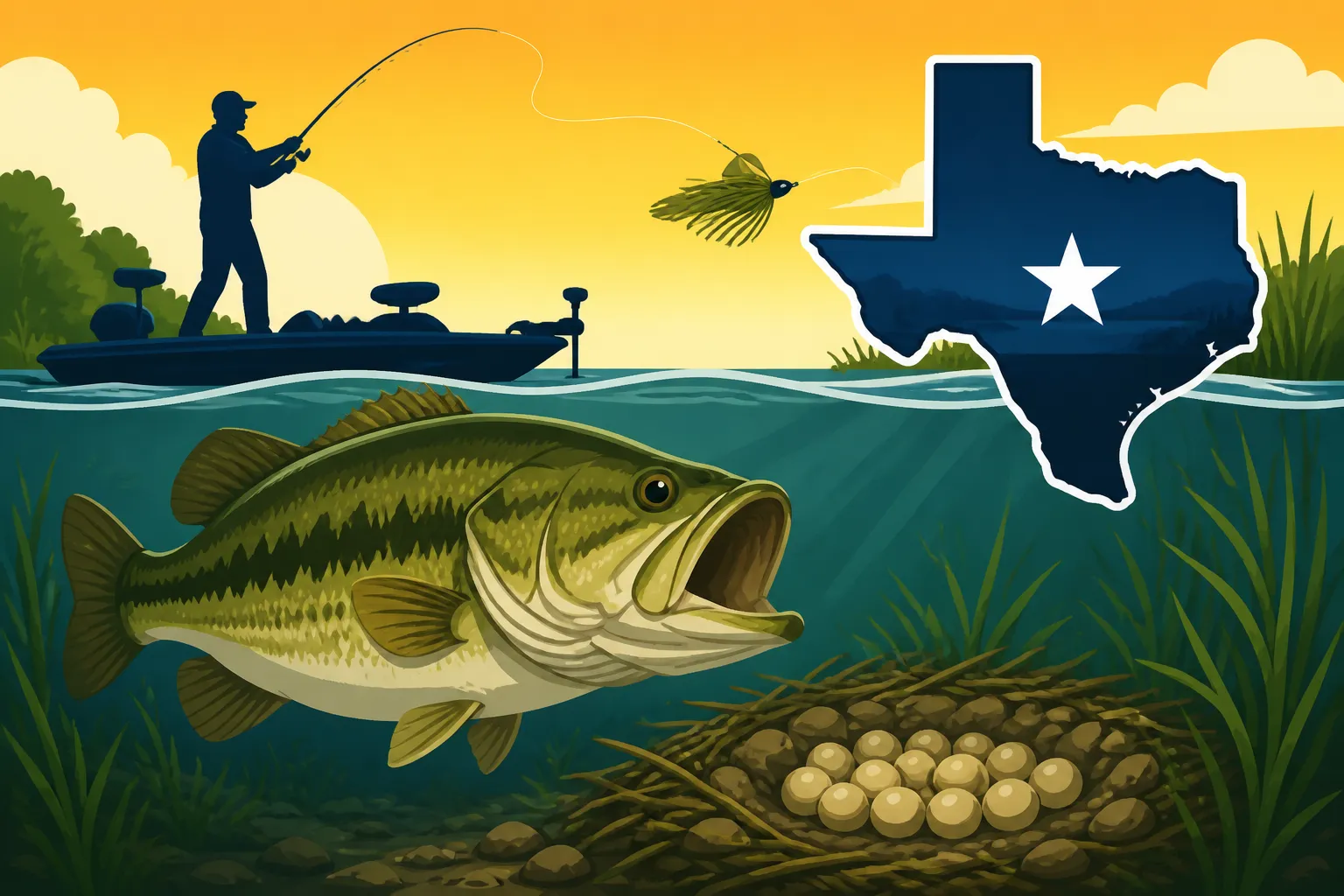
How to catch bass during the spawn
There's nothing quite like the excitement of chasing bass during their annual spawn in Texas. It's a time when those big, prespawn females are packing on the last few ounces before they head to the shallows, and the males are already guarding nests. Anglers often face the unique challenge of enticing these fish, which might be more focused on reproduction than feeding. This guide is all about giving you the insights and techniques you need to effectively catch bass when they're on their beds, navigating the nuances of this critical period in the lifecycle of a Texas bass.
Understanding the Texas Bass Spawn
The bass spawn is a truly magical time in the angling world, especially here in Texas, where our lakes and rivers burst with activity. It's when largemouth bass transition from their deep-water winter haunts to the warmer, shallower areas to reproduce. Understanding this cycle isn't just about catching fish; it's about appreciating the incredible natural rhythm of our freshwater ecosystems.
When Does the Spawn Happen in Texas?
The timing of the bass spawn in Texas isn't a hard and fast date you can circle on your calendar. Instead, it's a gradual process heavily influenced by environmental factors, primarily water temperature and lunar cycles. Generally, we start seeing those first signs of pre-spawn movement as early as February in some of our warmer southern lakes, like Falcon Lake or Amistad. The peak of the spawn typically rolls around March and April across much of the state, but it can extend into May in the Panhandle or cooler reservoirs up north. Think of it like a ripple effect across the state, with the southern waters warming up first.
Water temperature is the most crucial trigger. Largemouth bass typically begin constructing their nests when water temperatures consistently reach the low to mid-60s Fahrenheit (around 62-68°F). This is their biological alarm clock, signaling that conditions are right. Cold fronts can certainly push them back or delay the process, causing fish to retreat to slightly deeper water before moving back up when stability returns. The full moon often plays a role too, with many anglers reporting significant waves of bass moving onto beds around this lunar phase. Keep an eye on the Texas Largemouth Bass Spawning Months to get a general idea of what to expect, but always check local conditions.
The Different Stages of the Spawn Cycle
Fishing the spawn isn't just about showing up when the bass are on beds. It's a three-act play: pre-spawn, spawn, and post-spawn, and understanding each stage will greatly improve your success.
The pre-spawn is arguably one of the most exciting times to fish. Bass, especially the big females, are gorging themselves, building up energy reserves for the strenuous act of spawning. They're often found staging on points, humps, and secondary breaks leading into spawning coves, usually in 8-20 feet of water. They are aggressive and feeding heavily, making them susceptible to a wide range of reaction baits like crankbaits, spinnerbaits, and even swimbaits. This is when anglers often catch their personal bests because the fish are at their heaviest.
Next comes the spawn itself, the focus of this guide. This is when bass move into very shallow water, often 1-5 feet deep, to construct and guard their nests. The males arrive first, sweeping out circular depressions on hard bottoms – typically gravel, sand, or shell. Once the beds are ready, the females move in to lay their eggs. During this period, their primary focus shifts from feeding to reproduction and protection. While they might strike a bait, it’s usually out of aggression to defend their territory rather than hunger. This can make them challenging but incredibly rewarding to catch if you understand their protective instincts.
Finally, we have the post-spawn. After the grueling process of spawning, females are often exhausted and thin. They'll typically move to nearby deeper cover, like brush piles or submerged timber, to recover and regain strength. The males, meanwhile, continue to guard the fry for a period before moving off themselves. During this recovery phase, bass can be finicky. They might prefer smaller, subtle baits or slow presentations as they slowly start to feed again. Understanding this full cycle, as outlined in our Texas Bass Spawning Season Guide, is key to consistent success throughout the spring.
Why the Spawn is a Prime Fishing Window
Despite the challenges of coaxing a territorial bass to bite, the spawn is considered a prime fishing window by many seasoned Texas anglers, and for good reason. First and foremost, it’s when many of the largest, heaviest female bass are in shallow, accessible water. While they might be finicky, seeing a true trophy bass on a bed is an unforgettable experience, and with the right approach, you have a legitimate shot at catching her. This is often the best opportunity of the year to target those legendary ShareLunker-sized fish.
Secondly, during the spawn, bass are highly concentrated in specific areas. Unlike other times of the year when they can be scattered across vast expanses, during the spawn, they are literally "bedded up" in predictable locations. This concentration makes them easier to find, assuming you know what to look for and where to cast. It simplifies the search process, allowing anglers to focus on presentation and technique rather than endless searching. Many anglers consider this period an exciting chess match against a highly visible, yet often stubborn, opponent.
Locating Spawning Bass
Finding bass on their beds requires a keen eye, a bit of patience, and knowing the right habitat. It’s not just about randomly cruising the shoreline; it’s about identifying those subtle cues that scream "bass bed."
Identifying Prime Spawning Areas
When bass are looking to spawn, they prioritize certain conditions. They want calm, protected water, away from strong currents or heavy wave action. Think about the back of coves, pockets off main lake points, and shallow flats in protected bays. These areas warm up faster in the spring sun, providing the ideal incubator for eggs. Water clarity is also a factor; bass prefer cleaner water so they can see and protect their beds from predators.
Look for hard bottoms. Bass will not spawn on soft, silty, or muddy bottoms because their eggs need to adhere to something solid and require good water circulation. Gravel, sand, shell, or even roots of submerged vegetation are ideal substrates. Areas with some form of overhead cover or nearby vertical structure, such as docks, submerged brush piles, cypress trees, or even large rocks, are also highly favored. This cover provides a sense of security and a quick escape route, as well as shade from intense midday sun. Best Places to Fish in Texas during this season will often be lakes with these characteristics.
Visual Cues and Bed Fishing
This is where the term "bed fishing" comes from – the act of visually locating bass on their nests. To do this effectively, you absolutely need good quality polarized sunglasses. They cut the glare off the water's surface, allowing you to peer into the shallows and spot those tell-tale circular depressions on the bottom. Without them, you're essentially fishing blind. You can find an excellent selection of Best Sunglasses for Sight Fishing in Texas on platforms like Amazon.
Once you spot a bed, look for the fish. Typically, you'll see a male bass, smaller than the female, diligently fanning the nest. The female, if present, will often be larger and positioned slightly off the bed or hovering directly over it. Sometimes she's a little harder to spot, blending in with the surroundings. Pay attention to how they react to your presence. If they bolt, give them some time and space; they might return. If they hold their ground, you’ve found an active bed, and the game is on! Remember, bass are very territorial during this time, so any intruder, including your bait, will often be seen as a threat.
Essential Gear and Baits for Spawning Bass
Having the right tools for the job can make all the difference when you're targeting bass on their beds. Precision, stealth, and durability are key.
Rod, Reel, and Line Selection
When sight fishing for spawning bass, you need a setup that offers both sensitivity for detecting subtle bites and enough backbone to handle a powerful fish. A medium-heavy to heavy power spinning or baitcasting rod, typically 6'6" to 7'6" in length, is ideal. The longer rod provides better casting distance and leverage, which can be crucial for making accurate pitches to beds from a distance without spooking the fish. For spinning gear, a fast action tip allows for pinpoint accuracy and quick hooksets, while a strong butt section helps with control. You can explore a variety of options for Best Fishing Rods for Texas Anglers to find one that suits your style.
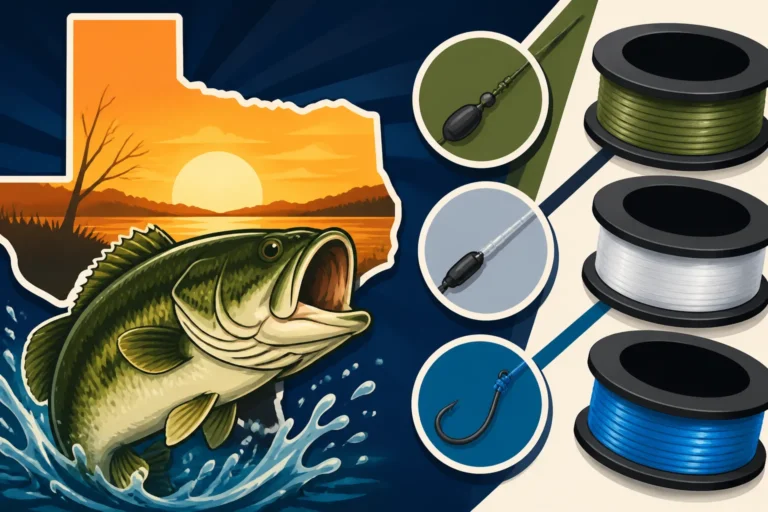
Pair your rod with a reliable reel. For baitcasting, a reel with a moderate to fast gear ratio (6.1:1 to 7.1:1) is versatile, allowing for both slow presentations and quick retrieves. For spinning, a 2500-3000 size reel offers a good balance of line capacity and power. Line choice is also paramount. Many anglers prefer fluorocarbon line, typically 12-20 lb test, because of its low visibility and abrasion resistance. Some might opt for braided line with a fluorocarbon leader for added sensitivity and strength, especially when fishing around heavy cover. The clarity of Texas waters during the spawn often makes fluorocarbon a popular choice for its near-invisibility.
Top Baits for Bed Fishing
The goal with bed fishing baits isn't necessarily to mimic natural forage, but rather to annoy or provoke the bass into striking defensively. Soft plastics are king in this scenario.
| Bait Type | Common Use Case | Key Characteristics |
|---|---|---|
| Creature Baits | Flipping and pitching to beds; imitating invaders | Lots of appendages for enticing movement; bulky profile |
| Lizards | Classic bed bait; perceived threat to eggs | Streamlined for accurate casts; subtle tail action |
| Soft Plastic Tubes | Mimics crawfish or baitfish; falls slowly with fluttering action | Hollow body allows for scent insertion; versatile presentation |
| Jigs (Skirts) | Compact profile; mimics crawfish or other bottom dwellers; weedless options | Good for heavier cover; can be hopped or dragged |
| Wacky Worms/Senkos | Slow, natural fall; subtle enticing action on the bed | Extremely versatile; can be weightless or lightly weighted |
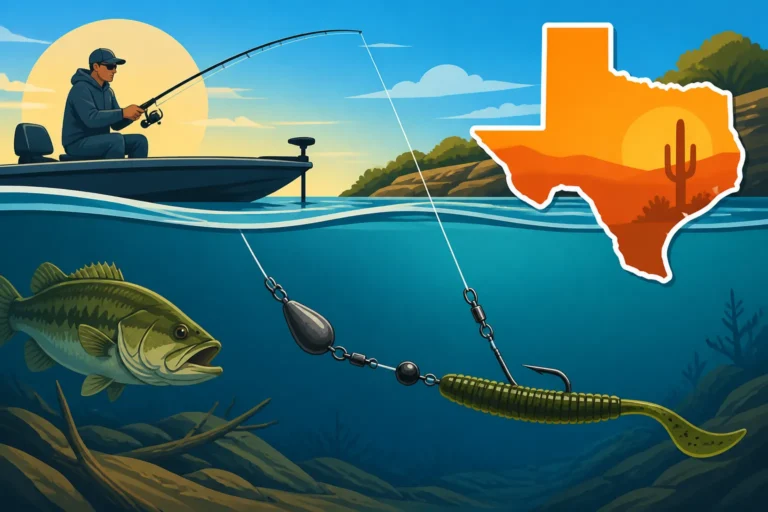
Creature baits, such as a Brush Hog or a Speed Craw, are incredibly effective. Their multiple appendages move erratically in the water, creating a commotion that often irritates bed-guarding bass. Lizards are another classic bed bait; many believe bass perceive them as egg-eaters, triggering a protective strike. Texas-rigging these baits with a light weight allows for a slow, controlled fall directly into the bed. How to fish a Texas rig for bass is a fundamental technique you'll want to master.
Jigs, especially those with compact profiles, can also be deadly. A green pumpkin or black-and-blue jig with a soft plastic trailer can perfectly imitate a crawfish trying to invade the nest. For a more subtle approach, a weightless Senko-style worm or a wacky-rigged worm provides an incredibly slow, tantalizing fall that often proves irresistible to even the most stubborn bed fish. Remember, the key is not just the bait, but how you present it, making it look like a persistent nuisance the bass must remove. Don't forget to stock up on these and other Best Soft Plastics for Texas Bass Fishing.
Other Must-Have Gear for Success
Beyond your rod and reel, a few other items are non-negotiable for successful spawn fishing. As mentioned, high-quality polarized sunglasses are paramount. They are your eyes into the underwater world. Without them, you're just casting blind.
A shallow water anchor system (like a Power-Pole or Talon) on your boat is a huge advantage. These systems allow you to quietly and quickly stop your boat precisely where you need it, often without spooking fish on beds. If you don't have one, a quiet trolling motor and a traditional anchor or even a push pole can work, but stealth is crucial. Keeping your distance and being able to hold your position are major keys to success.
Finally, consider a good pair of fishing pliers for hook removal, especially since bass might swallow the bait deeply when striking out of aggression. A measuring board is also important to ensure you adhere to Texas Largemouth Bass Length Limits, and a portable livewell or a large cooler with an aerator is essential for keeping fish healthy if you plan to weigh them in a tournament or participate in the ShareLunker program. Many of these essential items can be easily found and purchased through retailers like Amazon, ensuring you're fully equipped before hitting the water.
Techniques for Approaching and Catching Spawning Bass
Successfully catching bass during the spawn is an art form, a blend of stealth, precision, and a deep understanding of bass behavior. It's often more about coaxing a strike than triggering a feeding frenzy.
The Art of Sight Fishing and Pitching
Sight fishing is the quintessential spawn technique. Once you've spotted a bed and the bass on it, the first step is to approach with extreme stealth. Bass are highly sensitive to vibrations and shadows. Use your trolling motor minimally and quietly, or if possible, drift into position. Keep a low profile in your boat and avoid making sudden movements. The further you can cast from, the better your chances of not spooking the fish.
When you cast, aim your bait beyond the bed, allowing it to sink naturally as you retrieve it into the target zone. A direct splashdown onto the bed can often send the fish darting away. The goal is to present the bait as if it's naturally entering their space, not directly attacking it. Precision casting is critical; you want your bait to land within inches of the bed, if not directly on it, without hitting the fish itself. This requires practice and a steady hand. Many anglers utilize a short, accurate pitch rather than a long, sweeping cast for maximum control.
Presenting Your Bait Effectively
Once your bait is in the bed, the real work begins. Bass on beds are often not actively feeding, so you need to agitate them. The key is persistence and repetition. Cast your bait onto the bed, let it sit for a few seconds, then give it a slight twitch or hop. Let it sit again. The goal is to make the bait seem like a stubborn intruder that won't leave. Don't be afraid to keep the bait in the bed for an extended period, sometimes several minutes on a single cast. It’s a test of patience, for both you and the fish!
The strike itself might not be a typical aggressive bite. Often, a bedded bass will mouth the bait to move it, or simply clamp down on it and swim off the bed. You might feel a subtle tick, a slight weight increase, or simply see your line moving sideways. If you see the fish pick up the bait, set the hook immediately! These aren't always hard-hitting bites, so pay close attention to your line and the fish's reaction. Sometimes, it takes multiple casts and even bait changes to finally trigger that strike. Switching from a creature bait to a lizard, or from a jig to a Senko, can sometimes be the magic trick. This is a game of irritating the bass until they can't take it anymore.
Ethical Considerations and Catch & Release
While the spawn offers incredible opportunities for trophy bass, it also brings up important ethical considerations. When bass are on their beds, they are vulnerable. Catching a bass from its nest can disrupt its spawning activity, potentially leaving the eggs unguarded and susceptible to predators. Many anglers, including myself, advocate for responsible catch and release during the spawn, especially for the larger females. Our Texas Largemouth Bass Fishing Guide often emphasizes these principles.
If you choose to fish the spawn, handle the fish gently and return them to the water as quickly as possible. Minimize their time out of the water, and use proper handling techniques to avoid stressing them. Some anglers even advocate leaving certain fish alone if they are particularly hard to catch, feeling that it's more important to let them complete their reproductive cycle. It's a personal choice, but being mindful of the fish's role in the ecosystem helps ensure healthy bass populations for future generations of Texas anglers. After all, we all want to enjoy fantastic fishing during Best Time of Year to Fish in Texas for years to come.
Disclaimer
This article is for general informational purposes only and does not constitute professional advice. Laws, prices and regulations vary by location and change over time. Consult a qualified professional for guidance on your specific situation.