Where do speckled trout go in winter
If you've ever found yourself bundled up, staring at a glassy Texas bay in the dead of winter, wondering where all the speckled trout have gone, you're certainly not alone. It's a common frustration for many anglers when the mercury drops and their favorite fall spots suddenly seem empty. This comprehensive guide will pull back the curtain on the winter habits of speckled trout, revealing their cold-weather hideouts and offering practical strategies to help you locate and catch them when the temperatures plunge.
Understanding Speckled Trout Behavior in Cold Water
Let's be real, speckled trout are just like us in many ways when the cold hits: they want to stay warm, find food without expending too much energy, and conserve their strength. Unlike some other species that might simply shut down entirely, specks definitely adjust their behavior dramatically. This isn't about them disappearing; it's about them moving to more comfortable and productive zones.
The Impact of Water Temperature on Trout Metabolism
Water temperature is the absolute biggest factor governing trout behavior in winter. As the water cools, a speck's metabolism slows down considerably. Think of it like a car in winter – it takes longer to warm up, it's not as efficient, and it needs more careful handling. For trout, this means they're less active, their digestion is slower, and they don't need to eat as often or chase their food as aggressively. They become lethargic, preferring to ambush prey rather than expend precious energy on a long pursuit. This metabolic shift is why those fast, erratic retrieves that work so well in summer just don't cut it when it's chilly.
Why Trout Seek Warmer, Stable Water
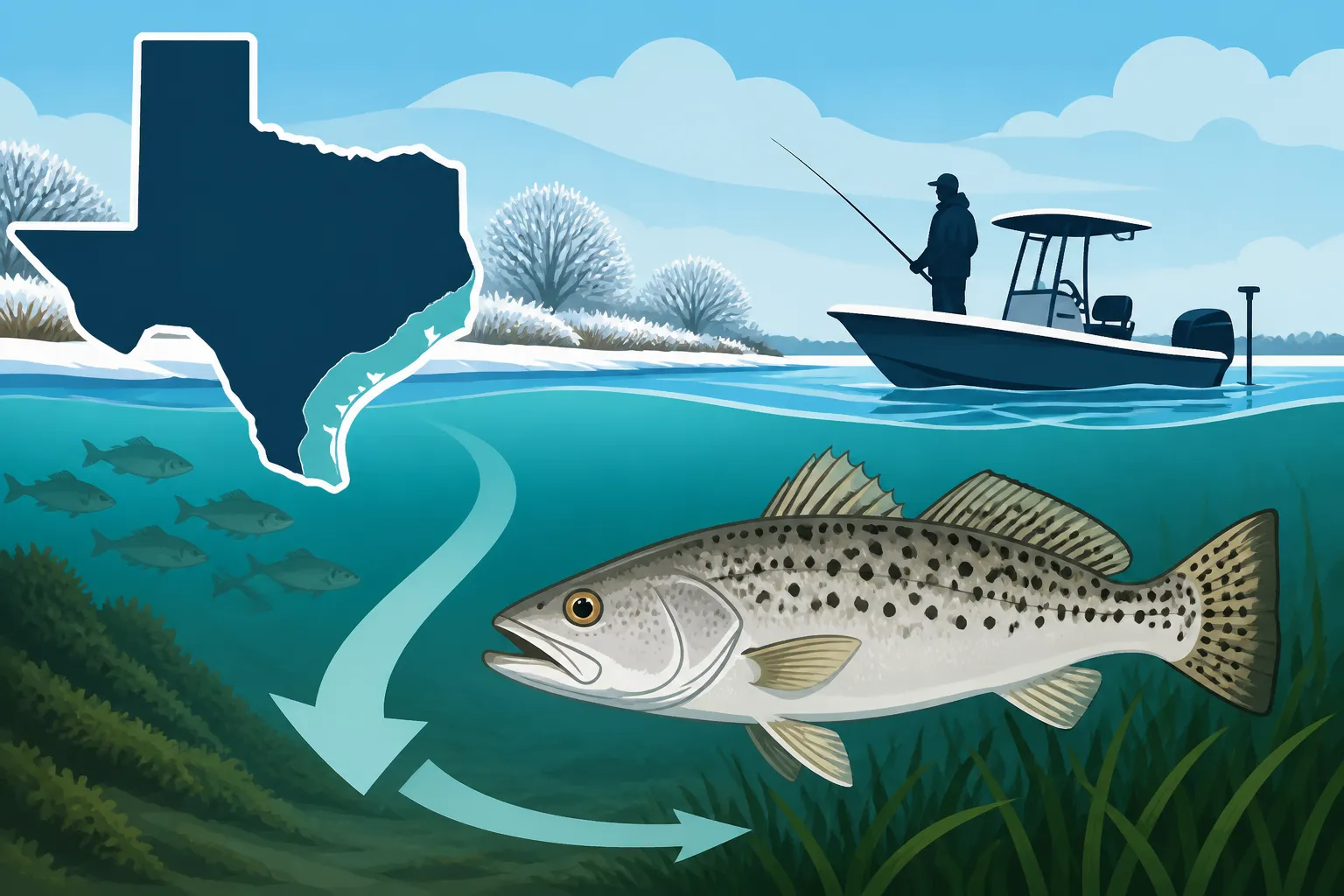
Just a few degrees can make a world of difference to a cold-blooded fish. When air temperatures drop, especially during a brutal Texas blue norther, the shallow flats can cool down incredibly fast. Speckled trout, being fairly sensitive to these changes, will actively seek out areas where the water temperature is more stable and, ideally, a few degrees warmer. This isn't about finding a hot tub; it's about finding relative comfort. They're looking for thermal refuge, places where the water either cools more slowly or warms up faster, even if only by a slight margin. These small temperature differences can concentrate fish in surprisingly tight areas.
Where Speckled Trout Relocate During Winter Months
So, if they're not on the shallow flats flashing their iridescent sides, where do these elusive beauties go? The answer often lies in understanding the dynamics of a winter bay system and knowing where to look for those subtle advantages. It's less about wide-open spaces and more about specific, often overlooked, features.
Deep Pockets and Channels
One of the primary havens for speckled trout in winter are the deeper pockets, guts, and channels within the bay. These areas offer more stable water temperatures because deep water doesn't cool down or warm up as quickly as shallow water. Think of it like a thermal blanket. Even a drop-off of a few feet can be enough to create a comfortable zone for a school of trout. They'll stack up in these depressions, waiting for baitfish to drift by or for a warming trend to bring them shallower. Finding these deeper areas is crucial. Anglers often use their electronics or detailed maps to locate these critical contours.
Often, you'll find these deep pockets near entrances to smaller bayous, around oyster reefs that drop off sharply, or along the edges of the main navigation channels that cut through the bay. Texas Saltwater Fishing Regulations apply in these areas just as anywhere else, so always be mindful of limits.
Muddy Bottoms and Dark Substrates
Another key factor in winter is the bottom composition. Dark, muddy bottoms absorb and retain heat from the sun much better than sandy or shell bottoms. On a sunny winter day, even if the air is chilly, that dark bottom can radiate enough warmth to raise the water temperature by a crucial few degrees. Speckled trout will absolutely move into these shallower, muddy areas during the warmest part of the day to soak up that solar warmth and feed. This is especially true after a string of sunny, calm days.
These muddy flats are usually found in the back lakes, sheltered coves, and protected shorelines that aren't exposed to strong winds or currents. They might be mere inches deeper than surrounding areas, but the dark mud makes all the difference. Knowing this can help you target your Texas Redfish Size and Bag Limits and your Texas Speckled Trout Bag Limits.
Protected Bayous and Canals
Sheltered bayous, canals, and drains that flow into the main bay system also serve as vital winter sanctuaries. These areas are often narrower, shallower, and have darker bottoms, allowing them to warm up faster on a sunny day. They also offer protection from strong winds, which can rapidly chill exposed open water. Trout will push into these protected zones, sometimes quite far up the bayou, especially during prolonged cold snaps. The lack of current in many of these areas also conserves the trout's energy, as they don't have to fight against the flow.
You might find trout congregating around oyster shell middens, submerged grass beds, or even man-made structures like docks and bulkheads within these protected waterways. These structures provide cover and ambush points for less active fish. Remember, even in these cozy spots, Texas Fishing License Requirements Explained still apply!
Oyster Reefs and Shell Pads
While oyster reefs are prime structure year-round, their role changes a bit in winter. Rather than holding fish all over, trout will often position themselves on the leeward (downwind) side of the reef, or along the deeper edges where the reef drops off into a channel or deeper flat. The structure itself provides ambush points, and the shells can retain a bit of warmth. Crucially, oyster reefs are also home to a variety of small crustaceans and baitfish that can become easy prey for sluggish trout.
| Winter Speckled Trout Habitat Type | Key Characteristics | Why Trout Prefer It | Best Time to Fish |
|---|---|---|---|
| Deep Channels & Pockets | Stable temps, deeper water | Thermal refuge, less current | Early morning, late afternoon, post-front |
| Muddy Bottomed Flats | Absorb solar heat, shallower | Warm up faster in sun | Midday, after several sunny days |
| Protected Bayous & Canals | Sheltered from wind, dark bottoms | Warmth, calm water, ambush points | Midday, stable conditions |
| Oyster Reef Edges | Structure, food source, subtle depth changes | Ambush points, bait concentration | Varies, often where reef meets deeper water |
Adapting Your Fishing Strategy for Winter Trout
Knowing where the speckled trout are is only half the battle; the other half is understanding how to catch them when they're less active. Winter trout fishing requires a significant shift in technique, patience, and lure selection.
Slow Down Your Presentation
This is perhaps the most critical adjustment for winter trout. Forget those fast, aggressive retrieves you use in warmer months. With their metabolism slowed, trout aren't going to chase a rapidly moving bait. Think slow, methodical, and subtle. A slow retrieve with long pauses is often the ticket. Allow your lure to sit on the bottom for several seconds before giving it a slight twitch or a slow drag. Many strikes will happen on the pause, as a trout decides to engulf an easy meal.
This applies whether you're using soft plastics, MirrOlures, or even live bait. Work the edges of channels, the drop-offs, and around any visible structure with extreme patience. Remember, you're trying to appeal to a sluggish predator looking for an effortless meal, not one that's actively hunting. Check out How to Catch Speckled Trout in Winter for more specific techniques.
Focus on Specific Lure Types and Colors
When it comes to lures, smaller and more subtle presentations tend to shine in winter. Soft plastics rigged on lighter jigheads (1/8 to 1/4 ounce) are fantastic because they sink slowly and allow for long hang times in the strike zone. Colors can vary, but generally, natural baitfish colors (shrimp, mullet, shad) work well in clearer water, while darker or brighter colors (chartreuse, plum, dark green) can be effective in stained or muddy water, especially over dark bottoms. You can find a huge selection of these on Amazon, often bundled for convenience.
Hard plastic lures like suspending twitchbaits or slow-sinking plugs can also be deadly. These baits allow you to twitch, pause, and let the lure hover in place, perfectly mimicking a stunned or dying baitfish. Best Lures for Speckled Trout in Winter goes into more detail on specific lure choices. Don't forget live shrimp or small mud minnows if you prefer bait; they often require even slower presentations.
Timing Your Trips Wisely
In winter, the best time to fish often isn't first light. Instead, focus on the warmest part of the day, typically from late morning through mid-afternoon. This is when the sun has had a chance to warm up the shallow mud flats and the water temperatures are at their highest for the day. A few degrees can wake up the trout enough to become more active feeders. If you've had several sunny, calm days in a row, the fishing can be even better, as the water has had more time to retain warmth.
Look for a rising tide during these warmer periods, as it can bring baitfish closer to those deep channels and muddy pockets where trout are holding. Pay attention to weather patterns, too. A day or two after a strong cold front passes, once the winds die down and the sun comes out, can be prime time for winter trout. The water may still be cold, but stable conditions can spur a feeding window.
Essential Gear for Cold Weather Trout Fishing
Winter fishing in Texas can be incredibly rewarding, but it definitely demands the right gear to stay comfortable and effective. Being cold and miserable is a surefire way to cut your trip short.
Layered Clothing and Waterproof Outerwear
Staying warm starts with proper layering. Begin with a moisture-wicking base layer against your skin to pull sweat away. Add a fleece or insulated mid-layer for warmth, and top it off with a windproof and waterproof outer shell. This combination allows you to adjust to changing temperatures throughout the day and protects you from the biting wind that often accompanies cold fronts. Good quality rain gear is essential, even if rain isn't in the forecast, as it provides an excellent wind barrier. Brands like Simms or Grundéns are popular among serious anglers, but you can find effective and affordable options for layering on Amazon.
Don't forget warm socks, waterproof boots, a beanie or warm hat (you lose a lot of heat through your head!), and good gloves. Fingerless gloves can be a lifesaver for maintaining dexterity while tying knots or casting.
Electronics and Navigation Tools
Having reliable electronics, particularly a good fish finder and GPS, is a huge advantage in winter. The fish finder will help you identify those subtle depth changes, channels, and deeper pockets where trout are likely to be holding. You can often see schools of baitfish or even individual trout holding tight to the bottom in these areas. Your GPS will be invaluable for marking these productive spots and navigating safely, especially in foggy conditions that can be common in winter.
Many modern units combine detailed mapping with sonar capabilities, allowing you to scan the bottom contours and see exactly where those crucial drop-offs are. Some premium units even offer side-imaging, which can help you locate fish holding off to the sides of your boat. Best Fishing Electronics for Texas Anglers offers a deeper dive into choosing the right setup.
The Right Rod, Reel, and Line Setup
For winter speckled trout, a medium-light to medium power spinning rod, around 7 feet in length, offers the versatility needed for casting lighter lures and detecting subtle bites. Pair it with a 2500 or 3000 series spinning reel spooled with 10-15 lb braided line. The no-stretch nature of braid is excellent for feeling those light winter strikes. Always add a fluorocarbon leader of 15-20 lb test, as it's nearly invisible underwater and helps protect your main line from abrasion.
A sensitive rod is paramount. When trout are sluggish, their bites can be incredibly light – sometimes just a slight weight or a tap. A good quality rod will transmit these subtle signals, allowing you to set the hook before they drop the bait. You'll find a wide array of options for sensitive rods and smooth reels on Amazon, catering to different budgets.
Winter speckled trout fishing definitely presents a different challenge than the red-hot action of spring or fall. But by understanding their cold-weather movements, slowing down your approach, and dressing for success, you can absolutely find these fish and enjoy some fantastic, solitary days on the Texas bays. It's about patience, observation, and adapting to the conditions, and the reward of a beautiful winter speck is more than worth the effort.
Disclaimer
This article is for general informational purposes only and does not constitute professional advice. Laws, prices and regulations vary by location and change over time. Consult a qualified professional for guidance on your specific situation.