What is a paddlefish
You've just heard a whisper, or maybe even seen a picture, of something truly prehistoric lurking in Texas waters: the paddlefish. It's not your typical bass or catfish, and that's exactly why many anglers are scratching their heads, wondering what in the world this creature is, and more importantly, what the rules are if you ever encounter one. There's a lot of mystery and misinformation out there, and the last thing any responsible angler wants is to accidentally break a regulation. This guide is here to clear the murky waters, helping you understand the Texas paddlefish, its unique biology, and exactly what you need to know about fishing for it in our great state.
The Elusive Texas Paddlefish: An Ancient Marvel
Imagine a fish that swam alongside dinosaurs, virtually unchanged for millions of years. That's essentially what a paddlefish is. These magnificent, ancient creatures are truly a sight to behold, but they're also incredibly rare in Texas today, making any encounter a special one. Many folks, especially those new to fishing in our diverse Texas waters, might confuse them with something else entirely due to their incredibly distinct appearance.
A Glimpse into Prehistory: What Makes a Paddlefish Unique?
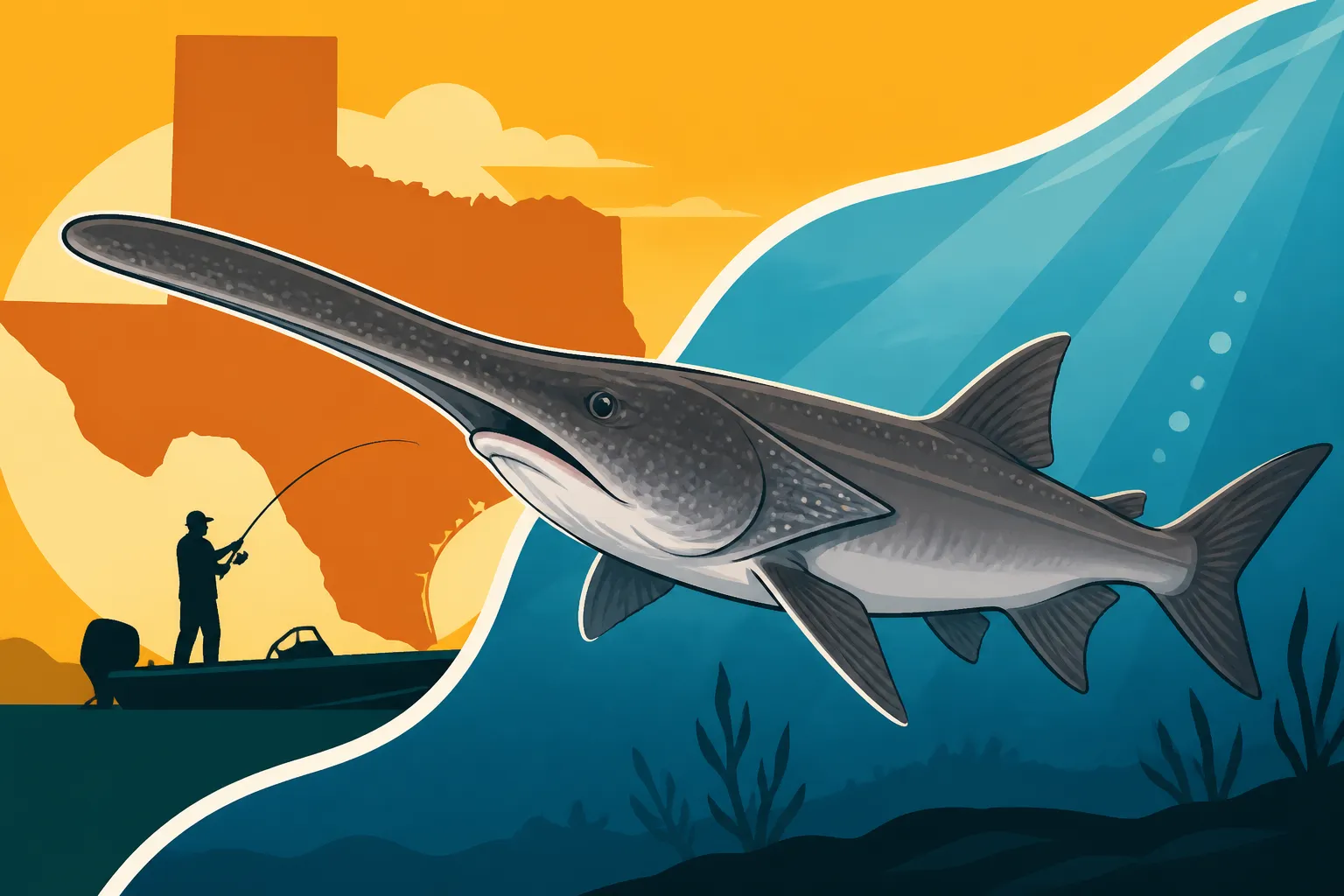
The most striking feature of the paddlefish, and the origin of its name, is its incredibly long, paddle-like snout, or rostrum. This isn't just for show; it's a highly sensitive organ packed with electroreceptors that help the fish detect its prey, even in dark or muddy water. Unlike most fish we're used to catching, paddlefish don't have scales in the traditional sense. Instead, their skin is smooth and shark-like, giving them a sleek, almost prehistoric feel. Their skeleton is largely cartilaginous, much like a shark or sturgeon, which further emphasizes their ancient lineage.
When you see a picture, you might think it's some kind of swordfish or even a gar, but the paddlefish stands alone. They can grow to be quite large, often exceeding five feet in length and weighing over 60 pounds, though specimens of that size are exceptionally rare in Texas these days. It's truly a "living fossil," a term often thrown around but truly applicable to this remarkable species.
Where Do Paddlefish Live in Texas? Historical Range and Current Status
Historically, paddlefish were found in the larger river systems of East Texas, primarily the Sabine, Neches, and Trinity rivers, all part of the vast Mississippi River basin. These rivers, with their wide, slow-moving stretches and access to expansive floodplains for spawning, provided the ideal habitat for these impressive filter feeders. However, times have changed dramatically. Over the last century, habitat loss due to dam construction, channelization, and pollution severely impacted paddlefish populations across their range, including in Texas.
Today, paddlefish are considered extremely rare in Texas. While individual sightings are occasionally reported, often accidental catches, there are no established, reproducing populations left within Texas state lines. The species is listed as endangered or threatened in many states, and while specific designations can vary, their rarity in Texas means they are afforded a very high level of protection. This is why understanding the regulations is so critical – you're dealing with a truly vulnerable and precious part of our aquatic heritage. They're a stark reminder of the impacts human development can have on wild populations, and why conservation is so vital for species like the Texas Alligator Gar Fishing Guide.
The Life and Times of a Paddlefish: Biology and Behavior
Understanding how paddlefish live helps us appreciate why they are so vulnerable and why their presence, even as an accidental catch, is such a big deal. They operate on a completely different biological clock and feeding strategy than most other fish in our freshwater systems.
Filter Feeders of the Deep: What Do Paddlefish Eat?
Unlike a largemouth bass that aggressively strikes at lures or a catfish that scavenges the bottom, paddlefish are obligate filter feeders. This means their diet consists almost exclusively of microscopic zooplankton, tiny animals suspended in the water column. They don't have teeth for chewing or a predatory instinct to chase down fish. Instead, they swim slowly with their enormous mouths wide open, straining vast quantities of water through their elaborate gill rakers, much like a baleen whale filters the ocean.
Their distinctive paddle-like rostrum plays a crucial role here, acting as a highly sensitive antenna that helps them locate concentrations of plankton. Think of it as a natural sonar system, guiding them to their next meal. This specialized feeding strategy means they aren't attracted to traditional baits or lures, which is why catching one intentionally is nearly impossible and certainly not the goal. This is a stark contrast to how we might approach catfish in Texas, where a variety of baits are employed.
Spawning Habits: A Journey Upriver
Paddlefish have very specific and demanding spawning requirements, which is a major reason for their decline. They are migratory fish that need long stretches of free-flowing river, often hundreds of miles, to reach suitable spawning grounds. Typically, they spawn in the spring, often triggered by rising water levels and specific water temperatures, when rivers flood into adjacent backwaters and gravel bars. The females release eggs over these gravel beds, and the males fertilize them.
The problem in Texas, and across much of their former range, is that the construction of dams effectively cuts off these migration routes. A dam acts as an impassable barrier, preventing paddlefish from reaching their ancestral spawning areas. This fragmentation of their habitat, combined with altered water flows and reduced water quality, makes successful natural reproduction nearly impossible in many areas. Without access to these critical spawning habitats, even if adult paddlefish somehow survive, new generations cannot be produced, leading to their eventual disappearance. This highlights the importance of keeping our rivers healthy and connected, a challenge discussed often in general Texas Freshwater Fishing Regulations.
Encountering a Paddlefish in Texas: Regulations and Rarity
This is where the rubber meets the road for Texas anglers. Given their extreme rarity and protected status, encountering a paddlefish isn't just a unique experience; it comes with specific legal responsibilities. It’s crucial to know what you can and cannot do.
Is it Legal to Catch Paddlefish in Texas? Understanding the Rules
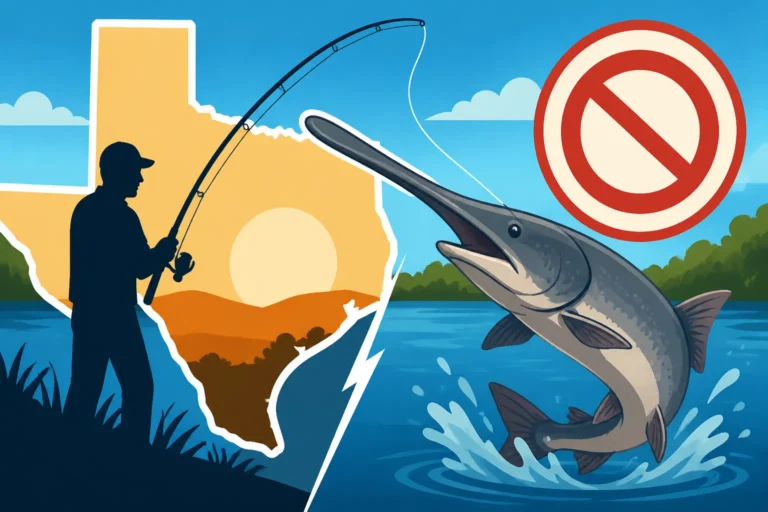
Let's be absolutely clear on this: It is NOT legal to intentionally catch, possess, or harvest paddlefish in Texas. If you accidentally hook one, the law requires that you immediately release it unharmed. This isn't a suggestion; it's a strict regulation designed to protect this incredibly vulnerable species. The Texas Parks and Wildlife Department (TPWD) has specific rules about which species can be harvested, and the paddlefish is firmly in the "protected" category. This differs significantly from common game fish like bass or catfish, which have specific Texas Fish Bag and Length Limits.
Violating these regulations can lead to serious consequences, including substantial fines and legal penalties. The state takes the protection of its rare and endangered species very seriously. Fishing without a proper Texas Fishing License Requirements Explained is one thing, but intentionally harming or possessing a protected species like a paddlefish carries much heavier implications. You won't find paddlefish on any list of legal catches in Texas, nor will you find specific seasons for them like you would for common species mentioned in Texas Fishing Seasons Month by Month. This protection is why you won't see them as a target species in any legitimate fishing guide, whether you're buying a new rod on Amazon or browsing a local tackle shop.
What to Do if You Accidentally Hook One
Given their filter-feeding nature, it's highly unlikely you'll hook a paddlefish with traditional baits and lures aimed at other species. However, accidents happen, especially if you're fishing in deeper river channels where they might still exist. If you find yourself in this rare situation, here’s exactly what you need to do:
- Do Not Remove from Water (If Possible): The most critical step is to keep the fish in the water as much as possible. Large, heavy fish like paddlefish can easily injure themselves by thrashing when out of their buoyant environment, and their internal organs can be damaged by their own weight.
- Handle with Extreme Care: If you absolutely must bring it partially out of the water to remove a hook, support its entire body. Never hold it by its paddle or gill plates alone. The paddle is incredibly sensitive and vital for its survival.
- Quick Hook Removal: Use a pair of long-nosed pliers or a hook remover (a good pair is always handy and easily found on Amazon) to quickly and gently dislodge the hook. Minimize the time the fish is out of the water.
- Cut the Line if Necessary: If the hook is deeply embedded or you're struggling to remove it quickly and safely, cut the line as close to the hook as possible. A hook left in will eventually rust out, and this is far better than causing significant trauma to the fish.
- Release Immediately: Once the hook is out (or line cut), gently guide the fish back into the water. Hold it upright in the current until it can swim away under its own power.
- No Photos or Hero Shots: Resist the urge for a trophy photo. While it's a unique catch, the stress of being out of water and handled can be lethal to these sensitive fish. The legal implications of possessing a protected species for a photo, even briefly, are also not worth the risk.
Remember, the goal is to ensure the fish's survival with minimal stress and injury. These are not common sport fish, and their continued existence in Texas is tenuous.
Conservation Efforts and the Future of Texas Paddlefish
The story of the paddlefish in Texas is a poignant one, reflecting broader challenges in aquatic conservation. Their rarity today underscores the importance of ongoing efforts to protect our natural resources and the species that depend on them.
Why Are Paddlefish Protected? The Importance of This Species
Paddlefish are protected for several compelling reasons. Firstly, as living fossils, they represent an incredibly unique and irreplaceable part of biodiversity. Losing them would mean losing an entire branch of evolutionary history. Secondly, they play a role in the ecosystem as filter feeders, helping to keep water clean by consuming plankton, though their sparse numbers now mean this impact is minimal in Texas.
Most importantly, they are indicator species. Their decline is a clear signal of broader environmental degradation in our river systems – habitat loss, altered water flows, and water quality issues that affect many other aquatic creatures. Protecting paddlefish means protecting the health of the entire river ecosystem. TPWD actively monitors rare species, and the paddlefish is definitely on their radar as a species of concern. The state's efforts extend beyond just regulations to active restoration projects and habitat improvement where feasible. You can learn more about general conservation efforts and rules from resources like Texas Fishing License Cost for Residents and Nonresidents which highlight how license fees support wildlife.
How Anglers Can Help: Reporting Sightings and Responsible Practices
As anglers, we are often the first line of observation on our waterways. If you believe you’ve accidentally caught or even just sighted a paddlefish in Texas, reporting it to the Texas Parks and Wildlife Department is immensely helpful. These reports can provide valuable data on their distribution, migration patterns, and overall health, contributing to conservation research and potential future management strategies. You can often find contact information on their website or by calling a regional office.
Beyond reporting, simply practicing responsible angling is key. This includes always adhering to Texas Fish Bag and Length Limits for legal species, using appropriate gear, and being mindful of your impact on the environment. Supporting organizations involved in river and wetland conservation, and understanding broader regulations like Texas Boat Registration Requirements and those concerning sensitive areas, all contribute to a healthier environment for all aquatic life, including the incredible, ancient paddlefish. Our actions on the water, whether it's how we buy our tackle from Amazon or how we handle an unexpected catch, truly make a difference for the future of species like these.
| Feature | American Paddlefish (Texas) | Alligator Gar (Texas) |
|---|---|---|
| Common Name | American Paddlefish | Alligator Gar |
| Appearance | Long, paddle-like rostrum; smooth, scaleless skin; shark-like tail | Alligator-like snout; diamond-shaped, ganoid scales; long, cylindrical body |
| Diet | Primarily zooplankton (filter feeder) | Predatory (eats other fish, waterfowl, small mammals) |
| Habitat | Large, slow-moving rivers, open waters, deep pools | Rivers, bayous, lakes, brackish waters; prefers slow-moving, shallow areas |
| Spawning Needs | Long river migrations, specific gravel bar/floodplain access | Flooded vegetation, backwater areas |
| Conservation | Critically rare/protected in Texas; immediate release required | Managed game fish with specific bag and length limits in Texas |
| Lineage | Ancient "living fossil" (paddlefish family) | Ancient "living fossil" (gar family) |
| Angling Method | Not targeted by anglers; accidental snagging possible | Targeted with heavy tackle, bowfishing, trotlines |
Disclaimer
This article is for general informational purposes only and does not constitute professional advice. Laws, prices and regulations vary by location and change over time. Consult a qualified professional for guidance on your specific situation.