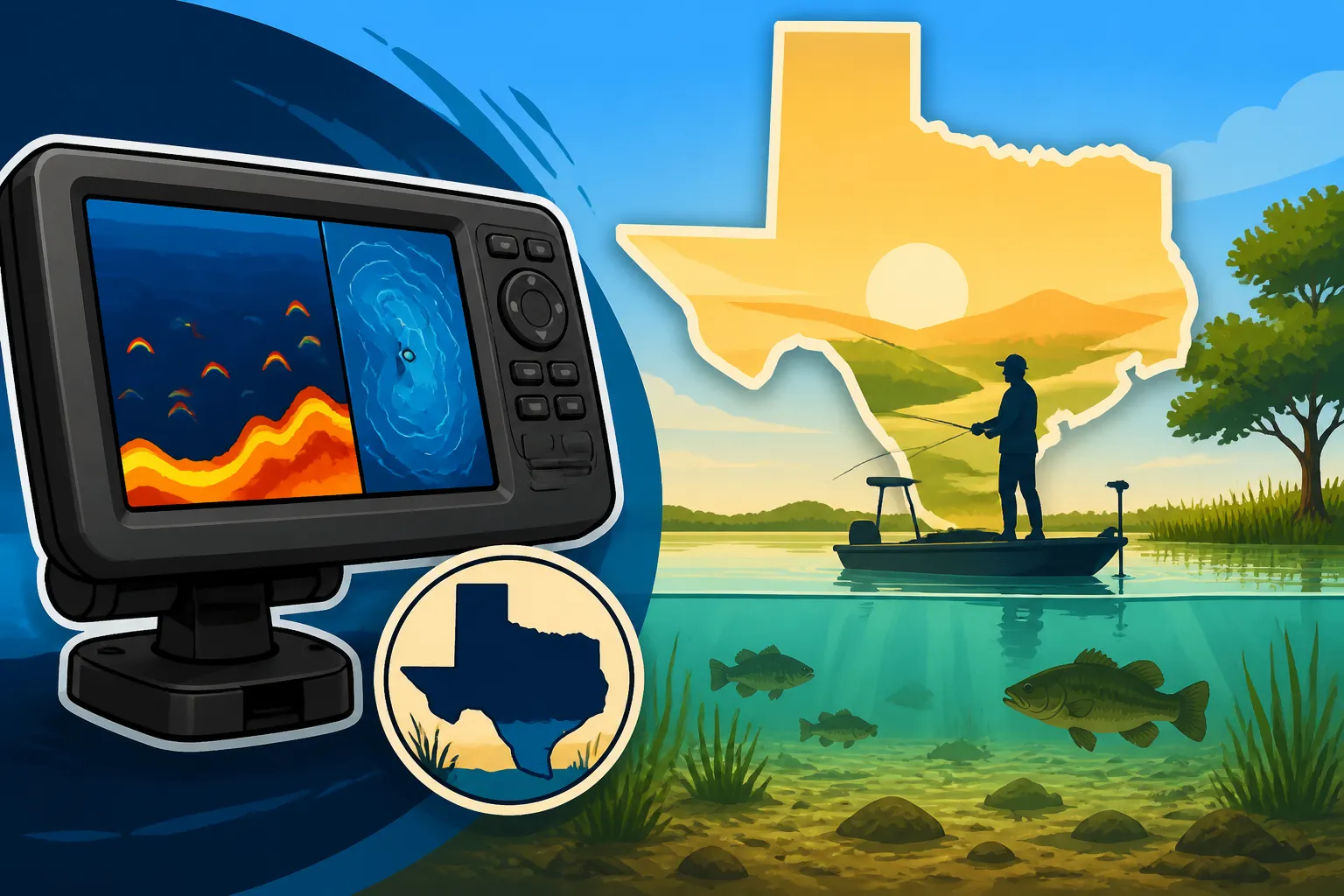
Best fish finder for shallow Texas lakes
One of the biggest frustrations for anglers fishing the vast, often murky, and sometimes surprisingly shallow waters of Texas lakes is trying to actually see what's beneath the surface. You know the fish are there, hiding in brush piles, hugging subtle creek channels, or tucked away in dense vegetation, but without the right eyes in the water, it feels like you're casting blind. This guide is here to cut through the confusion and help you understand exactly what to look for in a fish finder designed specifically to excel in those challenging shallow Texas lake environments, so you can spend less time guessing and more time catching.
The Unique Challenges of Shallow Texas Lakes for Fish Finders
Fishing in shallow water, especially across many of our beloved Texas lakes, presents a very different set of demands for your fish finder compared to deep-water angling. It’s not just about seeing the bottom; it’s about discerning structure, identifying fish amidst vegetation, and navigating accurately in often turbid conditions. Ignoring these unique challenges can leave you with a high-tech paperweight that simply can't deliver the clarity and detail you need.
Understanding Water Depth and Clarity
Shallow water, by its very nature, limits the time your sonar pulse has to travel down, reflect off objects, and return to the transducer. In deeper water, there's more "real estate" for the sonar to paint a picture. In shallow water, if your unit isn't optimized, everything can look compressed and muddled. Think about trying to take a picture in a tiny closet versus a grand ballroom; the closet offers fewer angles and less space to capture detail.
Beyond the depth itself, the clarity of Texas lakes can vary wildly. Some lakes, especially after heavy rains or in areas with soft bottoms, can be quite stained or even muddy. This suspended sediment can scatter sonar signals, making it harder for your fish finder to distinguish between a submerged log and a trophy bass. A lesser-quality transducer or an older sonar technology might struggle to penetrate this murk effectively, leading to a lot of guesswork and frustration. Conversely, some of our clearer Hill Country lakes, while shallow, require a different kind of finesse from your unit to avoid spooking fish.
Navigating Structure and Vegetation
Shallow Texas lakes are often teeming with various types of cover and structure. We're talking about sprawling hydrilla beds, dense stands of cattails, flooded timber from years past, submerged roadbeds, rock piles, and subtle creek channels that are only a few feet deeper than the surrounding flats. For a fish finder, separating a fish from a thick weed line or a piece of sunken brush is paramount. If your unit just shows a blob of green or indistinguishable clutter, it’s not doing its job.
The challenge intensifies when fish are tightly associated with this cover. A bass buried deep in a hydrilla mat or a crappie suspended just above a brush pile requires exceptional target separation and clarity from your sonar. Furthermore, mapping these underwater features precisely is critical for returning to productive spots. Without a detailed understanding of the bottom contours and cover, you're essentially just drifting and hoping for the best, which isn't a strategy for consistent success. This is especially true if you're exploring new areas where you haven't dropped a line before. For advanced navigation, you might want to look into Best GPS Units for Texas Boaters.
Key Features to Look For in a Shallow Water Fish Finder
When you’re trying to pick out a fish finder for the unique demands of shallow Texas lakes, you can’t just grab any unit off the shelf. Certain features become absolutely critical for success. It’s about more than just a fancy screen; it’s about the technology behind it and how it translates the underwater world into actionable information.
Transducer Technology and Frequencies
The transducer is the heart of your fish finder, sending and receiving the sonar signals. For shallow water, you want a transducer that can deliver a wide, clear cone of coverage. Traditional 2D sonar is good, but modern CHIRP (Compressed High-Intensity Radiated Pulse) technology is a game-changer. Unlike older sonar that sends a single frequency, CHIRP sends a continuous sweep of frequencies, providing much greater target separation and clarity. This means you can differentiate between individual fish, or between a fish and a piece of structure, even in just a few feet of water.
Beyond CHIRP, look for units with excellent Down Imaging and Side Imaging capabilities. These technologies use higher frequencies (typically 455 kHz, 800 kHz, or even Mega Imaging in some Humminbird models) to create picture-like views of what’s directly below and to the sides of your boat. In shallow water, Side Imaging allows you to scan vast flats, weed lines, and submerged timber for hidden fish without driving directly over them, potentially spooking them. Down Imaging gives you a photographic view directly beneath the boat, making it easier to pick out subtle humps or brush piles in scant depths. When considering your overall setup, remember that Best Fishing Electronics for Texas Anglers often includes more than just the fish finder itself.
Screen Resolution and Size
What good is cutting-edge sonar technology if you can't clearly see the images it produces? A high-resolution screen is non-negotiable for shallow water fishing. Pixels translate to detail, and in shallow, often cluttered environments, every pixel counts. You need to be able to discern the faint outline of a submerged log from a schooling baitfish, or identify the distinctive arch of a bass amidst a weed bed.
Screen size also plays a significant role. While smaller units are more portable and budget-friendly, a larger screen (7 inches or more is often ideal) provides a much better viewing experience, especially when using split-screen views to display 2D sonar, Down Imaging, Side Imaging, and mapping simultaneously. Trying to interpret complex images on a tiny screen, especially under bright Texas sunlight, can be a real headache. Consider how often you'll be staring at that screen and whether squinting will become a regular part of your fishing trip.
GPS and Mapping Capabilities
In shallow Texas lakes, especially those with large flats or extensive vegetation, having reliable GPS and detailed mapping is just as important as seeing fish. GPS allows you to mark waypoints for productive brush piles, subtle depth changes, or even individual fish you've spotted. This is invaluable for returning to hot spots later or on subsequent trips.
Integrated mapping, particularly with high-definition contour maps (often available from third-party providers or built into premium units), can reveal crucial underwater topography that isn't visible on the surface. You can identify submerged creek channels, hard-to-spot humps, or rock veins that hold fish, even in very shallow water. Many modern units also allow you to create your own custom maps, a feature incredibly useful for detailing those obscure, shallow honey holes. Knowing the contours helps you plan your approach, understand fish movements, and avoid running aground in truly skinny water. Learning How to read lake contour maps for bass fishing can really elevate your game.
Types of Fish Finders Best Suited for Shallow Water
The market for fish finders is huge, and it can feel overwhelming trying to figure out which "type" is going to serve you best on those shallow Texas lakes. But don't fret! We can narrow down the choices by focusing on what truly excels in less-than-deep conditions.
CHIRP Sonar for Clarity
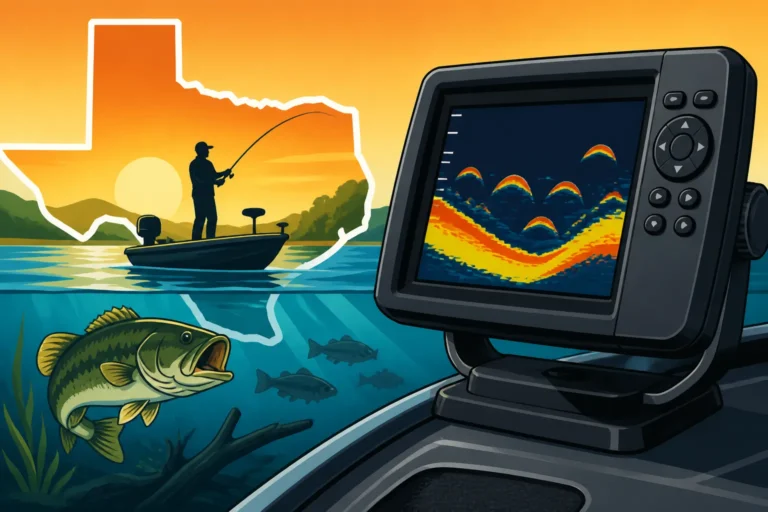
When you're trying to pick out a single bass hiding in a small clump of submerged grass in only three feet of water, traditional sonar can often just show you a fuzzy blob. This is where CHIRP sonar truly shines. Instead of sending out one single frequency, a CHIRP transducer broadcasts a whole range of frequencies, from low to high, and then processes the returning echoes from each of them. This advanced signal processing results in an incredibly clear, high-resolution image with phenomenal target separation.
What does that mean for you on a shallow Texas lake? It means you can distinguish individual fish from bait balls, and more importantly, differentiate a fish from the structure or vegetation it's holding in. You'll see crisper arches for fish, even in shallow water, and a clearer representation of the bottom composition. Many entry-level to mid-range units today offer some form of CHIRP, so you don't necessarily need to break the bank to get this crucial technology. If you're serious about How to Fish for Bass in Texas, CHIRP is a must-have.
Down Imaging and Side Imaging for Detail
While CHIRP 2D sonar gives you fantastic target separation directly below your boat, Down Imaging and Side Imaging offer a photographic-like view of the underwater world. These technologies use even higher frequencies, which don't penetrate as deep as some 2D sonar, but provide incredible detail in shallower water, making them perfect for Texas lakes.
- Down Imaging: Imagine looking straight down into the water, and seeing what's there almost as clearly as if the water were removed. That's what Down Imaging delivers. It stacks a series of very thin sonar slices to create an incredibly detailed, vertical view directly below your boat. This is invaluable for pinpointing specific brush piles, distinguishing between rock and timber, and seeing how fish are relating to those structures in shallow water.
- Side Imaging: This is arguably the most powerful tool for covering water in shallow lakes. Side Imaging transducers send beams out to the left and right of your boat, scanning vast areas as you move. You can literally "see" submerged timber lines, rock fields, weed edges, and even individual fish out to hundreds of feet on either side. For covering large, shallow flats or finding hidden creek channels that might be only slightly deeper than the surrounding area, Side Imaging is unbeatable. It allows you to locate promising areas without having to drive directly over them, making it an excellent scout for Best fishing spots for wade fishing in Texas.
Portable and Castable Options
Not everyone has a fancy bass boat or even a large jon boat. For many Texas anglers, especially those who fish from kayaks, small aluminum boats, or even from the bank, portability is key. Thankfully, there are excellent portable and castable fish finders that still offer impressive shallow-water capabilities.
- Portable Units: These typically consist of a screen unit and a suction-cup or clamp-on transducer. Brands like Garmin and Lowrance offer compact portable options that you can easily move between different boats or use on a rental. They often include CHIRP 2D sonar and sometimes even basic Down Imaging. They are fantastic for kayakers who want to mount a full-featured unit without a complex installation. When you're out exploring on your Best Kayaks for Texas Fishing, a portable unit can make all the difference.
- Castable Fish Finders: Devices like the Deeper Smart Sonar are small, spherical units that you cast out with a rod and reel. They connect wirelessly to your smartphone or tablet, displaying sonar images, water temperature, and even basic mapping. While they don't offer the same level of detail as high-end boat-mounted units, they are incredibly convenient for bank anglers, small kayaks, or even just checking a spot from shore before committing to launching a boat. They're surprisingly effective at finding structure and fish in shallow ponds or river bends.
Here's a quick comparison of fish finder types and their shallow-water utility:
| Fish Finder Type | Key Advantage for Shallow Water | Best Use Case |
|---|---|---|
| CHIRP 2D Sonar | Superior target separation; clear arches for fish in sparse cover. | Identifying fish in subtle depth changes or light vegetation. |
| Down Imaging | Photographic detail directly below; excellent for discerning structure. | Pinpointing specific submerged timber, rock piles, or brush. |
| Side Imaging | Wide area coverage; scans large flats and weed lines for hidden fish. | Scouting vast shallow areas, finding channel swings, locating structure. |
| Portable Units | Flexible, easy to move between vessels; minimal installation. | Kayaks, small jon boats, rental boats, bank fishing with setup. |
| Castable Units | Ultra-portable, no boat needed; ideal for bank or casual fishing. | Shore fishing, small ponds, checking depth/structure quickly from bank. |
Top Considerations for Anglers on Shallow Texas Lakes
Beyond the technical specifications, there are some practical realities to consider when choosing a fish finder for our diverse Texas lakes. These aren't just about the unit itself, but about how it fits into your fishing style, your budget, and your overall experience on the water.
Budgeting for Performance
Let's be real, fish finders can range from a couple of hundred bucks to several thousand. While it's tempting to go for the cheapest option or splurge on the most expensive, finding the sweet spot for your needs is crucial. For shallow Texas lakes, you truly benefit from the clarity and detail offered by CHIRP, Down Imaging, and Side Imaging. Generally, units that offer these capabilities effectively will start in the mid-range price points.
Think about what you truly need. If you're primarily a bank angler or kayak fisherman on small ponds, a robust castable unit or an entry-level portable fish finder from a brand like Garmin or Humminbird might be all you need. You can often find great deals on these kinds of units at places like Bass Pro Shops or on Amazon. However, if you're out on larger reservoirs like Lake Fork or Sam Rayburn in a bass boat, consistently trying to locate subtle shallow humps or isolated brush piles, investing in a larger screen unit with premium imaging is probably going to pay dividends. Sometimes, a slightly higher initial investment means less frustration and more fish in the long run.
Installation and Power Needs
Getting your new fish finder installed correctly, especially the transducer, is paramount to its performance. For shallow water, transducer placement is even more critical. You need it free from obstructions, away from turbulent water, and able to maintain a clear signal even when running at different speeds. Many shallow-water boats, especially Best Jon Boats for Texas Rivers, have unique hull shapes that require careful consideration for transducer mounting.
Furthermore, fish finders, particularly those with large screens and advanced imaging, can draw a fair amount of power. Ensure your boat's battery system can handle the load, especially if you're running multiple electronics. For kayak anglers, this might mean investing in a dedicated small marine battery or even a portable power station to keep your unit running all day. Nothing is more frustrating than your fish finder dying just as you've located that perfect honey hole.
Learning Curve and User Interface
Modern fish finders are incredibly powerful, but with that power comes a certain level of complexity. Some units have very intuitive, touchscreen interfaces that are easy to navigate, while others might require a bit more time with the manual to master. Think about your comfort level with technology. Are you someone who enjoys diving deep into settings and customizing every display, or do you prefer a more "plug and play" experience?
Brands like Lowrance, Humminbird, and Garmin all offer excellent units, but their user interfaces can feel different. Watching some YouTube videos or even getting hands-on with a display model at a store like Bass Pro Shops can give you a better feel for which interface resonates with you. Remember, the best fish finder is the one you know how to use effectively. Being able to quickly adjust settings, switch between screens, and interpret the data accurately on the fly is what will truly help you catch more fish in shallow Texas lakes. Taking the time to learn How to use a fish finder for bass fishing effectively will make a huge difference in your success.
Disclaimer
This article is for general informational purposes only and does not constitute professional advice. Laws, prices and regulations vary by location and change over time. Consult a qualified professional for guidance on your specific situation.