Best tackle for targeting trophy bass
Chasing that elusive, double-digit largemouth bass in Texas can be one of the most exhilarating yet frustrating challenges an angler faces. Many anglers find themselves repeatedly hooking smaller fish or losing the big ones due to inadequate gear, leaving them wondering if they're truly equipped for the fight. This comprehensive guide is designed to cut through that frustration, detailing the specialized tackle and techniques you need to not just hook, but land, those monster trophy bass lurking in our vast Texas lakes and reservoirs.
Understanding Trophy Bass Behavior in Texas
Before we even talk about rods and reels, let's talk about the fish. Trophy bass, especially those in the 8-pound-plus range that qualify for programs like the Texas ShareLunker program, are not your average pond bass. They're older, wiser, and often much more elusive. They didn't get big by being easy to catch, and they certainly didn't get big by making mistakes. Understanding their seasonal movements and preferred hideouts is paramount to selecting the right tackle to trick them into biting.
Seasonal Patterns and Their Impact on Tackle Choice
Texas bass, like all freshwater fish, are heavily influenced by water temperature and the changing seasons. Their behavior shifts dramatically from the pre-spawn frenzy to the deep-water doldrums of summer, and each phase demands a nuanced approach to tackle.
In the pre-spawn phase, typically late winter to early spring, bass are actively feeding to bulk up for the spawn. They move from deeper water to staging areas near shallower spawning flats. This is often the best time to target trophy bass, as they are at their heaviest and most aggressive. During this period, you might find them eating larger, protein-rich meals. This means lures that mimic big shad or perch, like substantial swimbaits or larger jigs, are often on the menu. Your tackle needs to be robust enough to handle these heavier baits and the explosive strikes that come with them. Think heavy casting gear. If you're looking for more detailed seasonal advice, check out How to Catch Bass in Spring in Texas.
As the water warms and the spawn kicks in, usually late March through April, big bass move onto beds. While many anglers target bedding bass, these fish are often focused on reproduction, not feeding. However, a well-placed bait that irritates them can draw a strike. Your tackle in this phase might shift slightly to more precise presentations – pitching jigs or soft plastics into specific targets. Sensitivity becomes key, allowing you to feel subtle bumps and detect fish that are just nudging the bait away. Read more on this crucial period in our Texas Bass Spawning Season Guide.
Summer in Texas is brutal, and so is the fishing for trophy bass. As water temperatures soar, oxygen levels decrease in shallow water, driving big bass deeper or into heavy, shaded cover. They become less active during the day, often feeding during low light conditions or at night. This calls for tackle that can effectively present baits in deeper water – think heavy jigging spoons, deep-diving crankbaits, or substantial Texas rigs fished along ledges and submerged structure. Gear that handles heavy line and can extract fish from dense cover is essential. Our guide on How to Catch Bass in Summer in Texas can provide more specific strategies.
Fall sees a cooling trend, and bass often go on a major feeding binge, mimicking the pre-spawn. They chase baitfish in open water and near shallow points, trying to pack on weight before winter. This "fall turnover" can be fantastic for power fishing. Fast-moving baits like spinnerbaits, crankbaits, and even topwater lures can be highly effective. Your tackle should be versatile, allowing for long casts and quick retrieves. How to Catch Bass in Fall in Texas delves into this exciting season. Understanding these seasonal shifts is the first step in selecting the right tools for the job. You can get an overarching view of optimal fishing times in Best Time of Year to Fish in Texas.
Key Structures and Cover Where Giants Live
Trophy bass are rarely found cruising open water. They are ambush predators, and they seek out specific types of structure and cover that offer protection, ambush points, and proximity to food sources. Your tackle must be capable of working these areas effectively without getting snagged or failing under pressure.
Submerged Timber and Brush Piles: Lakes like Lake Fork or Sam Rayburn are famous for their standing timber and flooded brush. These areas provide incredible cover for big bass, offering shade, hiding spots, and places for baitfish to congregate. To fish these areas, you need stout rods with plenty of backbone, reels with strong drag, and abrasion-resistant line. Pitched jigs, Texas rigs, and creature baits are prime choices, and your tackle needs to be able to rip a big fish out of that woody cover before it can wrap your line. This is where heavy-duty gear from brands often found at Bass Pro Shops really shines.
Ledges and Drop-offs: In many of Texas' deeper reservoirs, big bass relate to offshore ledges, humps, and creek channels. These are highway systems for baitfish, and trophy bass will sit on the edges, waiting for an easy meal. Vertical jigging spoons, deep-diving crankbaits, and heavy Carolina rigs are excellent here. The tackle requires sensitivity to feel subtle bites in deep water and the power to set the hook from afar. A good fish finder is almost as crucial as the tackle itself in these situations.
Grass Beds and Hydrilla: Lakes with extensive grass beds, like Lake Conroe or Toledo Bend, are prime trophy bass habitat. The grass provides oxygen, shade, and a dense ecosystem for baitfish and invertebrates. Punching through thick mats with heavy tungsten weights and stout soft plastics requires specialized heavy-action rods and powerful baitcasting reels. Flipping jigs into holes in the grass is another deadly technique. Your line absolutely needs to be braided in these scenarios to cut through the vegetation and handle the explosive fight.
Docks and Boat Houses: These man-made structures provide overhead cover, shade, and often have submerged brush or tires around them. Big bass love them. Skipping jigs or soft plastics under docks requires a specific rod action (typically medium-heavy to heavy with a fast tip) and excellent casting accuracy. Your gear must be precise and powerful enough to turn a fish away from pilings and cables.
Essential Rod and Reel Combinations for Texas Trophy Bass
When it comes to tackle for trophy bass, you're looking for a balance of power, sensitivity, and durability. This isn't the time for finesse ultralight gear (unless you're targeting smallmouth, which is a different beast entirely). Texas trophy bass demand serious equipment that can withstand violent strikes and powerful fights. For a more general overview of rod and reel choices, check out Best Fishing Rods for Texas Anglers and Best Fishing Reels for Texas Anglers.
Power and Action: Matching Your Rod to the Fight
The "power" of a fishing rod refers to its lifting strength or stiffness. For trophy bass, you'll generally want medium-heavy to heavy power rods. This allows you to effectively cast heavier baits, penetrate bony mouths with larger hooks, and horse a big fish away from cover.
The "action" of a rod describes where it bends when pressure is applied.
- Fast action rods (the tip bends) are excellent for single-hook baits like jigs and Texas rigs because they provide quick, strong hook sets and maximum sensitivity. You'll feel every bump and tick, crucial when a big bass barely mouths a bait.
- Moderate-fast or moderate action rods (the rod bends further down the blank) are often preferred for treble-hook moving baits like crankbaits or spinnerbaits. The softer bend acts as a shock absorber, preventing hooks from tearing out during a violent head shake.
For punching heavy hydrilla, a heavy or extra-heavy power, fast action rod is non-negotiable. It gives you the leverage to drive a big hook through the fish's jaw and rip it out of dense cover. For throwing big swimbaits, you might even consider specialized swimbait rods that are often extra-heavy power with a more moderate action, designed to load up and launch those heavy lures a long distance while still having the backbone to control a giant.
Consider a 7' to 7'6" heavy power, fast action casting rod for pitching jigs and Texas rigs. For deep-diving crankbaits, a 7' to 7'11" medium-heavy, moderate-fast action rod will serve you well. Many reputable brands like Shimano, Daiwa, or even specific Bass Pro Shops house brands offer excellent options in these categories.
Gear Ratios and Drag Systems: Controlling the Beast
The reel is your engine, and its components are vital for controlling a big fish.
Gear Ratio: This refers to how many times the spool turns with one full rotation of the handle.
- Low gear ratio reels (around 5.1:1 to 6.4:1) are "winches." They're slower but provide more torque, making them ideal for cranking deep-diving crankbaits or slowly retrieving big swimbaits. The slower retrieve helps keep baits in the strike zone longer and reduces fatigue when fighting a heavy fish.
- Medium gear ratio reels (around 6.5:1 to 7.2:1) are versatile workhorses, good for a wide range of techniques from spinnerbaits to Texas rigs.
- High gear ratio reels (7.3:1 and up) are "speed demons." They're perfect for quickly taking up slack line, crucial for techniques like pitching and flipping, or for getting a fish away from heavy cover rapidly. They're also great for topwater lures where you want to keep the bait moving fast. For trophy bass, having at least one high-speed reel for quick retrieves and pulling fish out of cover is beneficial.
Drag System: This is arguably the most critical component when fighting a trophy fish. A smooth, powerful drag prevents your line from breaking while allowing the fish to pull line when necessary, tiring itself out. Look for reels with a high maximum drag rating (often 15-25+ pounds for baitcasters). More importantly, the drag should be smooth and consistent, without any sticking or jerking, especially under heavy pressure. A sticky drag is a recipe for broken lines and lost fish. Brands like Shimano's Curado or Daiwa's Tatula series are known for their reliable drag systems. Always test your drag before fishing and adjust it based on your line strength and the situation.
| Rod Power & Action | Ideal Lure Types | Primary Advantage | Common Applications for Trophy Bass |
|---|---|---|---|
| Heavy, Fast | Jigs, Texas Rigs, Punching Baits | Strong hooksets, maximum sensitivity | Heavy cover, flipping, pitching |
| Med-Heavy, Fast | Spinnerbaits, Chatterbaits, Jigs | Versatile, good balance of power/sensitivity | General purpose, open water to light cover |
| Med-Heavy, Mod-Fast | Crankbaits, Large Topwaters | Shock absorption, prevents hook tears | Open water, reaction strikes, deep diving |
| Extra-Heavy, Mod | Large Swimbaits, A-Rigs | Casts heavy lures, powerful fish control | Trophy hunting, open water to heavy cover edges |
Top Lure Categories and Their Applications for Trophy Bass
Trophy bass didn't get big by being foolish. They've seen it all. Your lure selection needs to be precise, catering to their instincts for a large meal or a territorial defense. For a broader look at popular lures, see Best Lures for a Texas Tackle Box.
Big Baits for Big Bass: Swimbait and Glide Bait Strategies
This is where the term "go big or go home" truly applies. If you want to catch a truly giant bass, often you need to throw a truly giant bait.
Swimswims: These soft or hard plastic lures mimic large baitfish like shad, perch, or trout. They range from 4 inches up to 12 inches or more. The key to swimbaits is their incredibly realistic swimming action. They often trigger a predatory response from big bass that might ignore smaller offerings. Retrieval speeds vary; some are designed to be burned, others slow-rolled along the bottom. You need specialized heavy-duty tackle to cast these large, often weighty lures effectively and to handle the ensuing fight. Look for swimbaits from brands that cater to serious big bass anglers. Online retailers like Amazon offer a wide variety, but checking out dedicated big bait sections at Bass Pro Shops might give you a better feel for the options. Learn more in How to fish a swimbait for big bass.
Glide Baits: These are a specific type of hard swimbait designed to "glide" from side to side with a subtle retrieve. They require a specific rod action and technique to get the desired S-motion. Glide baits are fantastic for tempting wary trophy bass that are cruising edges or suspended. The natural, slow, deliberate movement can be irresistible to a large fish that's looking for an easy meal. They are often fished with long pauses, allowing the bait to suspend enticingly. These aren't cheap lures, but the results they can deliver make them worth the investment for a trophy hunter.
When using big baits, patience is key. You're not looking for numbers; you're looking for that one giant bite. Your gear must be capable of launching these heavy baits and controlling the inevitable explosive strike from a truly massive bass.
Jigs and Soft Plastics for Close-Quarters Combat
When trophy bass bury themselves deep in cover, finesse sometimes takes a backseat to brute force, but precision remains paramount.
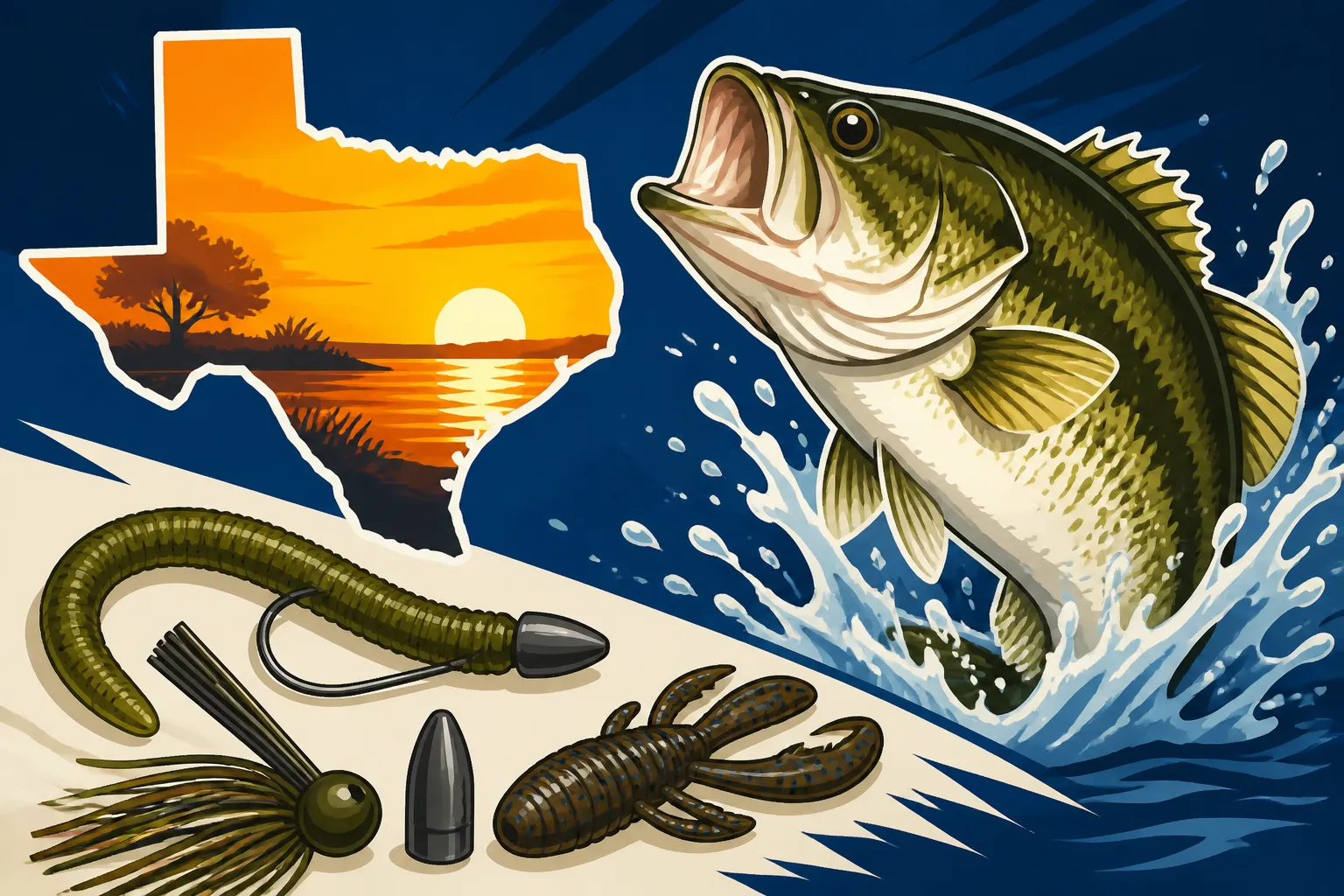
Jigs: Flipping and pitching jigs are classic trophy bass baits. Whether it's a living rubber jig, a skirted football jig, or a heavy punching jig, these versatile lures can imitate crawfish, bluegill, or other bottom-dwelling prey. For trophy bass, focus on heavier jigs (3/8 oz to 1 oz+) that can penetrate cover or maintain bottom contact in deeper water. Pair them with beefy trailers that add bulk and action. The compact profile of a jig allows it to slip through thick cover where a spinnerbait might snag. A heavy power, fast action rod with braided line is essential for a powerful hook set and extracting fish.
Texas-Rigged Soft Plastics: The Texas rig is a staple for a reason. Its weedless design makes it perfect for fishing heavy cover, whether it's submerged timber, grass, or brush piles. For trophy bass, think bigger plastics: 7- to 10-inch worms, creature baits, or large beaver-style baits. Use heavy tungsten weights (1/2 oz to 1 oz+) to get your bait through thick vegetation or down to fish quickly in deeper water. Tungsten is preferred over lead because it's denser, smaller, and provides better sensitivity, allowing you to feel subtle bites. The key is to match your hook size to your plastic to ensure a proper hook set. A heavy-gauge, sharp hook is non-negotiable.
Crankbaits and Spinnerbaits: Covering Water for the Hunt
While big jigs and swimbaits are for targeted strikes, crankbaits and spinnerbaits are excellent for covering water and triggering reaction bites from aggressive trophy bass.
Deep-Diving Crankbaits: When bass retreat to deeper ledges or creek channels during hotter months, a deep-diving crankbait is your best friend. These lures are designed to dive to specific depths (15-25+ feet) and are excellent for banging off structure, deflecting, and drawing those aggressive reaction strikes. For trophy bass, focus on larger profiles and realistic baitfish patterns. A medium-heavy to heavy power, moderate-fast action rod is ideal for casting these lures and absorbing the shock of a strike. A low-gear ratio reel helps you crank them down effectively without wearing out your arms.
Spinnerbaits and Bladed Jigs (Chatterbaits): These moving baits are fantastic for targeting bass in and around sparse to medium cover, especially during pre-spawn, spawn, and fall. The flash and vibration mimic fleeing baitfish or crawfish. For trophy bass, consider larger profile spinnerbaits (3/4 oz to 1 oz) with tandem willow or Colorado blades, or bladed jigs with a substantial trailer. These baits can be slow-rolled, burned, or "killed" through cover. They often elicit vicious strikes. A medium-heavy, fast action rod with fluorocarbon or braided line works well here.
Line Selection and Terminal Tackle for Maximum Strength
It doesn't matter how good your rod, reel, or lure is if your line or terminal tackle fails. For trophy bass, every component needs to be bomb-proof. The difference between landing a giant and a heartbreaking story often comes down to these crucial, often overlooked, details. For general advice on line, check out Best line weight for Texas bass fishing.
Braided, Fluorocarbon, and Monofilament: Choosing the Right Line
Each line type has its place in the trophy bass angler's arsenal.
-
Braided Line: This is your heavy hitter. Braided line offers superior strength-to-diameter ratio, zero stretch, and incredible abrasion resistance. It's fantastic for fishing in heavy cover, punching mats, or throwing large swimbaits where a powerful hook set and brute force are needed to pull a fish out. Its lack of stretch means maximum sensitivity. For trophy bass, consider 50-80 lb test braided mainline. The downside is its visibility in clear water, which can sometimes spook wary fish. Many anglers use a fluorocarbon leader with braid in clearer water situations.
-
Fluorocarbon Line: This line is nearly invisible underwater, making it ideal for clear water and pressured fish. It has low stretch (though not zero like braid), which offers good sensitivity and strong hook sets. Fluorocarbon is also highly abrasion-resistant, which is crucial around rocky bottom or submerged timber. It sinks, which can be an advantage for deep-diving crankbaits or Carolina rigs. For trophy bass, 15-25 lb test fluorocarbon is common for jigs, Texas rigs, and crankbaits. Brands like Seaguar and Berkley offer excellent fluorocarbon lines.
-
Monofilament Line: Monofilament, or mono, has significant stretch, which can be both a blessing and a curse. The stretch makes it forgiving, preventing hooks from tearing out when a fish jumps or makes a sudden run, making it popular for topwater baits and crankbaits. It's also typically the most affordable option. However, its stretch reduces sensitivity, and it has less abrasion resistance than braid or fluorocarbon. For trophy bass, 17-25 lb test mono can be used for reaction baits in open to moderate cover.
| Line Type | Key Properties | Best Applications for Trophy Bass | Pros | Cons |
|---|---|---|---|---|
| Braided | Zero stretch, high strength | Punching, flipping, heavy cover, large swimbaits | Super strong, sensitive, cuts vegetation | Visible, can dig into spool, expensive |
| Fluorocarbon | Low stretch, invisible | Jigs, Texas rigs, crankbaits, clear water | Nearly invisible, abrasion resistant | Stiffer, can have memory, more expensive |
| Monofilament | High stretch, floats | Topwaters, shallow crankbaits, forgiving hooksets | Forgiving, good knot strength, affordable | Low sensitivity, less abrasion resistant |
Hooks, Weights, and Swivels: The Small Details That Prevent Heartbreak
These components are the weak links if not chosen carefully. Never skimp on terminal tackle when chasing trophy bass.
Hooks: For trophy bass, forget flimsy hooks. You need heavy-gauge, super-sharp hooks that will not bend or break under extreme pressure.
- Worm Hooks: For Texas rigs, use high-quality, heavy wire EWG (Extra Wide Gap) or straight shank hooks in sizes 3/0 to 5/0, depending on the plastic. Brands like Gamakatsu and Owner are industry standards.
- Jig Hooks: Most jigs come with integrated hooks, but ensure they are stout and sticky sharp. If tying your own, choose robust models.
- Treble Hooks: For crankbaits and topwaters, consider upgrading stock treble hooks to stronger, sharper models, especially on higher-end lures. A bent treble on a trophy fish is a soul-crushing experience.
Weights: When using soft plastics, tungsten weights are superior to lead. As mentioned, they are denser, smaller, and provide better sensitivity. For trophy bass, don't be afraid to use heavier weights (1/2 oz to 1.5 oz) to get your bait where it needs to be, whether it's punching through mats or getting to the bottom in deep water. Always peg your weight with a bobber stop or toothpick when fishing heavy cover to keep it from separating from your bait.
Swivels: While not always used directly with bass fishing, if you're using a Carolina rig, a high-quality barrel swivel or ball-bearing swivel is essential to prevent line twist, especially with heavier weights and larger baits. Again, don't buy the cheapest option; invest in strong, reliable swivels to avoid a catastrophic failure.
Targeting trophy bass in Texas is a commitment, but with the right tackle and a deep understanding of their behavior, you significantly increase your odds of landing that fish of a lifetime. Always inspect your knots, check your line for nicks, and keep your hooks razor sharp. Good luck out there, and remember, that next cast could be the one! You can find more specific advice on what constitutes a trophy fish and how to report it in How to catch trophy bass for the ShareLunker program.
Disclaimer
This article is for general informational purposes only and does not constitute professional advice. Laws, prices and regulations vary by location and change over time. Consult a qualified professional for guidance on your specific situation.