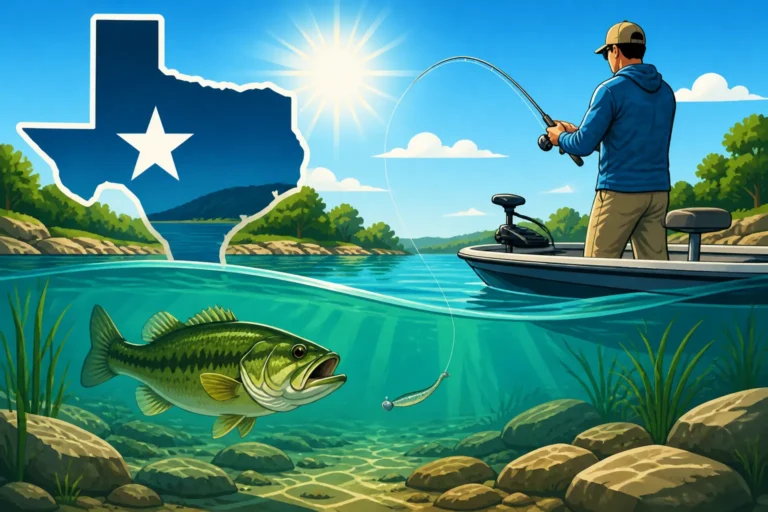
How to Catch Bass in Fall in Texas
As the scorching Texas summer sun begins its slow retreat, many anglers start feeling a mix of excitement and frustration. On one hand, cooler temperatures mean more comfortable days on the water. On the other, those bass that were so predictable in the heat can suddenly seem to vanish, leaving you scratching your head. This comprehensive guide will unravel the mysteries of fall bass behavior in Texas, providing you with proven strategies and techniques to consistently land fish during this dynamic season.
Understanding Fall Bass Behavior in Texas
Fall in Texas brings a magnificent transformation, not just in the scenery, but deep beneath the surface of our lakes and rivers. Bass, like most creatures, are keenly aware of these environmental shifts, and their behavior changes dramatically. What worked in July likely won't cut it in October, and understanding these shifts is your first step to success.
The Post-Summer Transition and Shad Spawn
Once the intense heat of summer starts to break, usually around late September or early October, the water temperatures begin a gradual decline. This cooling period is a huge relief for bass, which have spent months holed up in deeper, cooler water or tucked away in dense cover. As the water cools, their metabolism picks up, and they start to feel that primal urge to feed heavily again. They know winter is coming, and they need to bulk up.
A critical aspect of this fall transition is the "shad spawn" or, more accurately, the widespread schooling and renewed activity of baitfish. Threadfin and gizzard shad, which comprise a huge portion of the bass's diet in many Texas lakes, start forming massive schools. They’ll often move closer to the surface and into shallower areas, congregating around points, humps, and even shorelines. Bass will follow these schools like hawks, ambushing them with renewed vigor. If you can find the bait, you're usually not far from the bass. This aggressive feeding period is often what anglers call the "fall frenzy."
The Fall Turnover and Its Impact
Mid-fall can throw a wrench into the works, especially on larger, deeper reservoirs. This is when the phenomenon known as "fall turnover" often occurs. During summer, lakes stratify into layers: a warm, oxygen-rich top layer (epilimnion) and a cold, oxygen-depleted bottom layer (hypolimnion). As surface temperatures cool, the top layer becomes denser, eventually sinking and mixing with the bottom layers. This process equalizes water temperature and oxygen levels throughout the water column.
While turnover is a natural and healthy process for the lake, it can temporarily disrupt fishing. The mixing water can become cloudy, and the sudden shift in conditions can disorient bass, scattering them or making them sluggish for a few days to a week. You might notice unusual smells or debris on the surface. When a lake is turning over, bass can be found almost anywhere, making them incredibly difficult to pattern. The key is to keep moving and try various depths and presentations until you find some active fish. Patience is definitely a virtue during these periods.
Locating Fall Bass Hotspots in Texas Lakes
Finding bass in the fall is all about understanding their renewed relationship with baitfish and recognizing the subtle cues the lake provides. They're on the move, chasing their food sources, and if you can think like a shad, you'll be well on your way to locating some hungry bass.
Following the Bait: Creeks, Coves, and Points
Once the water cools down, baitfish—especially shad—start to gather in massive schools. Bass are always, always, always close behind. Your mission, should you choose to accept it, is to find those baitfish. One of the most productive places to start looking is in the backs of creeks and coves, particularly those that have a good flow of water entering them, especially after a rain. Fresh water often brings in nutrients and smaller organisms, attracting baitfish, and in turn, attracting bass. Look for nervous water, subtle swirls, or even shad flicking on the surface. On lakes like Lake Fork or Sam Rayburn, these large creek arms can hold incredible numbers of both bait and bass.
Main lake points are another fantastic spot. These underwater structures act like highways and ambush points for bass. Baitfish migrating from deeper water into shallower coves will often cruise along these points, making them prime targets for waiting bass. Points that have a quick drop-off into deeper water, or that feature submerged brush or rock piles, are even better. These features provide bass with cover to hide and launch their attacks. Don't be afraid to fish both the shallow and deep sides of these points, as bass can be found suspended at various depths depending on the sun and bait location.
Shallow Water Feeds and Ambush Points
With cooler temperatures and the increased activity of baitfish, bass will often push into incredibly shallow water to feed aggressively. This is your chance to catch them in places you might not have considered during the summer. Focus on areas with good cover that provide bass with ambush opportunities. This includes boat docks, especially those with brush piles sunk underneath them. Bass will use the shade and structure to hide and dart out at passing bait.
Fallen trees and laydowns are also gold mines. These provide excellent cover, and baitfish often congregate around them. Work your lures thoroughly around every branch and trunk. Grass lines, whether submerged hydrilla, coontail, or emergent reeds, are another key area. Bass will patrol these edges, darting in and out to snatch baitfish. During the fall, don't overlook stretches of rocky banks, especially those that absorb and radiate heat from the sun. These can warm up slightly faster, attracting both bait and bass. The beauty of fall is that bass can be aggressive, making these shallow power fishing techniques incredibly effective.
Top Lures and Techniques for Fall Texas Bass
The renewed feeding frenzy of fall means bass are often willing to chase down a meal. This is a fantastic time to use a variety of lures, from fast-moving baits that imitate schooling shad to more subtle presentations for those times when the bite gets tougher. Having a diverse tackle box is crucial, and you can find a huge selection of these proven baits on Amazon.
Moving Baits for Active Fish
When bass are actively chasing baitfish, nothing beats a moving bait. These lures allow you to cover water quickly and capitalize on their aggressive instincts.
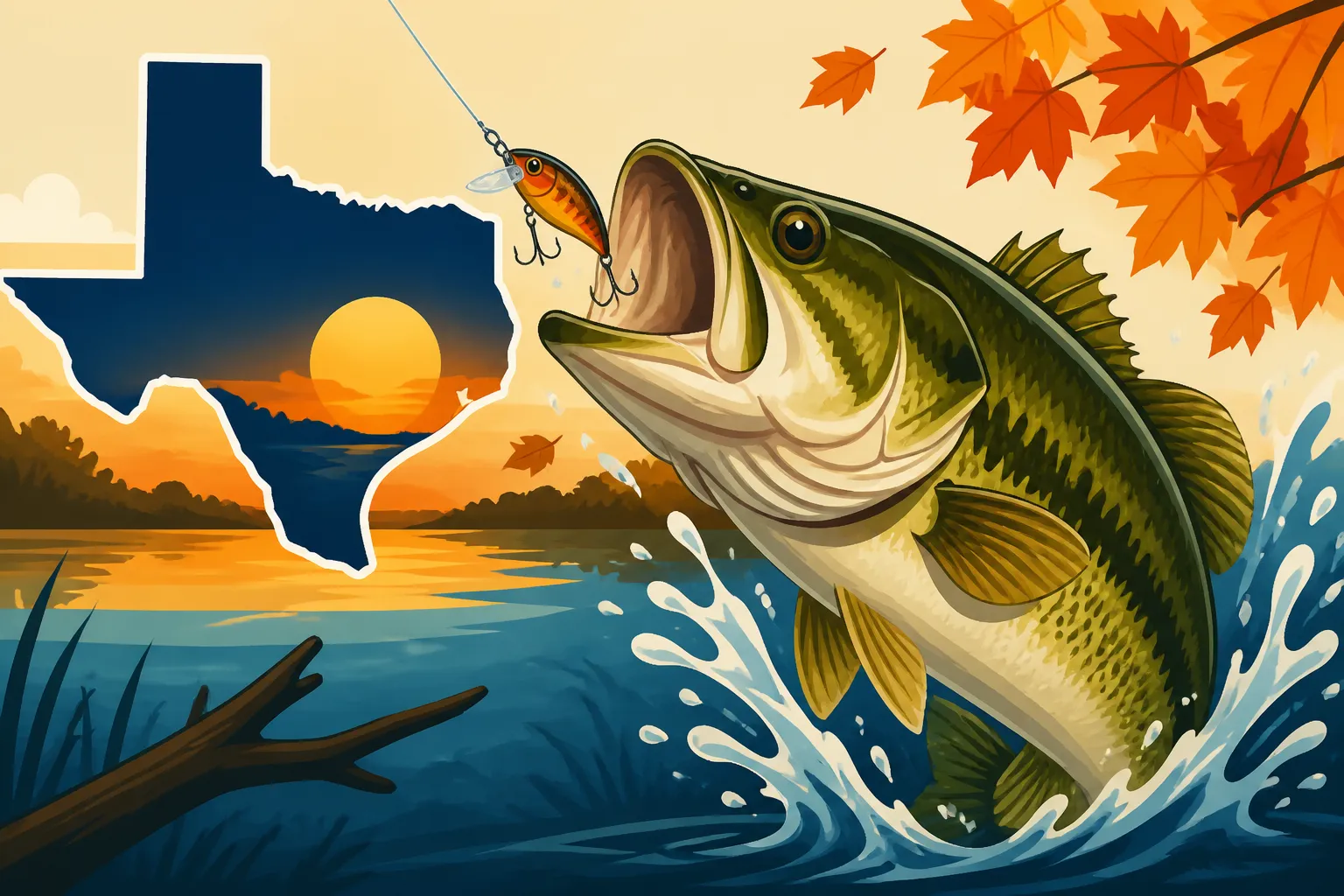
- Crankbaits: Square bill crankbaits are phenomenal for fishing shallow cover like docks, laydowns, and rocky banks. Their erratic action and ability to deflect off structure often trigger strikes. Medium-diving crankbaits are perfect for main lake points, submerged humps, and creek channels, imitating shad migrating through these areas. Look for colors like shad patterns, chrome, or even crawfish patterns if bass are feeding on crustaceans. A fast, erratic retrieve often works best.
- Spinnerbaits: These classic lures are incredibly versatile in the fall. They excel in stained or murky water, around grass lines, and when fishing timber. The flash and vibration of the blades draw attention, making them excellent search baits. Experiment with different blade combinations (Colorado/willow, tandem willow) and skirt colors (white/chartreuse for shad imitation, or darker colors for crawfish). Slow rolling them over points or burning them just under the surface near bait balls can be deadly.
- Chatterbaits (Bladed Jigs): These hybrids combine the flash of a spinnerbait with the erratic action of a crankbait. They're fantastic for working grass edges, skipping under docks, or fishing through sparse cover. The vibrating blade creates a unique thumping action that bass can't resist. Pair them with a matching soft plastic trailer for added bulk and action. White and chartreuse are go-to colors.
- Topwater Lures: On calm, overcast mornings or evenings, topwater fishing can be spectacular. Poppers, walking baits (like a Heddon Super Spook), and prop baits can draw explosive strikes when bass are feeding near the surface. Focus on flats, points, and the backs of coves where baitfish are congregating. The key is often to let the lure sit for a moment after casting, then work it with pauses and varying retrieve speeds to mimic a struggling baitfish.
Finesse Presentations for Finicky Bass
Even with aggressive fall feeding, there will be days when a cold front moves through, or the fish just aren't as active. That's when finesse techniques shine.
- Texas Rigs: A true Texas staple, the Texas rig is excellent for punching through grass, fishing dense brush piles, or slowly working rocky bottoms. Pairing a soft plastic worm or creature bait with a bullet weight and an EWG hook, it's virtually weedless. This allows you to present a bait directly into the fish's living room. A slower, methodical retrieve with subtle hops and drags is often most effective. Learn how to fish a Texas rig for bass effectively.
- Carolina Rigs: When bass are deeper, perhaps on main lake humps or points, and you need to cover ground effectively, the Carolina rig is your friend. It allows your bait to float freely behind a heavy weight, presenting a more natural, subtle offering. It's particularly good for targeting bass that are suspended or cruising slightly off the bottom. Focus on slow drags and long pauses, letting the current or your boat's movement impart action.
- Shaky Heads and Drop Shots: These ultra-finesse techniques are perfect for when bass are pressured, lethargic, or in clear water. A shaky head jig allows a small worm to stand upright off the bottom, mimicking a feeding baitfish. The drop shot rig, on the other hand, suspends your bait at a precise depth above a weight, making it irresistible to finicky bass. Both are excellent for vertically presenting baits over deep structure or targeting individual fish seen on your electronics.
Jigs and Swimbaits for Bigger Bites
If you're hunting for those true giants, fall is a prime time, and jigs and swimbaits are your heavy hitters. These lures imitate larger prey, often triggering a territorial or "big meal" response from trophy bass.
- Football Jigs and Casting Jigs: Jigs are quintessential big bass baits, especially in fall. Football jigs excel on rocky bottom areas, humps, and points, where they can mimic crawfish or bottom-dwelling bait. Casting jigs are more versatile, great for pitching into laydowns, docks, or sparse grass. Pair them with a bulky soft plastic trailer that adds action and resembles a crawfish or a bluegill. A slow, crawling, or hopping retrieve is usually the ticket. Focus on structure where big bass can ambush.
- Swimbaits: Whether you're using a smaller paddle tail swimbait on a jig head to mimic a single shad, or a larger jointed swimbait to imitate a big gizzard shad or even a small bream, these baits can be incredibly effective. Swimbait fishing requires a bit more dedication but can yield astounding results. Vary your retrieve speed, sometimes slow and steady, sometimes with sudden twitches, to make the bait look injured or panicked. This is an excellent choice for targeting those massive bass on popular trophy lakes like O.H. Ivie Reservoir or Lake Fork.
Mastering Fall Fishing Strategies Across Texas Water Bodies
Texas is a vast state, and its fishing waters are incredibly diverse, from expansive reservoirs to winding rivers and countless smaller ponds. While the general principles of fall bass fishing remain, tailoring your strategy to the specific type of water body will dramatically increase your success.
Large Reservoirs and Their Fall Challenges
Lakes like Toledo Bend Reservoir, Sam Rayburn, or Lake Livingston are immense, and patterning bass on them in the fall can feel like searching for a needle in a haystack. The sheer size means bass have a lot of room to roam, and baitfish schools can be spread out. The key here is to embrace mobility and methodical searching.
Start by focusing your efforts on major creek arms and the main lake points at their entrances. These are natural migration routes for baitfish moving into shallower feeding grounds. Use your electronics to find schools of baitfish, and then target the areas immediately around them. Don't be afraid to cover a lot of water with fast-moving search baits like crankbaits or spinnerbaits until you locate concentrations of fish. Once you find them, slow down and work the area thoroughly. Pay close attention to subtle depth changes, submerged timber, or old roadbeds, which often act as highways for bass. Fishing for bass in large Texas reservoirs requires patience and a willingness to adapt as conditions change.
Smaller Lakes and Ponds: Simpler Patterns
While large reservoirs demand extensive searching, smaller lakes, city park ponds, and private impoundments often present a much more straightforward fall fishing scenario. The bass here tend to be more predictable, and the feeding frenzies can be incredibly intense.
In these smaller waters, bass often relate heavily to any available cover: docks, brush piles, submerged trees, and grass lines. With cooler water, they'll spend more time in the shallows, making them accessible even to bank anglers. Aggressive power fishing with squarebill crankbaits, spinnerbaits, or even topwater lures can be incredibly effective, especially during the early morning or late afternoon. Don't overlook weed edges or deeper holes in the middle of a pond where bass might retreat during the brightest parts of the day. The beauty of these smaller waters is that you can often develop a successful pattern relatively quickly and enjoy consistent action. Many of these waters are part of the Texas Neighborhood Fishin' program stocked lakes, making them ideal for family outings.
River Systems and Flow Dynamics
Fishing river systems like the Trinity River, Guadalupe River, or Brazos River in the fall presents a unique set of challenges and opportunities. The constant flow of water is the primary factor influencing bass behavior. As temperatures cool, bass in rivers will often congregate in slower-moving eddies, oxbows, and around structure that breaks the current.
Look for current breaks created by fallen trees, rock piles, bridge pilings, or sharp bends in the river. These spots allow bass to rest out of the main current while still having easy access to baitfish being swept downstream. Spinnerbaits, jigs, and Texas-rigged soft plastics are excellent choices for working these current seams and structural elements. Pay attention to water clarity and adjust your lure colors accordingly. After a good rain, bass will often move into feeder creeks to capitalize on new influxes of food. Understanding Texas Freshwater Fishing Regulations is especially important when fishing rivers, as regulations can sometimes be site-specific.
Essential Gear and Tips for Fall Bass Anglers
As a seasoned angler, I've learned that having the right tools and being prepared for anything can make or break a fall fishing trip. Texas weather can be famously unpredictable, so a versatile tackle selection and appropriate attire are non-negotiable.
Rod, Reel, and Line Setups
Versatility is the name of the game in fall bass fishing. You'll want a few different setups to handle various techniques.
- Medium-Heavy Casting Rod (6'6" – 7'3"): This is your workhorse for most moving baits like crankbaits, spinnerbaits, and chatterbaits. Pair it with a baitcasting reel with a gear ratio around 6.4:1 or 7.1:1, allowing you to quickly retrieve lures and keep up with aggressive bass. For line, 15-20 lb fluorocarbon is an excellent choice for its low stretch and abrasion resistance, giving you a good feel for the lure and strong hooksets.
- Medium-Action Spinning Rod (6'6" – 7'): Essential for finesse techniques like shaky heads, drop shots, and weightless worms, especially in clear water or when the bite is tough. A spinning reel in the 2500-3000 size range spooled with 10-15 lb braided line (with an 8-12 lb fluorocarbon leader) offers incredible sensitivity and casting distance for lighter baits.
- Heavy Casting Rod (7' – 7'6"): If you're pitching jigs into heavy cover or throwing larger swimbaits, a heavier rod with more backbone is crucial. Pair it with a sturdy baitcasting reel and 50-65 lb braided line for maximum power and abrasion resistance.
You can find a wide array of reliable fishing rods and reels on Amazon to suit your budget and specific needs. Remember, matching your rod and reel to the specific technique you're employing will significantly improve your presentation and hook-up ratios. For more detailed information, consider checking out our guide on Best Fishing Rods for Texas Anglers.
Seasonal Tackle Box Must-Haves
Your fall tackle box should be a dynamic collection, ready to adapt to the day's conditions. Beyond the specific lures mentioned earlier, here are some must-haves:
- Plenty of Soft Plastics: Stock up on various colors and styles of worms, creature baits, and swimbaait trailers. Green pumpkin, black and blue, junebug, and watermelon red are perennial favorites.
- Terminal Tackle: A good selection of hooks (EWG, straight shank, wacky rig hooks), bullet weights (various sizes), and swivels is crucial. Don't forget extra leader material (fluorocarbon in 8-20 lb test) and plenty of soft plastic scent.
- Line Clippers and Pliers: Sharp line clippers are essential for clean knots, and good pliers (especially needle-nose) are invaluable for removing hooks safely from fish, and sometimes from yourself!
- Net and Scale: A good landing net helps protect both you and the fish, especially when dealing with larger, more acrobatic bass. If you're interested in the ShareLunker program or simply want to document your catches, a reliable scale is a must.
- Sun Protection: Even in fall, the Texas sun can be intense. Always carry sunscreen, a wide-brimmed hat, and polarized sunglasses. Polarized sunglasses are particularly helpful for spotting fish or submerged structure in clearer water.
Weathering the Texas Fall Elements
Texas fall weather is a fickle beast. One day it can be 80 degrees, the next a cold front sweeps through, dropping temperatures into the 40s. Being prepared for these swings is vital for comfort and safety.
- Layer Up: Always dress in layers. Start with a moisture-wicking base layer, add a fleece or thermal layer, and top it with a waterproof and windproof outer shell. You can always peel layers off as the day warms up, but you can't add what you don't have.
- Rain Gear: Sudden pop-up showers are not uncommon. A lightweight, packable rain suit (jacket and pants) can save your day.
- Hand Warmers: For those truly chilly mornings, a few chemical hand warmers can make a big difference, especially if you're a bank angler or not moving much.
- Hydration: Even in cooler weather, it's easy to get dehydrated. Always bring plenty of water or sports drinks.
- Check the Forecast: Before heading out, always check the latest weather forecast. Pay attention not just to temperature, but also wind speed and direction, as these can drastically affect boating conditions and fish behavior. A guide like Texas Fishing Seasons Month by Month can offer a broader view of seasonal expectations.
Remember, a little preparation goes a long way. Fall is an incredible time to be on the water in Texas, with often aggressive fish and beautiful scenery. By understanding bass behavior, knowing where to look, and having the right gear, you'll be well-equipped to make the most of this fantastic season. For those wondering about the annual cycle, our guide on the Texas Bass Spawning Season Guide provides insight into what happens before and after the fall feeding frenzy. And don't forget, you'll need to know your Texas Fishing License Requirements Explained before you even cast a line!
Fall Bass Lure Comparison Chart
Here's a quick reference table comparing some popular fall bass lures and their ideal conditions:
| Lure Type | Best for… | Ideal Conditions | Retrieve Style | Target Zone |
|---|---|---|---|---|
| Squarebill Crankbait | Shallow cover (docks, rocks, laydowns) | Active fish, stained to clear water | Erratic, deflecting off structure, varying speed | Shallows, creek channels |
| Spinnerbait | Covering water, grass lines, murky water | Windy, overcast, post-cold front | Slow roll, burning, stop-and-go | Grass, timber, points |
| Chatterbait | Grass edges, skipping docks, sparse cover | Active to moderately active fish, stained water | Steady retrieve, occasional twitch | Grass, docks, laydowns |
| Topwater (Popper/Walker) | Surface activity, calm conditions, low light | Calm, low wind, early morning/late evening | Walk-the-dog, pop-and-pause, erratic | Flats, points, coves |
| Texas Rig | Heavy cover, bottom contact | Any conditions, especially good for punching | Drag, hop, twitch, slow crawl | Grass, brush, rocks |
| Carolina Rig | Deeper water, suspended fish, covering ground | Moderately active, clear to stained water | Slow drag, long pauses | Humps, points, channels |
| Football Jig | Rocky bottoms, deep structure, big fish | Cooler water, moderate to clear conditions | Drag, hop, subtle shake | Rocks, humps, ledges |
| Swimbait (Paddle Tail) | Mimicking shad, covering water | Active fish, clear to stained water | Steady retrieve, occasional twitch | Open water, points, humps |
Disclaimer
Fishing conditions and regulations can change. Always consult the latest Texas Parks and Wildlife Department (TPWD) regulations before heading out. This guide is for informational purposes only and does not constitute professional advice.