Texas Catfish Bag Limits
One of the most common frustrations for any Texas angler is trying to keep up with all the different rules and regulations, especially when it comes to specific fish species. You’re out there, having a great day, the catfish are biting, and suddenly you start to second-guess yourself: "How many can I keep? What's the size limit on that big blue cat? Does this lake have special rules?" It's enough to make your head spin! This comprehensive guide is here to clear up all that confusion about Texas catfish bag limits, so you can focus on the fight and enjoy your catch with confidence.
Understanding Texas Catfish Species and Their Limits
Texas is a fantastic state for catfish, home to three main species that anglers regularly target: Channel Catfish, Blue Catfish, and Flathead Catfish. While they all share that distinctive whiskered face, they have different characteristics, grow to different sizes, and, most importantly, have slightly different regulations you need to be aware of. Knowing which one you've hooked is the first step to staying compliant and avoiding any unwanted surprises from a game warden.
Channel Catfish
Ah, the good ol' Channel Catfish! These are arguably the most common and widespread catfish in Texas, found in almost every lake, pond, and river across the state. They’re known for their deeply forked tails, smooth skin, and often, a scattering of dark spots along their sides, especially when they're younger. They’re fantastic fighters on light tackle and even better on the dinner plate. Many of us grew up catching Channels in local ponds, and they hold a special place in the hearts of Texas anglers.
Channel catfish are often abundant and reproduce readily, which is why the regulations for them are generally more generous compared to their larger cousins. However, "generous" doesn't mean "unlimited," and there are still important daily bag and length limits to adhere to. These rules are in place to ensure that even with their prolific nature, their populations remain healthy and sustainable for future generations of anglers. Whether you’re targeting them with punch bait, cut bait, or even a simple worm, understanding the rules for these delicious fish is crucial.
Blue Catfish
If you're looking for a serious battle and the potential for a true trophy, the Blue Catfish is your target. These giants are known for their formidable size, straight-edged tails, and often a distinctive hump just behind their head, especially on larger specimens. Unlike channels, blues typically don't have spots, and their color can range from a silvery-blue to a slate gray. They're often found in larger rivers and reservoirs, thriving in deep, flowing water. Lakes like Lake Tawakoni and Lake Texoma are legendary for their monster blue cat populations.
Because of their potential to grow to immense sizes—sometimes over 100 pounds—Blue Catfish often have specific regulations designed to protect these larger, older breeding fish. While you can keep a good number of smaller blues, the rules tighten up considerably for the really big ones. This helps ensure that the gene pool for large fish remains strong, and that those incredible, once-in-a-lifetime catches continue to be a possibility for anglers across Texas. Without these regulations, it wouldn't take long for the giants to disappear, impacting both the ecosystem and the fishing experience.
Flathead Catfish
The Flathead Catfish is a unique creature among its whiskered brethren, a true ambush predator with a distinctive appearance. You can recognize a Flathead by its broad, flattened head (hence the name!), small eyes, and a lower jaw that protrudes noticeably past the upper jaw, giving it a shovel-like look. Their tails are rounded, not forked, and their coloration is often mottled brown and yellow, allowing them to blend seamlessly with rocky or woody bottom structures. They prefer live bait and can be incredibly elusive, making them a prized catch for many dedicated anglers.
Flatheads are typically less numerous than channels or blues and have different life cycles. They're also known for their incredible table fare, with firm, white meat. Due to their solitary nature and slower growth, their bag and length limits are often the most restrictive of the three species. These stricter rules are vital for protecting their populations and ensuring that these fascinating, hard-fighting catfish remain a part of Texas’s diverse fishery. Catching a big flathead often feels like a significant accomplishment, and respecting their limits helps maintain that challenge and reward for all of us.
Specific Bag and Length Limits for Each Catfish Species
Navigating the exact numbers for catfish limits can feel a bit like trying to solve a puzzle, especially with all the nuances between species and different bodies of water. The Texas Parks and Wildlife Department (TPWD) sets these rules with conservation in mind, balancing recreational opportunities with the need to maintain healthy fish populations. Knowing the precise statewide rules is your baseline, but remember, there are always exceptions that you need to be mindful of.
Statewide Daily Bag and Length Limits
For most of Texas's public waters, the regulations for catfish are fairly consistent. It’s important to understand these general rules first, as they apply almost everywhere unless otherwise noted. The daily bag limit refers to the maximum number of fish you can keep in a single 24-hour period, starting at midnight. The length limit refers to the size range of fish you are legally allowed to retain.
Here’s a breakdown of the statewide limits for the three main species:
| Species | Daily Bag Limit | Minimum Length | Maximum Length | Special Notes |
|---|---|---|---|---|
| Channel Catfish | 25 (combined) | 12 inches | None | Combined with Blue Catfish. |
| Blue Catfish | 25 (combined) | 12 inches | None | Combined with Channel Catfish. Only 5 fish over 30 inches. |
| Flathead Catfish | 5 | 18 inches | None |
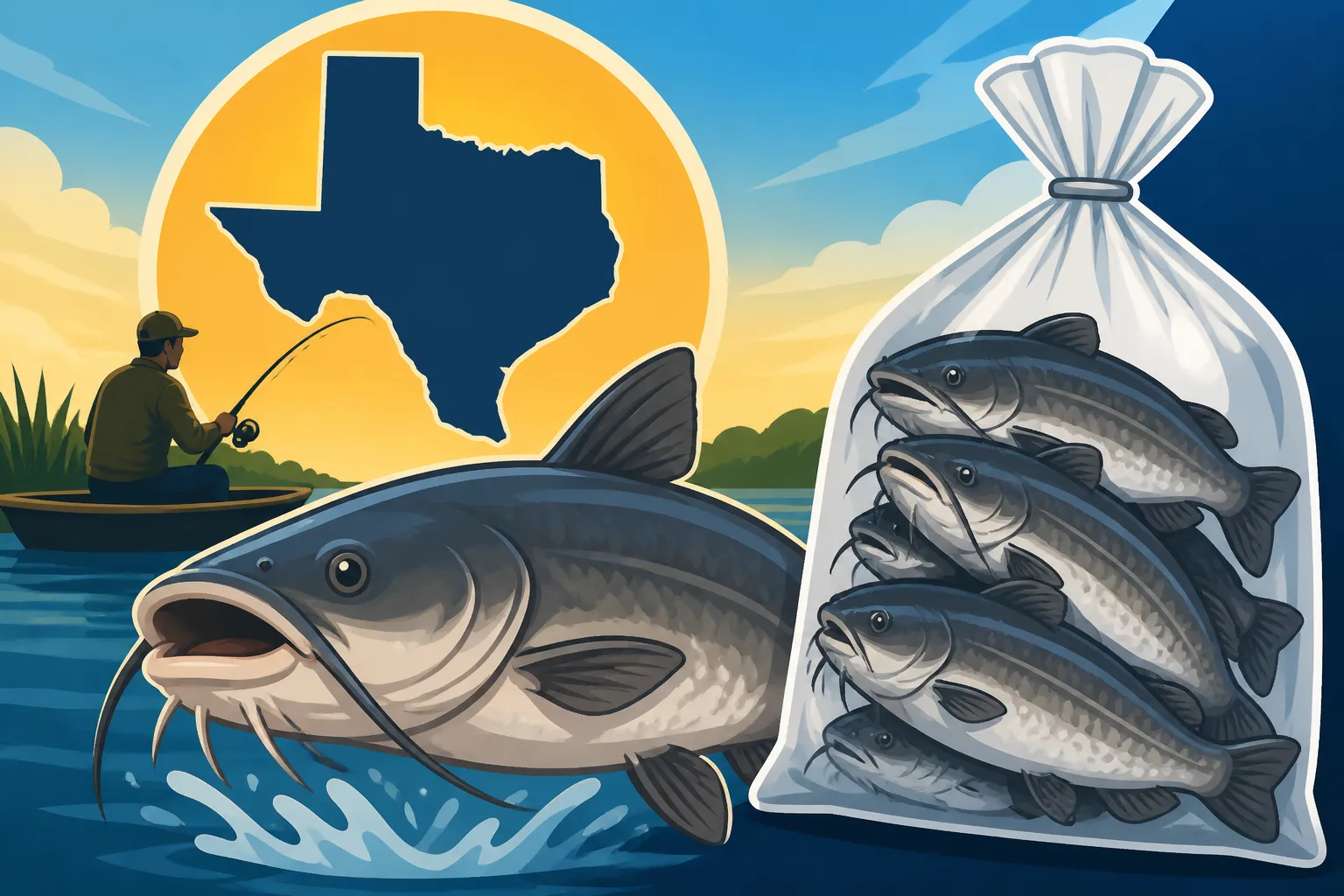
Let’s unpack this a bit. For Channel and Blue Catfish, you can keep a combined total of 25 fish per day. This means if you catch 10 channel cats and 15 blue cats, you've hit your combined limit. Crucially, within that combined 25, you can only keep 5 Blue Catfish that are over 30 inches long. This particular rule is a big one, designed to protect those large, reproductively valuable blue cats. For Flathead Catfish, the limit is much more restrictive: only 5 per day, with an 18-inch minimum length. These specific limits, detailed further in our article on Texas Catfish Bag Limits, are critical for responsible angling.
Special Community Fishing Lakes and Park Waters
While the statewide limits are your general guide, it's absolutely vital to remember that not all waters play by the same rules. Many smaller community fishing lakes (CFLs) and waters within state parks or city parks often have very specific, and typically more restrictive, regulations. These localized rules are usually put in place because these smaller bodies of water receive heavy fishing pressure, or they are specifically managed for "put-and-take" fisheries, often stocked with smaller fish for immediate recreational angling.
For instance, many of these urban or community-managed ponds might have a daily bag limit of only 5 Channel or Blue Catfish, with no minimum length, or a slot limit that differs significantly from the statewide rule. You might also find rules that prohibit the use of trotlines or juglines in these areas. It’s not uncommon to see large, clear signs posted at these locations detailing the exact regulations. Always, and I mean always, take a moment to read these signs before you cast your first line. Ignoring them, even accidentally, can lead to a ticket, and nobody wants that to ruin a perfectly good fishing day. For instance, the TPWD’s Neighborhood Fishin' program lakes often have very specific regulations posted right there at the access points. These special rules are a key part of Texas Freshwater Fishing Regulations.
Reservoir-Specific or River-Specific Exceptions
Beyond community lakes, some of Texas's larger, more popular reservoirs and certain river stretches also have their own unique catfish regulations. These exceptions are typically established after extensive biological studies by TPWD to address specific population dynamics or management goals within that particular body of water. For example, a lake known for producing exceptionally large blue catfish might have a tighter slot limit to protect those trophy-sized breeders.
Take Lake Tawakoni, for instance, a powerhouse for blue catfish. While the statewide combined limit for blue and channel catfish is 25, with only 5 blue catfish over 30 inches, Tawakoni specifically has a rule where you can only keep one blue catfish 30 inches or greater in length within your 25-fish combined bag. Another example is Richland-Chambers Reservoir, which often has special rules impacting its impressive catfish populations. Similarly, on Lake Texoma, due to its shared border with Oklahoma, specific reciprocal agreements and unique limits are in place for certain species, including catfish. Always consult the current TPWD Outdoor Annual or use their online "Public Fishing Waters" tool before heading to a new reservoir. This diligence ensures you're fishing within the law and contributing to the health of that specific fishery. Checking the specific regulations for a particular lake, like those you'd find in a guide for Lake Texoma Fishing License Rules, is always a smart move.
Common Misconceptions and Special Scenarios
Even with a clear understanding of the basic rules, anglers often run into situations that can cause confusion. Fishing isn't always black and white, and there are nuances around culling, possession, and how certain gear types interact with bag limits. Getting these details straight can save you a headache down the line and ensure you're always fishing ethically and legally.
The "Combined" Bag Limit Explained
The term "combined" for Channel and Blue Catfish often trips people up. It doesn't mean you get 25 channel catfish and 25 blue catfish. Instead, it means that your total number of both species, added together, cannot exceed 25 fish in one day.
Let’s walk through a few scenarios:
- Scenario 1: You catch 15 Channel Catfish, all over 12 inches. You then catch 10 Blue Catfish, all between 12 and 30 inches. Your combined total is 25, and none of your blue cats are over 30 inches, so you're good.
- Scenario 2: You catch 20 Channel Catfish, all legal. You then catch 5 Blue Catfish. Two of those Blue Catfish are over 30 inches, and three are under 30 inches. You've hit your combined limit of 25. You are also within the "5 Blue Catfish over 30 inches" rule because you only have two.
- Scenario 3 (Illegal): You catch 20 Channel Catfish. You then catch 6 Blue Catfish that are all over 30 inches. You have technically caught 26 fish (over the combined limit), and you have 6 Blue Catfish over 30 inches (over the specific large blue cat limit). This scenario would put you in violation.
The key is to keep a running tally of both species and pay very close attention to the length of your Blue Catfish. That "only 5 over 30 inches" rule within the 25-fish combined bag for blue and channel catfish is the one that most often leads to issues if not understood clearly. It's a prime example of why knowing Texas Fish Bag and Length Limits is so important.
Culling and Possession Limits
Culling refers to the act of replacing a fish you've already kept with a larger one of the same species. In Texas, you are generally allowed to cull legally caught fish, but there's a critical catch: once a fish is placed on a stringer, in a livewell, or otherwise retained as part of your daily bag, it counts towards your limit. If you decide to replace it with a larger fish, you must immediately release the smaller fish alive. You cannot be in possession of more than your daily bag limit at any time while you are fishing.
The "possession limit" also comes into play. While the daily bag limit is what you can catch in one day, the possession limit is the maximum number of fish you can have in your possession at any time, including fish stored at home, in your cooler, or in your vehicle. For most species in Texas, the possession limit is typically twice the daily bag limit. So, for Channel and Blue Catfish, your possession limit would generally be 50 combined, with specific rules for large blue catfish applying.
When transporting fish, TPWD regulations require that you retain the head and tail of your catch until you reach your final destination. This allows game wardens to accurately identify the species and measure the fish to ensure compliance with length limits. Cutting off the head or tail prematurely could lead to a citation, even if you were otherwise legal. This is a common rule across many states and helps prevent illegal possession.
Gear-Specific Regulations for Catfish
Catfish are often targeted using methods beyond rod and reel, such as trotlines and juglines. These passive fishing methods also come with their own set of rules and limitations, which are designed to ensure fair chase, prevent overharvest, and maintain safety on the water.
For instance, if you're using a trotline, there are rules about the maximum number of hooks you can deploy (typically 50 hooks per line), how the line must be tagged with your name and address or TPWD customer number, and where you can set them (e.g., not near boat ramps or swimming areas). Similarly, juglines have rules about the number of jugs you can use, and how they must be marked. These rules are detailed in our guide on Texas Trotline and Jugline Rules.
The fish caught on trotlines and juglines still count towards your daily bag and possession limits. You cannot, for example, catch your daily limit of catfish on a rod and reel and then go check your trotlines to add more fish beyond that limit. All fish caught by any legal method contribute to your overall daily bag. Understanding these gear-specific rules is just as important as knowing your size and bag limits, ensuring your entire fishing operation is compliant.
Why These Regulations Matter: Conservation and Future Fishing
It's easy to view fishing regulations as just another bureaucratic hurdle, something to memorize to avoid a ticket. But the truth is, these rules are much more than that. They are the backbone of sustainable fishing in Texas, meticulously crafted by biologists and wildlife managers to ensure that our incredible fisheries remain vibrant and productive for generations to come. Without them, the prolific waters we enjoy today could quickly become barren.
Preventing Overfishing and Maintaining Healthy Populations
At its core, the primary purpose of bag and length limits is to prevent overfishing. Every fish population has a finite capacity to reproduce and sustain itself. If too many fish are removed, or if too many of the wrong size (e.g., large breeders or immature fish) are taken, the population can crash, and it takes many years, if not decades, for it to recover.
Consider Blue Catfish: the rule about only keeping 5 fish over 30 inches isn't arbitrary. Larger, older fish, particularly females, are often the most prolific spawners, contributing significantly more eggs to the next generation. By limiting the harvest of these "trophy" sized fish, TPWD helps ensure that a strong breeding stock remains in the water, producing plenty of young fish to keep the population robust. Conversely, minimum length limits for species like Flatheads protect younger, immature fish, giving them a chance to grow, reproduce at least once, and contribute to the overall biomass before they can be harvested. These are the fundamental principles of Texas Freshwater Fishing Regulations that keep our lakes and rivers teeming.
Ensuring Quality Fishing Experiences for Everyone
Beyond preventing ecological collapse, regulations also aim to enhance the quality of the fishing experience for all anglers. Nobody wants to go to a lake expecting a good day of fishing, only to find it depleted of fish or dominated by small, unhealthy specimens. Thoughtful bag and length limits contribute to a more diverse and enjoyable fishery.
By protecting larger fish, these rules help maintain the potential for trophy catches, which are a huge draw for many anglers. Imagine heading out to Lake Tawakoni specifically to catch a giant blue cat; the limits in place mean that those opportunities aren't just a distant memory. They also help distribute the catch more equitably among anglers and ensure that the populations are healthy enough to withstand natural pressures like drought or disease. When you have a healthy, balanced fish population, you generally have more consistent fishing success, and the fish you do catch are typically healthier and stronger. These regulations are a key component of the Texas Parks and Wildlife Department's broader management strategies, influencing things like Texas Catfish Species Guide and ensuring there are plenty of fish for us to learn How to Catch Catfish in Texas.
Staying Compliant: Tips for Anglers
Understanding the rules is one thing, but consistently applying them on the water is another. Life happens, conditions change, and sometimes, in the excitement of the moment, it's easy to make a mistake. Developing good habits and having the right tools can make all the difference in ensuring you stay compliant and avoid any unintended violations.
Always Check Current Regulations
This is, without a doubt, the single most important piece of advice any angler can receive. Regulations are not static; they can and do change. While the statewide catfish limits have been fairly consistent for a while, specific lake or river regulations are reviewed periodically and can be adjusted based on biological surveys, environmental conditions, or management goals.
How do you stay updated?
- TPWD Outdoor Annual: The Texas Parks and Wildlife Department publishes an annual Outdoor Annual, available online and at most license vendors. This is your definitive guide. You can also download the TPWD Outdoor Annual app to your smartphone, which is incredibly handy on the water.
- TPWD Website: The official TPWD website has a dedicated "Public Fishing Waters" section where you can search for specific lakes or rivers and pull up their unique regulations. This is particularly useful for checking those reservoir-specific exceptions.
- Local Signage: As mentioned, always read any signs posted at boat ramps, fishing piers, or park entrances, especially at smaller community fishing lakes.
- License Year: Remember that fishing licenses and the associated regulations run from September 1st to August 31st each year. Always make sure your Texas Fishing License Renewal Rules are up to date and that you're fishing under the most current set of rules.
It might seem tedious to double-check every time, but it’s a small effort that prevents big problems. It also shows respect for the resource and the efforts of wildlife managers. Our guide on Texas Fishing License Requirements Explained offers more details on keeping your paperwork in order.
Essential Gear for Measuring and Counting
To comply with length and bag limits, you need practical tools at your disposal. Don't rely on guesswork – a few simple items can make all the difference.
- Measuring Device: A reliable measuring board or tape measure is absolutely essential. Many tackle boxes or boat dashboards come with adhesive rulers, or you can purchase standalone bump boards. Make sure it's clearly marked in inches and easy to read, especially when wet or in low light. For example, a sturdy, bright-colored measuring board can be found on Amazon, making it easy to see and use quickly on the boat or bank. When measuring, lay the fish flat on its side, with its mouth closed and against the bump (if using a board), and measure to the tip of the tail.
- Counting System: For bag limits, especially for a combined limit of 25 fish, it’s easy to lose track. A simple clicker counter, often used by golf pros or event organizers, can be a great way to keep an accurate tally of fish kept. Alternatively, some anglers use a designated stringer for legal fish, and visually count as they go. Others might use a small notepad and pencil, or even a specialized fishing app that allows for logging catches.
- Stringer or Livewell: If you intend to keep fish, you need a way to keep them alive and healthy until you leave the water, or properly iced in a cooler. A strong stringer that threads through the fish's gill plate and out its mouth is common for bank anglers. For boaters, a well-aerated livewell is ideal. Keeping fish alive not only preserves their freshness for consumption but also allows for ethical culling if you decide to upgrade a smaller fish with a larger, legal one. Just ensure your livewell is adequate for the number and size of fish you plan to keep.
Having these tools readily available means you can quickly and accurately assess your catch, reducing stress and ensuring you're always within the legal parameters.
Reporting Violations and Ethical Angling
As anglers, we're all stewards of the resource. Part of that stewardship involves ensuring that everyone plays by the rules. If you witness a fishing violation, such as someone keeping undersized fish, exceeding the bag limit, or using illegal gear, you have a responsibility to report it.
The TPWD's "Operation Game Thief" program provides a confidential way to report violations. You can call their hotline at 1-800-792-GAME (4263) or use their online reporting system. Provide as much detail as possible, including location, date, time, description of the individuals or vessel, and the nature of the violation. These reports are crucial for law enforcement to protect our fisheries.
Beyond reporting, ethical angling also means practicing responsible catch-and-release, especially for those larger fish that you don't intend to keep or that exceed specific length limits. Handle fish gently, minimize their time out of water, and use proper dehooking tools (many excellent options are available on Amazon) to ensure their best chance of survival. Releasing a large, healthy blue catfish to spawn again is a rewarding act that directly contributes to the future of Texas fishing. Understanding the proper techniques for How to Catch Catfish in Texas also includes knowing how to release them responsibly.
Disclaimer
Please remember that fishing regulations, including bag and length limits, can change. Always consult the most current Texas Parks and Wildlife Department Outdoor Annual or their official website before heading out to fish to ensure you have the most up-to-date and accurate information. This guide is for informational purposes only and should not be considered a substitute for official regulations.