Penalties for Fishing Without a Texas License
It's an easy mistake to make, especially when you're caught up in the excitement of a fishing trip or simply forget to renew your annual license. Many anglers find themselves wondering about the real consequences of dropping a line in Texas waters without the proper permits. This comprehensive guide will walk you through the various penalties and repercussions you could face if you're caught fishing without a valid Texas fishing license, helping you understand the gravity of the situation and how to avoid it.
The Absolute Necessity of a Texas Fishing License
Before we dive into the nitty-gritty of penalties, let's briefly touch on why these licenses are so crucial. It’s not just about bureaucracy; it’s about conservation. The fees collected from fishing licenses directly fund critical conservation efforts, fish stocking programs, habitat restoration, and enforcement by the Texas Parks and Wildlife Department (TPWD). Without these funds, the vibrant fisheries we enjoy across the state, from the sprawling lakes of East Texas to the productive bays of the Gulf Coast, wouldn't be sustainable.
Imagine heading out to your favorite spot on Lake Fork, all geared up for a trophy bass, only to realize your license expired last month. Or maybe you're visiting from out of state and just assumed you didn't need one for a quick trip to the coast. These assumptions can quickly lead to an unpleasant encounter with a game warden, and trust me, they're not there to give warnings for something as fundamental as a license. Understanding the legal framework is the first step in ensuring your fishing adventures remain enjoyable and penalty-free. You can learn more about the specific requirements by checking out Texas Fishing License Requirements Explained.
Who Needs a License and Who Doesn't
The general rule of thumb in Texas is that most individuals aged 17 and older need a valid fishing license to fish in public waters. This applies whether you're fishing from a boat, off a pier, or wading in a stream. There are, however, some notable exceptions that people often overlook, which can lead to confusion.
For instance, children under 17 years of age are exempt from needing a license. This is fantastic for encouraging young anglers and making family outings more accessible. Additionally, Texas offers exemptions for residents born before January 1, 1931, allowing them to fish without a license. It’s a small nod to our elder statesmen and women who have seen many fishing seasons come and go. There are also specific exemptions for disabled veterans and active-duty military personnel under certain conditions. Knowing these exceptions, outlined comprehensively in resources like Who Doesn't Need a Texas Fishing License, can save you a lot of headache and potential legal trouble. Always double-check your eligibility before assuming you're exempt, because a simple misunderstanding isn't usually an acceptable defense in the eyes of the law.
Types of Licenses and Endorsements
Texas offers a variety of fishing licenses designed to cover different types of fishing and residency statuses. You've got your basic freshwater and saltwater licenses, combination hunting and fishing licenses, and even temporary one-day licenses for those quick trips. On top of that, if you plan to fish in saltwater, you'll almost always need a saltwater endorsement, even if you have a general fishing license. This can be a point of confusion for many.
For example, a Texas resident planning to fish for catfish in a local pond would need a freshwater license. However, if they decide to try their luck at redfish in Galveston Bay, they would need a saltwater endorsement added to their license, or an all-water license which includes both. The specific costs vary, and a good overview of options like Texas All-Water Fishing License Explained can help you choose the right one. It's really important to ensure that the license you possess covers the specific type of water body you're fishing in and the species you're targeting, as this can affect whether your license is considered "valid" for the activity you're undertaking. Don't just get a license; get the right license.
What Happens When You're Caught Without a License
So, you're out on the water, minding your own business, and a Texas Game Warden approaches. They ask for your license, and you can't produce one. What's next? This isn't just a friendly chat; it's a legal interaction that can quickly escalate. Game wardens are fully commissioned state peace officers, meaning they have the authority to issue citations, make arrests, and even confiscate equipment.
The immediate consequence is usually a citation, which is essentially a ticket that requires you to appear in court or pay a fine. However, the situation can become much more severe depending on the circumstances, your past record, and the discretion of the officer. It’s crucial to remain polite and cooperative, even if you’re feeling frustrated or embarrassed. Arguing or being uncooperative can lead to additional charges, making a bad situation significantly worse. A simple fishing violation can turn into resisting arrest or obstruction, which carries far heavier penalties.
The Immediate Citation and Court Appearance
When a game warden discovers you fishing without a license, they will issue you a citation. This document details the specific violation, the date and time, and information about where and when you need to address the ticket. For many, this will mean a court appearance, typically in a Justice of the Peace court in the precinct where the violation occurred.
The citation acts as a legal summons, and ignoring it is perhaps the worst thing you can do. Failing to appear in court or failing to pay the fine by the due date can result in further legal action, including warrants for your arrest, additional hefty fees, and suspension of your driver's license. It’s not just a fishing problem anymore; it becomes a criminal justice problem. Imagine a game warden pulling you over for a routine boat safety check, and discovering an outstanding warrant for an unpaid fishing license fine from two years ago. It happens more often than you think, and it’s a situation no one wants to be in.
Discretion of the Game Warden
While game wardens are tasked with enforcing the law, they do often have some level of discretion. This doesn't mean you should expect a warning, especially for a clear-cut violation like not having a license. However, factors like your demeanor, whether you honestly just forgot, or if there are other violations involved, can sometimes influence how strictly the law is applied.
For example, if you're respectful, admit your mistake, and immediately try to rectify it (perhaps by attempting to purchase a license on your phone, though this won't negate the violation), the outcome might be slightly less severe than if you're combative or try to hide your actions. However, let’s be realistic: a game warden’s primary duty is enforcement. They see all kinds of excuses, so a genuine, respectful attitude is your best bet, but it's not a get-out-of-jail-free card. The law is the law, and being caught without a license is a violation that usually results in a citation, plain and simple.
Breaking Down the Penalties and Fines
The financial implications of fishing without a Texas license can be quite significant, extending far beyond what you would have paid for the license itself. It's typically classified as a Class C misdemeanor, which is the lowest level of criminal offense in Texas, but it still carries a punch.
The base fine for fishing without a license can range from $25 to $500. However, this base fine is rarely the only cost you'll incur. Various administrative fees, court costs, and state surcharges quickly pile up, making the total amount you owe much higher. It's not uncommon for a "simple" unlicensed fishing ticket to end up costing $300 to $500 or even more, especially after court fees and other assessments are added. Compare that to the relatively modest cost of a Texas fishing license, which often ranges from $30 to $60 for residents. It's a stark financial lesson.
The Standard Misdemeanor Charge
As mentioned, fishing without a license is usually a Class C misdemeanor. While this isn't a jail-time offense for a first-time violation, it is a criminal charge that goes on your record. This distinction is important. It's not just a civil infraction like a parking ticket; it's a criminal offense.
The maximum fine for a Class C misdemeanor is $500. This is the cap set by state law, but local jurisdictions and specific circumstances can influence the exact amount within that range. For instance, if you're also violating other regulations at the time, such as exceeding bag limits, using illegal gear, or fishing in a restricted area, those additional offenses will be tacked on, each carrying its own set of fines and potential escalation of the criminal charges. A game warden might be patrolling a popular fishing pier near Corpus Christi, and if they find you without a license and also with a redfish well over the slot limit, you're looking at multiple, serious violations.
Additional Fees and Court Costs
This is where the real sticker shock often comes in. The fine itself is only one part of the equation. When you receive a citation that requires a court appearance, you'll be responsible for various court costs and administrative fees, even if the judge decides to give you a minimal fine. These fees are set by the county and state and are mandatory regardless of the judge’s ruling on the initial offense.
These additional costs can include court administration fees, judicial support fees, indigent defense fees, and even specific fees for services like warrant processing if you failed to respond to the original citation. It all adds up quickly. For example, a $100 fine could easily turn into a $300-$400 payment once all the court and state fees are factored in. It’s a bitter pill to swallow for what might have been an honest oversight, but it’s the reality of the legal system. It's always cheaper to pay for your Texas Fishing License Cost for Residents and Nonresidents upfront.
Factors Influencing the Severity of Penalties
Several factors can influence how severely you are penalized for fishing without a license. While the minimum penalties are usually somewhat consistent, the maximums and additional consequences can vary widely.
- Prior Offenses: If this isn't your first rodeo and you've been cited for fishing without a license before, the penalties will almost certainly be harsher. Repeat offenders might face higher fines, more stringent court orders, and an increased likelihood of having their fishing privileges suspended for an extended period.
- Other Violations: Were you also caught fishing illegally in other ways? Maybe you had undersized fish, were over the bag limit, or were using prohibited gear. Each additional violation layers on more fines and potential legal trouble. For example, if you're fishing in a state park without a license and snagging protected fish, the game warden isn't going to be lenient.
- Cooperation with Authorities: As mentioned, your behavior during the encounter can play a significant role. Being respectful and cooperative won't excuse the violation, but it can certainly prevent additional charges that could arise from obstructing a peace officer or being disruptive.
- Location of the Offense: While the state laws are consistent, local justice courts might have slightly different interpretations or standard operating procedures regarding fines and court appearances. A rural county might handle things differently than a bustling metropolitan area, although the core penalties remain tied to state law.
Beyond the Financial Fine: Other Potential Penalties
While the financial hit is often the most immediate concern, fishing without a license in Texas can lead to other, perhaps more impactful, consequences that affect your ability to enjoy fishing in the future. These penalties underscore the state's commitment to protecting its natural resources and ensuring compliance.
It's not just about paying a ticket and being done with it. Depending on the severity of the offense, especially for repeat offenders or those involved in more serious wildlife violations, the state can take away your privilege to fish, confiscate your equipment, and make it difficult to obtain licenses in the future. These are the kinds of consequences that truly impact a passionate angler's lifestyle.
Loss of Fishing Privileges
One of the most significant consequences for an avid angler is the potential loss of fishing privileges. In Texas, a judge has the authority to suspend your fishing license or your privilege to obtain one for a certain period. This suspension can range from a few months to several years, depending on the nature of the violation and your past record.
Imagine being told you can't fish for the next year or two. No more weekends on Toledo Bend, no more chasing redfish in the Laguna Madre. For many, this is far more painful than any monetary fine. This suspension is recorded in the TPWD system, meaning you won't be able to purchase any new licenses, even if you try to do so through an online vendor like Amazon or at a local sporting goods store. Any attempt to fish during this suspension period would result in even more severe penalties, including higher fines and potentially jail time for violating a court order.
Equipment Confiscation
While not a universal outcome for a first-time license violation, game wardens do have the authority to confiscate fishing equipment, and even boats, used in the commission of serious wildlife violations. If your unlicensed fishing is part of a larger pattern of illegal activity, or if you're using illegal gear, the risk of losing your expensive rods, reels, and even your vessel becomes very real.
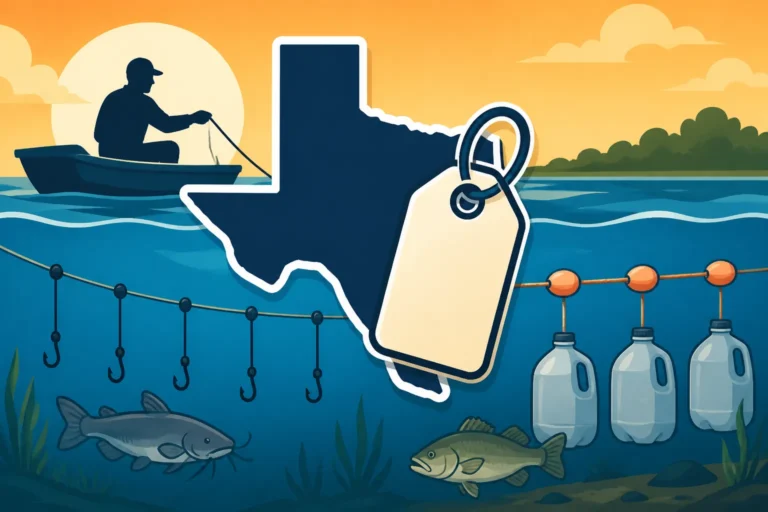
For example, if you're caught fishing without a license and found to be using an illegal trotline with too many hooks or improperly tagged, the game warden could seize the trotline, your boat, and any associated gear. While unlikely for a single, minor license offense, the possibility exists and serves as a stark reminder of the serious enforcement capabilities of TPWD. This is especially true if the violation involves commercial fishing without the proper permits, where the stakes are much higher.
Impact on Future Licenses
Beyond a temporary suspension, a history of wildlife violations, including fishing without a license, can negatively impact your ability to purchase licenses in the long term. TPWD maintains records of all citations and convictions. While a single Class C misdemeanor might not permanently bar you from getting a license, multiple offenses or more serious violations can lead to prolonged restrictions or even permanent prohibitions.
This database is interconnected, so if you try to renew your license online or at a retailer, your history of violations will be flagged. This could mean a delay in processing, additional scrutiny, or outright denial of your application. It underscores the importance of staying compliant with all regulations, not just to avoid immediate fines, but to preserve your ability to enjoy fishing for years to come. Think about it: a seemingly small mistake today could limit your access to future fishing opportunities.
Here's a quick overview of potential consequences:
| Violation Type | Potential Fine Range | Court Costs (Estimated) | Other Penalties |
|---|---|---|---|
| Fishing without license (Class C Misdemeanor) | $25 – $500 | $200 – $500 | License Suspension, Criminal Record |
| Multiple or Egregious Violations | Up to $4,000 | Variable | Equipment Confiscation, Jail Time (rare), Longer Suspensions |
| Failure to Appear/Pay | Adds $100s to Fine | Warrants, Driver's License Suspension |
Avoiding the Hassle: Ensuring You're Compliant
The best way to avoid all these penalties is simple: always be compliant. It sounds obvious, but many anglers find themselves in trouble due to forgetfulness, ignorance, or procrastination. Luckily, Texas has made it incredibly easy to purchase and manage your fishing license, so there's really no excuse.
Staying informed about the regulations and proactively managing your license status are key steps. It's a small investment of time and money that pays huge dividends in peace of mind and hassle-free fishing trips. Whether you prefer the convenience of online purchases or the traditional method of visiting a retailer, making sure your license is valid is easier than ever.
How to Get Your Texas Fishing License
Purchasing a Texas fishing license is a straightforward process, designed to be accessible to everyone. You have several convenient options:
- Online: The Texas Parks and Wildlife Department (TPWD) website offers a seamless online purchase system. You can buy your license from the comfort of your home, print a temporary copy immediately, and have the physical license mailed to you. This is often the quickest way to get legal, especially if you suddenly decide on an impromptu fishing trip. When does a Texas fishing license expire? Licenses are valid from September 1 to August 31 of the following year, regardless of when you purchase them, so planning ahead for renewal around late August is smart.
- By Phone: You can also purchase a license over the phone by calling the TPWD customer service line. This is a great option if you have questions or prefer speaking to a representative.
- In Person: Many retailers across Texas, including most sporting goods stores, bait shops, and even some grocery stores, are authorized license vendors. Places like Academy Sports + Outdoors, Bass Pro Shops, and even larger retailers like Walmart often have dedicated counters where you can quickly purchase your license. This is a good option if you want to ask questions in person or prefer a physical transaction. For specific locations, you can look up Where to Buy a Texas Fishing License In Person.
Always Carry Your License
Once you have your license, it's absolutely essential to carry it with you while fishing. Game wardens will ask to see it, and you must be able to produce it upon request. While TPWD now allows you to show your license on your phone through their official app, or even display a clear photo of it, having the physical copy is always the safest bet, especially if your phone battery dies or you lose service.
Many anglers use waterproof license holders or laminate their paper licenses to protect them from the elements. You can find durable, waterproof license holders online, including on platforms like Amazon, that attach easily to your vest or tackle box, keeping your license safe and readily accessible. Making sure your license is easily retrievable is just as important as having it in the first place.
Stay Informed on Regulations
Regulations in Texas, like any other state, can change. Bag limits, length limits, special seasons (like the Texas Flounder Season and Limits), and gear restrictions are all subject to periodic updates based on biological surveys and conservation needs. It's your responsibility as an angler to stay informed about these changes.
TPWD publishes a comprehensive Outdoor Annual every year, available online and in print wherever licenses are sold. This is your go-to guide for all fishing regulations. Before heading out, especially to a new body of water or for a species you don't typically target, take a few minutes to review the relevant sections. Ignorance of the law is never a valid defense, and a game warden will not care that you "didn't know." Being prepared means knowing not just if you need a license, but also what the current rules are for what you're trying to catch.
Special Considerations and Exemptions
While the general rule is clear – get a license – there are always specific scenarios and populations that warrant a closer look. Texas does make some allowances, but these are often misunderstood or not fully known, leading to unnecessary confusion or, worse, violations.
It's crucial to understand these nuances, not just to avoid penalties but to fully appreciate the thought that goes into managing our state's incredible fishing resources. Knowing about options like Texas Free Fishing Day or specific exemptions can make fishing more accessible for certain groups, but always remember that these are exceptions to the rule, not the rule itself.
Fishing in Private Waters or Pay Lakes
A common question is whether a fishing license is required when fishing on private property or in a "pay lake." Generally, a Texas fishing license is not required to fish in private waters. This includes privately owned ponds, lakes, or stretches of river that are entirely contained within private property and have no connection to public waterways. If you own the land or have explicit permission from the landowner, you're usually in the clear.
The same often applies to commercial "pay lakes" or "fish farms" where you pay an entry fee and are typically fishing in a contained, stocked environment. However, this is where it gets tricky: if that private lake or pay lake does have a connection to public waters (even intermittently, like during heavy rains), or if the fish can move freely between public and private systems, then a license is required. Always check with the private landowner or the pay lake operator to confirm their specific rules and license requirements, as some might still require a state license as part of their terms.
Special Exemptions for Certain Groups
Texas offers several commendable exemptions and discounts for specific segments of the population. These are important to know if you or someone you know might qualify.
- Youth Anglers: As previously mentioned, children under 17 do not need a fishing license. This is a fantastic way to introduce kids to the sport without an extra financial burden. It's a great opportunity for families to enjoy fishing together without worrying about an additional license for the youngsters.
- Seniors: While not entirely license-free for all seniors, Texas does offer significant discounts for residents aged 65 and older. These senior licenses are typically much less expensive than standard adult licenses. You can find more details on Texas Senior Fishing License Discount and Texas Fishing License for Anglers Over 65.
- Disabled Veterans and Active Military: Texas honors its service members with exemptions for certain disabled veterans and active-duty military personnel. For disabled veterans, specific documentation of disability is required. Active-duty military personnel typically need to show proof of their active status. These exemptions acknowledge their service and sacrifice. Always have the proper identification ready to present to a game warden if you fall into one of these categories.
- Free Fishing Day: TPWD designates one specific day each year as Free Fishing Day, typically in early June. On this day, everyone, regardless of age or residency, can fish in public waters without a license. It’s a wonderful initiative to encourage participation in fishing. However, all other regulations, such as bag and length limits, still apply on this day. It's not a free-for-all!
When Reciprocal Agreements Apply (e.g., Lake Texoma)
Some border waters shared with neighboring states have special reciprocal agreements regarding fishing licenses. The most prominent example in Texas is Lake Texoma, which it shares with Oklahoma. Fishing on Lake Texoma can be a bit confusing because depending on where you are on the lake, you might be in Texas or Oklahoma waters.
To simplify things, a special Lake Texoma fishing license is available. This license allows you to fish anywhere on Lake Texoma, regardless of whether you're a Texas or Oklahoma resident, and it covers both states' portions of the lake. Alternatively, a valid Texas fishing license with a freshwater endorsement (or an all-water license) or a valid Oklahoma fishing license will typically suffice for the entire lake, as long as you adhere to the regulations of the state whose license you hold. For specifics, always consult resources like Lake Texoma Fishing License Rules or the TPWD Outdoor Annual. These reciprocal agreements are specific to certain bodies of water and do not extend to other shared rivers or lakes unless explicitly stated. Other examples include portions of the Sabine River and Toledo Bend Reservoir with Louisiana. For instance, you can delve into Texas-Louisiana Reciprocal Fishing License Rules to understand these unique scenarios.
Disclaimer
The information provided in this guide is for general informational purposes only and does not constitute legal advice. While we strive to keep the information up-to-date and accurate, regulations can change. Always consult the official Texas Parks and Wildlife Department (TPWD) Outdoor Annual or website for the most current and authoritative regulations before engaging in any fishing activities. Compliance with all applicable laws and regulations is the sole responsibility of the individual angler.