Texas trotline hook limit rules
It can feel like you need a law degree just to understand all the fishing regulations in Texas, and trotlines are definitely one of those areas that can cause a lot of head-scratching. Many anglers love the efficiency of trotlines for catching catfish, but navigating the specific rules, especially around hook limits, can be confusing. This guide is here to untangle those knots for you, providing clear, detailed information on Texas's trotline hook limit rules and other essential regulations to keep you fishing legally and successfully.
Understanding Texas Trotlines and Their Appeal
Trotline fishing holds a special place in the hearts of many Texas anglers, offering a different approach compared to traditional rod and reel methods. It’s a technique steeped in tradition, especially effective for certain species like catfish, and understanding its basics is the first step before diving into the regulations.
What Exactly is a Trotline?
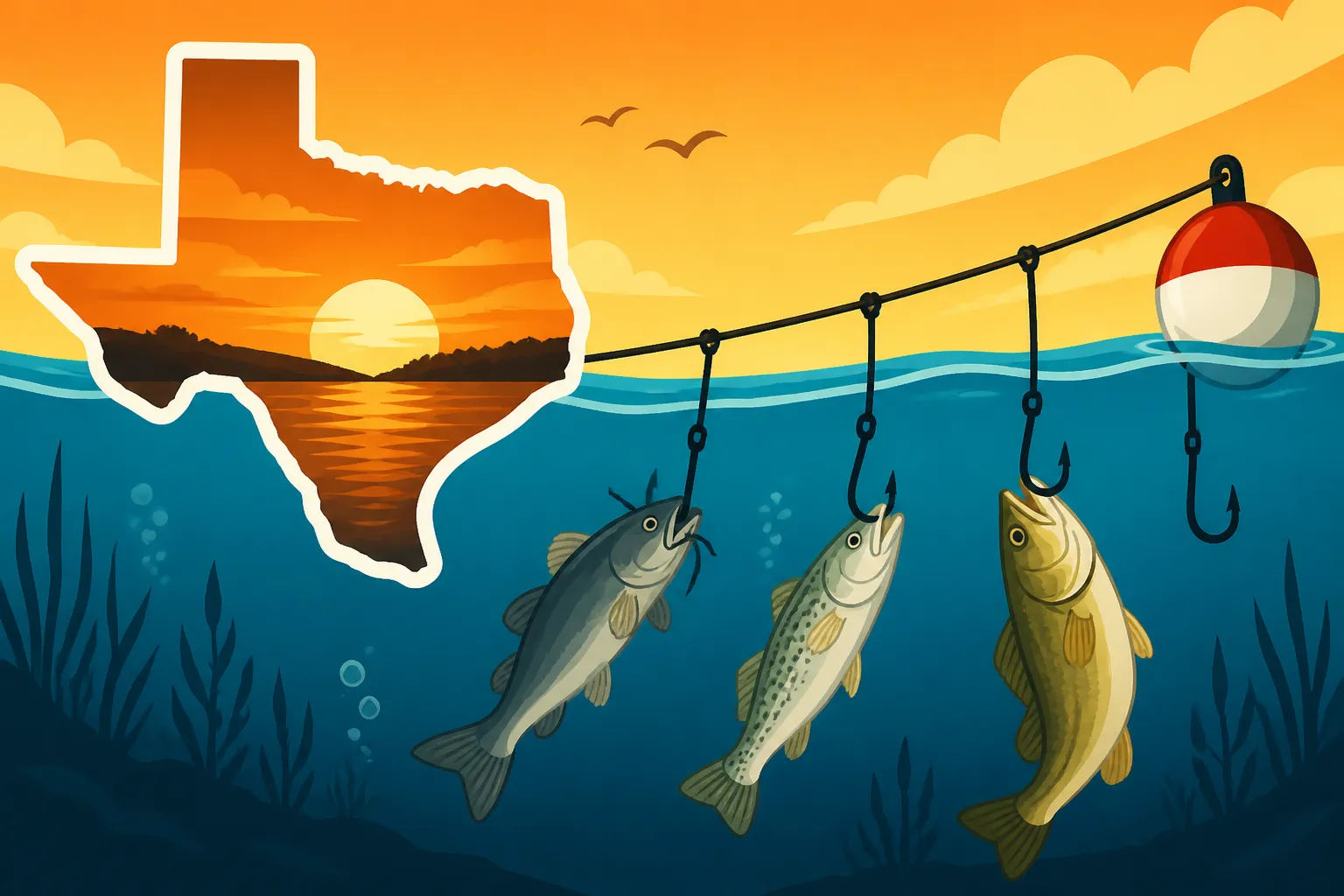
Imagine a long, heavy main line, stretched across a body of water or anchored to the bank, with multiple baited hooks attached at intervals along its length. That, in a nutshell, is a trotline. Unlike a jugline, which drifts freely or is anchored at one end and typically has fewer hooks, a trotline is usually set in a more stationary position, often secured to trees, posts, or heavy weights on both ends. These lines are designed to fish passively, allowing anglers to set them and then return later to check for catches. You'll find different configurations, from lines strung across small creeks to elaborate setups in larger reservoirs. Many experienced anglers often find themselves setting up their gear, including hooks and lines, sourced from places like Amazon, ensuring they have reliable equipment for their endeavors.
The beauty of a trotline lies in its ability to cover a larger area and present multiple baits simultaneously, increasing the chances of a catch without constant direct supervision. It’s not just about setting it and forgetting it, though. There's an art to choosing the right location, bait, and depth, all of which contribute to a successful trotline outing. For those interested in the foundational rules, understanding the basic concept of a trotline is key to grasping why specific regulations, such as hook limits, are put into place by the Texas Parks and Wildlife Department (TPWD).
Why Anglers Choose Trotlines in Texas
There's a reason trotlines have remained a popular fishing method in Texas for generations, particularly among those targeting specific fish species. The primary appeal lies in their efficiency for catching prolific bottom-feeders, especially the various species of catfish that thrive in Texas waters. Anglers often use trotlines to target larger quantities of channel catfish, blue catfish, and even flathead catfish.
For many, trotlines offer a more relaxed fishing experience. Instead of spending hours actively casting and retrieving, you can set your lines, enjoy other activities, and then return to harvest your catch. This can be especially appealing for family outings or when you're hoping to stock up on fish for a big fish fry. The ability to soak multiple baits in different depths or locations along a single line maximizes your chances, especially during periods when fish are actively feeding but might be scattered. If you're wondering about the legalities, a good starting point is to understand that you absolutely need a fishing license to use these devices, much like any other fishing method in the state, so be sure to check the specific requirements on how to get a Texas fishing license. The method is also highly effective in larger bodies of water, like many of our sprawling Texas reservoirs, where covering significant territory can be crucial for locating schools of fish.
The Core: Texas Trotline Hook Limit Rules
Now, let's get down to the nitty-gritty: the actual hook limits and other critical rules you absolutely need to know before deploying a trotline in Texas. Missteps here can lead to frustrating encounters with game wardens and costly fines, so pay close attention.
Specific Hook Limits for Non-Commercial Trotlines
For recreational anglers, the rules for trotlines are quite clear and are designed to ensure sustainable fishing practices while still allowing for effective angling. In Texas, a trotline can have no more than 50 hooks. This limit applies to a single trotline, meaning you can't just keep adding hooks indefinitely. Each hook must be spaced at least 3 feet apart. This spacing requirement isn't just arbitrary; it helps prevent tangling, reduces the likelihood of snagging non-target species, and makes the line easier to check and tend. Imagine trying to untangle a hundred hooks crammed together—it would be a nightmare! This also ensures that each bait has a decent "zone" to attract fish.
It's important to remember that these rules are specifically for non-commercial fishing. If you're involved in commercial fishing operations, different regulations and licenses apply, and the hook limits can vary significantly. But for the vast majority of us recreational anglers who are just trying to catch some supper, 50 hooks is your magic number. This 50-hook limit is strictly enforced, and game wardens often check for compliance, so don't try to push your luck. You also need to be aware of the overall Texas Freshwater Fishing Regulations or Texas Saltwater Fishing Regulations depending on where you're setting your line.
Important Gear Tagging Requirements
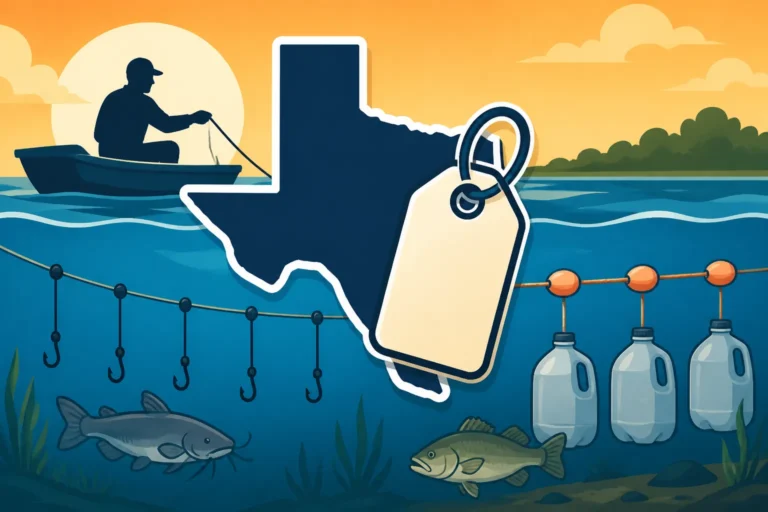
Beyond the hook limits, one of the most frequently overlooked — and often cited — regulations for trotlines is the tagging requirement. Every trotline you deploy in Texas waters must be clearly marked with a legible tag. This isn't just a suggestion; it's a legal obligation that allows game wardens to identify the owner of the gear and ensures accountability. This rule applies to all non-recreational fishing devices, which includes trotlines, juglines, and throwlines. Without a proper tag, your gear could be confiscated, and you could face a citation. You might also want to consult the detailed article on Texas gear tag requirements for trotlines and juglines for more specific information.
So, what exactly needs to be on this tag? The tag must clearly display the name and address of the person using the gear. It's often recommended to use durable, waterproof tags, perhaps even engraved ones, because they can take a beating from the elements, especially if your line is set for several days. Simple handwritten tags on flimsy material might wash away or become illegible, putting you in violation. You can easily find suitable blank tags or tag-making supplies on Amazon or at local sporting goods stores. The tag must be attached to the trotline itself, typically near one of the anchor points, where it's easily visible to anyone inspecting the line. Think of it like a license plate for your fishing gear – it identifies you as the responsible party.
Restrictions on Trotline Placement and Setbacks
Just because you can use a trotline with 50 hooks doesn't mean you can place it anywhere you please. There are significant restrictions on where trotlines can be deployed, primarily concerning public safety, navigation, and environmental protection. One of the most critical rules is the "600-foot rule" around public boat ramps, docks, swimming areas, and any other designated public access points. You cannot set a trotline within 600 feet of these areas. This helps prevent prop entanglement for boats, reduces the risk of swimmers getting caught in the lines, and keeps access clear for other recreational users. This rule is particularly important in popular lakes and rivers, where multiple users share the same water space.
Furthermore, trotlines cannot obstruct navigation in any navigable channel. If your trotline makes it difficult or impossible for a boat to pass safely, you're in violation. It's also generally prohibited to set trotlines across entire channels or waterways in a way that creates a barrier. Common sense dictates that you should always consider the safety and convenience of others when choosing a trotline location. Finally, while not always explicitly stated as a distance, deploying lines in a manner that creates a nuisance or hazard to private property owners, such as directly in front of a residential dock, is strongly discouraged and can lead to local complaints and intervention from authorities. Always aim to be a responsible and respectful angler.
Additional Regulations and Best Practices for Trotline Fishing
Beyond the core hook limits and tagging, there are other important rules and best practices that responsible trotline anglers should always follow. These ensure both the health of the fishery and the safety of everyone sharing the waterways.
Checking and Tending Your Trotlines
A trotline is not a "set it and forget it" device in the literal sense. Texas Parks and Wildlife Department regulations require that all non-recreational fishing devices, including trotlines, be checked at least once every 24 hours. This isn't just about adhering to the law; it's a crucial ethical and practical consideration. Neglecting your trotlines for longer periods can lead to several problems:
- Fish Mortality: Fish caught on a trotline that isn't checked regularly can die, spoil, or become easy prey for predators. This is a waste of a resource and can lead to unnecessary suffering.
- Spoilage: Especially in the hot Texas climate, fish left on a line for more than 24 hours can quickly spoil, rendering them inedible and attracting scavengers that can damage your gear.
- Entanglement: Lines left unattended are more prone to becoming tangled with debris or even other boats, creating hazards.
- Theft/Vandalism: Unfortunately, unattended gear is more susceptible to theft or damage from others.
Regularly tending your trotline means removing any caught fish, re-baiting hooks, and checking the line's integrity. It ensures that your fishing effort is productive and humane. If you're going to use a trotline, commit to checking it daily.
Legal Species and Bait Restrictions
While trotlines are incredibly effective for catfish, it's important to remember that not all species are legal to catch with this method, and certain bait restrictions also apply. Generally, trotlines are intended for non-game fish, particularly various types of catfish. However, game fish caught on a trotline must immediately be released if they are not within legal limits, or if they are a species not permitted for retention on this gear type. For instance, while you can catch catfish, knowing the Texas Catfish Bag Limits is essential to stay within the law.
When it comes to bait, Texas regulations are fairly broad, allowing for most natural and artificial baits commonly used for catfish. This includes cut bait, live baitfish (if legal for possession and not a prohibited invasive species), dough baits, and various commercial catfish baits. However, the use of game fish or parts of game fish (except for non-protected rough fish like carp or buffalo as cut bait) is generally prohibited as bait. Using live bait can be very effective, but always double-check the rules. For more guidance on what's permissible, you can look up specific details on whether you Can you use live bait on a Texas trotline?. Always ensure your bait choices comply with current TPWD rules to avoid accidental violations.
Safety and Environmental Considerations
Responsible trotline fishing goes beyond just following the written rules; it also involves being a good steward of the environment and considering the safety of others.
- Preventing Snagging: When deploying your trotline, try to choose locations away from heavy boat traffic or areas where swimmers are present. Always ensure your main line and drop lines are as tight as possible to minimize slack and reduce the risk of entanglement for wildlife or other water users. Marking your line with visible floats can also help prevent accidents, although TPWD does not explicitly require floats for trotlines (they are required for juglines).
- Removing Old Lines: One of the biggest environmental frustrations for park rangers and fellow anglers is abandoned fishing gear. Trotlines, if left in the water, can become "ghost fishing" devices, continuing to catch and kill fish and other wildlife unnecessarily. They can also become navigation hazards and unsightly litter. Always remove your trotlines, hooks, and all associated gear when you're finished fishing. Pack out everything you pack in, and leave no trace.
- Personal Safety: Handling trotlines, especially those with many hooks, requires caution. Always wear gloves to protect your hands from hooks and rough lines. Be mindful of where you're setting your feet and hands when tending the line, and if you're using a boat, ensure it's stable. Remember, those 50 hooks can be quite dangerous if not handled carefully.
Penalties for Non-Compliance
No one wants to get a ticket while enjoying a day on the water, but unfortunately, violations of fishing regulations, including those for trotlines, carry real consequences. It's crucial to understand what could happen if you're found to be non-compliant. To avoid these issues, always ensure you're up-to-date with all the requirements, including your Texas Fishing License Requirements Explained.
What Happens if You Break the Rules
Being caught fishing with an illegal trotline — perhaps one with too many hooks, no proper tag, or placed in a prohibited area — can result in a significant headache. The Texas Parks and Wildlife Department (TPWD) takes these regulations seriously, and game wardens are frequently patrolling waterways, checking for compliance.
- Fines: The most common consequence is a monetary fine. These fines can vary depending on the severity of the violation and whether it's a first offense or a repeat issue. While minor infractions might be a couple hundred dollars, more serious or repeated violations can quickly escalate into larger sums, often reaching several hundred to over a thousand dollars when court costs are included. For example, getting caught using more than the legal number of hooks or having an untagged line will almost certainly lead to a citation.
- Confiscation of Gear: In addition to fines, game wardens have the authority to confiscate illegal fishing gear. This means your trotline, all its hooks, anchors, and even sometimes your catch, could be seized by the state. Not only is this a financial loss, but it's also a significant inconvenience.
- Loss of Fishing Privileges: In more severe cases, or for repeat offenders, fishing privileges can be suspended. This means you might be prohibited from fishing in Texas waters for a certain period, which for passionate anglers, is a truly painful consequence.
- Criminal Charges: While less common for simple trotline violations, intentional and egregious violations, especially those involving repeated offenses, significant waste of natural resources, or interference with game wardens, could potentially lead to more serious legal consequences, including criminal charges.
It's always better to err on the side of caution. If you're unsure about a specific rule, consult the official TPWD outdoor annual or website. The relatively minor effort of double-checking the rules is always preferable to the stress and cost of a violation. Remember, the game wardens are there to protect Texas's natural resources and ensure fair play for everyone, not just to ruin your day. Understanding regulations like Texas Trotline and Jugline Rules can save you a lot of trouble.
Summary of Texas Trotline Regulations
To help keep everything clear, here's a quick reference table summarizing the key trotline regulations for recreational anglers in Texas:
| Regulation Aspect | Specific Rule for Recreational Anglers | Importance |
|---|---|---|
| Hook Limit | Maximum of 50 hooks per trotline. | Prevents over-harvesting and manages fishing effort. |
| Hook Spacing | Each hook must be spaced at least 3 feet apart. | Reduces tangling, prevents snagging, allows for effective bait presentation. |
| Tagging | Must have a legible tag with angler's name and address. | Ensures accountability, identifies owner of gear. |
| Checking Frequency | Must be checked at least once every 24 hours. | Humane treatment of fish, prevents spoilage, maintains line integrity. |
| Placement Restrictions | No trotlines within 600 feet of public boat ramps, docks, swimming areas. Cannot obstruct navigation. | Ensures public safety, maintains clear waterways, respects private property. |
| License Requirement | A valid Texas fishing license is required. | Fundamental requirement for all fishing activities. |
| Bait | Most legal natural and artificial baits allowed; no game fish or parts of game fish as bait. | Ensures sustainable fishing, prevents waste. |
| Removal | All gear must be removed when finished fishing. | Prevents "ghost fishing," reduces litter, maintains clean waterways. |
Disclaimer
Please remember that fishing regulations can change. While I strive to provide the most accurate and up-to-date information, it is always your responsibility as an angler to consult the official Texas Parks and Wildlife Department (TPWD) Outdoor Annual or their website for the most current rules and regulations before heading out. This guide is for informational purposes only and should not be considered a substitute for official legal documents.