Texas bowfishing license requirements
Trying to figure out the exact rules for something as specific as bowfishing in Texas can feel like navigating a maze. It’s not always as straightforward as just grabbing a general fishing license, and the last thing any of us wants is to accidentally break a rule while out enjoying the water. This guide is here to untangle all those questions, clarifying exactly what licenses and endorsements you need for bowfishing in Texas, along with some critical regulations you need to know to stay on the right side of the law and ensure an ethical experience.
Understanding the Core Texas Fishing License Requirement
Before you even think about nocking an arrow, you need to understand that bowfishing in Texas still falls under the umbrella of "fishing." This means your very first step, the absolute foundational requirement, is a valid Texas fishing license. It’s not some loophole that lets you off the hook; it's just another method of harvesting fish, and all methods require proper licensure.
Think of it this way: whether you're casting a lure from a bass boat, dropping a line from a pier, or aiming an arrow from a flat-bottomed boat, you’re engaging in the act of fishing. The Texas Parks and Wildlife Department (TPWD) considers bow and arrow a legal means for taking fish, but it doesn't exempt you from the standard licensing requirements. Many folks get confused, thinking that because it's a "different" way to fish, it might have entirely separate rules. While there are some unique rules for bowfishing, they add to, rather than replace, the general fishing license mandate. To get a handle on the broader picture, you might want to review the comprehensive details on Texas Fishing License Requirements Explained.
Age plays a significant role in who needs a license. Generally, if you're 17 years old or older, you're required to purchase a fishing license. Those younger than 17 are usually exempt, which is a fantastic way to introduce kids to the sport without the added cost and paperwork. There are also specific exemptions for very senior Texans, particularly those born before September 1, 1931. It’s always a good idea to double-check the specifics for these categories, as rules can sometimes have nuances. If you're wondering if you or someone you know might be exempt, a good resource is Who Doesn't Need a Texas Fishing License.
Getting your license is thankfully pretty easy these days. You can purchase one online directly through the TPWD website, which is incredibly convenient. Many major retailers across the state, like Walmart, Academy Sports + Outdoors, and various sporting goods stores, also sell licenses in person. This flexibility means you can usually grab one on your way to the lake or coast. Buying online often involves a small administrative fee, which is good to be aware of. You can learn more about these charges at Texas Online License Purchase Fees. Regardless of where you buy it, ensure you keep proof of your license on your person while fishing, whether it's a physical copy or an electronic version on your phone via the official TPWD Outdoor Annual app.
Specific Licensing and Equipment for Bowfishing
Here's where some of the common misunderstandings about bowfishing licenses in Texas come into play. Many assume there’s a separate "bowfishing endorsement" or stamp you need to purchase, similar to how you need a Texas Saltwater Endorsement Explained to fish in coastal waters. The good news is, for the act of bowfishing itself, you do not need an additional special endorsement beyond your general fishing license.
This is a huge relief for many anglers who are just getting into bowfishing. Your standard freshwater, saltwater, or all-water fishing license covers the "right" to fish with a bow and arrow. However, and this is a critical "however," your general fishing license must align with the waters you plan to bowfish. If you're hitting the brackish estuaries of Galveston Bay, you'll need an all-water or saltwater fishing license. If you're targeting carp in Lake Fork, a freshwater or all-water license is sufficient. The method (bowfishing) is covered, but the type of water dictates your base license.
When it comes to equipment, Texas is fairly permissive regarding the tools you can use for bowfishing. The "lawful means" for taking non-game fish include:
- Bow and arrow: This is the classic setup, often involving specialized reels mounted to the bow and heavy, barbed arrows tethered to a line.
- Crossbow: These are also permitted, offering another option for those who prefer the mechanics of a crossbow.
- Spear and spear gun: While not strictly bowfishing, these fall under similar regulations for taking non-game fish.
Regardless of your chosen implement, it's vital to ensure your equipment is in good working order. Bowfishing gear can take a beating, especially if you're hunting in dense vegetation or rocky areas. Regularly check your lines for fraying, your arrows for damage, and your bow/crossbow for any functional issues. Safety should always be paramount when handling powerful equipment like bows and arrows. You can find a wide array of specialized bowfishing equipment, from basic bowfishing reels to complete bowfishing kits, on retailers like Amazon.
Beyond the license, it’s imperative to remember that all general fishing regulations still apply. This includes things like daily bag limits, length limits, and possession limits. Just because you're using a bow doesn't mean you can disregard these rules. In fact, for certain species like alligator gar, there are extremely stringent regulations that must be followed. We’ll dive deeper into that in the next section, but the takeaway here is: secure your general fishing license, understand the type of water you’re fishing, and ensure your equipment is safe and effective.
Legal Species for Texas Bowfishing
This is arguably the most critical section for any aspiring Texas bowfisher. While your general fishing license covers the method of bowfishing, it absolutely does not give you carte blanche to shoot any fish you see. Texas Parks and Wildlife Department (TPWD) is very clear about which species are legal to take with a bow and arrow, and the distinction primarily lies between "non-game fish" and "game fish."
The golden rule for bowfishing in Texas is: you can generally only bowfish for non-game fish. Game fish – the highly sought-after species that anglers typically target with rod and reel – are almost universally off-limits for bowfishing. This is a crucial conservation measure to protect populations of popular sportfish.
Let’s look at the species you can legally target:
- Common Carp: These are abundant in most freshwater systems and are a prime target for bowfishers due to their size and widespread distribution.
- Grass Carp: An invasive species, grass carp are often targeted to help control aquatic vegetation, and bowfishing is a popular method.
- Buffalo (Smallmouth, Bigmouth, Black): These large, robust fish are excellent targets and can provide a real challenge.
- Gar (Alligator, Longnose, Spotted, Shortnose): Alligator gar are especially popular, but they come with their own set of specific and strict regulations (which we’ll cover shortly). Longnose, spotted, and shortnose gar are also fair game. If you're really interested in these prehistoric giants, you might want to read our Texas Alligator Gar Fishing Guide.
- Bowfin: Often mistaken for smaller gar species, bowfin are aggressive, toothy fish found in East Texas waters.
Now, for the equally important part: the species you cannot legally bowfish for. This list includes virtually all of Texas's freshwater and saltwater game fish. Attempting to harvest these species with a bow and arrow can lead to hefty fines and legal trouble.
- Freshwater Game Fish: This category includes popular species like largemouth bass, smallmouth bass, spotted bass, all species of catfish (channel, blue, flathead), crappie (white and black), white bass, striped bass, hybrid striped bass, sunfish (bluegill, redear, green sunfish), and rainbow trout.
- Saltwater Game Fish: In coastal waters, you cannot bowfish for red drum (redfish), spotted seatrout (speckled trout), flounder (southern flounder), black drum, or sheepshead.
It's absolutely paramount to be able to identify your target species before you release an arrow. In the heat of the moment, with adrenaline pumping, misidentification can easily happen. If you're unsure, don't shoot. This is especially true when distinguishing between non-game carp and game fish like catfish, or between different types of gar. Always err on the side of caution. Staying up to date on Texas Fish Bag and Length Limits is also essential, as even for legal bowfishing species, limits can apply.
To help visualize, here’s a quick summary:
| Category | Legal for Bowfishing in Texas (Examples) | Typically Off-Limits for Bowfishing in Texas (Examples) |
|---|---|---|
| Non-Game Fish | Common Carp, Grass Carp, Bigmouth Buffalo, Smallmouth Buffalo, Black Buffalo, Alligator Gar, Longnose Gar, Spotted Gar, Shortnose Gar, Bowfin | (N/A – generally all non-game fish are legal if not otherwise restricted) |
| Freshwater Game Fish | (Generally NO) | Largemouth Bass, Smallmouth Bass, Spotted Bass, Channel Catfish, Blue Catfish, Flathead Catfish, Crappie, White Bass, Striped Bass, Hybrid Striped Bass, Sunfish (Bream), Rainbow Trout |
| Saltwater Game Fish | (Generally NO) | Red Drum (Redfish), Spotted Seatrout (Speckled Trout), Southern Flounder, Black Drum, Sheepshead |
| Special Species Notes | Alligator Gar may have additional harvest reporting requirements and stricter limits in certain areas. | Protected, threatened, or endangered species are always off-limits. |
Important Regulations and Best Practices for Bowfishing
Beyond just knowing your license and your legal targets, there are several other critical regulations and best practices that every Texas bowfisher should follow to ensure a safe, legal, and ethical experience.
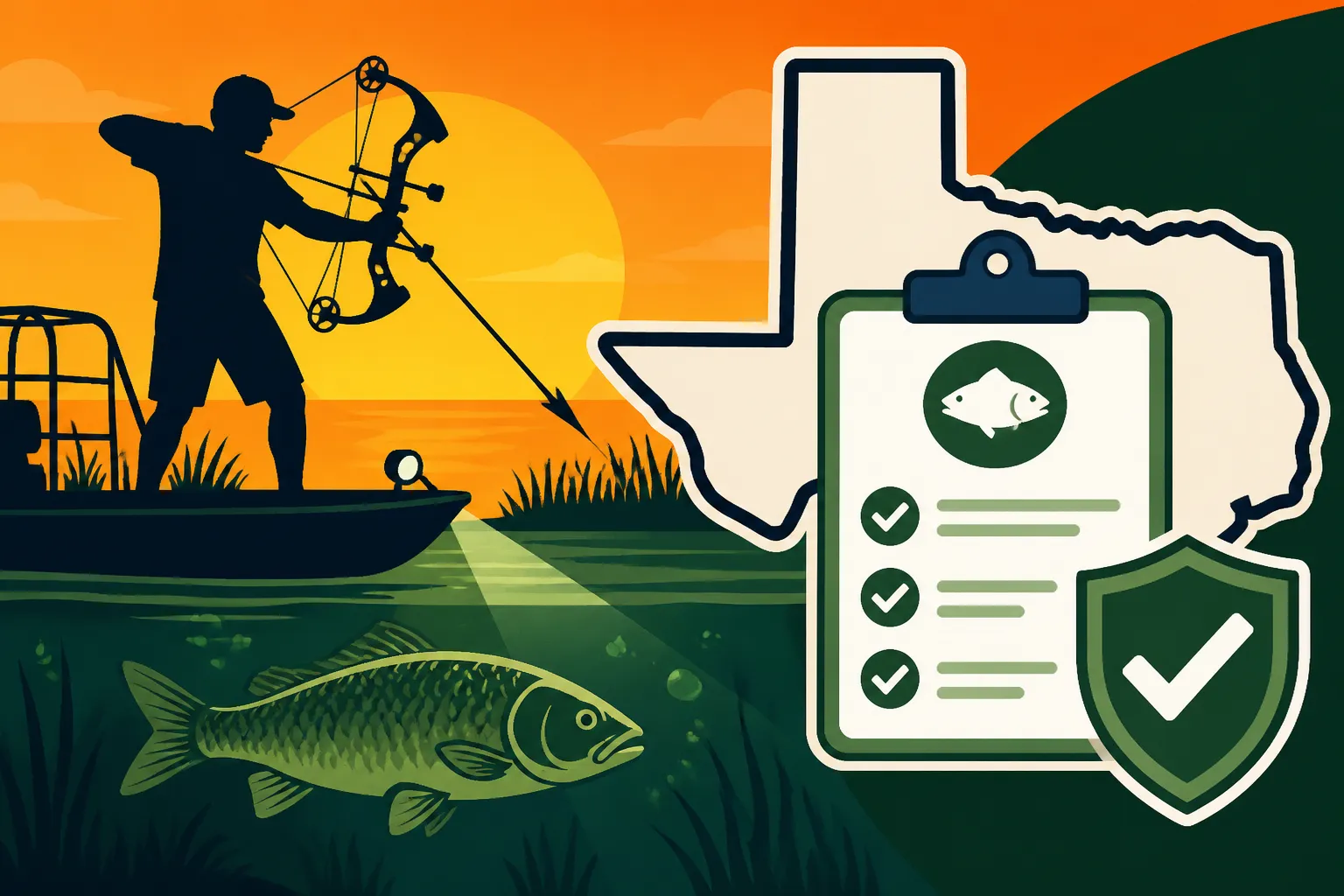
First off, let’s talk about timing and location. Bowfishing can be incredibly effective both day and night. Many experienced bowfishers prefer night excursions, especially in warmer months, as non-game fish often move into shallower waters to feed under the cover of darkness. The use of artificial lights to attract and spot fish is perfectly legal when bowfishing, and you'll find specialized lighting setups, often battery-powered, available on platforms like Amazon to illuminate the water. However, always be mindful of local ordinances. Some public parks or municipal lakes might have restrictions on night activities or specific fishing methods. Always check with local authorities or TPWD regulations for the specific body of water you intend to fish. Fishing on private property without permission is, of course, strictly prohibited.
Safety cannot be stressed enough when it comes to bowfishing. You are wielding a powerful projectile weapon. Always be aware of your surroundings, both in front of and behind your target. Ensure there are no other boats, swimmers, or structures in the line of fire. Stray arrows can travel significant distances and cause serious injury or damage. It's not just about hitting the fish; it's about what happens if you miss, or if the arrow deflects. Wear appropriate safety gear, and if you’re new to bowfishing, consider going with an experienced friend or a guide for your first few outings.
Now, for those majestic Alligator Gar. While they are legal bowfishing targets, they come with a distinct set of rules due to their unique biology and conservation status. Texas has some of the best alligator gar fishing in the world, and TPWD works hard to manage this incredible resource. For instance, if you harvest an alligator gar over 48 inches from certain specific water bodies – like the Trinity River – you are often required to report your harvest within 24 hours to TPWD. This is usually done online through their website or the Outdoor Annual mobile app. These specific regulations can change, so it's vital to consult the most current Texas Freshwater Fishing Regulations or the TPWD Outdoor Annual before your trip. Always check the "Special Alligator Gar Harvest Regulations" section. Failure to report a trophy-sized gar can result in penalties.
Finally, let's talk about ethics and responsibility. Bowfishing, by its nature, often results in taking fish that are not traditionally consumed by many anglers, such as carp or some gar species. If you harvest a fish, you have an ethical obligation to either consume it or dispose of it properly. Leaving fish carcasses on the bank or throwing them back into the water to rot is not only disrespectful to the resource and other users but can also attract pests and create unsanitary conditions. Many bowfishers utilize the meat for consumption (gar and carp can be quite tasty when prepared correctly), or donate them to those who will use them, or properly dispose of them in designated waste facilities.
Reciprocal Licenses and Border Waters for Bowfishing
Texas shares several significant waterways with neighboring states, and these "border waters" often have special reciprocal agreements concerning fishing licenses. This can be a real convenience for anglers, but it also means understanding a few extra nuances, even when bowfishing.
Perhaps the most famous example is Lake Texoma, which straddles the Texas-Oklahoma border. For many years, anglers with a valid Texas fishing license could fish the entire lake, as could those with an Oklahoma license. This reciprocal agreement generally extends to bowfishing as well, meaning if you have a valid Texas fishing license (and adhere to all Texas bowfishing regulations), you can bowfish on either the Texas or Oklahoma side of Lake Texoma without needing a separate Oklahoma license. However, it's always smart to verify the most current rules, as agreements can occasionally be updated. For specific details on this popular destination, check out our guide on Lake Texoma Fishing License Rules.
Similarly, if you're planning to bowfish on waters that form the border with Louisiana, such as Toledo Bend Reservoir, the Sabine River, or Caddo Lake, you'll encounter similar reciprocal agreements. A Texas resident with a valid Texas fishing license can typically fish the shared waters without needing a Louisiana license, and vice versa for Louisiana residents. Again, this usually applies to bowfishing, provided you follow the regulations of the state whose license you hold. For comprehensive information on these specific border waters, our Texas-Louisiana Reciprocal Fishing License Rules guide can provide detailed insights.
The key takeaway here is that while reciprocal agreements make fishing on these border waters much easier, you still need a valid license from one of the states, and you must adhere to that state's specific fishing and bowfishing regulations. Don't assume that because you can use a Texas license on the Oklahoma side of Texoma, you can ignore Oklahoma's specific bag limits or species restrictions if you choose to follow their rules. It's generally safest to stick to the regulations of the state your license originates from, as that's what you're legally bound to. When in doubt, consulting the official TPWD outdoor annual or even contacting game wardens in the specific area can clear up any confusion and prevent potential Penalties for Fishing Without a Texas License. These waters offer incredible bowfishing opportunities, so understanding these agreements ensures your trip is enjoyable and hassle-free.
Disclaimer
The information provided in this guide is intended for general informational purposes only and does not constitute legal advice. Fishing regulations, including licensing requirements, species limits, and lawful means of take, can change frequently. Always consult the most current official Texas Parks and Wildlife Department (TPWD) Outdoor Annual or website for the most up-to-date and accurate regulations before engaging in any fishing activities, including bowfishing. Failure to comply with regulations may result in penalties.