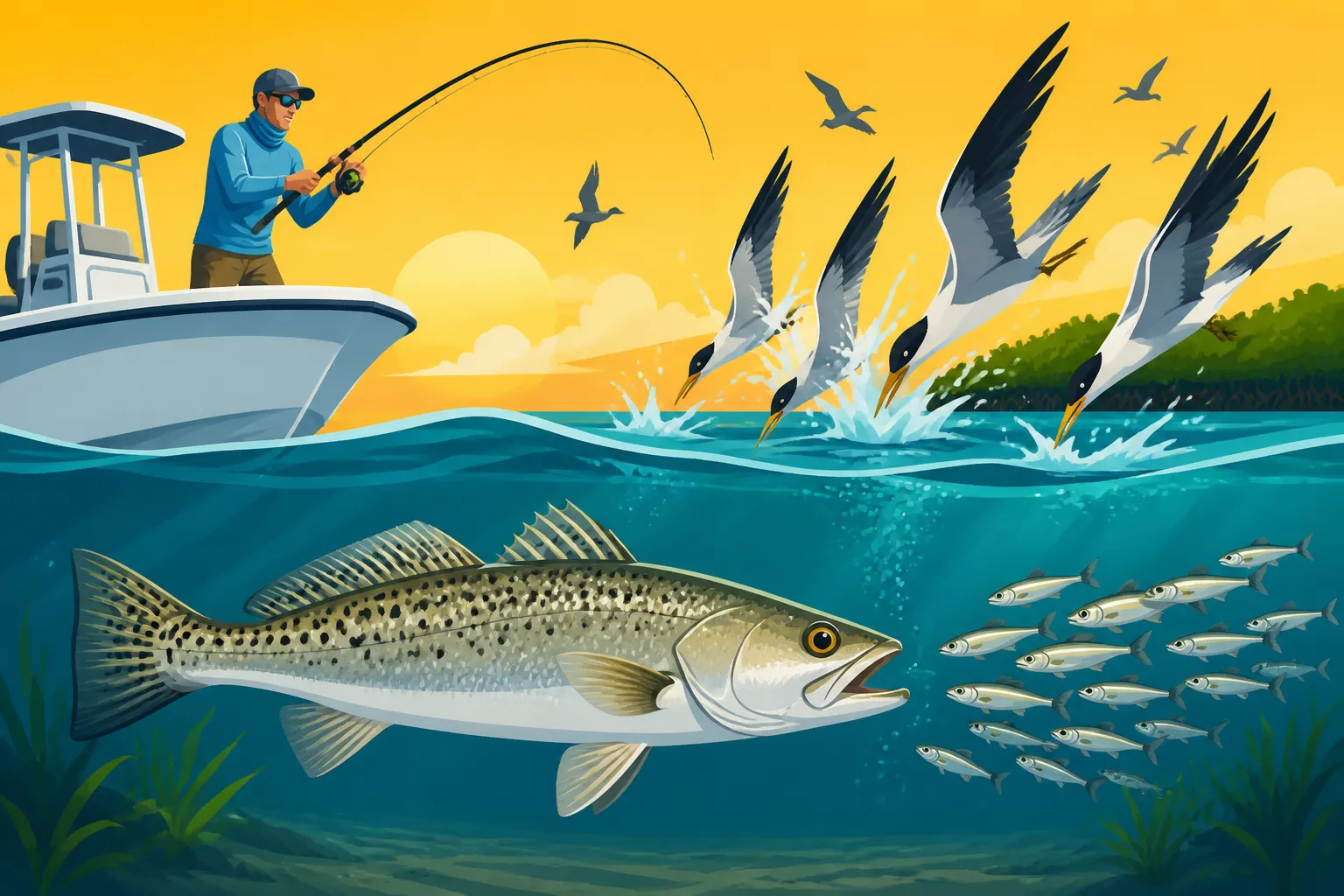
How to catch speckled trout under diving birds
There's nothing quite like the adrenaline rush of spotting a swarm of gulls, terns, or pelicans diving aggressively into the water on a Texas bay. It's a universal signal to any seasoned angler: "Fish are feeding!" But seeing those birds isn't always a guarantee of a filled cooler, especially when you're targeting elusive speckled trout. Many anglers get frustrated, chasing birds only to find the trout aren't biting or they're just catching baitfish. This guide is dedicated to unraveling the mystery of fishing under diving birds, helping you understand the 'why' and 'how' so you can turn those exciting bird plays into successful speckled trout catches.
Understanding the Diving Bird Phenomenon
When you see a frenzy of birds crashing into the water, it's not just a random spectacle; it's a clear indication of a massive baitfish migration being driven to the surface by predatory fish. For speckled trout anglers, this is like finding a giant flashing neon sign that reads "EAT HERE!" The birds are simply taking advantage of an easy meal, and if you can figure out which fish are causing the commotion beneath, you're in for a treat. However, not all bird activity means speckled trout, and knowing the difference is key to saving time and fuel.
Why Birds Dive for Speckled Trout
Birds dive because the baitfish, usually glass minnows, shad, or juvenile mullet, have nowhere else to go. They're being corralled by aggressive predators from below, pushing them against the surface tension of the water. This creates an irresistible opportunity for opportunistic birds. Speckled trout, being ambush predators with excellent eyesight, are often right in the thick of this feeding frenzy, using the confusion to pick off easy meals. They're not always at the very top, but they are often just below the main chaos, picking up injured or stunned baitfish that drift down. This means your lure needs to mimic that easy meal.
It's a delicate ecosystem working in harmony – or rather, in a feeding frenzy. The larger game fish, like schooling redfish or even some larger catfish in brackish areas, will often initiate the chase. The speckled trout, being agile and quick, capitalize on the disarray. If you can effectively present your lure among the chaos, you're essentially offering an even easier meal than the baitfish struggling at the surface. Understanding this dynamic helps you mentally prepare for where the trout might be positioned within the water column.
Decoding Different Bird Behaviors
Not all diving bird shows are created equal. This is where observation really pays off, and it's something I learned the hard way after countless fruitless chases. You've got to become a bit of a bird whisperer, understanding what their movements really mean.
- Fast, Hard Dives: If you see birds, especially terns, diving straight down with force, almost like little arrows, it often signals smaller, faster baitfish being pushed up by equally fast, aggressive predators. This could mean speckled trout, but it could also be white bass if you're in a more brackish area, or even schooling redfish. These quick, shallow bursts are often the most promising for active trout.
- Sustained Dives with Pelagic Birds: When pelicans are getting in on the action, performing their big, clumsy, belly-flop dives, it usually means larger baitfish are present, or a more sustained feeding event is happening. Pelicans have larger pouches and prefer a bigger meal. If you see pelicans mixed with terns, it's a very good sign that the bait ball is significant and attracting a variety of predators, including larger trout.
- Skimming and Picking: Sometimes, birds will just skim the surface, picking off individual baitfish without fully diving. This can indicate that the baitfish are not being aggressively pushed from below, or the predators have moved deeper. While it might still mean fish are around, it's generally a less promising sign for a hot trout bite, as the feeding isn't as intense. It's more of a scattered snack than a full-on buffet.
- Bird Types and What They Indicate: Different birds target different size bait and behave differently. Terns are usually after smaller baitfish and are very acrobatic. Gulls are a bit more generalist. Pelicans, as mentioned, indicate larger bait. Learning these nuances helps you decide if it's worth the chase or if you should keep looking for a better opportunity. When the birds are truly committed to the dive, that's your cue to get your lure in the water. This type of intense activity means the fish are in a hyper-feeding mode.
Gearing Up for Success: Rods, Reels, and Lures
Having the right gear is non-negotiable when you're chasing diving birds, especially for speckled trout. You need equipment that allows for quick, accurate casts and the ability to handle a strong fight, because those schooling trout can be surprisingly powerful. Don't show up to a gunfight with a butter knife, as the saying goes! A good setup will maximize your chances of turning those bird sightings into actual fish in the boat.
The Right Rod and Reel Combo
For speckled trout under diving birds, you're looking for a setup that prioritizes casting distance and accuracy, coupled with enough backbone to haul in a decent fish. A medium-light to medium power spinning rod, typically in the 7-foot to 7-foot 6-inch range, is often ideal. This length gives you leverage for longer casts and helps manage the line in windy conditions often found on the open bay. Pair that with a quality 2500 to 3000 series spinning reel. I’ve personally found that a smooth drag system is incredibly important, as a big speckled trout can make some surprising runs.
- Rod Action and Power: A fast or extra-fast action rod is perfect because it gives you the sensitivity to feel subtle bites and the quick tip recovery needed for precise casting. The medium power is robust enough to handle the fight of a good trout but still light enough to make casting all day comfortable. For your main line, 10-15 pound braided line is a fantastic choice. It offers incredible sensitivity, minimal stretch for solid hooksets, and casts like a dream. Just remember to add a fluorocarbon leader of 20-30 pound test, about 2-3 feet long. This leader is practically invisible underwater and provides abrasion resistance against oyster shells and trout teeth. You can find quality braided line and fluorocarbon leaders on Amazon if your local tackle shop is out of stock.
- Reel Features: Look for a reel with a good gear ratio (around 6.0:1) for quick retrieves, which is often crucial when speckled trout are actively chasing bait. A smooth retrieve and a strong, reliable drag are also essential. When those trout hit, they can hit hard, and you want your reel to respond smoothly, preventing line breaks. The lighter weight of this setup also means less fatigue during those intense, rapid-fire casting sessions that often occur under a hot bird bite.
Lure Selection for Diving Bird Scenarios
This is where many anglers get it wrong. They throw the same old lure, even when the fish are focused on a particular bait. When trout are feeding under birds, they're keyed in on baitfish. Your lures need to imitate that.
- Soft Plastic Grubs and Paddletails: These are arguably the most effective lures for speckled trout in any situation, and especially under birds. A 3-4 inch paddletail or a jerk shad on a 1/8 to 1/4 ounce jighead is a killer combination. Colors like "Opening Night," "Chicken on a Chain," "limetreuse," or "pearl white" are classic Texas bay producers. The jighead weight should be chosen based on depth and current – lighter in shallow, calm water, heavier in deeper or faster-moving conditions. You want it to sink naturally, mimicking an injured baitfish. Many anglers swear by brands like MirrOlure for their soft plastics, and you can stock up on a wide variety on Amazon before your next trip.
- Topwater Lures: If the birds are truly pushing bait to the surface, and the trout are actively exploding on top, a topwater plug can be absolutely exhilarating. Walk-the-dog style lures in chrome, bone, or silver/black are excellent choices. They create a commotion that perfectly imitates a struggling baitfish on the surface. However, topwater can be less effective if the trout are holding deeper beneath the bait ball. Knowing Best Topwater Lures for Texas Bass can give you some transferable ideas, even though we're targeting trout here.
- Spoons and Sinking Lures: Sometimes, the trout are a little deeper, just below the main fray, picking off the stragglers. This is where a silver or gold spoon (1/2 to 3/4 ounce) can shine. It casts a mile and has a fluttering action on the retrieve or fall that mimics a dying baitfish. Other sinking lures like a MirrOdine or a soft plastic shrimp imitation can also be effective if the trout aren't quite committed to the surface. It's about having options to match the mood of the fish and the depth of their feeding zone.
Strategic Approaches to Fishing Under Birds
Spotting the birds is just the first step. What you do next can make or break your success. A clumsy approach, a poor cast, or the wrong retrieve can quickly turn a hot bite into a frustrating missed opportunity. Mastering the approach and presentation is crucial for consistent catches when fishing under diving birds.
The Art of the Approach and Cast
This is where patience and stealth become your best friends. It’s tempting to motor right into the center of the bird frenzy, but that's usually the worst thing you can do. Roaring up to the commotion with your outboard will scatter the baitfish and send the trout diving for cover, effectively shutting down the bite.
- Stealthy Approach: Always approach the feeding birds from upwind or upcurrent, if possible. Cut your motor a good distance away – sometimes a quarter-mile or more – and drift or use your trolling motor to slowly get into casting range. The goal is to be as quiet and unobtrusive as possible. Think of yourself as a hunter stalking prey. If the wind is strong, position your boat so you can drift through the edges of the activity, making long casts into the fray. Observing Texas Saltwater Fishing Techniques can further refine your approach.
- Targeting the Edges: Don't cast directly into the thickest part of the birds right away. Often, the largest trout are lurking on the edges of the bait ball, waiting for injured baitfish to escape the main chaos. Cast your lure just past the active feeding zone and retrieve it through the area where you expect the trout to be. This also helps avoid spooking the entire school. A long, accurate cast is paramount here. Practice your casting, because when that bird show starts, you don't want to waste time with short or errant throws.
- Managing Multiple Boats: If there are other boats also targeting the same bird play, show courtesy. Maintain a safe distance and try to work together, if possible, by approaching from different angles or taking turns casting. The last thing you want to do is cut off another angler or spook the fish for everyone. A little fishing etiquette goes a long way in ensuring a sustained bite for all.
Retrieval Techniques to Entice Trout
Once your lure is in the water, the retrieve is what triggers the strike. Speckled trout in a feeding frenzy are looking for easy targets – baitfish that are struggling, injured, or simply vulnerable. Your retrieve should mimic this.
- Mimicking Injured Bait: For soft plastics on a jighead, a "twitch, twitch, pause" retrieve is often deadly. Cast it out, let it sink for a few seconds (matching the depth you think the trout are at), then twitch your rod tip sharply a couple of times, allowing the lure to dart and then fall naturally. Many strikes happen on the pause as the lure flutters down. Experiment with the length of your pauses and the aggressiveness of your twitches until you find what the fish are responding to. Sometimes a steady, slow retrieve with subtle twitches is all it takes.
- Topwater Action: If you're using a topwater plug, a classic "walk-the-dog" retrieve is the ticket. This involves a rhythmic twitching of your rod tip while reeling in slack, making the lure zigzag enticingly across the surface. Don't stop reeling until you feel the fish or your lure is out of the strike zone. The key is consistent action that looks like a distressed baitfish trying to escape. Remember, the bite might be explosive, so be ready to set the hook firmly.
- Varying Your Depth: If you're not getting bites on the surface or just below, try letting your lure sink a bit deeper. Sometimes the trout are hanging 5-10 feet down, picking off the baitfish that have been injured and are sinking. Adjust your jighead weight or use a slower sinking lure. Don't be afraid to experiment with different depths and retrieve speeds until you hit the sweet spot. The conditions, current, and even the type of baitfish can influence where the trout are holding in the water column.
Troubleshooting and Maximizing Your Catch
Even with the perfect gear and a stealthy approach, some bird plays can be frustrating. You might be catching only baitfish, or the trout might seem to vanish as soon as you get close. Don't despair; there are ways to troubleshoot and improve your chances. Understanding the nuances can make all the difference, especially when you encounter Texas Speckled Trout Bag Limits or are looking to catch a good number of fish within those limits.
When the Birds Are Finicky
Sometimes the birds are diving, but you're not getting any strikes, or you're only reeling in tiny baitfish. This happens to everyone, and it's usually a sign that the larger game fish aren't present or aren't aggressively feeding.
- Check Your Lure Size and Color: If you're only catching baitfish, your lure might be too small or too closely mimicking the actual bait, causing the trout to ignore it in favor of easier, natural meals. Try upsizing your lure slightly, or changing to a color that contrasts more, making it stand out as an easy target. Conversely, if the trout are being very picky, you might need to "match the hatch" more precisely with a lure that exactly imitates the baitfish size and color.
- Adjust Your Depth: The trout might be deeper than you think. Let your lure sink longer before starting your retrieve. Try a heavier jighead to get down faster. Remember that trout often feed just below the main bait ball, not necessarily right in the thick of it at the surface.
- Look for Other Signs: Sometimes, the most intense bird activity isn't where the trout are. Keep an eye out for actual trout slicks on the water (oil patches from feeding fish) or even trout breaking the surface. These are direct signs of speckled trout activity and often more reliable than just birds alone. If the bird play seems too scattered or unproductive, move on and look for another opportunity.
Safety and Ethical Considerations
Fishing under diving birds, especially in popular bay systems, can get hectic. It's important to keep safety in mind and practice ethical angling. The Texas coast is a beautiful, thriving ecosystem, and we want to keep it that way for generations to come.
- Boat Safety: Always be aware of other boats, especially when drifting or using your trolling motor. Maintain safe distances and avoid sudden movements that could cause collisions. Always have your life jackets accessible, and make sure your boat is equipped with all necessary safety gear. While some might think Texas Boat Safety Equipment Requirements are just red tape, they're truly there to keep everyone safe.
- Respect Wildlife: While the birds are a signal, avoid disturbing them excessively. Don't motor directly into a flock of feeding birds, as it can disrupt their feeding and even injure them. Give them space.
- Fish Handling and Limits: Be mindful of the Texas Fish Bag and Length Limits for speckled trout. It's crucial to know these regulations and adhere to them. When releasing fish, do so quickly and carefully, minimizing their time out of water. Use de-hooking tools if necessary to reduce stress on the fish. If you're using live bait, ensure you're handling it properly to keep it lively. Remember, the goal is to enjoy the experience and bring home a sustainable catch, not to deplete the resource.
Diving birds are truly one of the most exciting signals an angler can hope for on a Texas bay. With the right gear, a stealthy approach, and a bit of patience, you can turn those frantic splashes into memorable speckled trout catches. So next time you see that aerial show, don't just watch – get in on the action!
Disclaimer
This article is for general informational purposes only and does not constitute professional advice. Laws, prices and regulations vary by location and change over time. Consult a qualified professional for guidance on your specific situation.