Best rigs for flounder fishing
There's nothing quite like the thrill of feeling that distinct thump-thump-thump of a flounder bite, only to have your heart sink when you reel in nothing but a bare hook. Texas flounder are notoriously clever, often lying in wait and striking with a subtlety that can fool even seasoned anglers. If you've ever found yourself wondering why they're so hard to pin down, chances are your rig might be part of the puzzle. This guide is all about demystifying flounder fishing, breaking down the best rigs to ensure your bait is presented perfectly, increasing your chances of landing that delicious flatfish.
Understanding Flounder Behavior to Inform Your Rig Choice
Before we even get to tying knots, it’s crucial to understand the fish we’re after. Flounder aren’t like your typical schooling fish or pelagic predators that chase down their meals. They’re masters of camouflage and ambush, and knowing their habits is the first step to outsmarting them.
Flounder's Ambush Predatory Style
Imagine a flounder. It's flat, right? That's not just for looks; it's their entire hunting strategy. These fish spend most of their lives buried in the sand or mud, with only their eyes peeking out, perfectly blending into the seabed. They're like underwater ninjas, waiting for an unsuspecting shrimp, small fish, or crab to swim or crawl by. When the moment is right, they erupt from their hiding spot with surprising speed, engulfing their prey.
This ambush style tells us a lot. Your rig needs to present your bait right in their strike zone – which is typically on or very near the bottom. Anything too high off the bottom might go unnoticed, or simply won't look natural to a flounder. They're not usually looking up for food; they're looking across or slightly up from their hidden vantage point. This is why a natural, subtle presentation that mimics wounded or unaware prey is often far more effective than something flashy or fast-moving that might suggest danger.
Preferred Habitats and Bottom Types
Flounder are creatures of habit and prefer specific underwater real estate. Knowing where they hide will help you choose a rig that won't constantly get snagged, and will also put your bait in the most productive areas. You’ll find them in a variety of coastal environments across Texas.
They love sandy bottoms, especially near channels or drop-offs where current might bring food. Muddy bottoms are also prime real estate, as are the edges of lush grass flats where they can hide and ambush prey moving between the grass and open water. Oyster reefs, those knobby, sharp structures that hold so much life, are absolute magnets for flounder, but they can be a tackle graveyard if you're not careful with your rig. You'll also find them around jetties, piers, and bridge pilings, particularly during their migration. The trick is to keep your bait where they live without constantly losing your terminal tackle. A heavy sinker in thick oyster shells is a recipe for frustration, while too light a weight in strong current won't keep your bait down where it needs to be.
Tidal Influences and Current
The ebb and flow of the tide are absolutely critical when fishing for flounder, especially in our Texas bays and along the Gulf Coast. Tides dictate current, and current dictates where baitfish and shrimp move. Flounder, being smart, will position themselves strategically to take advantage of this natural conveyor belt of food.
They typically face into the current, waiting for meals to be swept towards them. During a strong incoming or outgoing tide, flounder will often tuck into eddies, behind structure, or along current breaks to conserve energy while still having easy access to passing prey. This means your rig needs to be able to hold bottom effectively in the current without washing away, but also needs to drift naturally enough to appear as part of the natural flow. Too much weight, and your bait just sits there; too little, and it's gone with the wind (or current!). Understanding the "flounder run" and how tidal movements influence it, as detailed in our guide on How to Fish the Texas Flounder Run, is key to consistent success.
Classic and Effective Flounder Fishing Rigs
Alright, now that we know how flounder behave, let’s talk about the gear. These rigs are tried and true, proven to put flounder in the cooler across Texas. Each has its strengths, so knowing when to deploy which one is a game-changer.
The Carolina Rig (The Go-To Flounder Slayer)
If there's one rig that's synonymous with flounder fishing in Texas, it's the Carolina Rig. This thing is a classic for a reason – it just works, plain and simple.
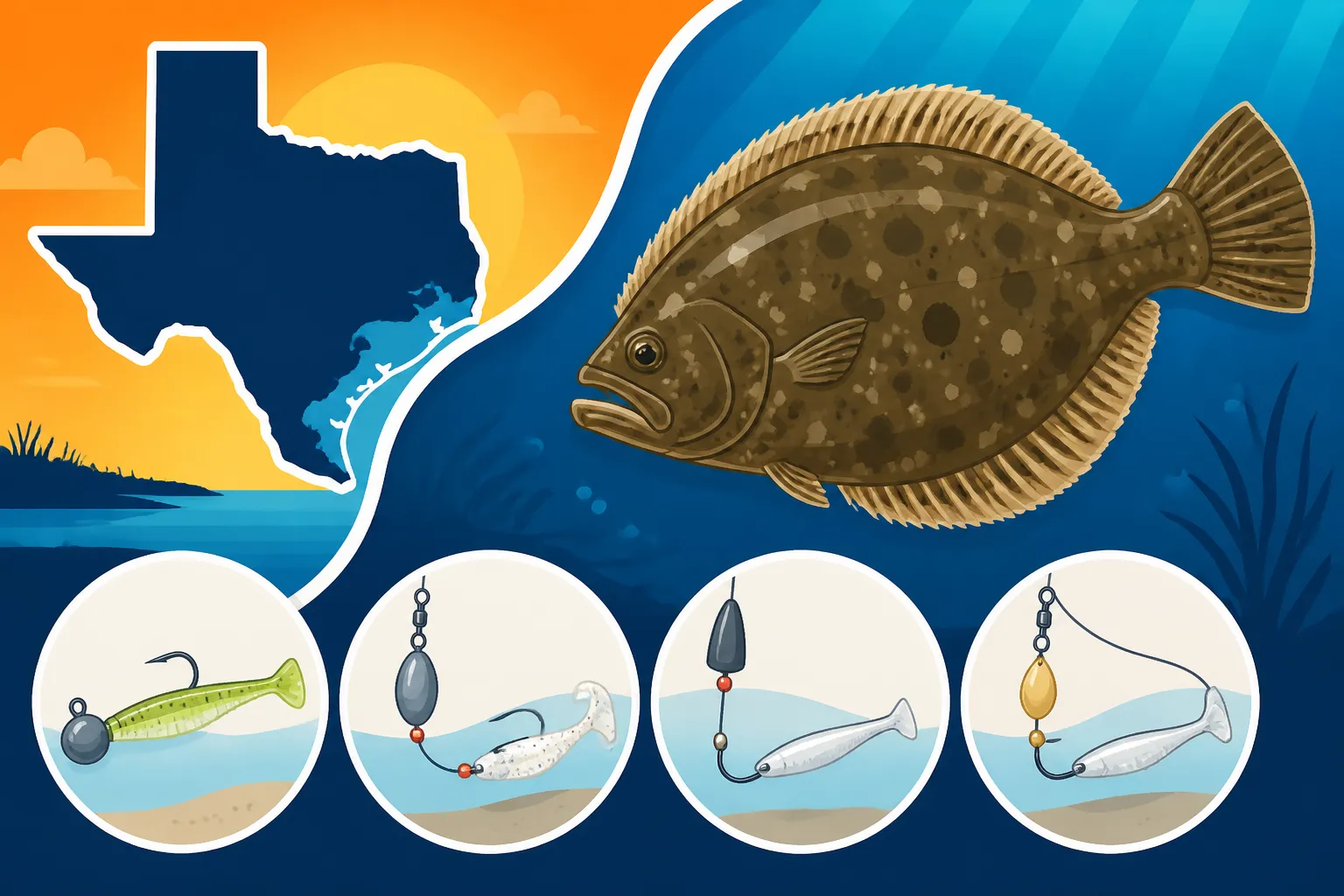
The beauty of the Carolina Rig lies in its simplicity and its ability to present bait in a super natural way right on the bottom. It typically consists of a weight (usually an egg sinker or a barrel sinker) threaded onto your main line, followed by a small bead (to protect your knot), then a swivel. Off the other end of the swivel, you tie a leader of fluorocarbon or monofilament, and finally, your hook. The free-sliding weight means that when a flounder picks up your bait, it feels very little resistance from the sinker, allowing it to mouth the bait and commit before feeling the hook. This is absolutely critical for those subtle flounder bites.
You'll want to use this rig in most bottom-oriented situations: drifting over expansive sand or mud flats, working the edges of grass beds, or even slowly bumping along shallower oyster reefs where snags aren't too severe. The ideal leader length can vary, but generally, anywhere from 12 to 30 inches gives your bait enough freedom to flutter naturally behind the weight. As for sinker weight, match it to the current and depth; you want just enough weight to maintain bottom contact without feeling like you're dragging an anchor. For hook choice, a Kahle hook or an Octopus hook in a 1/0 to 3/0 size is usually perfect for live bait like mud minnows or finger mullet, as discussed in our Best Bait and Lures for Texas Fishing guide. When shopping for these components, a quick search on Amazon will show you countless options for sinkers, swivels, and hooks to build your ideal setup.
The Drop Shot Rig (For Finicky Flounder or Structure)
While the Carolina rig is great for broad coverage, sometimes you need a more finesse approach, or you're fishing in an area with lighter, sporadic structure. That's where the drop shot rig really shines.
A drop shot rig places the hook above the sinker. You tie your hook directly to the main line (often with a Palomar knot, leaving a long tag end), and then tie your sinker to that tag end. This unique setup keeps your bait suspended at a precise depth, which can be incredibly effective when flounder are hugging a specific contour, or when you want to keep your bait just above some light grass or oyster shells that might snag a traditional Carolina rig. The sinker still touches the bottom, but your bait hovers, enticing those finicky flounder to strike.
This rig is fantastic when you're targeting specific spots, like the edges of small shell pads, isolated rocks, or around pier pilings where flounder might be holding. It allows you to shake your rod tip and impart subtle action to your bait without moving the sinker much, really making your offering dance in place. You can also fish it vertically from a boat or kayak, presenting your bait directly to fish you mark on your sonar. Small circle hooks or finesse hooks work well with live shrimp or small plastics. Experiment with how far above the sinker you place your hook – sometimes a few inches is all it takes, other times a foot might be better.
Jig Head & Soft Plastic (Active Flounder Hunting)
For the angler who likes to stay active and cover water, a simple jig head paired with a soft plastic lure is an incredibly versatile and effective flounder killer. This isn't a passive rig; it's about hunting them down.
The rig itself couldn't be simpler: a jig head (a weighted hook with a lead head) and a soft plastic lure threaded onto it. The magic happens in the retrieve. You can cast it out, let it sink to the bottom, and then use a slow, steady retrieve with occasional hops or drags along the bottom. The paddle tail, grub, or shrimp imitation on the jig head will kick and wiggle, mimicking a fleeing baitfish or shrimp. This active presentation often triggers a more aggressive strike from flounder than a stationary live bait rig might.
This setup is ideal for drifting large flats, fan-casting shorelines, or working the deeper edges of channels. It allows you to cover a lot of ground quickly, searching for those hidden flatfish. Jig head weights can range from 1/8 oz in very shallow, calm water to 1/2 oz or even heavier in deeper water or strong current. Colors like chartreuse, white, pink, and natural shrimp or mullet patterns are perennial favorites. You'll find an incredible variety of jig heads and soft plastics on Amazon, allowing you to stock up on different weights and colors to match any conditions. Remember to keep a keen eye on your line for any slight twitch or slack, as flounder often pick up a lure without a hard strike.
Specialty Rigs and Advanced Considerations for Texas Flounder
While the classics will get you far, sometimes you need to pull out a few extra tricks, especially when conditions are tricky or you're after those elusive trophy flounder.
Popping Cork Rigs (When Flounder Are Looking Up)
"Wait, I thought flounder were bottom feeders?" You're right, they mostly are! But there are times when a popping cork rig can be surprisingly effective for flounder, especially when they're feeding in very shallow water over grass or shell, and actively looking for commotion on the surface.
A popping cork rig features a float (the popping cork) that sits on the surface, a leader beneath it, and then your bait or lure. The idea is to periodically "pop" the cork with a sharp twitch of your rod tip. This creates a splashing, gurgling sound that mimics a shrimp or baitfish fleeing a predator, or just general feeding activity. The sound and commotion can draw flounder out from their hiding spots, and the bait suspended beneath the cork can be irresistible.
This rig excels in shallow grass flats, especially during an incoming tide when flounder might be moving onto the flats to feed. It's also great for fishing over light shell where a bottom rig might constantly snag. Keep your leader length short enough to keep your bait just above the grass or shell, typically 1 to 3 feet. Live shrimp are deadly under a popping cork, but a small jig with a soft plastic can also be effective. The key is to find a good rhythm with your pops – a few sharp pops, then a pause, letting the bait settle, before popping again. This can be particularly useful when fishing in areas like the prolific Galveston Bay Fishing Spots, where shallow grass is abundant.
Live Bait Rigs (The Unbeatable Choice)
Let's be honest, as much as we love artificial lures, live bait often reigns supreme, especially for finicky fish like flounder. There's just something about the natural scent, movement, and vibration that flounder simply can't resist.
When it comes to live bait for flounder, the usual suspects are mud minnows (killifish), finger mullet, and live shrimp. Each has its advantages. Mud minnows are incredibly hardy and can withstand a lot of abuse, staying lively on the hook for a long time. Finger mullet are excellent baitfish that flounder gorge on. Live shrimp are a universal attractant for almost any saltwater fish in Texas. The way you rig them is crucial: for mud minnows and finger mullet, you can hook them lightly through the lips (from the bottom up, avoiding the brain) or just in front of the tail. Hooking through the lips allows for a more natural swimming action, while tail-hooking makes them dart and struggle more, which can also be a great trigger. For live shrimp, hooking them through the horn or the tail is common.
Using a live bait rig is effective almost always, but it's particularly potent when the bite is slow or when targeting larger, more cautious flounder. The natural presentation of live bait under a Carolina rig or a very light knocker rig (where the sinker slides directly on the main line down to the hook) is incredibly hard for a flounder to pass up. Keeping your bait lively is key, so consider a good aerated live bait bucket or a portable aerator, many of which are available on Amazon. Make sure your hook size matches your bait; you want enough hook exposed to get a good set without hindering the bait's natural movement.
Terminal Tackle Essentials and Considerations
No matter which rig you choose, the small components make a huge difference. Don't skimp on terminal tackle – it's the weakest link in your system!
- Hooks: For live bait, Kahle hooks (also known as wide-gap hooks) or Octopus hooks are excellent as they allow the bait to swim freely and have a good hook-up ratio. Sizes typically range from 1/0 to 3/0, depending on the size of your bait. Circle hooks are also gaining popularity for their ability to hook fish in the corner of the mouth, making for easier release if you're not keeping fish (though with Texas flounder, if you're within the Texas Flounder Season and Limits, they usually end up in the cooler!).
- Swivels: High-quality barrel swivels or SPRO swivels are essential. They prevent line twist, which can weaken your line and cause frustrating tangles, especially when retrieving bottom rigs. Keep them small but strong enough for your target species.
- Leader Material: Fluorocarbon leader material is a top choice due to its invisibility underwater and its abrasion resistance, which is vital when fishing around oyster shells and rocks. Monofilament can also work and is more forgiving, but fluorocarbon generally offers a stealthier presentation. Use anywhere from 15 to 30 lb test, depending on the snags and size of fish you expect.
- Sinker Types: Egg sinkers are fantastic for Carolina rigs as they slide freely. Pyramid sinkers are great for holding bottom in strong currents, especially on sandy bottoms. Cannonball sinkers or teardrop sinkers work well for drop shot rigs. Match the weight to the conditions – too light, and your rig washes away; too heavy, and you lose feel for the bite.
You can find a massive selection of all these essential terminal tackle items on Amazon, allowing you to choose the best quality and quantity for your needs without breaking the bank. Always inspect your line and leader for nicks and abrasions, especially after fishing around structure.
Rigging for Different Texas Flounder Scenarios
Texas is a big state with diverse fishing environments. A rig that works wonders in a calm bay might be useless off a roaring jetty. Adapting your approach to the specific conditions is paramount for success.
Jetty and Pass Fishing
Fishing jetties and passes for flounder, especially during the fall flounder run, can be incredibly productive, but it also presents unique challenges. The currents here can be powerful, and the rocky bottom is a tackle-eating machine.
When fishing jetties, you'll often need heavier sinkers to keep your bait on the bottom. Pyramid sinkers or bank sinkers in weights from 1 to 4 ounces (or even more in extreme current) are common. Your leader material needs to be robust – think 20-30 lb fluorocarbon to withstand the constant abrasion against barnacle-covered rocks. A modified Carolina rig or a knocker rig (where the weight slides directly down to the hook) are excellent choices here. For the knocker rig, a heavy bullet sinker or egg sinker is threaded directly onto your main line, then tied to a sturdy swivel or a heavy-duty jig head. This keeps your bait right on the bottom with minimal line out, reducing snags. Cast your rig parallel to the jetty, letting the current sweep it slowly along the rocks, or fan-cast into the deeper channels of the pass. You might also want to consult our guide on Texas Saltwater Fishing Regulations to ensure you're compliant with all rules for these specific locations.
Bay and Flat Fishing
Out in the calmer waters of the Texas bays and on expansive grass and sand flats, a more subtle approach is usually best. Here, you're less concerned with fighting heavy current and more focused on natural presentation and avoiding hang-ups in vegetation.
For bay and flat fishing, lighter rigs are the order of the day. A classic Carolina rig with a lighter egg sinker (1/4 to 3/4 oz, depending on depth and current) and a 15-20 lb fluorocarbon leader is often perfect. The key is to use just enough weight to maintain bottom contact, allowing your bait to drift or be retrieved very slowly and naturally. When fishing over grass, consider a weedless hook, or shorten your leader on a Carolina rig to keep your bait just above the thickest parts of the grass. A jig head with a soft plastic can also be incredibly effective here, especially when drifting. Cast it out, let it sink, and slowly reel it in with occasional hops. This allows you to cover a lot of ground and actively search for flounder hidden in the sparse grass or sandy potholes. For specific spots, our article on Matagorda Bay Flounder Fishing Spots offers excellent advice on where to target these flatfish in the bays.
Wade Fishing vs. Boat Fishing
Your mode of transportation also plays a significant role in your rig selection. What works from a boat might be cumbersome while wade fishing, and vice-versa.
Wade Fishing: When you're out there on foot, wading through the shallows, mobility and simplicity are key. You're limited in the amount of gear you can carry, so versatile rigs are best. A Carolina rig with a moderate weight (1/4 to 1/2 oz) is a staple for waders, allowing you to cast and slowly drag your bait across flats and along drop-offs. Jig heads with soft plastics are also excellent, as they let you cast, retrieve, and cover water actively without having to constantly rebait. Lighter tackle is generally preferred for comfort and ease of casting. Focus on casting to areas where current creates natural ambush points, or where you see sand pockets within grass beds. For more tips on getting in the water, check out How to Wade Fish for Redfish in Texas, many of which are applicable to flounder.
Boat Fishing: From a boat, you have the advantage of covering more ground, reaching deeper waters, and carrying a wider array of tackle. This opens up options like vertical jigging with heavier jig heads or even using the drop shot rig more effectively. When drifting, you can deploy multiple rods with different rigs – some with Carolina rigs, others with jig heads – to see what the flounder prefer that day. You can also use your boat's electronics to identify subtle depth changes or structure that might hold fish, then present your rig directly to them. The ability to anchor and precisely target a productive area also allows for more stationary live bait presentations.
Here's a quick comparison of common flounder rigs:
| Rig Type | Primary Use | Key Components | Pros | Cons |
|---|---|---|---|---|
| Carolina Rig | General bottom fishing | Egg sinker, bead, swivel, leader, Kahle hook | Natural presentation, good feel, versatile | Can snag in heavy structure, can spook wary fish with large sinker |
| Drop Shot Rig | Finicky fish, light structure | Hook (above sinker), leader, sinker (below hook) | Keeps bait suspended, precise depth control | Not ideal for covering wide areas, more finesse-oriented |
| Jig Head & Soft Plastic | Active searching, covering ground | Jig head, soft plastic lure | Highly interactive, mimics fleeing bait, good for covering water | Requires active retrieve, can get bit off by other species |
| Popping Cork Rig | Shallow grass flats, active fish | Popping cork, leader, jig/bait | Creates commotion, keeps bait visible above grass | Less subtle, might spook wary fish in clear water |
| Live Bait Rig | Anytime, especially tough bite | Various, focus on hook for live bait | Irresistible to flounder, high success rate, natural appeal | Requires bait management, can be fragile, bait cost |
Choosing the best rig for flounder fishing in Texas isn't about finding a single magic bullet, but rather understanding the fish, the environment, and how to present your bait in the most enticing way. With these classic and specialized rigs in your arsenal, along with a keen eye on the conditions, you'll be well on your way to catching more of these delicious flatfish. Don't forget to always check the latest Texas Fish Bag and Length Limits before you head out!
Disclaimer
This article is for general informational purposes only and does not constitute professional advice. Laws, prices and regulations vary by location and change over time. Consult a qualified professional for guidance on your specific situation.