Cedar Creek Reservoir Fishing Guide
Finding a fantastic fishing spot close to the bustling Dallas-Fort Worth Metroplex can sometimes feel like chasing a ghost. You want those trophy catches and peaceful moments on the water, but who wants to drive for hours just to get there? Cedar Creek Reservoir often gets overlooked, but it's a true gem that offers incredible fishing opportunities right in your backyard, and this guide is here to unlock all its secrets.
Getting to Know Cedar Creek Reservoir
Cedar Creek Reservoir, often affectionately called "The Creek" by locals, isn't just another body of water; it's the fourth largest lake in Texas by surface area, providing an expansive playground for anglers. Located about an hour southeast of Dallas, it's a prime destination for those in North Texas looking for diverse fishing experiences without the lengthy commute. This sprawling reservoir spans over 32,000 acres, boasting more than 300 miles of shoreline, which translates to a massive amount of fishable water and endless possibilities for finding that perfect honey hole.
Geographical Context and General Characteristics
Cedar Creek is an impoundment of Cedar Creek, a tributary of the Trinity River, and it was created in 1965 by the Tarrant Regional Water District primarily as a water supply for Fort Worth. What makes it unique for fishing is its varied underwater structure. You'll find everything from shallow flats and vast expanses of hydrilla to deep channels, submerged timber, and rocky points. This diversity in habitat supports a robust ecosystem, making it a fantastic multi-species fishery. The lake's waters can range from clear to stained, depending on recent rainfall and activity, so being adaptable with your lure choices is key.
Local Regulations and License Snapshot
Just like any other public water in Texas, fishing on Cedar Creek Reservoir requires adherence to the statewide regulations set by the Texas Parks and Wildlife Department (TPWD). This means ensuring you have a valid Texas fishing license, complete with any necessary endorsements, before you even cast a line. For those new to the state or just visiting, understanding Texas Fishing License Requirements Explained is crucial. Remember, the general freshwater bag and length limits apply here, but it's always smart to double-check the latest TPWD Outdoor Annual for any specific regulations unique to Cedar Creek, especially concerning specific species or seasons. Penalties for not following these rules can be hefty, so a quick review is always worth your time.
Top Fish Species and Where to Find Them
Cedar Creek Reservoir is a renowned fishery for several popular game species, each offering a different challenge and reward. Anglers flock here seeking the thrill of a hard-fighting bass, the steady tug of a crappie, or the sheer power of a big catfish. Knowing where these fish tend to congregate is half the battle, and Cedar Creek has distinct areas that favor certain species.
Largemouth Bass Strategies
Without a doubt, largemouth bass are the undisputed kings of Cedar Creek Reservoir. This lake is famous for producing impressive numbers of quality bass, and even some true lunkers. During the spring spawn, which you can learn more about in our Texas Bass Spawning Season Guide, these fish move into shallower water, making areas with submerged vegetation, boat docks, and cypress trees prime targets.
As the weather heats up in summer, bass tend to retreat to deeper structure. Think about creek channels, humps, and points where they can ambush baitfish. Finding those thermoclines and identifying areas with good cover like brush piles or submerged timber is critical. In the fall, bass will follow baitfish into shallower coves as they gorge themselves before winter, often becoming more aggressive. Winter fishing requires a slower approach, often targeting deep ledges and rock piles. Popular baits include jigs, crankbaits, spinnerbaits, and a variety of soft plastics fished on a How to fish a Texas rig for bass or Carolina rig.
Crappie Hotspots and Techniques
If you're after delicious white fillets, Cedar Creek's crappie population is thriving. Both white and black crappie call this reservoir home, and they can be found in abundance, especially during their spawning periods. Crappie are notorious for schooling up, so when you find one, you're likely to find many more.
During the spring, look for crappie to move into shallow, brushy coves and around standing timber in 2-6 feet of water. They love to hide around submerged brush piles, bridge pilings, and any other vertical structure. As summer approaches, they'll pull back to deeper water, often suspending over creek channels or congregating around man-made fish attractors. Small jigs (1/16 to 1/8 ounce) tipped with minnows or soft plastic crappie baits are incredibly effective. A great way to locate them is by using your fish finder to mark brush piles and then vertical jigging. You can dive deeper into How to Fish for Crappie for more specialized tips.
Catfish Abundance and Fishing Methods
Cedar Creek Reservoir offers excellent opportunities for channel, blue, and flathead catfish. Catfish are often overlooked by bass anglers, but they provide consistent action and can grow to impressive sizes here. The sheer abundance of baitfish, coupled with the lake's diverse bottom structure, makes it a prime habitat for all three species.
Channel catfish are widespread and can be caught almost anywhere, from shallow coves to main lake points. They respond well to prepared baits, cut bait, or shrimp. Blue catfish, which can grow quite large, are often found in deeper creek channels, along river bends, and near the dam. Fresh cut bait, particularly shad, is a top choice for these monsters. Flathead catfish are more solitary and prefer live bait, often lurking in areas with heavy cover like timber or rocky outcrops. Night fishing for catfish can be particularly productive, especially in warmer months. For more detailed advice, check out our Texas Catfish Species Guide.
White Bass Runs
For sheer numbers and fast-paced action, nothing beats the white bass runs on Cedar Creek. These feisty schooling fish are a blast to catch, especially when they're actively chasing bait on the surface. White bass are particularly active during their spring spawning migration, when they move up the feeder creeks.
During the spring run, concentrate your efforts in the upper reaches of the creeks flowing into Cedar Creek, such as Caney Creek or Cedar Creek itself. Small jigs, inline spinners, and lipless crankbaits are deadly when cast into schooling fish. As the water warms in summer, white bass will move to the main lake, often schooling in open water and chasing shad. Keep an eye out for diving birds, which often indicate a schooling frenzy below. Trolling small crankbaits or casting chrome spoons into these feeding schools can yield non-stop action.
Key Fishing Spots and Public Access
One of the great things about Cedar Creek Reservoir is the ample access available to anglers, whether you're bringing a full-size bass boat or simply want to cast from the bank. Knowing the various ramps, marinas, and public areas can make your fishing trip much smoother and more productive.
Public Boat Ramps and Marinas
Cedar Creek Reservoir is well-equipped with numerous public boat ramps, making it easy to launch your vessel. On the east side of the lake, popular ramps include those at Gun Barrel City, such as the Gun Barrel City Park Ramp, which offers good access to the mid-lake area. Further south, the launch at Log Cabin City Park provides access to deeper water and the south end.
On the west side, ramps around Payne Springs and Tool offer entry to excellent fishing grounds. For those needing services, there are several marinas dotted around the lake. These often provide fuel, bait, tackle, and sometimes even guide services. For example, FishingBooker is a great resource if you're looking to book a guided trip with a local expert who knows these ramps and honey holes like the back of their hand. Always check ramp conditions, especially during periods of low or high water, as some ramps might become unusable.
Bank Fishing and Park Access
Not everyone has a boat, and that's perfectly fine! Cedar Creek Reservoir still offers some decent bank fishing opportunities, especially in its various city parks and designated public access areas. Local parks in towns like Gun Barrel City, Mabank, and Tool often have shoreline access where you can cast a line.
These spots are usually best for targeting panfish, catfish, and sometimes even opportunistic bass, particularly during the spring or fall when fish are closer to the shore. For families or beginners, these public areas are fantastic, offering a chance to enjoy the outdoors and catch some fish without needing extensive gear. Just be mindful of local park rules and ensure you're not trespassing on private property. Free Shoreline Fishing at Texas State Parks is a topic you might find interesting if you're exploring other Texas bank fishing options.
Notable Coves, Channels, and Structures
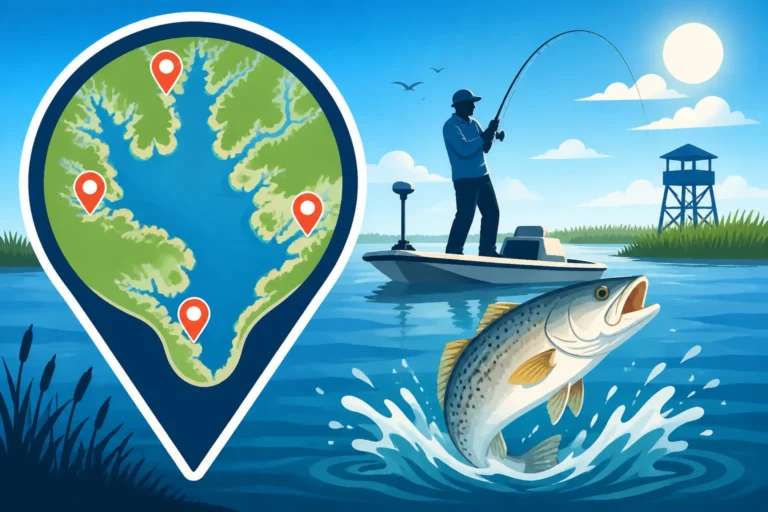
Cedar Creek is a large lake, so breaking it down into key areas can help you narrow your focus.
- The Northern End: This area tends to be shallower with more extensive hydrilla beds (when present) and stumps, making it a prime largemouth bass and crappie habitat, especially in spring. Look for the coves and feeder creeks north of the Highway 198 bridge.
- Mid-Lake Area: This section features a mix of shallow coves and deeper main lake points, with plenty of docks, boat houses, and submerged brush. It's excellent for crappie, bass, and catfish throughout the year. The area around Gun Barrel City and Malakoff offers a variety of structures.
- Southern End: Closer to the dam, the lake generally gets deeper, with more distinct creek channels and rocky structures. This is often where you'll find larger blue catfish and deeper-holding bass, especially during the hotter months. The old river channel winds its way through here, providing excellent deep-water ambush points.
Understanding the lake's topography and where various species prefer to hold at different times of the year is crucial for consistent success. Many anglers find it beneficial to consult a detailed lake map or use good Best Fishing Electronics for Texas Anglers to identify these structures before heading out.
Essential Gear and Tackle for Cedar Creek
Having the right equipment can make or break your day on the water, especially on a lake as diverse as Cedar Creek Reservoir. From the perfect rod and reel combo to the most effective lures, being prepared will significantly increase your chances of success.
Rod and Reel Setups
For bass fishing on Cedar Creek, you'll want versatile setups. A medium-heavy casting rod (6'6" to 7'6") paired with a baitcasting reel is ideal for throwing heavier jigs, crankbaits, and larger Texas rigs. This provides the backbone needed to pull bass out of cover. For lighter presentations, like finesse worms or topwater lures, a medium-action spinning rod (6'6" to 7') with a spinning reel works wonders. You might want to read our Best Fishing Rods for Texas Anglers for more in-depth choices.
For crappie, a light to ultralight spinning rod (5' to 7') with a small spinning reel spooled with 4-6 lb test monofilament or fluorocarbon is perfect. This allows for sensitive presentations of small jigs and minnows. For catfish, a medium-heavy to heavy conventional or spinning rod (7' to 9') with a robust reel capable of handling 15-30 lb test monofilament is recommended, especially if you're targeting those big blue or flathead cats.
Recommended Lures and Baits
Cedar Creek has a wide variety of forage, so your lure selection should reflect that.
- For Largemouth Bass:
- Spring: Spinnerbaits, ChatterBaits, square bill crankbaits in shad or crawfish patterns, jigs with craw trailers, and soft plastic stick baits (Senkos) rigged weightless or on a Texas rig.
- Summer: Deep diving crankbaits, shaky head worms, drop shot rigs, large plastic worms, and topwater frogs or poppers in low-light conditions.
- Fall: Lipless crankbaits, bladed jigs, swimbaits, and jerkbaits.
- Winter: Jigs, slow-rolled spinnerbaits, and suspending jerkbaits.
- For Crappie:
- Small (1/16 to 1/8 oz) tube jigs, curly tail grubs, or crappie minnows fished under a bobber or vertically jigged. Colors like chartreuse, white, and black/chartreuse are often effective.
- For Catfish:
- Prepared stink baits, cut shad, live sunfish, chicken liver, and shrimp are all excellent choices. Vary your baits based on the specific species you're targeting. For blue cats, fresh cut shad is hard to beat.
Boat and Kayak Considerations
Given the size of Cedar Creek Reservoir, having a boat can significantly expand your fishing horizons. Bass boats are common for their speed and ability to cover water, while bay boats or center consoles can also handle the main lake chop. If you're considering a larger vessel, be sure to check out Best Boats for Texas Lake Fishing.
However, you don't need a massive boat to fish Cedar Creek. Kayaks are becoming increasingly popular, especially for exploring shallower coves, fishing around docks, or silently stalking bass in areas larger boats can't reach. A stable Best Kayaks for Texas Fishing equipped with a fish finder and rod holders can open up countless opportunities. Just be mindful of wind and boat traffic on the main lake, as conditions can get choppy. Always wear your life jacket, especially in a kayak, and ensure you have all Texas Boat Safety Equipment Requirements on board, regardless of your vessel type.
Seasonal Fishing Strategies on Cedar Creek
Fishing conditions and fish behavior on Cedar Creek Reservoir fluctuate dramatically with the seasons. A technique that worked wonders in spring might be useless in summer. Understanding these seasonal shifts is fundamental to consistent success.
Spring: The Spawn and Post-Spawn Frenzy
Spring is arguably the most anticipated season for bass anglers on Cedar Creek. As water temperatures climb into the 60s, largemouth bass begin their annual migration to the shallows for the spawn. This period usually runs from late February through April, peaking when water temperatures hit the mid-60s. Look for fish in protected coves, around boat docks, cypress trees, and any shallow cover. Soft plastics like Senkos, flukes, and jigs are excellent choices for tempting bedding bass.
After the spawn, bass move into a post-spawn phase, often guarding fry or recuperating in slightly deeper water nearby. This can be a challenging time, but targeting creek channels, points, and transition areas with spinnerbaits or shaky heads can be effective. Crappie also move shallow in spring, congregating around brush piles and timber, making it a prime time for jigging or fishing with minnows. White bass will be making their upstream runs in the feeder creeks, offering incredible fast action.
Summer: Dealing with the Texas Heat
Texas summers on Cedar Creek are hot, and the fishing can be challenging if you don't adjust your approach. Bass will generally move to deeper, cooler water, often suspending over thermoclines or relating to deep structure like ledges, humps, and submerged roadbeds. Early morning and late evening topwater bites can be explosive, but midday requires deep-diving crankbaits, Carolina rigs, or slow-fished jigs. Night fishing for bass can also be incredibly productive during the peak summer months. Find out more about How to Fish in Hot Texas Summers to beat the heat.
Catfish thrive in the summer heat. Night fishing with cut bait in deep holes or along channels is a prime strategy for blue and flathead catfish. Channel catfish will still be active in shallower areas, especially at night. Crappie will be schooling in deeper brush piles or suspended over the main lake channels, so a good fish finder is invaluable for locating them.
Fall: Transition and Feeding Frenzies
As temperatures begin to drop in the fall, Cedar Creek comes alive again. The cooler water revitalizes the fish, and they enter a "feeding frenzy" phase, actively chasing baitfish in preparation for winter. This is a fantastic time for all species. Largemouth bass will follow schooling shad into shallower coves and creek arms. Topwater action can pick up again, and lipless crankbaits, spinnerbaits, and swimbaits are highly effective for covering water and finding active fish.
White bass will also be actively schooling and chasing shad on the main lake; keep an eye out for surface activity. Crappie will start to move out of their deep summer haunts and become more spread out, often relating to shallower brush and timber before settling into winter patterns. Fall is a great time to experiment with different techniques as fish become more aggressive and less pressured by the heat. Our Best Time of Year to Fish in Texas covers this in more detail.
Winter: Slow and Steady Wins the Race
Winter fishing on Cedar Creek requires patience and a slower approach. The fish are still there, but their metabolism slows down, and they become less active. Largemouth bass will often relate to deep ledges, rock piles, and points, especially those with access to deeper water. Jigs, suspending jerkbaits, and slow-rolled crankbaits are effective, fished meticulously and deliberately.
Crappie will often school tightly in deep brush piles or suspended over channels. Vertical jigging with small minnows or micro jigs is key to getting bites. Catfish can still be caught, particularly large blue cats in the deepest parts of the main lake and creek channels, using fresh cut bait. The key to winter fishing is slowing down your presentation, being incredibly observant, and targeting areas where fish can find stable water temperatures and ambush opportunities.
Planning Your Cedar Creek Fishing Trip
A successful fishing trip to Cedar Creek Reservoir goes beyond just knowing where the fish are; it involves proper planning, understanding local resources, and prioritizing safety.
Finding Local Fishing Guides and Charters
If you're new to Cedar Creek or want to maximize your chances of a trophy catch, hiring a local fishing guide is an excellent investment. These professionals spend countless hours on the water and know the lake's ever-changing patterns, secret spots, and what baits are hot. Many guides specialize in specific species, so whether you're after bass, crappie, or catfish, you can find an expert to lead the way.
Platforms like FishingBooker make it incredibly easy to find and book experienced local guides for Cedar Creek Reservoir. You can read reviews, compare prices, and choose a guide whose specialty aligns with your fishing goals. They'll also ensure you're fishing legally and safely, providing all the necessary gear and sharing invaluable tips along the way.
Accommodations and Nearby Amenities
Cedar Creek Reservoir is surrounded by several charming small towns that offer various amenities for visiting anglers. Gun Barrel City, Mabank, Tool, and Malakoff are the main hubs. You'll find a range of accommodations, from quaint bed and breakfasts to vacation rentals, and even some hotels. There are plenty of local restaurants, bait and tackle shops, and grocery stores to stock up on supplies.
For those planning an extended stay, many properties around the lake offer private docks, which can be a huge convenience for boat owners. It's always a good idea to book accommodations in advance, especially during peak fishing seasons or holidays, as Cedar Creek is a popular destination for both anglers and vacationers.
Safety on the Water
Safety should always be your top priority when fishing any large body of water. Cedar Creek Reservoir is generally safe, but its size and popularity mean you should always be prepared.
- Weather Awareness: Texas weather can change rapidly. Always check the forecast before heading out and be prepared for sudden storms, strong winds, or temperature drops. If you see dark clouds or lightning, get off the water immediately.
- Life Jackets: Ensure everyone on board has a properly fitting life jacket, and children under 13 must wear one while a boat is underway. This is a crucial Texas Life Jacket Requirements for Boats rule.
- Hydration and Sun Protection: Especially during the summer, drink plenty of water to avoid dehydration. Wear sunscreen, a wide-brimmed hat, and polarized sunglasses to protect yourself from the harsh Texas sun.
- Navigation: While Cedar Creek is generally well-marked, always be aware of your surroundings. Some areas might have submerged stumps or shallow spots, so careful navigation, especially if you're unfamiliar with the lake, is essential. Good GPS units or mapping on your Best Fishing Electronics for Texas Anglers can be a lifesaver.
- Emergency Plan: Let someone know where you're going and when you expect to return. Carry a fully charged cell phone and a first-aid kit on your boat.
Following these safety tips will ensure you have an enjoyable and incident-free fishing adventure on Cedar Creek Reservoir.
Cedar Creek Reservoir Species and Seasons at a Glance
To help you visualize the best times to target different species and general areas, here's a handy table:
| Species | Peak Seasons | Typical Location | Best Baits/Lures | Key Considerations |
|---|---|---|---|---|
| Largemouth Bass | Spring (Spawn), Fall | Shallow coves (Spring), Deep structure (Summer), Channel bends, docks, vegetation | Soft plastics, jigs, crankbaits, spinnerbaits, topwaters | Vary techniques with depth and cover; early/late bites in summer |
| Crappie | Spring (Spawn), Fall | Brush piles, standing timber, bridge pilings, submerged structure | Small jigs (tube, curly tail), live minnows | Schooling fish; a good fish finder is a game changer |
| Channel Catfish | Spring, Summer, Fall | Shallow flats, creek channels, coves, docks | Prepared baits, cut bait, shrimp, chicken liver | Can be caught almost anywhere; good night fishing |
| Blue Catfish | Summer, Fall, Winter | Deep creek channels, river bends, main lake basins, near the dam | Fresh cut shad, whole gizzard shad | Target deeper water; can grow very large |
| Flathead Catfish | Summer, Fall | Heavy cover, timber, rock piles, deeper holes | Live bait (sunfish, perch) | Solitary; difficult to target but highly rewarding |
| White Bass | Spring (Run), Summer (Schooling) | Feeder creeks (Spring), Main lake open water (Summer) | Small jigs, inline spinners, lipless crankbaits, chrome spoons | Look for surface activity and diving birds; fast action |
Disclaimer
Fishing conditions and regulations can change rapidly. Always consult the latest Texas Parks and Wildlife Department (TPWD) Outdoor Annual for the most current rules and regulations before heading out. The information provided in this guide is for general informational purposes only and should not be considered legal advice.