What do largemouth bass eat in Texas lakes
It can be incredibly frustrating to hit your favorite Texas lake, ready to reel in some hawgs, only to find the bass aren't biting what you're throwing. You start to wonder, "What on earth are they actually eating out there right now?" Understanding the natural diet of largemouth bass in Texas is crucial to cracking the code and making your next fishing trip a success. This comprehensive guide will pull back the curtain on the diverse menu of a Texas largemouth, giving you the insights you need to choose the right bait and tactics.
The Opportunistic Hunter: What Defines the Largemouth Bass Diet?
Largemouth bass are incredible predators, known for their aggressive strikes and impressive fighting spirit. But what really makes them tick, food-wise? They're not picky eaters in the way some fish are; instead, they're classic opportunistic feeders. This means they'll pretty much eat anything they can fit in their mouth, as long as it looks like a good, easy meal. Their diet is incredibly varied, shifting with the seasons, their size, and the specific environment they call home. Thinking like a bass and understanding what they're instinctively preying on is the first step to becoming a more successful angler.
The Primary Prey: Baitfish and Panfish
When you picture a bass striking, often you imagine it engulfing a smaller fish. And you'd be right! Baitfish and panfish form the cornerstone of a largemouth bass's diet, especially as they grow larger. These are calorie-dense meals that provide the energy a big bass needs to grow and thrive. They'll actively hunt these schools, ambushing them from cover or chasing them down in open water.
For example, a bass might spend its morning lurking in a weed line on Lake Fork, patiently waiting for a school of threadfin shad or a lone bluegill to swim by. That sudden flash and violent tug on your line? That's often a bass replicating this natural hunting behavior. The size of the prey fish is often directly related to the size of the bass, with bigger bass naturally targeting bigger meals. It’s a simple energy equation: why chase ten tiny minnows when one hefty gizzard shad will do the trick?
Beyond Fish: Invertebrates and Amphibians
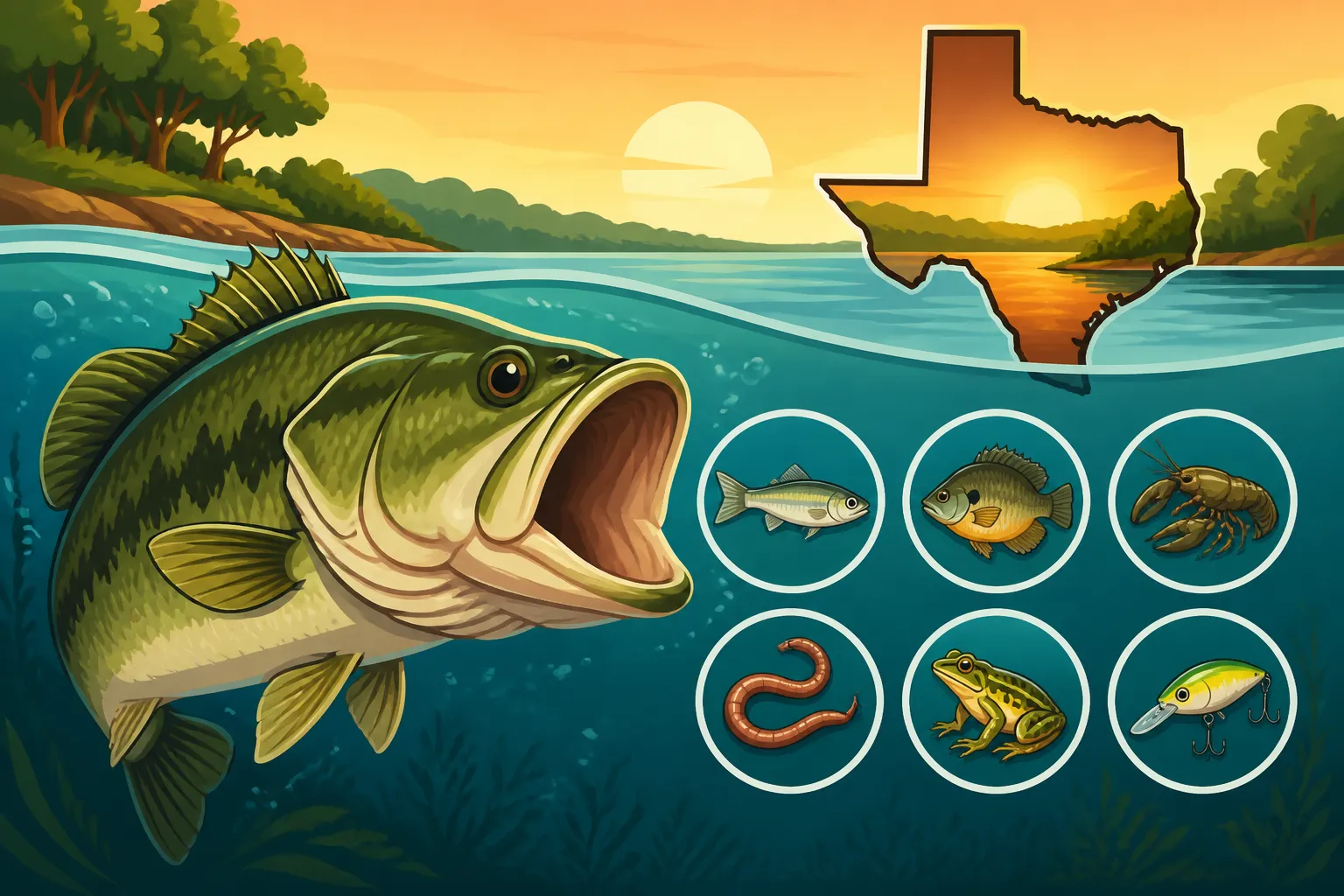
While fish might be the main course, largemouth bass certainly aren't limited to finned fare. Their diet expands significantly into the world of invertebrates and amphibians, especially when they're younger or when fish populations are less abundant. This is where the "opportunistic" part really shines through. These creatures often live in the same habitats as bass, making them easy targets.
Think about a small bass exploring the edges of a lily pad field in a pond near Houston. A crawfish scurrying along the bottom, an unsuspecting frog perched on a pad, or even a large insect that falls into the water – these are all fair game. These non-fish items provide vital nutrients and contribute significantly to their growth, particularly during different life stages or when water levels fluctuate and expose new food sources. When you're throwing a plastic frog or a creature bait, you're tapping into this natural food source.
The "Anything That Fits" Mentality
Seriously, it's not an exaggeration. If it moves and fits into their cavernous mouth, a largemouth bass will likely try to eat it. This isn't just about survival; it's about pure instinct and aggression. I've heard stories from anglers fishing Texas waters of bass spitting up everything from baby snakes to small ducklings, and even bats that fell into the water. While these might be rarer occurrences, they illustrate just how broad their feeding habits can be.
This "anything that fits" mentality is why sometimes the most unconventional lures can be surprisingly effective. A topwater lure that creates a big commotion might mimic a struggling bird or a rodent that fell in, triggering a predatory strike even if there aren't many fish around. It’s a testament to their apex predator status in freshwater environments. They are constantly assessing their surroundings for caloric opportunities.
Texas-Specific Menu: Local Delicacies for Largemouth Bass
Texas is a huge state with an incredible variety of aquatic environments, from shallow coastal marshes to deep, rocky hill country reservoirs and meandering rivers. This diversity means that while the general diet of a largemouth bass remains consistent, the specific species they prey upon can vary quite a bit from one lake to another. Understanding these localized food sources is key to tailoring your approach to a particular fishing spot.
Common Forage Fish in Texas Lakes
Texas lakes and rivers are teeming with various baitfish and panfish that form the bulk of a largemouth's diet. These are the fish that you, as an angler, will most often try to imitate with your lures. Knowing which ones are prevalent in your chosen fishery can make a world of difference.
| Forage Fish Species | Typical Habitat in Texas | Bass Lure Imitation |
|---|---|---|
| Threadfin Shad | Open water, vast schools | Small crankbaits, swimbaits, jerkbaits, spoons |
| Gizzard Shad | Open water, larger schools | Larger swimbaits, big spinnerbaits, deep-diving crankbaits |
| Bluegill | Around cover, shallow water | Jigs, soft plastic creatures, small crankbaits, topwaters |
| Sunfish (various) | Around cover, shallow water | Jigs, soft plastic creatures, small crankbaits |
| Minnows (various) | Shallows, grass, rocky areas | Small soft plastics, ultralight spinners |
| Crappie (juvenile) | Brush piles, standing timber | Small swimbaits, jigs |
You'll find massive schools of threadfin and gizzard shad in many of our larger reservoirs like Sam Rayburn Reservoir and Lake Fork. These fish are relatively small, silvery, and move in tight groups, making them easy for bass to target. Bluegill and other sunfish, on the other hand, are often found tucked into the cover of submerged brush, around boat docks, or along rocky shorelines. Bass will ambush them with brutal efficiency.
When you're out on the water, pay attention to what you see. If you spot schools of shad flickering near the surface, that's a huge clue that bass are likely feeding on them, and you should probably tie on a shad-imitating lure. Conversely, if you're fishing a shallow, brushy cove and see plenty of small bream, a bluegill-colored jig or swimbait might be the ticket. Texas Freshwater-Only License Cost often makes targeting these species very affordable.
Crustaceans and Insects: Hidden Gems
Beyond fish, Texas bass have a significant appetite for crawfish and a variety of insects. These are often overlooked by anglers who are solely focused on fish imitations, but they can be incredibly important, especially in certain conditions or times of the year.
Crawfish are a staple for bass in many Texas lakes. They live on the bottom, under rocks, in grass, and around woody debris. Bass will actively root them out, and a bright red or brown crawfish imitation can be deadly, particularly in spring or fall when crawfish are more active. Think about the countless times you've seen an angler pitching a red or brown jig into cover – they're mimicking a crawfish! You can find excellent options on Amazon for crawfish-patterned soft plastics that really trigger those bass strikes.
As for insects, while smaller bass might eat individual bugs more often, larger bass won't pass up a substantial meal. Large aquatic insects, grasshoppers, cicadas, and even dragonflies can all end up on the bass's menu, particularly if they fall onto the water's surface. This is where topwater lures, especially those that "walk" or "pop" on the surface, can be so effective. A bass sees that disturbance and thinks, "Dinner!"
Amphibians and Reptiles: Unconventional Meals
This is where the "anything that fits" truly comes into play. While not as common as fish or crawfish, amphibians like frogs and salamanders, and even small reptiles like water snakes, definitely make an appearance on the Texas largemouth bass's menu.
Frogs are a classic bass meal, especially around shallow, vegetated areas. A frog hopping from one lily pad to another is an irresistible target for a hungry bass lurking below. This is why frog lures, both hollow-bodied and soft plastic, are so popular and effective, especially in dense cover where other lures would snag. Bass attack them with explosive, heart-stopping blow-ups that are incredibly exciting for anglers.
Water snakes, while perhaps less frequent, are also fair game. A young water snake swimming across a cove, or a lizard that falls from an overhanging branch, presents a unique and substantial meal. While there aren't many "snake lures" on the market, the action of some larger soft plastic worms or swimbaits might inadvertently mimic a serpentine meal, leading to some surprising catches. This further solidifies the bass's reputation as a top-tier opportunistic predator.
Factors Influencing a Bass's Dinner Plate in Texas
A bass doesn't eat the same thing, in the same way, all year round. Their diet is a dynamic process, influenced by a multitude of environmental and biological factors. Understanding these shifts is paramount to consistently catching fish in Texas waters. It’s like knowing the local diner’s daily specials – sometimes they have the steak, sometimes it’s fish, and sometimes it’s a surprise.
Seasonal Shifts and Water Conditions
Texas weather is a wild card, and these fluctuations directly impact what bass are eating. As the seasons change, so does the activity of their prey and the bass themselves.
- Spring: This is prime feeding time! As water temperatures rise, fish become more active, and bass are often in a pre-spawn or spawning phase, needing a lot of energy. Crawfish are also highly active. Bass will aggressively feed on anything available, often preferring larger, protein-rich meals. This is when you might see them chasing bigger shad or focusing on crawfish around shallow spawning grounds. Texas Bass Spawning Season Guide explains more about this critical period.
- Summer: The brutal Texas heat can make bass lethargic during the day. They'll often feed during cooler periods, like early morning, late evening, or even at night. Forage fish might be pushed deeper to find cooler water or hide in dense cover. Bass will often focus on smaller, easier-to-catch prey or ambush larger meals that stray into their deep cover. How to Fish in Hot Texas Summers delves into this challenge.
- Fall: As water temperatures cool, bass enter a "fall feeding frenzy" to bulk up for winter. Shad and other baitfish school up tightly, creating massive targets for hungry bass. Crawfish are still active. This is an excellent time to throw reaction baits like crankbaits and spinnerbaits, mimicking schooling baitfish.
- Winter: Cold water slows everything down. Bass are less active and their metabolism decreases. They'll eat less frequently but will still strike if an easy, high-calorie meal presents itself. Deeper, slower presentations mimicking lethargic baitfish or crawfish are often most effective. They're conserving energy, so a slow-moving, tempting target is usually what they go for.
Water clarity also plays a significant role. In clear water, bass rely heavily on sight, so natural-looking baits are often best. In stained or muddy water, they use their lateral line more, so baits with strong vibrations, rattles, or dark, silhouetted profiles tend to be more effective.
Size Matters: From Fry to Lunker
A tiny bass fry doesn't eat the same thing as a 10-pound lunker, and this change in diet throughout their life cycle is a fascinating progression.
- Fry and Juvenile Bass: When they first hatch, largemouth bass fry are microscopic, feeding on plankton and tiny invertebrates. As they grow, they quickly graduate to aquatic insects, small minnows, and the fry of other fish species (and sometimes even their own siblings!). They need to eat constantly to grow rapidly and avoid becoming prey themselves.
- Adult Bass: As they mature into adults, fish become the dominant food source, especially baitfish and panfish like bluegill, sunfish, and shad. Larger bass will target larger prey, maximizing their caloric intake with each strike. A 5-pound bass might regularly eat 6-inch bluegill, while a 12-pound giant might engulf an 8-10 inch gizzard shad. This focus on larger prey is why big swimbaits and oversized jigs can be so effective for trophy hunting.
Understanding this progression means you shouldn't throw a giant swimbait if you're targeting small pond bass, nor should you rely solely on tiny worms if you're after true Texas lunkers. Matching the size of your lure to the likely size of the bass's natural forage is a crucial tactic. Texas Largemouth Bass Length Limits are in place to help manage the population and ensure healthy growth of these fish.
Habitat and Forage Availability
Just like us, bass eat what's available in their pantry. The specific features of a lake or river dictate what types of prey are abundant, and therefore, what a bass is most likely to be eating.
- Weed Beds and Hydrilla: These dense covers are sanctuaries for baitfish, panfish, frogs, and many insects. Bass will lie in ambush within or along the edges of these beds, waiting for a meal to swim by. Lures that can be worked through or over weeds, like frogs, swim jigs, and Texas-rigged soft plastics, are excellent choices here. How to fish a Texas rig for bass is a great resource for understanding this technique.
- Open Water: In vast, open water sections of large reservoirs, bass often key in on schools of pelagic baitfish like shad. They might suspend themselves beneath these schools, waiting for an opportunity, or actively chase them to the surface. Vertical jigging spoons, deep-diving crankbaits, or umbrella rigs can be effective here.
- Rocky Banks and Bluff Walls: Crawfish thrive in rocky environments, as do certain types of minnows. Bass will cruise these areas, often hugging the bottom or suspending near the ledges, looking for crustacean and baitfish meals. Jigging worms, football jigs, and crankbaits that deflect off rocks are often productive.
- Standing Timber and Brush Piles: These submerged structures provide excellent cover for both bass and their prey. Panfish and smaller baitfish will congregate here, and bass will set up ambushes. Jigs, creature baits, and spinnerbaits worked slowly through the branches can entice strikes. How to fish standing timber for bass provides more detail on this.
Every lake has its own unique ecosystem. A lake with extensive hydrilla might have a frog and bluegill-heavy diet for its bass, while a deep, clear reservoir might see bass primarily focused on shad. Observing the environment and even talking to local bait shop owners can give you valuable clues about what's on the menu.
Using Their Diet to Your Advantage: Fishing Strategies
Knowing what largemouth bass eat isn't just a fun fact; it's the foundation of effective fishing. Every lure, every technique, and every approach you take should, in some way, relate back to the natural food sources and predatory behaviors of the bass. This means not just throwing random baits, but purposefully choosing ones that imitate what the bass are actually looking for.
"Matching the Hatch" in Freshwater
The concept of "matching the hatch" comes from fly fishing, but it's incredibly applicable to bass fishing. It simply means choosing a lure that closely resembles the size, shape, color, and action of the primary food source currently available to the bass.
If you've noticed schools of small, silvery threadfin shad flickering on the surface, then a small, silvery crankbait or a soft plastic swimbait in a shad pattern is an obvious choice. The goal is to present something so convincing that the bass doesn't think twice before striking. You can find a huge variety of shad-imitating lures on Amazon, from small lipless crankbaits to realistic swimbaits.
Conversely, if you're fishing shallow, vegetated areas where you see lots of bluegill, then a green pumpkin jig with a skirt that flares like a bluegill's fins, or a topwater popper in a bream color, would be a much better option. Always consider the local forage. This is why many anglers have a diverse tackle box – because the "hatch" is always changing! Best Bait and Lures for Texas Fishing offers a fantastic overview of various options.
Imitating Non-Fish Prey
Don't fall into the trap of only thinking about fish. As we've discussed, crawfish, frogs, and even large insects are critical components of a bass's diet. Incorporating lures that imitate these non-fish items can unlock new opportunities, especially when bass are pressured or focused on these alternative food sources.
Soft plastic creature baits and jigs are phenomenal at mimicking crawfish. Work them slowly along the bottom, bumping into structure, to imitate a crawfish scuttling away. The bass sees that movement, that puff of silt, and instinctively pounces. These are especially good during the spring when crawfish are molting and more vulnerable.
For frogs, there's nothing quite like a hollow-bodied frog lure. Cast it into thick lily pads or matted grass, and twitch it across the surface. The bass will often explode on it with a violent strike. This kind of fishing isn't for the faint of heart, but it's incredibly rewarding. Even large soft plastic worms can sometimes be worked in a way that mimics a snake swimming through the water, particularly when fished weightless over grass.
Understanding Bass Behavior Through Their Food
Beyond simply selecting the right lure, understanding the bass's diet helps you anticipate their behavior and choose the right presentation.
- Ambush Predators: If bass are feeding on cover-loving prey like bluegill or crawfish, they'll often be positioned in or near heavy cover (logs, brush, hydrilla). This means you need to get your lure into those tight spots, using techniques like pitching, flipping, or punching. Best Soft Plastics for Texas Bass Fishing are perfect for these tactics.
- Chasing Schools: When bass are feeding on open-water baitfish like shad, they might be actively chasing them, sometimes pushing them to the surface. This is when fast-moving reaction baits (crankbaits, spinnerbaits, topwater walking baits) can be incredibly effective. Look for diving birds or surface boils – these are sure signs of baitfish being attacked.
- Opportunistic Feeders: Because bass are so opportunistic, they're always on the lookout for an easy meal. This means that even if they're not actively feeding, a perfectly presented, vulnerable-looking lure can still trigger a reaction strike. Sometimes, it's not about being perfectly camouflaged, but about creating enough commotion or appearing easy enough to catch that they can't resist.
Ultimately, every fishing trip is a puzzle. The bass's diet is one of the biggest, most important pieces. By paying attention to what's in the water, what the season dictates, and what size bass you're after, you can make more informed decisions and significantly increase your chances of landing that trophy Texas largemouth. Remember, the goal is to make your lure look like something a bass wants to eat right now. Texas Largemouth Bass Fishing Guide has more tips to get you started!
Disclaimer
This article is for general informational purposes only and does not constitute professional advice. Laws, prices and regulations vary by location and change over time. Consult a qualified professional for guidance on your specific situation.