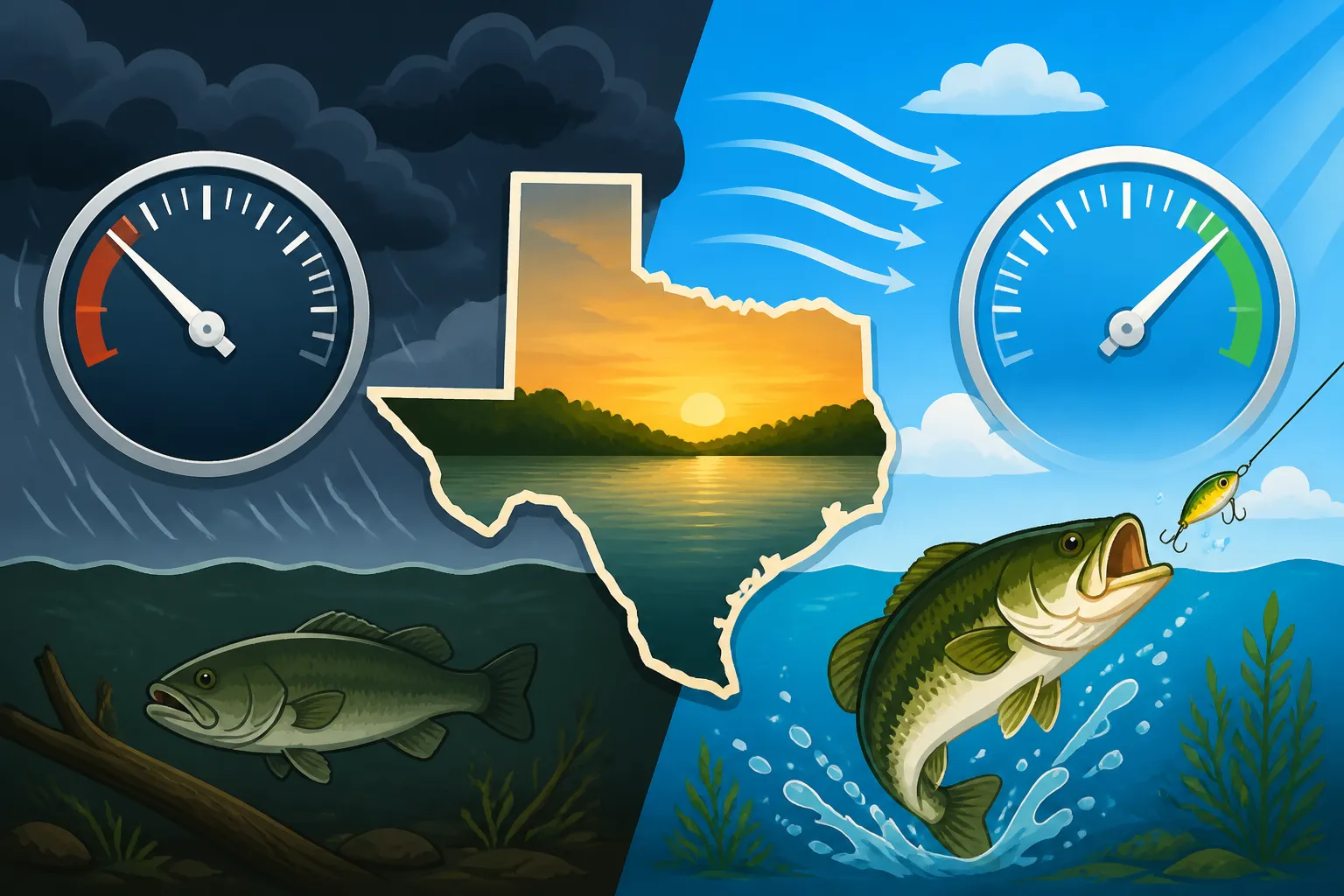
How barometric pressure affects fishing
Ever felt like the fish just vanished from your favorite honey hole, even when the sun was shining, and the water looked perfect? That mysterious silence from the water after a beautiful bluebird sky day can be incredibly frustrating, leaving you scratching your head about what went wrong. What many anglers don't always realize is that the subtle, invisible shifts in barometric pressure—the actual weight of the air above us—play a massive, often overlooked role in how fish behave, where they decide to hang out, and whether they're even in the mood to bite. This guide is going to break down exactly how these atmospheric pressure changes impact your fishing success here in Texas, and what actionable steps you can take to adapt and catch more fish.
Understanding the Unseen Force: What is Barometric Pressure?
Before we dive into how it affects fishing, let's get a handle on what barometric pressure actually is. Simply put, it's the weight of the column of air pushing down on the Earth's surface at any given time. Think of it like a blanket of air. When that blanket is heavy, we have high pressure. When it's lighter, we have low pressure. These changes aren't just abstract numbers; they're intrinsically linked to the weather patterns we experience, and more importantly for us anglers, they dictate a lot about the underwater world.
The Dynamics of High vs. Low Pressure
High pressure systems are typically associated with clear, calm weather, often those crisp, sunny days that seem perfect for fishing, yet often prove challenging. The increased atmospheric weight presses down on the water, making fish feel more pressure. Low pressure systems, on the other hand, are generally linked to unsettled, stormy weather – clouds, rain, wind, and often, some of the best fishing action. This decreased atmospheric weight causes a reduction in pressure on the water, which can trigger fish activity. The key isn't just what the pressure is, but how it's changing.
A slowly falling pressure often indicates an approaching storm, and this is a prime time for a feeding frenzy. A rapidly falling pressure, however, might signal an intense front moving in quickly, which can make fish unpredictable. Conversely, high and stable pressure can lead to slower fishing, but a slowly rising pressure after a storm can also spark a bite. Understanding these nuances is like getting a peek into the fish's mind, giving you an edge.
How Weather Fronts Drive Pressure Changes
Weather fronts are the primary drivers of significant barometric pressure changes. A cold front, for instance, typically brings a rapid drop in pressure as it approaches, followed by a sharp rise and stabilization under high pressure once it passes. You've probably heard anglers talk about the "post-frontal bite" being tough, and this high-pressure aftermath is exactly why. Warm fronts tend to bring a more gradual drop in pressure, often leading to a sustained period of active feeding before the full front arrives.
Storm systems themselves are low-pressure centers. As a hurricane or even a strong thunderstorm approaches, the pressure plummets. When the storm moves through, the pressure can then rise quickly. Understanding the weather forecast isn't just about packing a raincoat; it's about predicting the barometric shifts that will directly influence how and where you fish. Keeping an eye on a reliable weather app or a simple home barometer can give you a heads-up on these crucial changes.
How Barometric Pressure Influences Fish Behavior
So, why do fish care about a little more or less weight on the water? It all comes down to their physiology and instinct. Fish, especially those with swim bladders, are incredibly sensitive to changes in pressure. These internal organs help them maintain buoyancy at different depths, and when the external pressure changes, their internal system has to adjust.
Impact on a Fish's Swim Bladder
Most fish have a gas-filled organ called a swim bladder that helps them control their buoyancy in the water column. Think of it like a small internal balloon. When barometric pressure drops, the external pressure on the water decreases, causing the gases in a fish's swim bladder to expand. This makes the fish feel more buoyant, potentially uncomfortable, and they might have to work harder to stay at a stable depth. To compensate, fish might move deeper where the water pressure is naturally higher, or they might simply become less active.
Conversely, when barometric pressure rises, the external pressure increases, compressing the gas in their swim bladder. This makes them feel heavier and they might move shallower to equalize the pressure, or they might become more active as the pressure feels more stable. This physiological response is a key reason why a sudden, drastic change in barometric pressure can send fish scurrying or cause them to completely shut down their feeding activities. It’s not just about comfort; it’s about their fundamental ability to exist efficiently in their environment.
Relating Pressure to Feeding Patterns
The discomfort or comfort levels caused by barometric pressure directly impact a fish's metabolism and willingness to feed. During periods of falling pressure, especially a slow, steady drop preceding a weather front, fish often go on a feeding binge. They sense the impending change and instinctively know that feeding opportunities might be scarce once the storm hits or the high-pressure system settles in. This is often when you'll hear about an epic pre-frontal bite. How to fish before a cold front moves through becomes a crucial skill.
However, once a strong front passes and high, stable pressure sets in, fish often become lethargic. Their swim bladders are compressed, they feel less buoyant, and their metabolism can slow down. They might move to deeper, more secure cover, and their feeding windows become much shorter and more finicky. This is when finesse techniques often shine, or when you might target species less affected by pressure, such as bottom-dwelling catfish. Knowing these patterns can help you decide if it's a day for aggressive topwater lures or a subtle jig.
Movement and Depth Preferences
Barometric pressure also dictates where fish position themselves in the water column. During periods of high, stable pressure, fish tend to move deeper, seeking the comfort of more consistent water pressure. They might hunker down on ledges, in deep brush piles, or along channel breaks. They also become more sensitive to light, preferring shaded areas or deeper haunts. This means your usual shallow-water tactics might be fruitless.
When pressure is falling, fish are often more likely to be found in shallower water, actively cruising and looking for food. They might suspend just below the surface or hug shallow cover. This is when sight fishing or targeting visible structures can be particularly effective. After a severe low-pressure system (like a major storm), fish might be scattered or disoriented, making them harder to locate until pressure begins to stabilize and rise again. Understanding these depth and movement preferences is key to adapting your presentation.
Reading the Sky: Fishing Strategies for Different Pressure Systems
Knowing the science is one thing, but applying it on the water is where the magic happens. Paying attention to the weather forecast and the actual conditions when you're out there can transform a slow day into a productive one. It's not just about looking for rain; it's about understanding the invisible forces at play.
High and Stable Pressure: The Bluebird Blues
Ah, the dreaded bluebird sky days after a cold front has passed through. The sun is shining, there's not a cloud in the sky, and everything looks perfect for fishing. But often, it's anything but. Under high and stable pressure, fish tend to be lethargic, holding tight to cover, and staying deep. Their metabolism slows down, and they're less inclined to chase a fast-moving bait. This is a common scenario in Texas, especially after a winter cold front or even during a prolonged summer high-pressure system.
On these days, you'll want to slow down your presentation considerably. Think finesse tactics: drop shots, Ned rigs, or a slowly dragged Texas rig. Focus on deep water structure, shaded areas, and dense cover like brush piles or submerged timber. Your bites will likely be subtle, so pay close attention. Consider fishing during low light hours, like dawn or dusk, when fish might feel more comfortable venturing out. How to fish in hot Texas summers often means dealing with stable high pressure.
Falling Pressure: The Pre-Frontal Bite
This is the holy grail for many anglers! When the barometric pressure is steadily dropping, usually indicating a storm or front is on its way, fish sense the change and often go into a feeding frenzy. They're trying to pack on calories before the weather turns nasty, or before the high-pressure system that follows a cold front settles in. You might notice the sky getting cloudier, the wind picking up, or a general mugginess in the air. This is your cue to hit the water if you can.
During a pre-frontal bite, fish are often more aggressive and willing to chase down baits. This is the time to throw power fishing lures: crankbaits, spinnerbaits, chatterbaits, or topwater lures if conditions allow. Target areas where baitfish are abundant, or where predator fish might ambush prey, such as points, humps, and submerged grass lines. Don't be afraid to experiment with faster retrieves and bolder colors. The window for this bite can be relatively short, so make the most of it. Texas Bass Spawning Season Guide details another time when fish are often highly active, and pressure can enhance or suppress this.
Low and Unstable Pressure: The Post-Frontal Shut Down
Immediately after a strong cold front has passed and the barometer has bottomed out and started to rise, fish can be disoriented and inactive. The rapid change in pressure, combined with potential temperature drops and strong winds, can shut them down completely. The classic example is a thunderstorm or a squall line passing through a lake. For a period after that, the fishing can be exceptionally tough.
During this period, focus on targeting lethargic fish in deep, protected areas. You'll often find them huddled in the thickest cover, almost motionless. Present baits very slowly and directly to them. Sometimes, waiting a day or two for the pressure to stabilize, even if still high, can make a huge difference. Think about what fish need most when stressed: safety and minimal effort. They're not actively hunting; they're recovering. This is when knowing How to fish a Texas reservoir after a cold front becomes essential.
Rising Pressure After a Storm: Opportunity Knocks
While the immediate aftermath of a low-pressure system can be tough, a slowly rising barometer after the unstable period often signals improving fishing. As the pressure steadily increases, fish become more comfortable, their swim bladders stabilize, and their metabolism picks up again. This isn't usually as aggressive as the pre-frontal bite, but it's a great time to find fish willing to feed.
On these days, start by targeting transitional areas—places where fish might move from deep cover to shallower feeding grounds. Think about secondary points, creek channels, and the edges of weed lines. You can often use a mix of finesse and reaction baits. The fish are coming out of their funk, and while they might not hit everything, they're definitely looking for an easy meal. This is a fantastic opportunity to test out different depths and presentations.
Gear and Tools for Tracking Barometric Pressure
You don't need a professional meteorologist in your boat to pay attention to barometric pressure. There are several accessible tools and methods you can use to stay informed and adjust your fishing strategy accordingly. Integrating this into your routine can give you a significant advantage.
Modern Electronic Barometers and Apps
In today's tech-driven world, there are countless ways to track barometric pressure. Many modern fish finders and marine electronics now include built-in barometers, giving you real-time pressure readings right on your console. If your unit doesn't have one, portable digital barometers designed for fishing are readily available. These often display the current pressure and, crucially, show you the trend (rising, falling, or stable). You can typically find a wide range of these devices on Amazon, often with additional features like temperature and altitude readings.
Beyond dedicated devices, your smartphone is a powerful tool. Many weather apps offer detailed barometric pressure charts and forecasts, often specific to your exact location. Look for apps that provide a pressure trend graph, as knowing the direction and speed of change is far more useful than just the current reading. Some specialized fishing apps even integrate pressure data with moon phases and solunar tables to give you a comprehensive fishing forecast, helping you decide Best fishing days around a full moon or other factors.
Observing Natural Indicators
Even without gadgets, nature itself provides clues if you know what to look for. Changes in wind direction and intensity are often tied to pressure systems. A steady wind shifting clockwise (in the Northern Hemisphere) can indicate an approaching high-pressure system, while a counter-clockwise shift might mean low pressure. Cloud formations are also tell-tale signs: high, wispy cirrus clouds often precede a warm front and falling pressure, while towering cumulonimbus clouds signal unstable, low-pressure conditions and potential thunderstorms.
Pay attention to animal behavior, too. While not scientific proof, many experienced anglers observe that birds become more active and feed aggressively before a storm, much like fish. Even the general "feel" of the air—whether it's crisp and clear (high pressure) or muggy and heavy (falling pressure)—can give you a sense of what's happening. Learning to combine these natural observations with your electronic readings will make you a much more intuitive and successful angler.
Crafting Your Strategy Around Pressure Changes
Once you've got a handle on what the barometer is doing, the next step is to adjust your tactics. This isn't about throwing out your favorite lures but rather modifying how and where you use them. For instance, if you're dealing with high, stable pressure and the fish are deep and finicky, consider switching to a lighter line, a smaller bait, and a slower retrieve. You might even want to try a scent attractant to entice those reluctant biters.
Adjusting Lure Presentation and Depth
Let's say the pressure is falling, and you're anticipating that pre-frontal bite. This is the time to cover water and use reaction baits. A lipless crankbait or a bladed jig retrieved at a brisk pace can trigger strikes from actively feeding fish. If you're targeting bass, focus on structure that offers ambush points in shallower to mid-depth ranges. You might find a great selection of these on Amazon, often categorized by their diving depth or action.
Conversely, if a brutal cold front has just passed and the pressure is sky-high, you'll need to go slow and deep. Think about jigs with subtle trailers, drop shots, or even live bait presentations. Fish will often hug the bottom, so ensure your bait is getting right into their strike zone. This is when knowing How to fish deep drop-offs for bass becomes crucial, as fish seek thermal and pressure refuge in deeper water.
Choosing Your Fishing Spot Wisely
Barometric pressure also influences where you should focus your efforts. During high pressure, fish will often gravitate towards deeper water, thicker cover, or areas with more shade and consistent temperatures. Think about main lake points dropping into deep water, submerged timber, or deep creek channel bends. For saltwater fishing, this might mean targeting deeper channels or oyster reefs rather than shallow flats.
When pressure is falling, fish are more likely to be found in shallower feeding areas. This could be flats, weed lines, shallow points, or the upper reaches of creek arms. These areas become prime hunting grounds as fish become more active and less wary. Paying attention to these subtle shifts can guide you to the fish, instead of aimlessly casting where they should be. Combine this with your knowledge of specific fish species behavior, perhaps from the Texas Largemouth Bass Fishing Guide or Texas Saltwater Fishing Techniques, and you’ll be unstoppable.
Table: Barometric Pressure Trends and Fishing Impact
| Pressure Trend | Associated Weather | Fish Behavior & Location | Recommended Strategy |
|---|---|---|---|
| Falling Slowly | Approaching warm front, increasing clouds | Highly active, feeding aggressively, moving shallower | Aggressive, fast-moving baits (crankbaits, spinnerbaits) |
| Falling Rapidly | Approaching strong cold front, storm, high winds | Very active, then disoriented as front hits | Fast, reaction baits initially; then slow down/wait |
| Low & Unstable | During or immediately after storm, heavy rain | Inactive, disoriented, seeking cover/depth | Very slow, finesse, target heavy cover or deep |
| Rising Slowly | Post-storm recovery, clearing skies, stable | Increasing activity, moving from cover to feed | Mix of finesse and reaction baits; target transition areas |
| High & Stable | Clear skies, calm, sunny (e.g., post-cold front) | Lethargic, deep, tight to cover, finicky | Slow, finesse presentations; deep water, low light hours |
Disclaimer
This article is for general informational purposes only and does not constitute professional advice. Laws, prices and regulations vary by location and change over time. Consult a qualified professional for guidance on your specific situation.