Texas White Bass Fishing Guide
For many anglers across the Lone Star State, the thought of white bass brings a smile and a quickening pulse. But if you've ever felt overwhelmed by conflicting advice on when and where to find these feisty fish, or struggled to dial in the right techniques, you're not alone. This comprehensive guide is here to cut through the confusion, offering a deep dive into everything you need to know to successfully target and enjoy Texas white bass.
Understanding the Texas White Bass: The Angler's Favorite Fighter
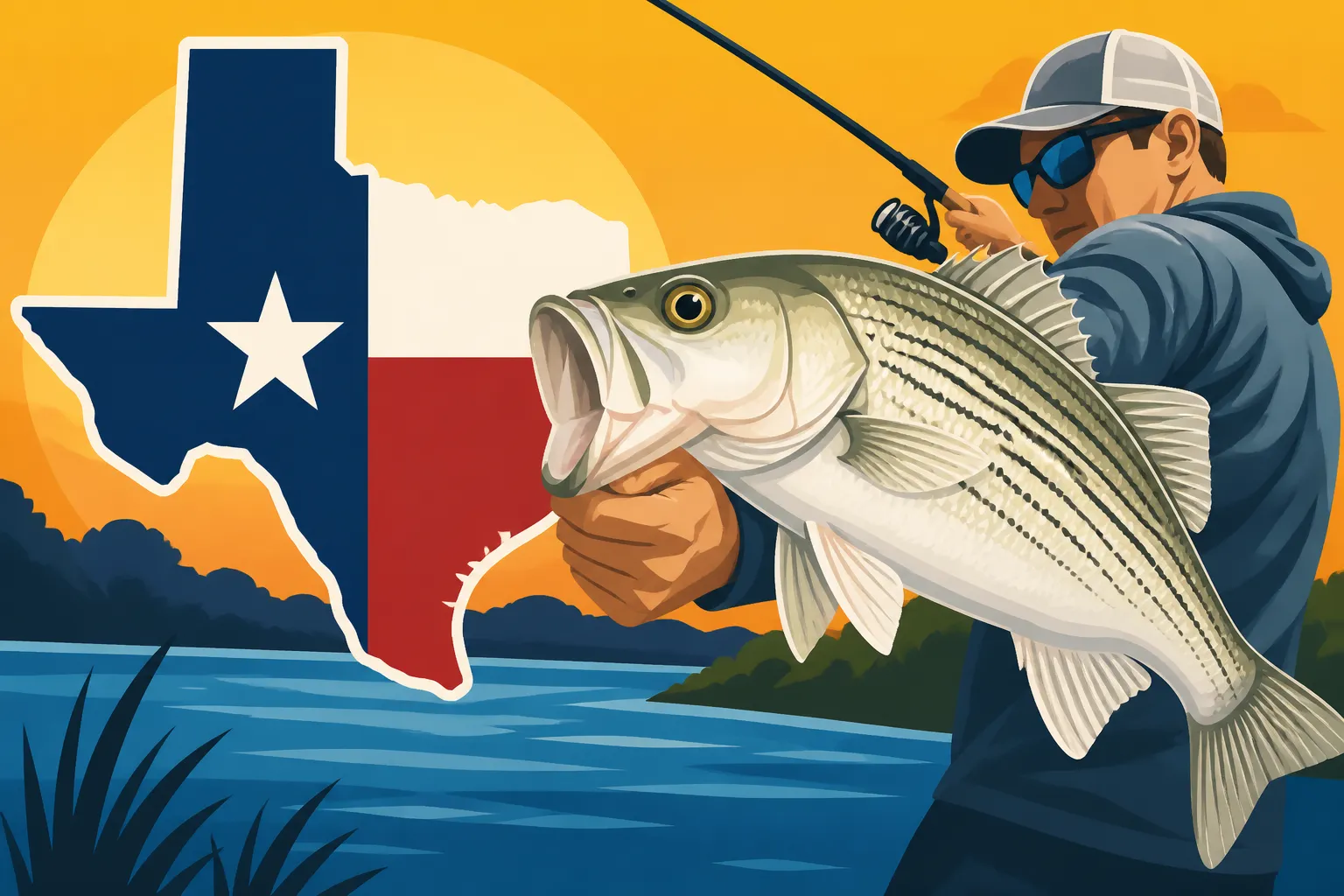
The white bass, or Morone chrysops, is a true gem in Texas freshwater fisheries. Often overshadowed by its larger black bass cousins or the brute strength of blue catfish, the white bass holds a special place in the hearts of many for its aggressive strikes, spirited fight, and excellent table fare. They're schooling fish, which means when you find one, you're often in for a non-stop action party!
Identifying the Texas White Bass
Before you can truly appreciate the white bass, it helps to know what you're looking for. While they share some similarities with their striped bass and hybrid striped bass relatives, there are key characteristics that set them apart. Understanding these differences is not just about bragging rights, it's also crucial for adhering to Texas Fish Bag and Length Limits as regulations can vary significantly between species.
White bass typically have a silvery body with several distinct, unbroken horizontal stripes running along their sides. The most telling feature is often a single prominent stripe that extends all the way to the tail. Their body shape is deeper and more compressed than a striped bass, giving them a somewhat "stockier" appearance. They also tend to be smaller than their cousins, rarely exceeding a few pounds, though a two-pounder is a true trophy in many Texas waters. Don't worry if you're still a bit unsure; checking out a Texas White Bass Identification Guide can offer clear visual cues to help you distinguish them from other species you might encounter.
The Life Cycle and Habits of White Bass
White bass are fascinating fish, and their life cycle heavily influences when and where anglers find them. They are relatively short-lived compared to largemouth bass, with most living around three to five years. Throughout the majority of the year, white bass live in large schools in open water, often suspending over deep submerged structures, humps, or creek channels in reservoirs. They are constantly on the move, chasing schools of baitfish like shad. This nomadic lifestyle makes them challenging to find at times, but also incredibly rewarding when you stumble upon a hungry school.
The most famous aspect of their life cycle, and what draws thousands of anglers to Texas rivers each spring, is their annual spawning run. As water temperatures begin to rise, typically between late February and April, these fish migrate en masse from their lake habitats up tributary rivers and creeks to spawn. This migration creates incredible concentrations of fish, making them much easier to target and providing some of the most exciting fishing opportunities of the year. Understanding this behavior is absolutely essential for anyone hoping to capitalize on the Texas White Bass Run Timing.
Prime Time for White Bass: Unlocking the Annual Spawning Run
If there’s one phenomenon that defines white bass fishing in Texas, it's the spring spawning run. This is when these ordinarily scattered fish congregate in incredible numbers, making for some of the most frantic and fun fishing experiences the state has to offer. Missing it would be a real shame!
Understanding the Timing and Triggers
The white bass run is driven primarily by water temperature and flow. As the winter chill recedes and the days get longer, the water in Texas lakes and rivers gradually warms. When tributary river temperatures consistently hit the low to mid-50s Fahrenheit, usually sometime in late February to early March, the white bass begin their upstream migration. This migration can continue well into April, sometimes even May, depending on the specific waterway and annual weather patterns. Heavy rains that create good current flow in rivers can also act as a strong trigger, drawing more fish upstream and concentrating them in certain areas.
It's not a switch that flips overnight; the run builds gradually. You'll often see the "scouts" showing up first, followed by larger schools. The peak of the run is usually a two-to-four-week window where the fishing can be absolutely phenomenal. Keeping an eye on local fishing reports and checking water temperatures for specific rivers can give you an edge in timing your trip perfectly. This is a prime example of why reading a How to Read a Texas Lake Fishing Report can be so beneficial.
Navigating the White Bass Run Locations
The "white bass run" isn't a single event; it happens on numerous rivers and creeks across the state that feed into major reservoirs. Essentially, if a large lake has a significant river or creek system flowing into it, there's a good chance it experiences a white bass run. Some of the most famous and productive runs occur on rivers like the Brazos River, Trinity River, Sabine River, Neches River, and the Colorado River. But smaller, lesser-known creeks can also offer fantastic, less crowded opportunities.
The key is to focus on the sections of these rivers just upstream from the main lake, or where the river narrows and creates current breaks, riffles, and deeper pools. White bass will stage in these areas before moving further upstream to actual spawning gravel beds. Access can be from public parks, bridges, or by boat. For example, parts of the Trinity River below Lake Livingston offer exceptional bank access during the run. Knowing Where does the Texas white bass run start for your preferred body of water can save you a lot of time and effort.
Where to Find Texas White Bass: Top Lakes and Rivers
Texas is blessed with an abundance of water, and that means plenty of prime habitat for white bass. While the spring run gets most of the attention, these fish are available year-round in many reservoirs, and understanding their typical haunts can help you connect with them no matter the season.
Top White Bass Reservoirs
Many of Texas's large to medium-sized reservoirs hold thriving populations of white bass. These lakes provide the expansive open water and abundant baitfish that white bass thrive on. During the warmer months, when the white bass aren't running upstream, they typically school up in deeper parts of the main lake. Look for them around major creek channels, submerged roadbeds, humps, and points, particularly those with access to deep water. Often, they'll be suspended in the water column, actively chasing shad.
Some of the most consistent white bass lakes include:
- Lake Texoma: Famous for its striped bass, but also offers fantastic white bass fishing, especially in the tributary rivers.
- Lake Tawakoni: A popular spot for various species, including consistent white bass action.
- Lake Fork: While renowned for trophy largemouth bass, Lake Fork also has good white bass populations, especially in the open water.
- Lake Livingston: Known for its large white bass, particularly during the Trinity River run.
- Lake Belton and Stillhouse Hollow Lake: These Central Texas lakes offer excellent opportunities.
- Lake Whitney: Another good option for both white bass and striped bass.
Remember, white bass are constantly on the move, following baitfish. Having good electronics on your boat, like a reliable fish finder, is a huge asset for locating these nomadic schools in open water.
Rivers and Tributaries Beyond the Run
While the spring spawning run is the obvious time to target white bass in rivers, these waterways can still be productive at other times of the year, particularly for those looking for a different kind of fishing experience. After the spawn, many white bass will migrate back to the main lake, but some individuals might linger in the lower sections of rivers or in deeper holes.
During summer and fall, targeting deeper bends, fallen timber, or areas where smaller creeks join the main river can still yield results. Kayak and canoe anglers can have a blast exploring smaller rivers and creeks that might be too shallow for larger boats, discovering hidden pockets of white bass. These areas often require a more stealthy approach and different tactics than open-water lake fishing. If you're looking for more general advice on Best Texas Rivers for Fishing, you'll find white bass are often a pleasant surprise catch there.
Essential Gear for Texas White Bass Fishing
You don't need a boatload of specialized, expensive gear to catch white bass. In fact, one of the beauties of white bass fishing is its accessibility. However, having the right setup can make a significant difference in your success and overall enjoyment.
Rod and Reel Combinations
For white bass, lighter tackle is generally more effective and, frankly, a lot more fun. A medium-light to medium power spinning rod, typically in the 6-foot to 7-foot range, is ideal. This length offers good casting distance for covering water, while the lighter power allows you to feel those subtle strikes and enjoy the fight of even a small white bass. You'll want a fast action tip for quick hook sets.
Pair your rod with a reliable spinning reel in a 1000 to 2500 size. This provides enough line capacity for these smaller fish and a smooth drag system is always important, even for modest fights. A good quality reel will also ensure smoother casting and retrieval, which can make a big difference when you're making hundreds of casts during a hot bite. For general recommendations, check out guides on Best Fishing Rods for Texas Anglers and Best Fishing Reels for Texas Anglers. You can often find excellent, affordable combos for white bass fishing on platforms like Amazon.
Line, Leaders, and Terminal Tackle
When it comes to line, a monofilament or fluorocarbon line in the 6- to 10-pound test range is usually perfect. Many anglers prefer monofilament for its stretch and knot strength, while others opt for fluorocarbon's low visibility and sensitivity. If you're fishing in clearer water or targeting particularly wary fish, a fluorocarbon leader of 4-6 pound test tied to your main line (especially if using braid) can be beneficial. Braided line in the 10- to 15-pound test range with a fluorocarbon leader is also a popular choice for its incredible sensitivity and strength, which helps when you need to feel light bites from fast-moving schools.
For terminal tackle, you'll mainly need a selection of small, sharp hooks (size 4 to 8, depending on your bait) and an assortment of small jig heads. Jig heads in 1/8 to 1/4 ounce are usually sufficient for most white bass scenarios, with heavier options up to 3/8 ounce if you're fishing strong currents or deeper water. A few small swivels and split shots can also be handy for adjusting your rig. Keep it simple and focused; you don't need a massive tackle box for white bass.
Proven Techniques for Catching Texas White Bass
Catching white bass, especially during the prolific spring run, can often feel like pure pandemonium – in the best way possible! However, having a few go-to techniques in your arsenal will help you maximize your success, whether you're targeting them in a river or a wide-open lake.
Casting and Retrieving
This is arguably the most common and effective technique for white bass, especially when they are actively feeding or during the spawning run. The idea is to cover water and imitate small baitfish. When casting from the bank during the run, look for eddies, current breaks, or deeper pools. Cast your lure (like a small jig, spinner, or spoon) upstream and allow it to drift naturally with the current while you slowly retrieve it, maintaining tension in your line. This presents the lure in a way that mimics a struggling baitfish being swept downstream.
From a boat in a lake, this technique involves a lot of fan-casting to locate schools. Once you find them, cast your lure beyond the school and retrieve it through them. The retrieve speed can vary, but a medium, steady retrieve is often a good starting point. Don't be afraid to experiment with adding pauses, jerks, or varying your speed until you find what triggers bites. Sometimes, a faster retrieve is needed to elicit a reaction strike from aggressive fish, while other times a slower, more methodical retrieve is better for lethargic schools.
Trolling for Open Water White Bass
When white bass are scattered or suspended in open water on large reservoirs, trolling can be an incredibly effective way to locate and catch them. This technique involves dragging lures behind a slow-moving boat, covering large expanses of water until you find a feeding school. Trolling is particularly useful when you don't have good fish finder readings or if the fish are spread out over a wide area.
You can troll a variety of lures, including small crankbaits, spoons, or even tandem rigs with jigs or small swimbaits. Pay close attention to your depth; often, white bass will be holding at a specific depth where baitfish are concentrated. Adjust your lure depth using different sized crankbaits, adding weight, or using a downrigger if you have one. Once you get a bite while trolling, mark the spot on your GPS, turn around, and fan cast the area. Often, you'll find the whole school right there, ready for a casting frenzy! For more advanced boat techniques, checking out a Texas Boat Safety Inspection Checklist can be useful for ensuring your vessel is ready for any fishing adventure.
Jigging and Deadsticking
Sometimes, white bass can be finicky, or they might be holding tight to a specific structure in deeper water. In these situations, more vertical presentations like jigging and deadsticking can be highly effective. Jigging involves dropping a lure (usually a spoon or a jig with a soft plastic tail) directly down to the depth where fish are marked on your fish finder, and then imparting an erratic up-and-down motion. This action can mimic a dying baitfish, often triggering strikes from less active fish.
Deadsticking is a more subtle approach. After dropping your jig or lure to the desired depth, you simply hold it still, or give it very slight, almost imperceptible movements. This is often effective in cold water or when fish are pressured and unwilling to chase. Sometimes, the only "movement" needed is the natural rocking of the boat or the subtle vibrations of the current. This technique requires patience and a sensitive rod to detect those incredibly light "thumps" that indicate a bite. It's especially useful when targeting fish concentrated in deep holes during the non-spawning season.
The Art of White Bass Bait and Lure Selection
When it comes to white bass, they aren't usually picky eaters. They're aggressive predators focused on baitfish, so lures that mimic shad or other small forage are generally your best bet. However, having a few different options can help you adapt to varying conditions and fish moods.
Go-To Lures for White Bass
You don't need a huge array of lures for white bass, but having a selection of these staples will serve you well:
- Small Jigs (1/8 to 1/4 ounce): These are absolute white bass killers. Pair them with small soft plastic grubs or curly tail worms in white, chartreuse, or pearl colors. The key is to find a jig head that's heavy enough to get to the fish's depth but light enough to have an enticing action. These are extremely versatile and can be cast, retrieved, trolled, or jigged.
- Inline Spinners: Brands like Rooster Tail or Mepps Aglia in smaller sizes (1/8 to 1/4 ounce) are classic white bass lures. The flash and vibration they create are irresistible to actively feeding white bass. Silver, gold, or white blades with a white or chartreuse dressing are consistently productive.
- Small Spoons (Casting or Jigging): Lures like a Kastmaster or a simple lead spoon in 1/8 to 1/4 ounce can be deadly, especially when fish are deep or tightly schooled. Their erratic flutter on the fall often triggers violent strikes. Silver is almost always a reliable color.
- Small Crankbaits: Shallow-diving crankbaits that mimic shad can be excellent, particularly when trolling or when white bass are feeding near the surface or along shallow points. Look for chrome, white, or shad patterns.
- Road Runners: A hybrid jig and spinnerbait, these combine the flash of a spinner with a jig head and soft plastic tail. They are incredibly effective for white bass, offering both vibration and a lifelike profile.
Having a good selection of these small but mighty lures in your tackle box is paramount. You can easily stock up on these essentials via platforms like Amazon, ensuring you're ready for any white bass encounter. For a more general overview of what works in Texas, refer to Best Bait and Lures for Texas Fishing.
Live Bait Options
While lures are incredibly effective and often preferred for their convenience and active fishing style, live bait can sometimes be the ticket, especially if fish are particularly sluggish or if you're fishing with younger anglers. Small minnows or shad are the top choice for live bait. They can be fished under a bobber in rivers or on a simple Carolina rig in deeper lake waters.
The biggest challenge with live bait is keeping it fresh and lively, especially in warmer Texas temperatures. A good aerated livewell or bait bucket is essential. When fishing with live bait, use a small, sharp hook (like a size 6 or 8 octopus hook) that won't impede the bait's natural movement. The key is to let the bait do the work; white bass will rarely pass up an easy meal.
Texas White Bass Regulations and Limits
Fishing in Texas is a privilege, and it comes with the responsibility of knowing and adhering to the regulations set forth by the Texas Parks and Wildlife Department (TPWD). These rules are in place to ensure healthy fish populations for generations to come, and white bass are no exception.
Understanding Daily Bag and Length Limits
White bass generally have generous bag limits in Texas, reflecting their abundant populations and relatively fast growth rates. However, these limits can vary slightly by specific body of water, so it's always critical to check the current regulations before you head out. A general statewide regulation often applies, but special conditions or exceptions might exist for certain lakes or rivers.
Typically, the daily bag limit for white bass is quite high, allowing anglers to keep a good number of fish for the frying pan. There's also usually a minimum length limit. This means any fish you catch below a certain length must be immediately released back into the water. This ensures that younger fish have a chance to grow and reproduce, contributing to the overall health of the fishery. Always carry a small measuring device with you, like a flexible tape measure, to quickly check your catch. For the most accurate and up-to-date information, you should consult Texas Freshwater Fishing Regulations and Texas Fish Bag and Length Limits.
License Requirements for White Bass Fishing
Unless you fall into one of the specific exemption categories, everyone aged 17 and older needs a valid Texas fishing license to fish for white bass (or any other fish) in public waters. This license helps fund the conservation and management efforts that keep Texas fisheries thriving. You can purchase a fishing license online, by phone, or at various retailers like sporting goods stores and some bait shops.
There are different types of licenses available, including annual licenses, combination hunting and fishing licenses, and even one-day licenses for visitors or those who only plan to fish occasionally. Make sure you purchase the appropriate license for your needs. It's a small investment that pays huge dividends in terms of healthy fisheries and continued access to amazing fishing opportunities. For more details on what's required, take a look at Texas Fishing License Requirements Explained. Always carry proof of your license with you while fishing – either a physical copy or an electronic version on your phone.
| Common Texas White Bass Regulations (Illustrative Example) |
|---|
| Typical Daily Bag Limit |
| 25 fish per person |
| Typical Minimum Length Limit |
| 10 inches |
| Exceptions |
| Always check current TPWD Outdoor Annual for specific lake/river exceptions. |
| License Required |
| Yes, for ages 17 and over, unless exempt. |
Remember, this table provides a general idea. Always confirm current regulations with the Texas Parks and Wildlife Department before fishing. Specific rules can change and vary by water body.
Beyond the Catch: Enjoying Your White Bass Harvest
So you've had a fantastic day on the water, filled your stringer with some beautiful white bass, and now you're back home. The adventure doesn't have to end there! White bass are prized by many anglers for their delicious, firm, white flesh. Preparing and cooking your catch is an integral part of the fishing experience.
Cleaning and Filleting White Bass
White bass are relatively easy to clean, especially once you get the hang of it. The main goal is to remove the skin and, for many, to fillet out the meat, avoiding the bones. A sharp fillet knife is your best friend here. Start by making an incision behind the gill plate, down to the backbone, and then turn the knife flat to run it along the backbone towards the tail, separating the fillet. Repeat on the other side.
One important tip for white bass (and other similar species) is to remove the "red meat" or "bloodline" that runs along the lateral line of the fillet. This dark stripe can sometimes impart a stronger, more "fishy" flavor. Simply use your knife to trim it away from the white meat. It's a small step that can make a big difference in the final taste. Properly cleaning your fish ensures the best possible flavor for your dinner table.
Delicious Ways to Cook White Bass
White bass is incredibly versatile in the kitchen. Its firm, flaky white meat holds up well to a variety of cooking methods. Here are a few popular ways to enjoy your fresh catch:
- Pan-Fried Perfection: This is a classic for a reason. Simply dredge your fillets in seasoned cornmeal or a flour mixture and pan-fry them in hot oil until golden brown and flaky. A squeeze of lemon and a side of hushpuppies or coleslaw makes for a quintessential Texas meal.
- Baked or Broiled: For a lighter option, bake or broil your fillets with a little butter, garlic, herbs (dill or parsley are great), and a dash of white wine. This method really lets the natural flavor of the fish shine through.
- Fish Tacos: Cut your fillets into strips, lightly bread and fry them, then serve in warm tortillas with your favorite toppings like shredded cabbage, pico de gallo, and a creamy sauce. White bass makes for fantastic fish tacos!
- Grilled: If you've got larger fillets, grilling them on a cedar plank or directly on the grates with some olive oil and spices can be a delicious, healthy option, especially during those warm Texas evenings.
No matter how you choose to prepare them, fresh white bass are a treat. They embody the reward of a successful day spent out on the water, enjoying the natural beauty and abundant fisheries that Texas has to offer. So, grab your gear, consult your Texas Fishing License Requirements Explained if needed, and get ready to experience the thrilling action of Texas white bass fishing!
Disclaimer
This article is for general informational purposes only and does not constitute professional advice. Laws, prices and regulations vary by location and change over time. Consult a qualified professional for guidance on your specific situation.