Is the Guadalupe bass endangered in Texas
It’s a common and very valid concern for anyone who loves Texas fishing: is the Guadalupe bass, our very own state fish, teetering on the brink of extinction? Many anglers worry about the health of this unique species, especially with all the changes happening in our waterways. This guide aims to clear up the confusion surrounding the conservation status of the Guadalupe bass, explain the challenges it faces, and highlight the incredible efforts being made to protect it for future generations of Texas anglers.
The Conservation Status of the Guadalupe Bass
Let's cut right to the chase: the Guadalupe bass is not currently classified as "endangered" under the federal Endangered Species Act. However, this doesn't mean it's entirely out of the woods. The Texas Parks and Wildlife Department (TPWD) lists the Guadalupe bass as a "Species of Special Concern." This designation means that while its populations aren't critically low enough to be federally endangered, there are significant threats and conservation needs that require ongoing monitoring and management to prevent it from becoming endangered in the future. It's a proactive approach to safeguard this truly special Texas native.
Think of it like this: an endangered species is already in critical condition, needing immediate, intensive care to survive. A species of special concern is like someone with a chronic condition that, if left unchecked, could become life-threatening. They need consistent care, lifestyle adjustments, and regular check-ups to stay healthy. For the Guadalupe bass, this means continuous habitat restoration, careful management of its populations, and an eye on potential threats. It’s a constant vigil to ensure our state fish thrives.
The journey to this "special concern" status is a long one, reflecting decades of observation and scientific study. When you hear about a species being "endangered," it typically means its numbers have plummeted to dangerously low levels across its entire range, facing a very high risk of extinction in the wild. While the Guadalupe bass has faced, and continues to face, serious challenges in certain areas of its historical range, dedicated conservation programs have managed to prevent it from reaching that dire federal classification.
Understanding the Guadalupe Bass and its Habitat
The Guadalupe bass is more than just a fish; it's a living symbol of Texas's natural heritage. It's truly unique, evolved right here in the Lone Star State, and perfectly adapted to our river systems.
A Texas Native
The Guadalupe bass (Micropterus treculii) is one of the "black bass" species, but unlike its more famous cousin, the largemouth, it's native only to the Edwards Plateau region of Central Texas. This makes it incredibly special, a true Texas original. You won't find wild, native Guadalupe bass populations thriving anywhere else in the world! Its preferred habitat is clear, flowing streams and rivers with rocky bottoms and plenty of submerged vegetation or undercut banks for cover. These fish are masters of their environment, capable of navigating strong currents and finding refuge in the intricate river systems of the Hill Country.
Their natural range primarily includes the Guadalupe River, Colorado River, San Antonio River, and Brazos River basins. Anglers cherish them for their feisty fighting spirit, often punching above their weight when hooked. They might not grow as large as a trophy largemouth, but what they lack in size, they make up for in pure tenacity and the thrill of the chase, especially when caught on light tackle. Many an angler has sought out Guadalupe Bass Native Range in Texas to experience the unique fight of this magnificent fish.
The Guadalupe bass holds a special place in the hearts of Texans, so much so that it was officially designated the state fish of Texas in 1989. This designation brought increased attention to its conservation needs, galvanizing efforts to protect its unique genetics and habitat. For many, catching a "Guad" is a bucket-list item, a testament to its elusive nature and the beauty of the rivers it inhabits. It's a fish that truly embodies the spirit of Texas, resilient and captivating.
Threats to the Species
While the Guadalupe bass might be tough, it's not immune to environmental pressures. Historically, one of the biggest threats to the Guadalupe bass has been habitat degradation due to urbanization, agricultural runoff, and water management practices that alter natural flow regimes. Dams, for instance, can fragment populations and change the natural character of a river, impacting spawning grounds and food sources. Pollution, though often unseen, can also slowly chip away at the health of these sensitive river ecosystems.
However, the most insidious and significant threat to the genetic purity of the Guadalupe bass has been hybridization with introduced smallmouth bass. Starting in the mid-20th century, smallmouth bass were stocked in many Texas rivers for recreational fishing, often overlapping with native Guadalupe bass populations. While smallmouth are great sportfish, they readily crossbreed with Guadalupe bass, producing fertile hybrid offspring. Over time, this widespread hybridization diluted the unique genetic makeup of the Guadalupe bass, threatening to erase its distinct identity.
Imagine a unique, colorful thread woven into a fabric. If you keep adding threads of a similar but slightly different color, eventually, the original color becomes indistinguishable. That's what was happening with the Guadalupe bass. This genetic dilution, rather than a catastrophic drop in population numbers, is the primary reason for its "Special Concern" status. It's not just about how many fish are in the river, but how many of them are pure Guadalupe bass. This problem has been a major focus of conservation efforts, requiring innovative strategies to reverse the trend.
Conservation Efforts and Progress
Thankfully, the story of the Guadalupe bass isn't just one of threats; it's also a powerful testament to successful conservation and dedicated teamwork.
The Role of Texas Parks and Wildlife Department (TPWD)
The Texas Parks and Wildlife Department has been at the forefront of Guadalupe bass conservation for decades, investing significant resources and expertise into its recovery. Their efforts are multi-faceted, focusing on both population management and habitat protection. One of their most critical initiatives has been the selective stocking of pure Guadalupe bass. This involves carefully identifying pure-strain broodstock from isolated populations, raising them in hatcheries, and then stocking them into rivers where hybridization has occurred. The goal is to "flood" the system with pure genetics, helping to outcompete or dilute the hybrid population back towards pure Guadalupe bass.
TPWD also undertakes extensive habitat restoration projects, working with landowners and local communities to improve river health. This can include anything from removing invasive species that outcompete native plants to stabilizing eroding banks and ensuring proper riparian buffers. By restoring the natural flow and structure of the rivers, they create optimal conditions for Guadalupe bass to spawn, feed, and grow. These efforts are often long-term projects, requiring continuous funding and community involvement to see lasting results. If you’re interested in the species, checking out the Guadalupe Bass Texas State Fish Guide is a great resource.
Beyond stocking and habitat work, TPWD conducts regular surveys and genetic testing to monitor the success of their programs. They track population numbers, assess the genetic purity of fish caught, and identify areas where more intervention might be needed. This scientific, data-driven approach is crucial for making informed conservation decisions and adapting strategies as environmental conditions change. Their commitment reflects a deep understanding of the ecological needs of this unique fish.
Angler Contributions
Anglers themselves play an absolutely vital role in the conservation of the Guadalupe bass. Without the enthusiastic participation and support of the fishing community, many of these efforts simply wouldn't be as effective. The first and perhaps most important way anglers contribute is through responsible fishing practices. This includes understanding and adhering to specific regulations designed to protect Guadalupe bass, such as bag and length limits. In many areas, catch-and-release is strongly encouraged or even mandated for Guadalupe bass, allowing these fish to continue to grow and reproduce.
Learning to properly identify Guadalupe bass is also crucial. Since they can be easily confused with smallmouth bass or even spotted bass, knowing the key visual cues helps anglers make informed decisions about what to keep and what to release. We'll delve deeper into identification tips shortly. Furthermore, supporting organizations like the Guadalupe River Trout Unlimited chapter or other local conservation groups through membership, donations, or volunteering directly aids habitat restoration and stocking efforts. Many fishing gear retailers, including those found on Amazon, also contribute to conservation efforts through partnerships or by promoting sustainable fishing products.
Finally, anglers serve as invaluable eyes and ears on the water. Reporting unusual fish catches, observations about habitat changes, or concerns about water quality to TPWD can provide critical data that helps scientists and managers track the health of Guadalupe bass populations. Every single angler who practices ethical fishing, respects regulations, and educates themselves about the species becomes a steward of Texas's aquatic resources. It's a shared responsibility that ensures the future of our state fish.
What Anglers Need to Know: Regulations and Identification
For any angler venturing into the rivers of the Texas Hill Country, knowing how to identify a Guadalupe bass and understanding the regulations is not just good practice, it's essential for conservation.
Guadalupe Bass Identification
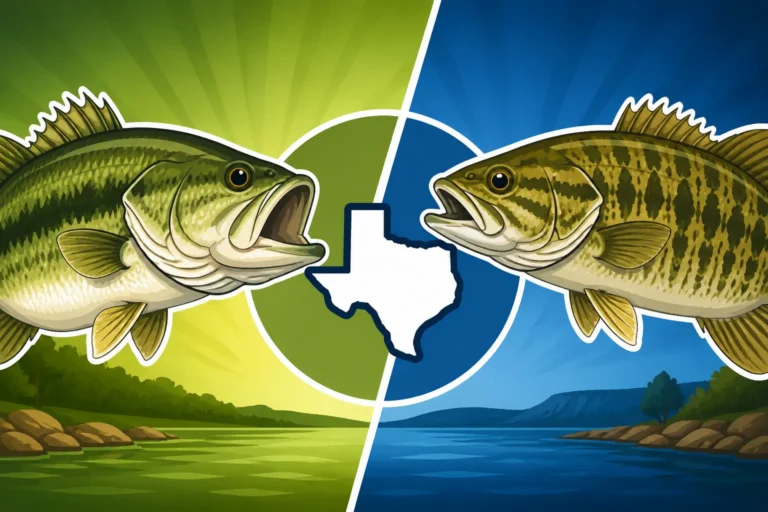
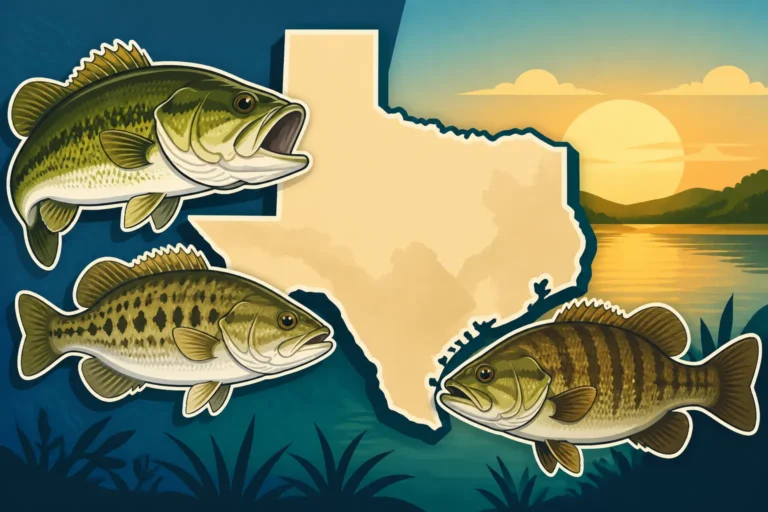
Identifying a Guadalupe bass can sometimes be tricky, especially since they share similarities with other black bass species, most notably the smallmouth bass. However, there are distinct features that, once you know them, make identification much easier. The most telling characteristic of a pure Guadalupe bass is the pattern of dark, diamond-shaped spots that form a lateral band along its side. Unlike the dark vertical bars often seen on smallmouth bass, or the more irregular blotches on a largemouth, the Guadalupe bass typically has these distinct, somewhat connected "chain-like" diamonds. Its belly will also typically extend much further up the sides, giving it a characteristic "zippered" look on the ventral surface where scales meet.
Another key identifier is the size of its mouth. The mouth of a Guadalupe bass generally does not extend past the rear margin of its eye when closed. This is a crucial difference from a largemouth bass, whose mouth extends well past the eye. While smallmouth bass also have mouths that typically don't extend past the eye, the smallmouth usually has more pronounced vertical barring and lacks the distinct chain-like lateral pattern of the Guadalupe bass. The dorsal fins can also offer clues: a Guadalupe bass typically has an unbroken connection between its spiny and soft dorsal fins, unlike the more distinct separation sometimes seen in largemouths. Mastering these differences is key, and resources like How to tell a Guadalupe bass from a smallmouth bass provide excellent visual guides.
| Feature | Guadalupe Bass | Smallmouth Bass | Largemouth Bass |
|---|---|---|---|
| Lateral Markings | Diamond-shaped spots forming a connected chain pattern | Dark vertical bars, sometimes blotchy | Irregular blotches, often forming a horizontal band |
| Mouth Extension | Does not extend past the rear of the eye | Does not extend past the rear of the eye | Extends well past the rear of the eye |
| Dorsal Fins | Connected spinous and soft dorsal fin | Connected spinous and soft dorsal fin | Deep notch separating spinous and soft dorsal fin |
| Pectoral Fin Rays | Typically 14-16 | Typically 15-18 | Typically 13-15 |
| Key ID Tip | "Zipper" pattern on belly, distinct lateral diamonds | Prominent vertical bars, no distinct lateral diamonds | Large mouth, horizontal blotchy band |
When you're out on the water, especially in areas like the Guadalupe River or the Llano, take a moment to observe the fish you catch. Having a waterproof fish identification guide handy, perhaps one you picked up on Amazon, can be incredibly useful. Clear photos and diagrams will help solidify your understanding. Remember, accurate identification helps ensure that pure Guadalupe bass are released to continue their crucial role in the ecosystem.
Fishing Regulations and Limits
Fishing regulations for Guadalupe bass are designed to protect the species and promote its recovery. These regulations can vary by specific river or even by section of a river, so it's absolutely critical to check the most current Texas Parks and Wildlife Department Outdoor Annual before you head out. Don't rely on old information or what someone told you last year, because regulations can and do change. Generally, for Guadalupe bass, you'll find restrictive daily bag limits and minimum length requirements. In many cases, it’s a strict catch-and-release policy for Guadalupe bass, particularly in areas where conservation efforts are most intense.
For instance, certain river stretches might have a very conservative one-fish bag limit, with a slot limit that specifies only fish within a certain size range can be kept. This allows smaller fish to grow and larger, breeding-size fish to remain in the population. Other areas might have a no-kill regulation for all Guadalupe bass. Always carry your Texas Fishing License Requirements Explained and be ready to consult the rules. Understanding Texas Fish Bag and Length Limits is paramount. These rules are not arbitrary; they are carefully crafted by fisheries biologists to ensure the long-term health and genetic purity of the species.
It's also worth noting that if you're targeting other bass species, like largemouth bass, in the same waters, you still need to be able to distinguish them from Guadalupe bass to ensure you're following the correct regulations for each species. If you're ever in doubt about the species of bass you've caught, especially if you suspect it might be a Guadalupe bass or a hybrid, the safest and most responsible action is to gently release it. Using a soft-sided net, readily available on Amazon, can minimize harm during landing, and practicing proper catch-and-release techniques ensures the fish's best chance of survival. Always verify the specific Texas Freshwater Fishing Regulations for the body of water you intend to fish.
The Future of the Guadalupe Bass
The journey of the Guadalupe bass is a powerful example of how sustained conservation efforts can make a real difference, but the work is never truly done.
Ongoing Challenges
While significant strides have been made, the Guadalupe bass still faces persistent challenges. The threat of hybridization, although mitigated by stocking efforts, requires continuous monitoring. As human populations grow in Central Texas, so does the pressure on river systems. Increased water usage, pollution from urban and agricultural runoff, and the impact of climate variations like droughts and floods all pose ongoing threats to the delicate balance of the Guadalupe bass's habitat. Maintaining consistent water quality and flow regimes in our rivers is a perpetual struggle that demands constant attention and innovative solutions.
Furthermore, public awareness remains key. Not every angler is familiar with the nuances of Guadalupe bass identification or the specific regulations that protect it. Continued education and outreach are essential to ensure that both seasoned and novice anglers understand their role in safeguarding this unique fish. Organizations like TPWD and various conservation groups rely heavily on public support and compliance to achieve their goals. The "Special Concern" designation isn't a permanent reprieve; it's a call to action that requires sustained commitment from all stakeholders, from state agencies to individual citizens.
Even seemingly minor issues, like the spread of invasive species that alter aquatic ecosystems, can indirectly impact the Guadalupe bass. The intricate web of life in our rivers is sensitive, and disturbances at any level can have ripple effects. Therefore, researchers continue to study the Guadalupe bass and its environment, looking for new threats and better ways to ensure its long-term viability. It's a testament to the dynamic nature of conservation that the work is always evolving.
Hope for the State Fish
Despite these ongoing challenges, there is immense hope for the future of the Guadalupe bass. The success stories from programs like the "Guadalupe Bass Restoration Initiative" demonstrate that with focused effort, dedicated resources, and strong partnerships, we can reverse negative trends and restore native populations. Anglers today are catching more pure-strain Guadalupe bass in rivers where they were once genetically diluted, a direct result of decades of hard work. This shows that the science-based approaches employed by TPWD, coupled with public cooperation, truly work.
The Guadalupe bass has become a symbol of what can be achieved when people care about their natural resources. Its status as the official state fish of Texas gives it a special place, ensuring continued attention and funding for its protection. The passion of the angling community, coupled with the tireless efforts of biologists and environmentalists, creates a powerful force for good. Resources like Best Places to Fish in Texas often highlight the thriving waters where Guadalupe bass can now be found, encouraging responsible angling and appreciation for this incredible species.
As we look ahead, the future of the Guadalupe bass lies in maintaining this momentum. It means continuing to invest in habitat restoration, promoting responsible land and water management, and ensuring that future generations of Texans are educated about the importance of their state fish. Every time an angler practices catch-and-release, supports a local conservation project, or simply spreads awareness about the Guadalupe bass, they are contributing to a brighter future for this magnificent Texas native. It's a journey of continuous stewardship, ensuring that the unique spirit of the Guadalupe bass will continue to grace our rivers for generations to come.
Disclaimer
This article is for general informational purposes only and does not constitute professional advice. Laws, prices and regulations vary by location and change over time. Consult a qualified professional for guidance on your specific situation.