Best hook size for Texas catfish fishing
One of the most common frustrations for any Texas angler, especially when you're just getting into the world of whiskered giants, is trying to figure out what in the world hook size you should be using for catfish. It feels like there are a million options, and picking the wrong one can lead to missed bites, swallowed hooks, and a whole lot of head-scratching. This guide is going to clear up that confusion, diving deep into the nuances of hook selection so you can confidently rig up for channel cats, blue cats, and flatheads across our great state.
Understanding the Catfish in Texas and Their Feeding Habits
Before we can even talk about hooks, we've got to understand the fish we're trying to catch. Texas is blessed with an abundance of fantastic catfish, each with their own quirks when it comes to size, mouth shape, and how they approach a meal. Knowing these details is the first step to making an informed decision about your tackle.
Common Texas Catfish Species
When you mention "catfish" in Texas, most folks are thinking about one of three main species: Channel Catfish, Blue Catfish, and Flathead Catfish. While they all share those distinctive whiskers, they're surprisingly different in their typical sizes and, most importantly for our discussion, their mouth structures.
Channel catfish are probably the most widespread and recognizable, often found in smaller lakes, ponds, and rivers. They typically range from a pound or two up to 10-15 pounds, though bigger ones are certainly caught. Their mouths are relatively small and somewhat downturned, almost like a vacuum cleaner, which allows them to slurp up smaller baits and scavenge along the bottom. They’re notorious for nibbling and mouthing baits before committing. If you're looking for an excellent general guide on these critters, check out Texas Catfish Species Guide.
Blue catfish are the true titans of Texas waters. They can grow to absolutely immense sizes, with trophy-class fish easily topping 50, 70, or even over 100 pounds in our larger reservoirs and rivers. Their mouths are much larger, wider, and more forward-facing than channel cats, built for gulping down substantial prey. Blues are opportunistic feeders, willing to scavenge but also actively hunting. They tend to inhale baits whole, especially when targeting larger cut bait or live shad. If you're wondering about specific limits, a good resource is Texas Blue Catfish Length and Bag Limit.
Flathead catfish are unique among the three. They're solitary ambush predators, preferring live bait and often hiding out in submerged timber or rocky crevices. Flatheads also grow quite large, often competing with blue cats for the title of "biggest." Their mouths are massive, wide, and very flat, designed to swallow sizable live fish whole. Unlike channels that might peck, or blues that might gulp, flatheads often hit a bait with a powerful, decisive strike. Their preferred habitat is often where you'd set up a trotline, and for that, you'll want to check Texas Trotline and Jugline Rules.
How Catfish Feed – And Why It Matters for Hooks
The way a catfish feeds is incredibly important when it comes to choosing the right hook. Think about it: a small hook can be swallowed too deeply by a big fish, leading to difficult hook removal or even mortality for a fish you might want to release. Conversely, a hook that's too large for the bait might make it unnatural or difficult for the fish to get into its mouth.
Channel catfish are often described as "nibblers." They'll mouth a bait, taste it, maybe even move it around a bit before deciding to swallow. This behavior means you need a hook that's small enough to be easily taken into their relatively modest mouths, but also sharp and exposed enough to set properly when they finally commit. Smaller baits like worms, dough balls, or small pieces of cut bait are common for channels, so the hook needs to blend in.
Blue catfish, especially larger ones, are less subtle. They're often on the hunt for a substantial meal, so they'll approach a large piece of cut bait or a lively shad and simply inhale it. Their large, cavernous mouths can accommodate much larger hooks and baits. The key here is presenting a substantial offering that can withstand the force of their powerful bite and stay intact until you feel that distinctive tug.
Flathead catfish are the ultimate ambush predators in the catfishing world. They don't scavenge much; they prefer live bait, and they want it presented in a way that looks like an easy meal. When a flathead strikes, it's usually with a powerful, crushing bite, swallowing the live fish (and your hook) in one go. Because of this, you'll need a hook that can stand up to a strong fish and that allows your live bait to swim naturally until the moment of truth.
Deciphering Hook Sizes and Styles for Catfish
Now that we know our quarry, let's talk about the hardware. Hook sizes and styles can be incredibly confusing, especially with the different numbering systems out there. We'll break it down so you can pick the perfect point for your next Texas catfishing adventure.
The Hook Sizing System Explained
This is where many anglers get tripped up, and it’s completely understandable! There are two primary systems for hook sizing, and they seem to contradict each other.
First, you have the standard numbering system, which goes from small numbers to larger numbers (e.g., #1, #2, #4, #6, #8, #10). In this system, the smaller the number, the larger the hook. So, a #1 hook is considerably bigger than a #10 hook. These smaller-numbered (meaning larger) hooks are generally what you'll use for smaller catfish species or when using smaller baits.
Then, we have the "aught" system, denoted with a slash-O (e.g., 1/0, 2/0, 3/0, 4/0, 5/0, up to 20/0 or even larger). In this system, the larger the number before the /0, the larger the hook. So, a 5/0 hook is significantly larger than a 1/0 hook, and a 10/0 hook is massive. These "aught" hooks are what you'll typically use for bigger game fish like blue catfish and flathead catfish, especially when presenting larger baits. It's really important to get this straight, as confusing the two systems could lead you to buy hooks that are way too big or way too small for your intended target!
Essential Hook Styles for Texas Catfishing
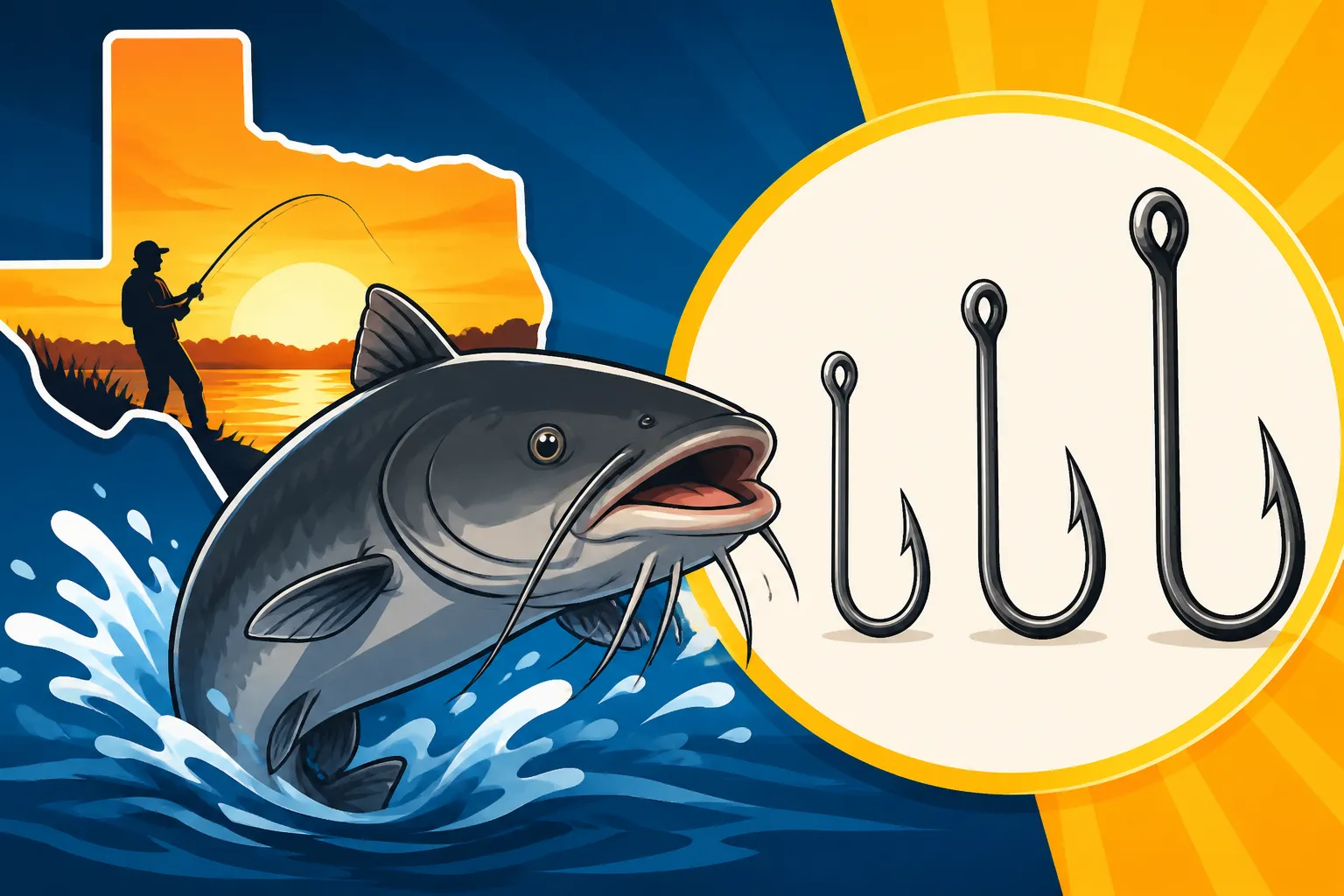
Beyond size, the style of hook plays a huge role in effectiveness, hook-up ratio, and fish care. For catfish, three main styles dominate the discussion: Circle Hooks, J-Hooks (including variations like Kahle and Octopus hooks), and less commonly, Treble Hooks. You can find a wide variety of these hook styles at your local Bass Pro Shops, making it easy to see the different shapes and sizes in person, or browse through options online from retailers like Amazon.
Circle Hooks: These are arguably the most popular and often recommended hooks for catfish, especially when fishing with multiple rods or for catch-and-release. A true circle hook has a point that turns inward, pointing back towards the shank, creating a circular gap. The magic of a circle hook is that it's designed to not hook a fish deeply in the gut. When a fish takes the bait and swims away, the hook slides out of the gullet and catches in the corner of the fish's mouth as the line tightens. This leads to incredibly high hook-up ratios with minimal effort (no hard "set" required) and significantly reduces gut-hooking, making them excellent for the health of the fish. They're fantastic for trotlines and juglines, too, as they often result in fish being safely hooked in the lip.
J-Hooks (Kahle, Octopus): The traditional "J" shape hook, also known as an "offset" hook, is still widely used, though often with variations like the Kahle or Octopus hook. Kahle hooks have a wide gap and a slightly offset point, often favored for cut bait or large chunks of punch bait, as they offer good bait presentation and a solid hook-up when the fish takes it deep. Octopus hooks have a short shank and a wide gap, often with an angled eye, making them excellent for presenting smaller baits like worms or small cut bait on a Carolina rig or a slip sinker rig. With J-hooks, you typically need to actively set the hook with a strong upward sweep of the rod once you feel a bite. While effective, there's a higher risk of gut-hooking compared to circle hooks, especially if you let the fish run too long before setting.
Treble Hooks: While you might see treble hooks on some artificial lures, they are generally not recommended for bait fishing for catfish, especially with live bait or chunk baits. The multiple points greatly increase the chance of gut-hooking, making removal difficult and often fatal for the fish. They can also damage the fish's mouth more severely. In many catfishing circles, using treble hooks for live bait is frowned upon due to ethical concerns about fish welfare. There are very few scenarios where a treble hook would be the "best" choice for targeting catfish with natural baits in Texas.
Matching Hook Size to Catfish Species and Bait
Now for the core of the matter: putting it all together. The "best" hook size isn't a single answer; it's a dynamic choice based on which catfish species you're targeting and, crucially, the size of the bait you're using.
Hooks for Channel Catfish
For your average channel catfish, the sweet spot for hook sizes often falls within the standard numbering system for smaller hooks, and the lower end of the aught system. We're generally talking about hooks ranging from size #1 to 5/0.
If you're targeting those smaller, eating-size channel cats in community ponds or smaller rivers, often under 5 pounds, a #2, #1, or 1/0 circle or octopus hook is usually perfect. These hooks are ideal for baits like nightcrawlers, shrimp, small pieces of cut hot dog, or dough baits. They are small enough for the channel cat's mouth, but still sturdy enough to handle a fight. For specific regulations on these fish, don't forget to look up Texas Channel Catfish Length and Bag Limit.
When you're stepping up to target slightly larger channel cats, maybe in the 5-15 pound range in bigger lakes, you might go up to a 2/0 or 3/0 circle or Kahle hook. These sizes accommodate slightly larger chunks of cut bait, chicken liver, or even a medium-sized shrimp. The wider gap on a Kahle hook can be great for presenting a more substantial piece of bait effectively. Remember, channel cats can be finicky, so a hook that lets the bait move naturally is key.
Hooks for Blue Catfish
When you're chasing blue catfish, especially those magnificent trophy blues, you'll be firmly in the "aught" hook sizes. Their large mouths and aggressive feeding habits demand bigger, stronger hooks that can withstand serious force. Typical sizes range from 3/0 all the way up to 8/0, and sometimes even larger for truly colossal fish.
For average-sized blues (say, 5-20 pounds) caught in reservoirs like Lake Texoma or Lake Livingston, a 4/0 to 6/0 circle hook is a fantastic all-around choice. These hooks are robust enough to handle cut shad, carp, or perch chunks, which are prime blue cat baits. If you're using live sunfish or perch, these sizes also work well, ensuring the bait can swim without being too hindered by the hook. Looking for bait suggestions? We have a great guide on Best Catfish Bait for Texas Lakes.
Now, if you're seriously targeting those monster blue cats – the 50-pounders and up that roam the depths of the major Texas rivers and lakes like the Trinity or the Brazos – you'll want to size up to 8/0, 10/0, or even 12/0 circle hooks. These massive hooks are designed for equally massive baits, like entire large shad, carp heads, or huge sections of cut bait. They offer the necessary strength and gap to firmly hook a giant blue cat in the corner of its formidable jaw.
Hooks for Flathead Catfish
Flathead catfish are unique in their preference for live bait, and your hook choice should reflect that. Since they ambush and swallow their prey whole, you need a hook that will allow your live bait to swim freely and stay alive, while also being strong enough to withstand a flathead's crushing bite. Sizes typically fall between 5/0 and 12/0.
For most flathead fishing, especially with medium-sized live perch, sunfish, or small carp (often 4-8 inches long), a sturdy 7/0 to 9/0 circle hook is a common and highly effective choice. The circle hook design is particularly beneficial here, as flatheads will often engulf the bait and swim off. The hook will typically set itself right in the corner of their mouth, which is crucial since you want to avoid gut-hooking a fish that you might release, or one that's destined for the dinner table.
If you're presenting truly large live baits—say, a 1-pound live carp or a big gizzard shad in a deep river hole—then you might go up to a 10/0 or 12/0 circle hook. The key is that the hook needs to be large enough to secure the bait without killing it too quickly, and strong enough to handle both the bait and the fish. Remember, flatheads are ambush predators, often found in heavy cover like submerged timber, so you'll need tackle that can pull them out of those snaggy situations. Check out How to Catch Catfish in Texas for more tips on these fighters.
Considering Bait Size
This is a fundamental rule across all species: the hook size should always be appropriate for the size of your bait. A common mistake is using a hook that's either too small, leading to the bait falling off or the hook being completely swallowed, or too large, making the bait look unnatural or difficult for the fish to take.
- Small Baits (worms, small cut pieces, punch bait): Use smaller hooks (e.g., #2 to 2/0). The hook should be largely hidden within or by the bait.
- Medium Baits (large cut chunks, whole shrimp, small live baits): Opt for medium-sized hooks (e.g., 3/0 to 6/0). The hook point and barb should be exposed for a clean hook-set.
- Large Baits (whole shad, large live fish, big carp chunks): Go for larger hooks (e.g., 7/0 to 12/0). Ensure enough of the hook is exposed from the bait to do its job, often just behind the head of a live baitfish.
Practical Tips and Advanced Considerations
Beyond just size and style, there are a few other things that savvy Texas catfish anglers keep in mind to maximize their success and ensure a good experience for both them and the fish.
Using the Right Tackle System
Picking the right hook is only one piece of the puzzle. It needs to be part of a balanced tackle system. A tiny hook on heavy braided line with a stiff rod is just as mismatched as a huge hook on flimsy mono with a light spinning rod. Ensure your hook's strength, its barb, and its eye are appropriate for the line you're using. If you're using heavy braided line for trophy blues, your hook needs to be stout enough not to bend or break under pressure. Conversely, if you're using lighter monofilament for channel cats, an overly heavy hook might weigh down your bait unnaturally.
Always, always use sharp hooks. A dull hook will struggle to penetrate a tough catfish jaw, leading to missed fish. Many hooks come chemically sharpened these days, but it's a good habit to check your hook points regularly and sharpen them with a hook file if needed. A sharp hook means less force required to set, which is especially beneficial with circle hooks that do most of the work themselves. For recommendations on the rest of your setup, take a look at Best Rods for Texas Catfish Fishing.
Hook Considerations for Different Fishing Methods
Your fishing method can also influence your hook choice.
- Bank Fishing: If you're casting from the bank, you might be using a slip sinker rig or a Carolina rig. Here, versatility is key, and a good 3/0 to 5/0 circle hook often performs well for mixed bags of channel and smaller blue cats.
- Trotlines: For trotlines, which can legally have many hooks, circle hooks are almost universally preferred. They minimize gut-hooking, which is great because you're not actively watching the line for a bite, and they maintain a good hook-up ratio even when unattended for a period. This also means less work for you when checking the line! Our article on How to Rig a Trotline in Texas goes into more detail.
- Juglines: Similar to trotlines, juglines also benefit greatly from circle hooks for the same reasons. The fish often hook themselves, which is ideal for a hands-off approach. You'll definitely want to read up on How to Set Up a Jugline for Catfish to make sure you're following all the rules.
- Boat Fishing (Anchored/Drifting): Whether you're anchored over a deep hole or drifting a flat, you'll still choose hooks based on species and bait size, but you might lean more towards a J-hook if you prefer actively setting the hook and feeling every bite, or stick with circles for ease of use.
The Importance of Regulations
Lastly, don't forget that regulations are a real thing in Texas, and they can sometimes impact your hook choice, especially concerning specialized gear. For example, there are specific rules about the number of hooks you can have on a trotline or jugline. While these rules typically don't restrict hook size, they are about quantity. Always consult the latest Texas Parks and Wildlife Department regulations before heading out. Knowing the rules, like those found in Texas Trotline Hook Limit Rules, ensures your fishing trip is both successful and legal.
Catfish Hook Size Quick Reference Table
| Catfish Species | Target Size Range | Typical Hook Sizes (Circle/Kahle) | Recommended Bait Examples | Key Considerations |
|---|---|---|---|---|
| Channel Catfish | 1-15 lbs | #2 to 3/0 | Worms, shrimp, small cut bait, chicken liver, dough bait | Smaller mouth, often nibble; aim for easy swallowing |
| Blue Catfish | 5-50+ lbs (General) | 4/0 to 6/0 | Cut shad, carp, perch chunks, large shrimp | Large mouth, active feeders; strong, sharp hooks |
| Blue Catfish | 50+ lbs (Trophy) | 8/0 to 12/0 | Whole shad, large carp sections, sunfish | Massive mouth, powerful strikes; heavy duty tackle |
| Flathead Catfish | 10-80+ lbs | 7/0 to 10/0 | Live sunfish, perch, small carp (4-8 inches) | Ambush predators, prefer live bait; ensure bait movement |
Picking the right hook size for Texas catfish fishing doesn't have to be a mystery. By understanding the different species, their feeding habits, and the various hook styles and sizing systems, you'll be well on your way to more successful outings. So, next time you're gearing up for a catfishing adventure, remember these tips, grab the right hooks, and get ready to feel that satisfying tug on your line!
Disclaimer
This article is for general informational purposes only and does not constitute professional advice. Laws, prices and regulations vary by location and change over time. Consult a qualified professional for guidance on your specific situation.