Texas channel catfish length and bag limit
It’s a truly frustrating experience to head out for a day of Texas fishing, hook into some beautiful channel catfish, and then stand there wondering if your catch is even legal to keep. With all the different rules for various species and water bodies, it’s easy to get confused. This comprehensive guide is here to cut through the noise, explaining the precise length and bag limits for channel catfish across Texas, so you can fish with confidence and stay on the right side of the regulations.
Statewide Regulations for Channel Catfish in Texas Waters
Let’s start with the basics, because understanding the statewide rules for channel catfish is your first line of defense against accidental violations. The Texas Parks and Wildlife Department (TPWD) has a set of core regulations that apply to most public waters across the state. These rules are designed to ensure sustainable fish populations for generations to come, balancing the fun of fishing with crucial conservation efforts.
Daily Bag Limit and Possession Limit
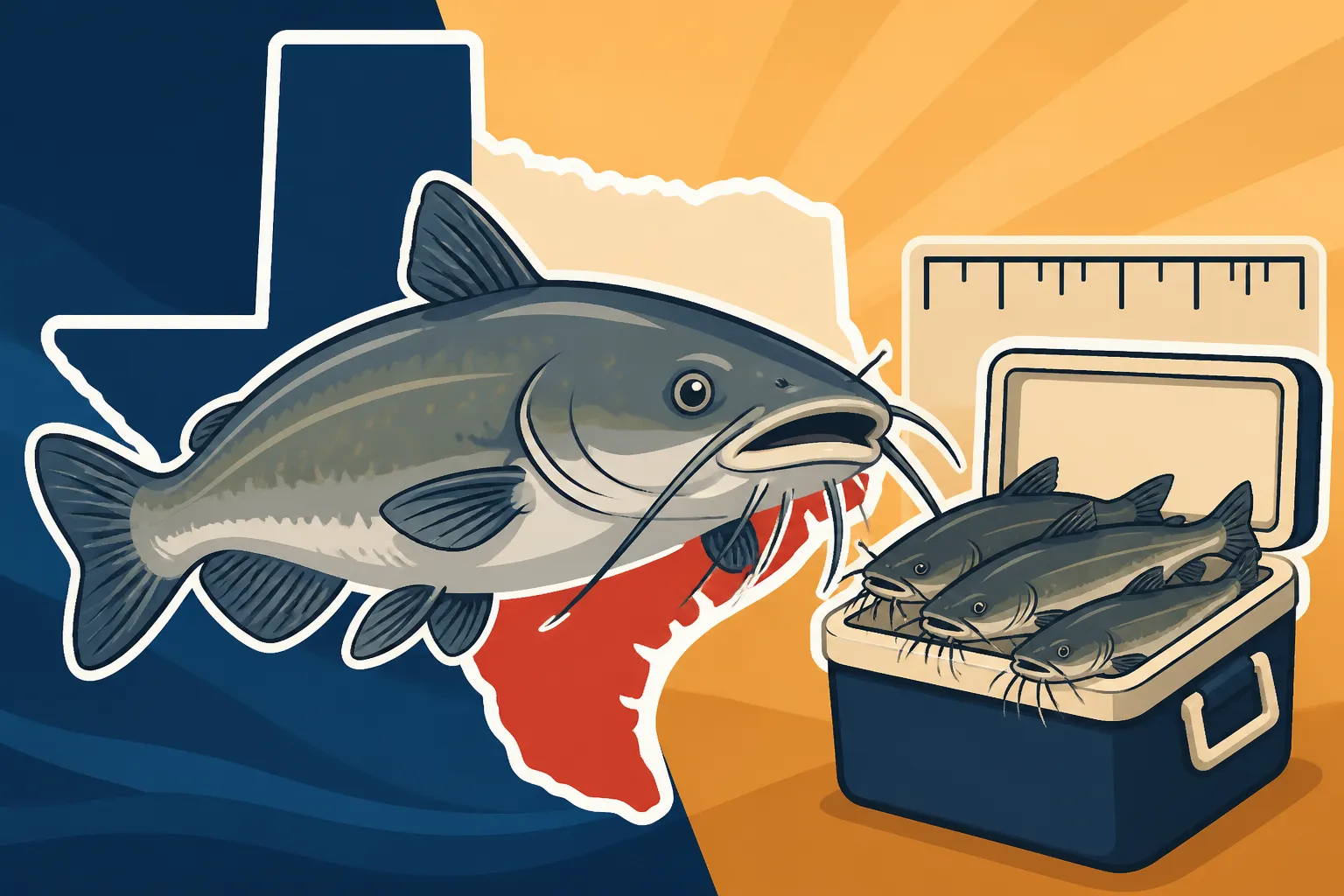
When you’re out on the water, whether it’s a serene morning on Lake Travis or a bustling afternoon on the Trinity River, the first number you need to remember for channel catfish is 25. That’s right, the daily bag limit for channel catfish is 25 fish per person. This means that in any single day, from midnight to midnight, an individual angler cannot keep more than 25 channel catfish. It's a generous limit, allowing for a good haul for a family fish fry, but it's important to keep track, especially if you're having a particularly good day.
Now, what about the possession limit? This often trips up even seasoned anglers. The possession limit refers to the total number of fish you can have in your immediate control, whether on your person, in your cooler, or in your vehicle, at any point after you've left the water. For channel catfish, the possession limit is twice the daily bag limit, which means you can possess up to 50 channel catfish. This rule primarily helps those who might be on a multi-day fishing trip or who have accumulated their catch over several legal fishing days. For instance, if you caught 25 catfish on Saturday and 25 more on Sunday, you could legally have 50 fish in your cooler on your way home, as long as each day's catch adhered to the 25-fish daily limit. The key here is not to exceed 25 fish caught in a single day. Make sure to consult the broader Texas Freshwater Fishing Regulations to fully grasp all the intricacies for other species too.
The Statewide Length Limit: What You Need to Know
Beyond how many fish you can keep, there's the critical question of how big (or small) they need to be. For channel catfish in most Texas public waters, there is a 12-inch minimum length limit. This means any channel catfish you catch that measures less than 12 inches from the tip of its snout to the tip of its tail (when laid flat) must be immediately released back into the water. This regulation is particularly vital for the health of channel catfish populations.
The primary reason for this 12-inch minimum length limit is biological conservation. Younger, smaller fish are crucial for the future of the fishery. By protecting these juvenile fish, we allow them to mature, reproduce, and grow to a size where they can contribute more significantly to the population before being harvested. This ensures a steady supply of fish for anglers in the long run. Imagine if everyone kept every small catfish they caught; the populations would quickly dwindle, and future fishing would suffer. This rule helps maintain that delicate balance, ensuring that the next time you're out, there are still plenty of thriving channel catfish to target.
Decoding Special Regulations and Exceptions for Channel Catfish
While the statewide rules offer a good baseline, Texas is a vast state with incredibly diverse aquatic ecosystems. Because of this, relying solely on statewide regulations for channel catfish can sometimes lead to trouble. The Texas Parks and Wildlife Department often implements special regulations for specific lakes, rivers, or even sections of a river, to address unique ecological conditions, manage localized fish populations, or enhance specific angling opportunities. It's always your responsibility to check the current Outdoor Annual or the TPWD website for the exact rules of the water body you plan to fish. You wouldn't want to accidentally keep an undersized fish just because you didn't know about a local exception!
Specific Lakes and Rivers with Unique Rules
There are indeed several well-known Texas water bodies that have different rules for channel catfish than the statewide limits. These exceptions are often put in place for very good reasons, tailored to the specific dynamics of that particular lake or river.
For example, on Lake Palestine in East Texas, which is a fantastic spot for catfish, there's often no minimum length limit for channel catfish. This means if you catch a 10-inch channel cat there, you can legally keep it, as long as you're still within your daily bag limit. Similarly, Lake Conroe, another popular fishing destination near Houston, sometimes has special provisions, or even a slot limit, to encourage the harvest of smaller, more abundant fish while protecting larger breeding stock. Another major fishery, the Toledo Bend Reservoir (which shares its waters with Louisiana), has a unique set of reciprocal regulations, sometimes differing on both sides of the state line, making it crucial to understand the Lake Texoma Fishing License Rules and other shared water regulations. Always, always double-check the local regulations for the specific lake or river you're visiting. A quick search on the TPWD site or checking the Outdoor Annual before you cast your first line can save you a headache later.
The Rationale Behind Varying Catfish Regulations
You might wonder why TPWD bothers with all these specific rules instead of just having one simple statewide regulation. The answer lies in ecological and management science. Every lake and river in Texas is its own unique ecosystem with varying factors that affect fish populations.
- Population Dynamics: Some lakes might have an overabundance of smaller channel catfish, leading to stunted growth due to competition for food. In such cases, removing the minimum length limit or increasing the bag limit encourages anglers to harvest more smaller fish, which can actually improve the overall health and size structure of the remaining population.
- Stocking Programs: Many Texas lakes are regularly stocked with channel catfish. The success of these stocking programs, combined with natural reproduction, can lead to different population densities and growth rates, necessitating adapted regulations.
- Habitat and Forage: The type and abundance of available food (forage) and habitat (cover, water depth, structure) can vary dramatically from one lake to another. A lake with rich forage might support faster-growing fish, while another with limited resources might produce slower-growing fish. Regulations are adjusted to reflect these environmental capacities.
- Angler Pressure: High angler pressure on certain popular lakes can also influence regulations. If a lake sees a lot of fishing activity, stricter limits might be needed to prevent overharvest, while less-frequented spots might have more liberal rules.
Understanding this rationale helps us appreciate why these rules exist and why staying informed about the specifics for your chosen fishing spot, like checking Texas Fish Bag and Length Limits, is not just about avoiding fines, but about contributing to healthy fisheries across our great state.
Here's a quick summary of general channel catfish regulations to give you a clearer picture, but remember, always verify with the current TPWD Outdoor Annual for specific water bodies.
| Regulation Type | Statewide Rule (Most Waters) | Example Exception (e.g., Lake Palestine) |
|---|---|---|
| Daily Bag Limit | 25 fish per person | 25 fish per person (usually consistent) |
| Length Limit | 12-inch minimum | No minimum length limit |
| Possession Limit | Twice the daily bag limit (50 fish) | Twice the daily bag limit (50 fish) |
Identifying Your Catch: Channel Catfish vs. Their Cousins
One of the biggest pitfalls for anglers, leading to potential fines or unintentional violations, is misidentifying their catch. In Texas, we have three primary species of "catfish" that are commonly caught: channel catfish, blue catfish, and flathead catfish. While they all share the common "catfish" characteristics like barbels (whiskers) and a lack of scales, their individual regulations can differ significantly. Knowing the distinct features of each is absolutely crucial.
Key Features to Distinguish Channel Catfish
Channel catfish are often the most common catfish encountered by recreational anglers, especially in smaller ponds and rivers. To confidently identify a channel catfish, look for these key characteristics:
- Forked Tail: This is perhaps the most defining feature. Channel catfish have a deeply forked tail fin, almost like a "V" shape. This is a primary differentiator from blue and flathead catfish.
- Spots: Many channel catfish, especially smaller ones, will have distinct dark spots along their sides. These spots can fade as the fish gets older and larger, but they are often present.
- Anal Fin: Look at the anal fin (the fin on the underside behind the vent). A channel catfish typically has 24-29 rays in its anal fin. Counting these can be tricky on a squirming fish, but it’s a reliable scientific method.
- Head Shape: They generally have a somewhat rounded, smooth head profile compared to the flatter, broader heads of flatheads.
By focusing on these features, you can almost always tell if you've got a channel cat on the line. For a deeper dive into all the different whiskered wonders, check out our Texas Catfish Species Guide.
Avoiding Misidentification and Potential Fines
Mistaking a blue catfish for a channel catfish, or vice-versa, can have real consequences. While both have forked tails, blue catfish generally have more anal fin rays (30-36) and lack the spots. Their heads are also more sloping. The Texas Blue Catfish Identification Guide goes into more detail. Flathead catfish, on the other hand, are easily identifiable by their broad, flat heads, mottled coloration, and rounded (not forked) tail fin. They also have a unique lower jaw that protrudes beyond the upper jaw. The Texas Flathead Catfish Minimum Length Limit often has different rules altogether.
The fines for violating fishing regulations in Texas can be substantial, ranging from a few hundred dollars to much more, plus court costs and the potential loss of your fishing license. It's simply not worth the risk. Here are some tips to avoid misidentification:
- Study Up Before You Go: Before each trip, especially to a new lake, refresh your memory on the identifying features of the fish you expect to catch.
- Use a Field Guide: Carry a waterproof field guide or use a reliable app on your phone that shows pictures and descriptions of common Texas fish species.
- Observe Carefully: When you land a fish, take a moment to look at its tail, spots (or lack thereof), and head shape before deciding whether to keep it or release it.
- When in Doubt, Release It: This is the golden rule. If you are unsure of the species or its legal size, the safest and most responsible action is to carefully release the fish. It’s better to be safe than sorry!
Being diligent about identification not only protects you from legal trouble but also promotes responsible angling and helps conserve the diverse fish populations that make Texas fishing so incredible.
Practical Tips for Measuring, Handling, and Compliance
Knowing the rules is one thing, but putting them into practice on the water is another. From correctly measuring your catch to handling fish ethically, there are several practical considerations that ensure you comply with regulations and contribute to sustainable fishing.
Accurate Measuring Techniques for Legal Compliance
Measuring a squirming fish correctly is an art, but it's a critical skill to master for legal compliance. Here's how to do it for channel catfish:
- Lay the Fish Flat: Place the fish on a flat surface, such as a measuring board, boat deck, or even the ground if you don't have a board. The fish should be as straight as possible, not curved.
- Close the Mouth: Gently push the fish's mouth closed against the "stop" or zero mark of your measuring device. Many measuring boards have a vertical stop at one end designed for this.
- Squeeze the Tail: Gently squeeze the tail fin lobes together to get the maximum length measurement. The measurement is taken from the tip of the snout to the furthest tip of the tail. This is called "total length."
- Read Clearly: Read the measurement at the furthest point of the tail. Ensure you're measuring to the nearest legal increment. If the rule is a 12-inch minimum, a fish that is exactly 11 ¾ inches must be released.
Having a reliable measuring device is key. Many anglers use purpose-built fish measuring boards, which you can find on Amazon or at any local tackle shop. Even a simple tape measure or ruler will work, but a dedicated board often makes it easier and more accurate, especially with a squirming fish. Remember, proper measurement is also crucial for other species like Texas Largemouth Bass Length Limits, so developing good habits is beneficial across the board.
Responsible Angling: Catch, Keep, and Release
Beyond just legal compliance, responsible angling practices help ensure the long-term health of our fisheries. Whether you're keeping a limit of delicious channel catfish for dinner or releasing an undersized fish, ethical handling is paramount.
- Handling Kept Fish: If you're keeping channel catfish, try to dispatch them quickly and humanely. Place them immediately on ice in a quality cooler to preserve their freshness. Many great coolers, from brands like Yeti or Igloo, can be found on Amazon, and they're invaluable for keeping your catch in prime condition, especially during the hot Texas summers. A good livewell with proper aeration can also keep your fish healthy until you're ready to process them, though for catfish, many anglers prefer to put them directly on ice.
- Handling Released Fish: For any fish that must be released (either because it's undersized, oversized, or you're simply practicing catch and release), minimize the time it's out of the water. Handle the fish gently with wet hands to avoid removing its protective slime coat. Use pliers or a hook remover (again, easily found on Amazon) to quickly extract the hook. If the fish is deeply hooked, it may be best to cut the line as close to the hook as possible rather than risk further injury trying to remove it. Return the fish to the water gently, allowing it to swim away on its own power.
- Gear Considerations: Using appropriate tackle can also improve survival rates for released fish. Circle hooks, for instance, are often recommended for catfish fishing as they tend to hook fish in the corner of the mouth, reducing gut-hooking. Knowing How to Catch Catfish in Texas with proper gear can make a big difference.
By adhering to these practices, you're not just a law-abiding angler; you're a steward of Texas's incredible fishing resources, helping to ensure that the joy of catching channel catfish can be experienced by generations of anglers to come.
Disclaimer
The information provided in this guide is for general informational purposes only and is subject to change. Fishing regulations, including length and bag limits, can be updated frequently by the Texas Parks and Wildlife Department. Always consult the most current official TPWD Outdoor Annual or their website before heading out to fish to ensure you have the most accurate and up-to-date information for your specific fishing location.