Texas flathead catfish minimum length limit
You’ve battled a powerful fish, felt that incredible tug on your line, and finally landed what looks like a magnificent flathead catfish. Your heart is pounding, and you’re probably already dreaming of the delicious meal it will make. But then, a nagging question creeps in: Is this fish legal to keep? Texas fishing regulations, especially around length limits for specific species like flathead catfish, can sometimes feel like a puzzle. This guide is here to untangle that confusion, providing clear, in-depth information on the minimum length limit for flathead catfish in Texas, why these rules exist, and how you can confidently stay on the right side of the law.
Understanding Texas Flathead Catfish Length Limits
It's easy to get caught up in the thrill of the catch, but understanding and respecting the rules is what truly makes a responsible angler. Texas Parks and Wildlife Department (TPWD) sets these regulations for good reason, aiming to ensure that our amazing fisheries remain healthy and productive for generations to come. Flathead catfish, with their distinct appearance and powerful fight, are a prime example of a species that benefits from careful management.
The Specific Minimum Length for Flathead Catfish in Texas
Let's get straight to the crucial detail: there is no statewide minimum length limit for flathead catfish in Texas. That might come as a surprise if you're used to strict slot or minimum limits for other popular species like largemouth bass or redfish. However, while there isn't a minimum, there is a statewide daily bag limit and a provision that only one flathead catfish over 18 inches can be retained per day. This regulation effectively manages the take of larger, potentially more mature breeding fish, without prohibiting anglers from keeping smaller, pan-sized flatheads.
This approach is a strategic move by the TPWD. Flathead catfish grow large and can live for many years. By allowing anglers to keep fish under 18 inches without a specific minimum, it provides opportunities for a harvest of smaller fish, which are often excellent table fare. Simultaneously, the "one fish over 18 inches" rule acts as a conservation measure for the bigger, older, and often more reproductively valuable individuals. It's a balance that supports both angler enjoyment and species sustainability. If you're keen to learn more about identifying your catch, check out our detailed Texas Flathead Catfish Identification Guide.
Why Flathead Catfish Regulations Matter for Conservation
Even without a strict minimum length, the existing regulations for flathead catfish are vital for their long-term health and abundance across Texas waters. These fish are significant predators in their ecosystems, consuming other fish, crustaceans, and even smaller mammals. Their role is crucial in maintaining a balanced aquatic environment.
The "one fish over 18 inches" rule plays a key role in ensuring that a healthy population of breeding-sized fish remains in the water. Flathead catfish take several years to reach sexual maturity. By limiting the harvest of larger individuals, TPWD helps ensure that these fish have ample opportunity to spawn multiple times throughout their lives, contributing more offspring to the population. This helps to prevent overfishing of the trophy-sized fish that are so sought after by many anglers. It's a careful conservation strategy designed to protect the genetic diversity and reproductive capacity of the species, ensuring future generations of Texans can enjoy the thrill of catching these impressive fish. For a broader overview of how all these rules fit together, you might find our article on Texas Freshwater Fishing Regulations particularly helpful.
Essential Gear and Techniques for Measuring Your Flathead Catch
While there's no minimum length, knowing how to measure your fish is still incredibly important, especially with that "one over 18 inches" rule. You certainly don't want to accidentally keep two big ones or incorrectly identify your catch, leading to a violation.
How to Accurately Measure Your Flathead Catfish
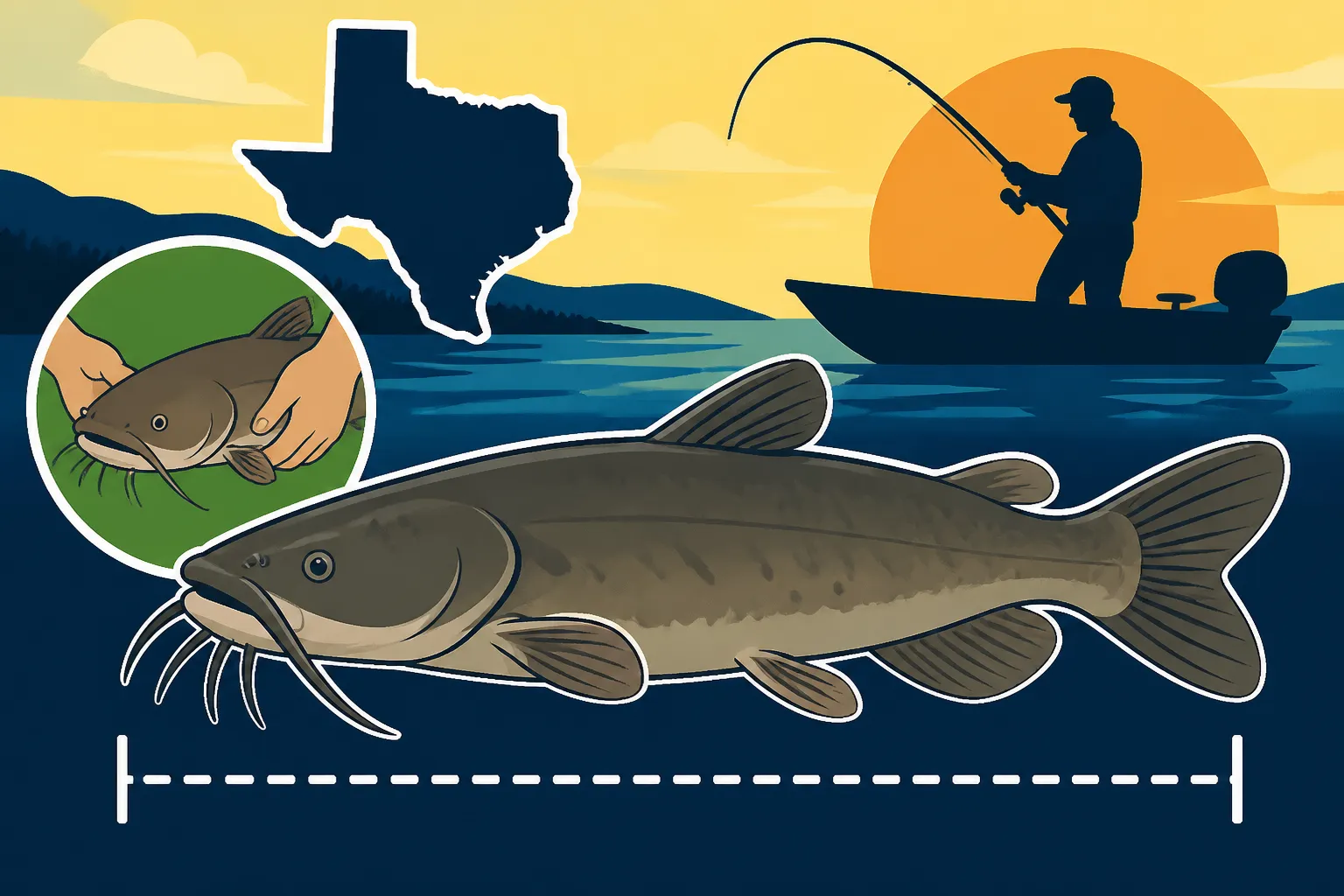
Measuring a fish correctly is a skill every angler should master. For flathead catfish, like most species in Texas, you'll measure from the tip of the snout to the tip of the tail, with the fish lying flat and the tail lobes pressed together to provide the maximum total length. Here’s a simple step-by-step process:
- Lay the fish flat: Gently place your flathead catfish on a flat surface, such as a measuring board or a boat deck with a tape measure. It's crucial to keep the fish as calm as possible to minimize stress and ensure an accurate measurement.
- Position the snout: Push the fish's mouth firmly against the bump of a measuring board or the zero mark of your tape measure. Make sure the mouth is closed.
- Compress the tail: While holding the head against the starting point, gently squeeze the tail lobes together so they are compressed. This will give you the maximum total length.
- Read the measurement: Note where the furthest point of the tail reaches on your measuring device. That's your official length.
Remember, always prioritize the fish's well-being. If you intend to release an undersized fish (or any fish you don't plan to keep), measure it quickly and carefully, minimizing its time out of the water.
Recommended Measuring Tools and Responsible Practices
Having the right tools makes measuring your catch much easier and more accurate. A good, sturdy measuring device is essential for any serious angler.
- Bump Boards: These are perhaps the most accurate and easiest tools for measuring fish. They have a solid "bump" at one end to place the fish's snout against, and clear markings along the board. Many come with a groove to hold the fish straight. You can find excellent quality bump boards on platforms like Amazon, often made from durable plastic or aluminum, designed to withstand the rigors of fishing.
- Retractable Tape Measures: While not as precise as a bump board, a waterproof, retractable tape measure can work in a pinch. Just ensure you hold the zero end firmly against the fish's snout and get a good read on the tail. Again, Amazon offers a wide selection of robust, marine-grade tape measures that are perfect for this application.
- Fish Rulers/Decals: Some boats or cooler lids come with built-in rulers. These are convenient, but always double-check their accuracy against a known measurement.
Beyond the tools, responsible practices are key. Always wet your hands before handling any fish you intend to release. This helps protect the fish's protective slime coat, which is vital for its health. If a fish is too large to handle easily, consider keeping it in the water while you measure it if possible, or use a large, wet net. These simple steps can significantly improve a fish's chances of survival after release. Ensuring you have robust gear, from rods to measuring devices, can truly enhance your experience, and you can often find comprehensive beginner fishing gear checklists on Amazon to help you prepare.
Beyond Length: Texas Flathead Catfish Bag Limits and Penalties
Understanding the length rule for flathead catfish is just one piece of the puzzle. You also need to be aware of daily bag and possession limits, which are just as critical for sustainable angling and avoiding legal trouble.
Texas Statewide Daily Bag and Possession Limits for Flatheads
For flathead catfish in most Texas waters, the statewide daily bag limit is 5 fish, with the caveat that only one of those five can be over 18 inches in length.
Let's break that down:
- Daily Bag Limit: This refers to the maximum number of fish you can keep in a 24-hour period, from midnight to midnight. So, if you're out fishing all day and catch several flatheads, you can only put five in your cooler, and only one of those can be longer than 18 inches.
- Possession Limit: This is the maximum number of fish you can have in your possession at any time, including those at your home, camp, or while transporting them. In Texas, the possession limit for flathead catfish is typically twice the daily bag limit, which means you can possess up to 10 flathead catfish, as long as no more than two of them are over 18 inches.
It's really important to keep these two limits distinct in your mind. If you go on a multi-day fishing trip, you can catch and keep five flatheads (with one over 18") each day, but your total possession cannot exceed ten (with two over 18") at any given time. These rules are designed to prevent excessive harvest and spread the fishing pressure across the population. Always double-check the latest Texas Fish Bag and Length Limits for any specific water bodies you plan to fish, as some local exceptions or special regulations might apply, though for flatheads, the statewide rule is generally consistent.
What Happens If You Break the Rules
Ignoring fishing regulations, whether it's length limits, bag limits, or even not having a valid license, can lead to some pretty serious consequences. It's not just about a slap on the wrist; these violations are taken seriously by law enforcement and the TPWD.
If you're caught with an illegal flathead catfish – perhaps you have two over 18 inches, or you've exceeded your daily bag limit – you could face substantial fines. These fines can vary depending on the specific violation and whether it's a first offense, but they can easily run into the hundreds of dollars. On top of the fine, you might also be required to pay civil restitution for the value of the fish you illegally harvested. Imagine paying hundreds of dollars for a fish you just wanted to eat!
Beyond the monetary penalties, a violation can also result in the loss of your fishing license privileges, either temporarily or even permanently for repeat offenders. This means you could be legally prohibited from fishing in Texas waters, which for many of us, is a devastating consequence. It’s a harsh reminder that these rules aren’t just suggestions. They're laws designed to protect our shared natural resources. To understand the broader implications of violating fishing laws, including fishing without a license, our guide on Penalties for Fishing Without a Texas License provides more comprehensive information.
Tips for Sustainable Flathead Catfishing in Texas
Being a responsible angler extends beyond just knowing the rules; it's about adopting practices that contribute to the overall health of our fisheries. Flathead catfish are magnificent creatures, and we want to ensure they thrive.
Best Practices for Catch and Release to Promote Fish Health
Even if you’re fishing for table fare, you’ll inevitably catch fish that are undersized, or perhaps you've already filled your bag limit. Knowing how to properly release a fish can significantly improve its chances of survival. Flatheads are generally quite resilient, but proper handling is still crucial.
- Use appropriate tackle: When targeting flatheads, especially larger ones, use tackle strong enough to land them relatively quickly. Prolonged fights can exhaust a fish, making it less likely to survive release. Many anglers prefer baitcasting setups with heavy line – you can find a great selection of durable lines and reels on Amazon suitable for this kind of fishing.
- Minimize handling time: The less time a fish spends out of the water, the better. Have your measuring tools, camera, and de-hooking tools ready before you even bring the fish into the boat or onto the bank.
- Wet hands and proper grip: Always wet your hands before touching a fish. This protects its vital slime coat. Support the fish horizontally, especially larger ones, to avoid damaging its internal organs or spine. Avoid holding them vertically by the jaw if they are heavy, as this can dislocate their jaw or injure their neck.
- Use de-hooking tools: Barbless hooks can make de-hooking easier, but even with barbed hooks, a good pair of long-nose pliers or a specialized de-hooker can quickly and safely remove the hook with minimal damage.
- Revive the fish: If a fish seems sluggish before release, gently hold it upright in the water, facing into the current (or move it back and forth if there's no current) to force water over its gills. Only release it when it swims away under its own power. These practices ensure that if you need to release an undersized fish, it has the best chance of thriving.
Locating Up-to-Date Regulations and Enhancing Your Catfishing Success
The world of fishing regulations can change, so it's always smart to have the most current information. The absolute best source for the most up-to-date Texas fishing regulations is the official Texas Parks and Wildlife Department (TPWD) website. They publish an annual Outdoor Annual, which is available online and in print at most license retailers. Always check this before your trip, especially if you haven't fished a particular waterbody recently or if it's a new fishing year.
Beyond regulations, enhancing your catfishing success involves understanding the species and its habits. Flatheads prefer live bait, often large baits like sunfish or perch, and they tend to hug structure such as logjams, submerged timber, and deep holes in rivers and reservoirs. For more detailed strategies on catching these impressive fish, be sure to read our guide on How to Catch Catfish in Texas. And if you're exploring different gear options for your next catfishing adventure, whether it's for trotlines, juglines, or rod and reel setups, our articles like Texas Trotline and Jugline Rules or Best Rods for Texas Catfish Fishing can provide valuable insights. The more you know, the more successful and responsible you'll be on the water!
Here's a quick summary of the key flathead catfish regulations in Texas:
| Regulation Type | Statewide Limit (Most Waters) | Important Notes |
|---|---|---|
| Minimum Length | None | There is no specific minimum length limit for flathead catfish in Texas. |
| Daily Bag Limit | 5 fish | Only one flathead catfish over 18 inches in length may be retained per day. |
| Possession Limit | 10 fish | No more than two flathead catfish over 18 inches in length may be in possession. (Generally twice the daily bag) |
| Gear Tags | Required for trotlines, juglines, and other passive gear. | Must include your name, address, and license number. |
Please remember, these are general statewide regulations for flathead catfish. Always consult the current Texas Parks and Wildlife Department Outdoor Annual for the most precise and up-to-date information, as special exceptions can exist for specific lakes or river segments.
Disclaimer
The information provided in this guide is for general informational purposes only and is not intended as legal advice. Fishing regulations can change, and specific rules may apply to certain bodies of water or situations. Always consult the official Texas Parks and Wildlife Department (TPWD) Outdoor Annual or their website for the most current and accurate fishing regulations before heading out on the water. Following all applicable laws and regulations is the sole responsibility of the angler.