Texas striped bass bag limit rules
Navigating the specific rules for fishing in Texas can often feel like deciphering a secret code, especially when you're targeting a popular species like striped bass. It’s easy to get confused about how many you can keep or what size they need to be, and nobody wants to inadvertently break the rules and face a fine. This comprehensive guide is here to clear up all the confusion surrounding the Texas striped bass bag and length limits, ensuring your next fishing trip is both fruitful and compliant.
Understanding the Standard Texas Striped Bass Regulations
When you head out to chase those hard-fighting striped bass in Texas, there are standard regulations set by the Texas Parks and Wildlife Department (TPWD) that apply to most public waters. These rules are put in place for a good reason: to ensure the long-term health and sustainability of our beloved fisheries. It's not just about what you catch, but how you catch it and how many you take home.
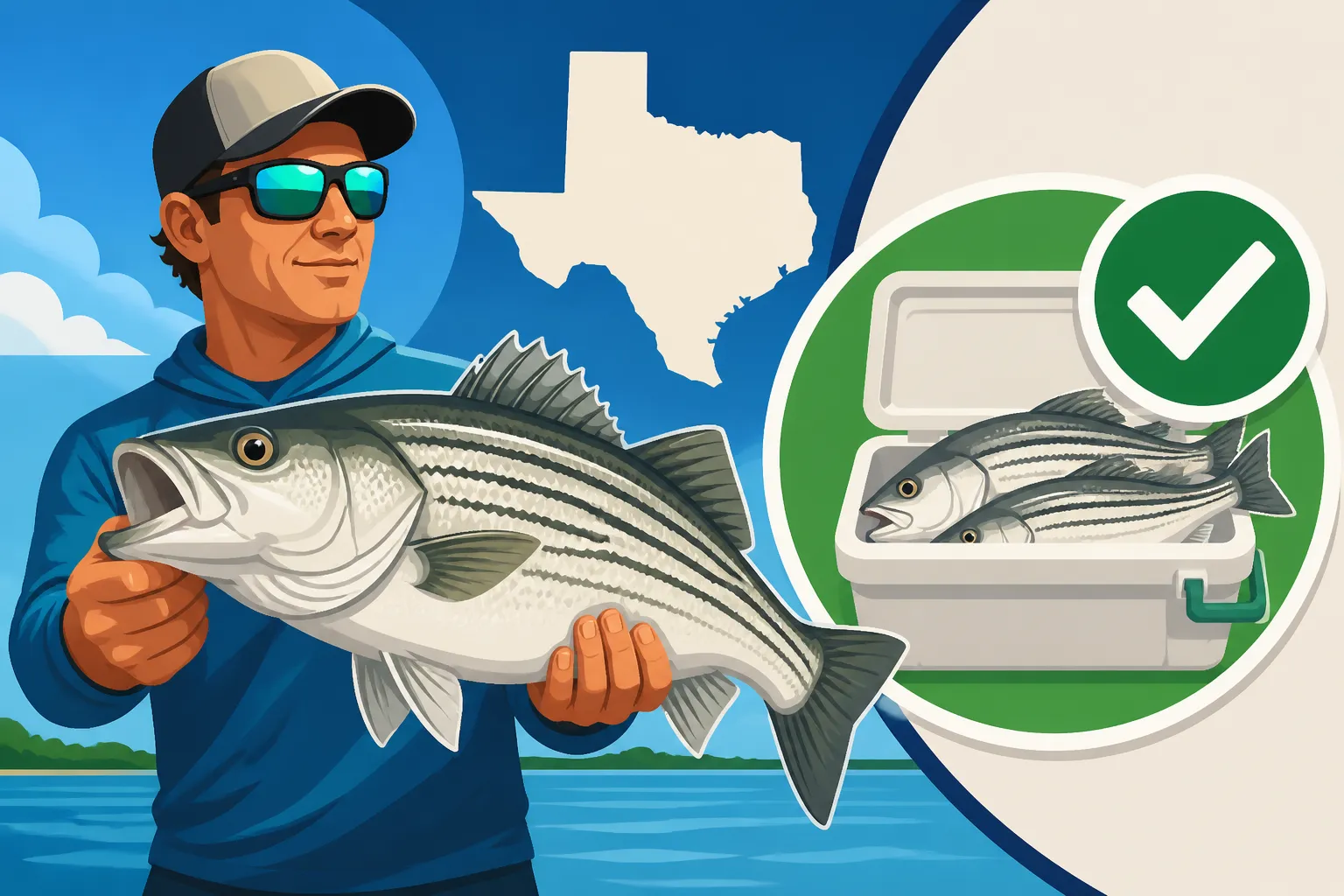
The general rule for striped bass in most Texas public waters is a daily bag limit of 5 fish. This means that in any given 24-hour period, from midnight to midnight, you can only keep five striped bass. Now, for the length, there's a minimum length limit of 18 inches. This means any striped bass you keep must measure at least 18 inches from the tip of its snout to the end of its tail, with the tail compressed. Anything shorter than that, no matter how plump, needs to go back into the water carefully. These aren't just suggestions; they are hard and fast rules designed to let the younger fish grow up and spawn, contributing to future generations of stripers.
It’s crucial to understand the difference between a "daily bag limit" and a "possession limit." While the daily bag limit is the number of fish you can harvest in one day, the possession limit refers to the maximum number of fish you can have on your person or in your immediate control once you're off the water or at your primary residence. For striped bass in Texas, the possession limit is typically twice the daily bag limit, which means you can have up to 10 striped bass in your possession, provided you haven't exceeded the daily bag limit on any single day you fished. So, if you're on a multi-day trip, say camping out near a lake, and you caught five fish on Monday and another five on Tuesday, you'd be at your possession limit of ten fish as you head home. Always check the current Texas Freshwater Fishing Regulations to confirm these details, as rules can occasionally be updated.
Special Regulations for Lake Texoma and Other Areas
Texas is a big state, and while standard regulations apply to most waters, certain lakes have their own unique rules, especially when they are shared with another state. Lake Texoma, an incredibly popular destination for striped bass anglers, is a prime example of such an exception, sitting on the border of Texas and Oklahoma. If you're planning a trip there, you'll definitely want to understand the specific Lake Texoma Fishing License Rules and the accompanying striped bass regulations.
On Lake Texoma, the daily bag limit for striped bass is generally 10 fish, which is double the standard Texas limit. However, there's a twist: of those 10 fish, only 2 can be 20 inches or longer. This "two fish over 20 inches" rule is in place to protect the larger, more reproductively mature striped bass, ensuring they continue to contribute to the lake's robust fishery. The minimum length limit for striped bass on Lake Texoma is still 18 inches, just like the statewide rule. So, you could theoretically keep ten 18-inch striped bass, but only two of those could be 20 inches or greater. This specific regulation demonstrates a very intentional approach to managing a shared, highly productive fishery.
Anglers on Lake Texoma also need to be aware of the "fin clip" rule for purebred striped bass. In Texas, TPWD often stocks hybrid striped bass, which are a cross between striped bass and white bass. These hybrids have a broken, irregular stripe pattern on their sides. Pure striped bass, on the other hand, have more distinct, unbroken horizontal stripes. To differentiate between stocked hybrid striped bass and naturally reproducing pure striped bass, TPWD often clips a fin on the purebreds before stocking. However, on Lake Texoma, due to its unique dynamics and shared management with Oklahoma, this distinction can be a bit more complex, and anglers primarily focus on the overall length and bag limits rather than fin clips for striped bass identification for regulatory purposes. If you're interested in learning more about how to tell these species apart, check out our guide on Texas Hybrid Striped Bass vs Pure Striped Bass.
Another nuance to consider is the possibility of "no length limit" waters. While uncommon for striped bass, some smaller public waters or ponds might occasionally be designated by TPWD for special management where length limits are removed for certain species to address overpopulation or specific ecological goals. It is extremely rare for striped bass, which are typically managed with strict size and bag limits due to their growth potential and popularity. However, it's always best practice to consult the latest TPWD Outdoor Annual or the TPWD website before fishing any new body of water, as local variations or emergency regulations can occur. You can usually find the most up-to-date information, often broken down by specific water bodies, which is far more reliable than relying on word-of-mouth. This diligence ensures you're always on the right side of the law and contributing to responsible angling.
| Body of Water (Example) | Daily Bag Limit (Striped Bass) | Minimum Length Limit (Striped Bass) | Special Rules/Notes |
|---|---|---|---|
| Most Texas Public Waters | 5 fish | 18 inches | Possession limit is 10 fish. |
| Lake Texoma | 10 fish | 18 inches | Only 2 fish can be 20 inches or longer. Possession limit is 20 fish. |
| Other Specific Waters | Varies, check TPWD | Varies, check TPWD | Always consult the latest TPWD Outdoor Annual for specific lakes/rivers. |
Why These Regulations Exist and Their Importance
You might wonder why there are so many rules about how many fish you can keep and how big they have to be. It’s not just to make things complicated for anglers; these regulations are the backbone of sustainable fishing in Texas. The TPWD’s fisheries biologists conduct extensive research, constantly monitoring fish populations, growth rates, spawning success, and angler harvest to determine the optimal limits.
Protecting Breeding Stock and Population Health
The primary reason for minimum length limits, like the 18-inch rule for striped bass, is to protect immature fish, allowing them to grow to reproductive age and spawn at least once, if not multiple times. Striped bass are long-lived and can grow quite large. If anglers were allowed to keep every fish they caught, especially the smaller ones, the population wouldn't have enough mature adults to reproduce effectively. This would lead to fewer fish for everyone in the future. By enforcing a minimum length, we ensure that a healthy number of fish reach maturity and contribute to the population's natural replenishment.
Consider a scenario where every 12-inch striper was kept. That fish likely hasn't had a chance to spawn yet. By letting it go, you're giving it the opportunity to contribute thousands, if not millions, of eggs to the lake's ecosystem. This is particularly vital for Texas Striped Bass Fishing Guide where these magnificent fish can grow to impressive sizes and offer incredible angling experiences. These larger, older fish are often the most prolific spawners, and protecting them is paramount to maintaining a vibrant fishery.
Managing Angler Pressure and Fair Distribution
Bag limits, like the 5-fish daily limit or the 10-fish limit on Lake Texoma, serve to manage the overall harvest from a fishery. Texas has a huge and growing population of anglers, and without limits, a few individuals could potentially harvest a large number of fish, leaving fewer for others. Limits help distribute the resource more equitably among all anglers and ensure that the total number of fish removed from the lake each year doesn't exceed what the population can sustain.
Imagine a busy Saturday on a popular striper lake; if there were no limits, some boats might come in with coolers absolutely overflowing, while others struggle to find fish later in the season. Bag limits create a level playing field and encourage a "take what you need, leave the rest" mentality. This is a critical aspect of conservation, recognizing that our natural resources are finite and require careful stewardship. These regulations are part of the broader framework of Texas Fish Bag and Length Limits designed to protect all species across the state.
Adapting to Specific Fishery Dynamics
The special regulations on Lake Texoma, allowing a higher bag limit but with a slot limit (only 2 over 20 inches), demonstrate adaptive management. Texoma is an incredibly productive lake, known for its abundant striped bass population, often due to natural reproduction and extensive stocking programs. The higher bag limit acknowledges this robust population. However, the "only 2 over 20 inches" rule specifically targets the larger, trophy-sized fish, limiting their harvest to prevent overexploitation of the most valuable breeders and ensuring there's still a chance to catch that once-in-a-lifetime monster striper.
These nuanced rules are a direct result of ongoing monitoring and research by TPWD and, in the case of Lake Texoma, collaborative efforts with the Oklahoma Department of Wildlife Conservation. They collect data on catch rates, fish health, environmental factors, and even angler opinions to fine-tune these rules. So, when you follow these regulations, you're not just avoiding a ticket; you're actively participating in the scientific management of a precious natural resource, helping to preserve the future of Texas White Bass Fishing Guide and striped bass angling for generations to come. Having a good fish ruler and a digital scale, which you can easily find on sites like Amazon, is super helpful for making sure you're within the legal limits.
Practical Tips for Adhering to Limits and Responsible Angling
Following striped bass bag and length limits isn't just about avoiding penalties for fishing without a Texas license; it’s about being a responsible angler and contributing to the health of our Texas fisheries. Sometimes, in the heat of the moment, or when you're just learning, it can be tricky. Here are some practical tips to help you stay compliant and ensure a great fishing experience for everyone.
Measure and Count Carefully
This might sound obvious, but it's where most mistakes happen. Always carry a reliable measuring device on your boat or in your tackle box. A good, flat, rigid measuring board or a tape measure that won't stretch is ideal. When measuring, lay the fish flat, pinch the tail to get the maximum length, and measure from the tip of the snout. Don't eyeball it! That "just about 18 inches" fish might actually be 17.5 inches, and that half-inch could land you a citation. Many anglers mark their boat, a cooler, or even a paddle with the minimum length for a quick check.
As for counting, if you're keeping fish, try to keep a running tally in your head or even jot it down. If you're fishing with friends or family, make sure everyone understands the combined bag limit if you're sharing a cooler. For instance, if you and a buddy both have valid Texas Fishing License Requirements Explained and are fishing on most public waters, your combined limit is 10 fish. But once you have five in the cooler, if one of you hasn't caught any, that person can still catch and keep up to five. Communication is key! Always carry a valid How to Get a Texas Fishing License on your person, either digitally or physically.
Proper Release Techniques
Inevitably, you're going to catch fish that are either too small or over the length limit (in the case of Lake Texoma's 20-inch rule) that need to be released. Knowing how to properly release a fish greatly increases its chances of survival.
- Handle fish as little as possible: Try to keep the fish in the water while unhooking it.
- Wet your hands: Dry hands can remove the fish's protective slime coat, making it vulnerable to disease.
- Use appropriate tools: A pair of long-nose pliers or a dehooking tool can make removing hooks much easier and faster, especially if the fish has swallowed the hook.
- Avoid holding by the gills or eyes: These are extremely sensitive areas. If you must lift the fish, support its belly with one hand and gently hold its lower jaw (lipping it) with the other. For larger stripers, a net is a great way to control them boatside.
- Minimize air exposure: The longer a fish is out of water, the more stress it endures.
- Revive if necessary: If a fish looks sluggish, hold it gently in the water, facing into the current, until it regains its strength and can swim away on its own.
Good quality fishing gear, like a sturdy pair of pliers or a dehooker, can be found readily on sites like Amazon. Investing in these items is part of being a responsible angler.
Gear Considerations for Conservation
Your gear can also play a role in conservation, especially when it comes to releasing fish. Using circle hooks, particularly for bait fishing, can significantly reduce gut-hooking, making releases much easier and less traumatic for the fish. For lures, crimping down the barbs on your hooks can also make unhooking quicker, though it does increase the chance of a fish coming off during the fight.
Choosing the right tackle can also contribute to quicker fights, reducing stress on the fish. For example, using a rod and reel combo that's appropriate for the size of striped bass you're targeting prevents overly long fights that can exhaust a fish to the point of no return, even if you release it. If you're targeting big stripers, make sure your line and rod can handle the battle without unnecessarily prolonging it. This ensures that the fish you release, especially those under the 18-inch minimum, have the best possible chance to survive and grow. We’ve got detailed guides on Best Fishing Rods for Texas Anglers and Best Fishing Reels for Texas Anglers to help you pick the right setup.
By making a conscious effort to measure, count, and handle fish properly, you're not just following the rules; you're actively participating in the conservation efforts that keep Texas a premier fishing destination. Every fish you properly release contributes to the future of the fishery, ensuring there are plenty of hard-fighting striped bass for years to come.
Common Misconceptions and FAQs About Striped Bass Limits
It's natural to have questions, especially when dealing with specific regulations that can vary. There are several common misconceptions that pop up regarding Texas striped bass limits, and clearing these up can save you a lot of headache and keep you compliant with TPWD rules.
"Do I need a separate license or endorsement for striped bass?"
This is a frequently asked question, especially if you're used to saltwater fishing where a Texas Saltwater Endorsement Explained is required. For striped bass in Texas freshwater lakes, you do not need a separate endorsement beyond your standard freshwater fishing license. However, you do need a valid Texas fishing license if you are 17 years of age or older and not exempt. It's easy to purchase your license online, by phone, or at many sporting goods stores, including Academy Sports + Outdoors, or from various retailers. Always ensure your Texas Fishing License Cost for Residents and Nonresidents is current before heading out. The key is knowing if you're fishing in freshwater or saltwater, though most significant striped bass fisheries in Texas are freshwater.
"Are hybrid striped bass counted differently than pure striped bass?"
For the purpose of bag and length limits in most Texas waters, hybrid striped bass (often called "wipers") are typically counted together with pure striped bass. TPWD regulations usually refer to "striped bass and hybrid striped bass" collectively. This simplifies things for anglers as distinguishing between the two on the water can sometimes be challenging, especially for beginners. The main exception to this might be specific studies or reporting requirements, but for your daily bag, they're generally treated as the same. So, if the limit is five, that's five combined striped bass or hybrids. For more detailed identification, our Texas Striped Bass Identification Guide can be helpful.
"What if I catch a striped bass over the length limit on Lake Texoma?"
This is a critical point for Lake Texoma anglers. Remember, the rule there is a 10-fish daily bag limit, but only 2 of those fish can be 20 inches or longer. This is often misunderstood as a "slot limit" where you must release fish over a certain size, but it's actually a "maximum length for a portion of the bag" rule. If you've already kept your two fish that are 20 inches or longer, and you catch another one that measures 20 inches or more, you must release it, even if you haven't filled your overall 10-fish bag limit yet.
This can be a tricky situation. Suppose you catch a 22-inch striper, then a 21-inch striper, and keep both. You've now filled your "over 20 inches" quota for the day. If you then catch a 25-inch striper, you cannot keep it, even if you only have two fish in your cooler. It must be released. Always keep track of the sizes of the fish you decide to retain, especially on Lake Texoma. This specific rule helps ensure the continued presence of larger, trophy-sized striped bass in this exceptional fishery. If you're not sure, it's always safer to release.
"Does the bag limit apply to multiple fishing trips in one day?"
Yes, the daily bag limit applies to a 24-hour period, from midnight to midnight. It doesn't matter how many times you launch your boat or visit the bank. Once you've caught and retained your limit for that day, you cannot keep any more fish of that species until the next calendar day begins at midnight. So, if you hit the lake early, catch your five striped bass by lunchtime, and decide to go out again in the evening, any striped bass you catch must be immediately released. This is a common rule across most species in Texas and ensures a fair harvest over the entire day, regardless of your fishing schedule. Knowing the Best Time of Year to Fish in Texas can help you plan productive trips without overfishing.
Understanding these details is key to enjoying Texas fishing responsibly. The TPWD is always striving to balance angler opportunity with conservation needs, and by being informed, we all play a part in that success.
Disclaimer
Please note that fishing regulations, including bag and length limits, can change. While every effort has been made to provide accurate and up-to-date information in this guide, it is the angler's responsibility to consult the latest official Texas Parks and Wildlife Department (TPWD) Outdoor Annual or their website before heading out to fish. This guide is for informational purposes only and should not be considered a substitute for official regulations.