Texas spearfishing license and regulations
Navigating the world of spearfishing in Texas can feel like trying to hit a moving target – it's exciting, but you need precision and the right knowledge to succeed legally and safely. Many folks get confused about whether spearfishing requires a special license or if the same rules apply as traditional rod-and-reel fishing. This comprehensive guide will clear up all that uncertainty, detailing exactly what licenses you need, the specific regulations you must follow, and crucial gear restrictions for both freshwater and saltwater spearfishing across the Lone Star State.
Understanding Texas Spearfishing License Requirements
Let's cut right to it: there isn't a separate "spearfishing license" in Texas. This is a common misconception that can leave anglers scratching their heads. Instead, spearfishing is covered under the umbrella of a general Texas fishing license, but with some crucial additions and conditions. Understanding these upfront will save you a headache and potential fines down the road.
General Fishing License for Spearfishing
If you plan to spearfish in Texas, your first and most fundamental requirement is a valid Texas fishing license. Think of it as your golden ticket to participate in any legal fishing activity in the state, including spearfishing. This isn't just a suggestion; it's a legal mandate for most anglers aged 17 and older.
For spearfishing, the type of water you'll be in dictates which endorsements you need. If you're heading to the Gulf Coast for some offshore action, you absolutely need a valid fishing license with a saltwater endorsement. Without that, even if you have a freshwater license, you're not legally covered for saltwater spearfishing. Conversely, if your target is freshwater species in lakes or rivers, you'll need the appropriate freshwater endorsement. Many experienced anglers opt for the all-water package to cover all their bases, as it simplifies things immensely. This combined license includes both freshwater and saltwater endorsements, plus the necessary stamp for red drum, which is a popular spearfishing target in saltwater. It’s important to remember that these endorsements aren't optional add-ons if you plan to fish in those specific environments. They are critical components of your legal right to harvest fish. You can find more detailed information on specific requirements by checking out our guide on Texas Fishing License Requirements Explained.
Who Needs a License and Exemptions
The general rule is straightforward: anyone 17 years of age or older must have a valid fishing license to spearfish in Texas. This applies whether you're a resident or a non-resident. However, like most rules, there are some specific exemptions that are important to know. These exemptions apply to spearfishing just as they do to any other form of angling.
For instance, Texas residents born before January 1, 1931, are completely exempt from needing a fishing license. That's a nice perk for our seasoned anglers! Also, certain disabled veterans may qualify for a free fishing license, provided they meet specific criteria regarding their disability rating and residency. Active-duty military personnel also have specific rules that might exempt them from certain fees or requirements depending on their status. Another fantastic opportunity to spearfish without a license, for everyone, is during Texas's designated Free Fishing Day. While you still have to adhere to all bag and length limits, it's a perfect chance to try spearfishing or introduce someone new to the sport without the initial license cost. Beyond these, individuals fishing on private property in a private water body (meaning the water is entirely on private land and has no public access) generally do not need a license. However, always double-check local ordinances and ensure you have permission from the landowner. It's always best to err on the side of caution and ensure you're covered, especially when venturing into new waters.
Where to Obtain Your License
Getting your Texas fishing license is generally a straightforward process, designed to be as convenient as possible so you can spend less time on paperwork and more time on the water. You have several options available, catering to different preferences.
The quickest and often most convenient way to purchase your license is online through the Texas Parks and Wildlife Department (TPWD) website. Their system is user-friendly, allowing you to select your license type, add endorsements, and pay securely. Once purchased, you can often print a temporary license immediately or display it on your smartphone via the official TPWD Outdoors app – which is incredibly handy when you're already out on the water. Another popular option is buying your license in person. Most sporting goods stores like Academy Sports + Outdoors, many Walmart locations, and independent bait and tackle shops across the state are authorized license retailers. This is a great choice if you prefer a physical license, have questions, or want to pick up some last-minute gear at the same time. You can also purchase licenses over the phone by calling the TPWD customer service line. While perhaps not as immediate as online, it’s a good fallback if you don’t have internet access or a local retailer nearby. The cost of your license will vary depending on whether you're a Texas resident or a non-resident, and which endorsements you choose. To get a full breakdown of the costs, you might want to look at our detailed article on Texas Fishing License Cost for Residents and Nonresidents. Remember, always keep proof of your license on your person while spearfishing, whether it’s a physical copy or an electronic version on your phone, as game wardens regularly check.
Key Texas Spearfishing Regulations and Gear Restrictions
Spearfishing isn't just about having the right license; it's also about knowing and following the specific rules regarding gear, species, and locations. Texas has laid out clear guidelines to ensure sustainability and safety for all aquatic activities. Ignorance of these rules is never an excuse for violations, so it's critical to be informed before you even think about getting in the water.
Legal Spearfishing Gear and Methods
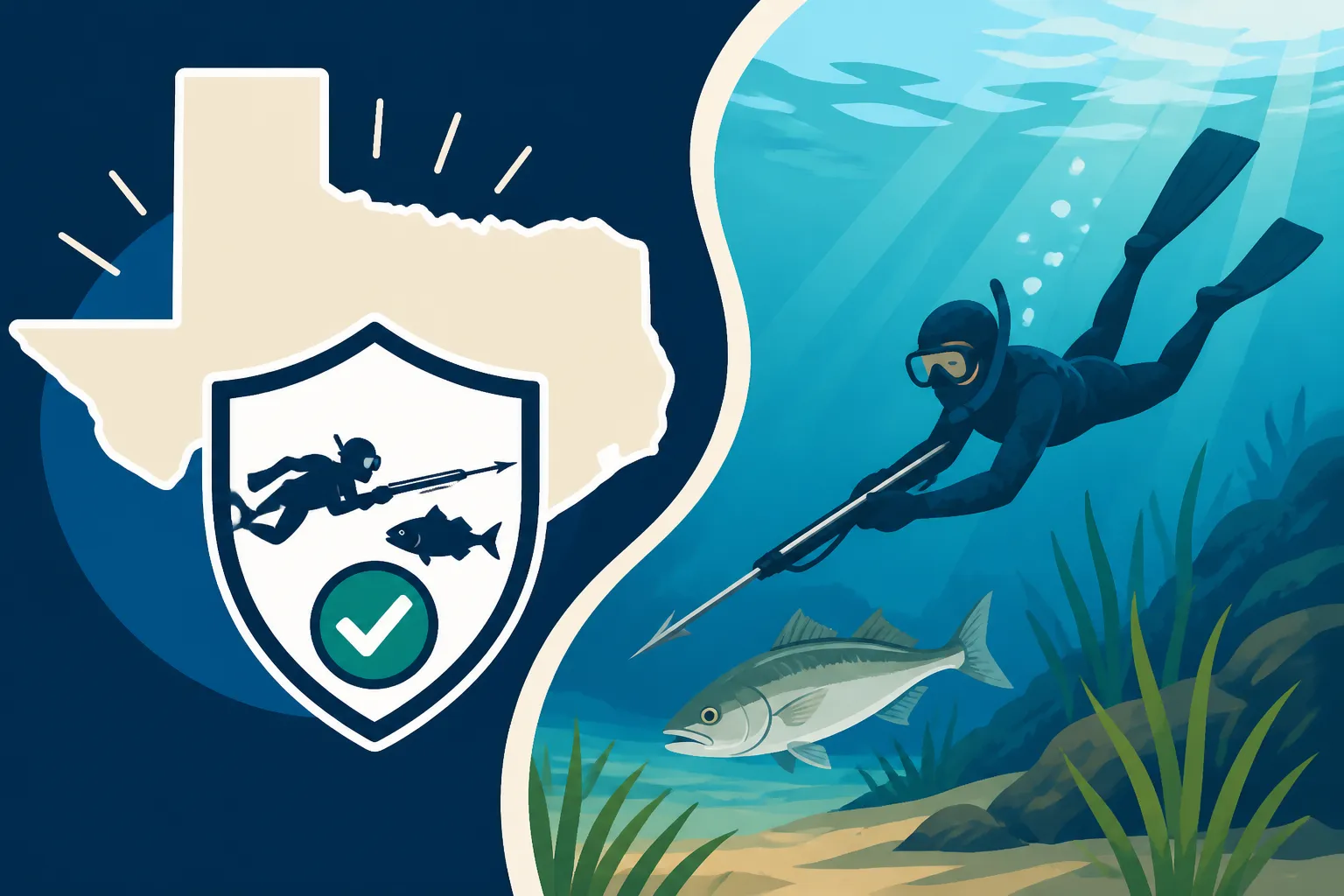
When it comes to spearfishing gear in Texas, the regulations are primarily concerned with ensuring fair chase and preventing the indiscriminate taking of fish. In both freshwater and saltwater, handheld gear is generally preferred and widely legal. This includes simple pole spears, which are essentially long rods with a spear tip, often powered by a rubber sling or band. Hawaiian slings, which are similar but usually have a separate handle for the rubber, are also permitted. For those looking for more power and range, certain types of spearguns, including pneumatic or band-powered models, are allowed. These spearguns can be equipped with reels for managing line, which can be particularly useful when targeting larger, fast-moving fish offshore.
However, there are important caveats. It is generally illegal to use spearguns while on SCUBA gear for the purpose of taking game fish in Texas freshwater. This is a critical distinction many freshwater spearfishermen learn the hard way. In freshwater, you are largely restricted to "skin diving" or "free diving" methods if you intend to harvest game fish with a spear. For non-game or "rough" fish, such as common carp or buffalo, SCUBA use might be permitted, but always verify specific local regulations as rules can vary. For saltwater spearfishing, the use of SCUBA gear with spearguns is generally permitted, especially for offshore trips targeting species like snapper and grouper. Powered spearguns that use explosives or other non-manual propulsion are universally prohibited. Always ensure your gear is in good working order and that any dive flags you use are properly displayed to alert nearby boaters to your presence. Safety first, always!
Species-Specific Rules and Bag Limits
This is where many spearfishermen, especially those new to the sport, can run into trouble. Spearfishing is merely an alternative method of harvest; it does not exempt you from the general bag and length limits that apply to all other forms of fishing in Texas. This means that every single fish you spear must meet the minimum and maximum length requirements for its species, and you cannot exceed the daily bag limit.
For saltwater spearfishing, popular targets include various snapper species (like Red Snapper, Lane Snapper, or Gray Snapper), several types of grouper (Gag, Red, Black), Amberjack, King Mackerel, and Dorado (Mahi-Mahi). Each of these has specific size and bag limits set by TPWD, often varying by season. For instance, Texas Redfish Size and Bag Limits are strictly enforced, and you might find similar detailed regulations for Texas Speckled Trout Bag Limits. Certain species, like the highly prized Red Drum (Redfish) and Spotted Seatrout (Speckled Trout), often have tighter restrictions, or in some cases, might be entirely prohibited from spearfishing in certain areas or during specific times. Always check the current TPWD Outdoor Annual before each trip, as regulations can change. In freshwater, while you can spear rough fish like common carp, grass carp, smallmouth buffalo, or even Texas Alligator Gar (with a special tag required for trophy gar), game fish like Largemouth Bass, Channel Catfish, or Crappie are usually off-limits for spearfishing, or are subject to extremely restrictive conditions (like no SCUBA use). The key takeaway here is that you must identify your target species before you spear it and ensure it's legal. Missing a shot because you're confirming the species is far better than facing a hefty fine.
Restricted Areas and Safety Considerations
Just like with any other outdoor activity, there are places where spearfishing is either prohibited or comes with strict rules, primarily for conservation or public safety. Understanding these restricted areas is crucial for a legal and safe spearfishing trip.
In Texas saltwater, spearfishing is generally prohibited within many jetties, piers, and designated artificial reef zones, especially those specifically managed for recreational fishing and diving without harvest. State parks, national parks, and wildlife refuges along the coast often have their own specific rules, which may include blanket bans on spearfishing or restrict it to certain areas. For example, some areas around Port Aransas or Galveston might have specific zones where spearfishing is not allowed to protect certain fish populations or to ensure diver safety in high-traffic areas. Always look for signage or consult local park rangers if you're unsure.
In freshwater, regulations are often even tighter. Spearfishing is typically prohibited in community fishing lakes, urban ponds, or in rivers and streams that are actively managed for game fish populations. Areas immediately below dams are also frequently off-limits due to safety concerns and fish concentration. Beyond specific prohibitions, general safety is paramount. Always spearfish with a buddy, especially offshore. A properly deployed dive flag is not just a recommendation; it's a legal requirement in many areas to signal your presence to boaters. Wearing brightly colored wetsuits or vests can also increase your visibility. Investing in a good quality dive knife, easily accessible, is also a smart move for safety, allowing you to cut yourself free from entanglements or dispatch a speared fish quickly. You can often find reliable dive knives and other essential safety gear on online platforms like Amazon, ensuring you're prepared for any situation. Remember, knowing the rules helps protect both you and the marine environment.
Freshwater vs. Saltwater Spearfishing Regulations in Texas
The distinctions between freshwater and saltwater spearfishing in Texas are quite significant, not just in terms of the environment and target species, but especially in the regulatory framework. What's perfectly legal in the Gulf can land you in hot water in a state lake, and vice versa. It’s essential to understand these differences to plan your spearfishing adventures responsibly.
Saltwater Spearfishing Deep Dive into the Gulf
Texas offers incredible opportunities for saltwater spearfishing, particularly in the Gulf of Mexico. Once you're beyond the immediate shoreline and into the blue water, the rules generally open up more, allowing for greater freedom in technique, including the use of SCUBA gear. The vast expanses of the Gulf, dotted with natural reefs, sunken structures, and numerous oil and gas platforms, create prime habitat for a wide variety of pelagic and reef fish. These structures act as magnets for fish, offering spearfishermen exciting targets.
Popular spearfishing spots offshore include the Flower Garden Banks National Marine Sanctuary (though strict 'no-take' rules apply to coral and other protected species, fish harvest zones are specific), and around the numerous oil rigs. Many of these rigs attract schools of King Mackerel, Amberjack, snapper, and grouper. For these trips, a robust speargun with a good range and a reel for line management is often preferred. The adrenaline rush of targeting a large Amberjack or a hefty Red Snapper around these deep-water structures is unmatched. Remember, you absolutely need a Texas saltwater endorsement as part of your fishing license to legally spearfish in these waters. Failing to have the proper license or endorsement is a common violation that can lead to significant penalties, as discussed in our article on Penalties for Fishing Without a Texas License. It's also critical to always be aware of your location relative to state and federal waters, as federal regulations often come into play for certain species further offshore, particularly for Red Snapper, which has different seasons and limits in federal waters compared to state waters.
Freshwater Spearfishing Lakes and Rivers
Freshwater spearfishing in Texas presents a very different set of challenges and regulations. While not as widely popular as its saltwater counterpart, it offers unique opportunities for those interested in targeting specific species. The key difference here, as previously mentioned, is the prohibition of using SCUBA gear to take game fish. This means if you're aiming for anything considered a game fish (like a Largemouth Bass or a Catfish), you must do so while free diving or skin diving, holding your breath.
This restriction severely limits the types of fish commonly targeted by spearfishermen in freshwater. Therefore, most freshwater spearfishing efforts are focused on "rough fish" or "non-game fish." These often include common carp, smallmouth buffalo, and various species of gar. Alligator gar, in particular, can be a thrilling target for experienced spearfishermen, especially those with an appropriate Alligator Gar tag. While not as common for spearfishing, the vast networks of rivers like the Trinity or Brazos, and lakes such as Lake Conroe or Lake Livingston, can hold large populations of these rough fish. Equipment typically involves pole spears or smaller spearguns, and often requires a lot of patience and stealth to approach fish in clearer freshwater environments. Always be certain of the species before taking a shot, and confirm any local rules, as some city lakes or small reservoirs might have blanket bans on spearfishing of any kind. Consulting the Texas Freshwater Fishing Regulations is always a good idea before heading out.
Important Considerations for Spearfishing Equipment
Beyond the regulations, having the right gear is crucial for both safety and success in spearfishing. The equipment you choose will largely depend on the type of spearfishing you plan to do (freshwater vs. saltwater, shallow vs. deep, small fish vs. large pelagics).
For starters, a high-quality mask and snorkel are non-negotiable. A good fit prevents leaks and allows for clear vision, which is absolutely vital for target acquisition and situational awareness. Fins are equally important, providing propulsion and maneuverability, especially when free diving or navigating currents. For safety, a dive flag and buoy are legally required and paramount for signaling your presence to boat traffic. You can find durable, brightly colored dive flags and floats on platforms like Amazon, making it easy to comply with safety regulations. A sharp, easily accessible dive knife is not just for dispatching fish; it's a critical safety tool for cutting lines, nets, or other entanglements.
When choosing a speargun, consider the power and range. Pole spears are excellent for smaller fish in shallow water or for quick, close-range shots. Band-powered spearguns offer more power and range, suitable for larger fish or deeper water. If spearfishing offshore, a speargun with a reel is highly recommended to manage the line of a powerful fish, preventing it from spooling you or tangling your gear. Always ensure your speargun is loaded and handled safely, only pointing it at your intended target. Regular maintenance, including rinsing all gear with fresh water after each use and checking bands and shafts for wear, will prolong the life of your equipment and prevent failures when you need it most.
Here's a quick comparison of key differences:
| Feature | Freshwater Spearfishing (Texas) | Saltwater Spearfishing (Texas) |
|---|---|---|
| License | Texas Fishing License + Freshwater Endorsement | Texas Fishing License + Saltwater Endorsement |
| SCUBA Use | Generally prohibited for taking game fish | Generally permitted |
| Primary Targets | Rough fish: Carp, Buffalo, Gar (with tag if needed) | Game fish: Snapper, Grouper, Amberjack, Mackerel, Dorado |
| Common Gear | Pole spears, smaller band spearguns | Band spearguns (often with reels), Hawaiian slings |
| Regulations | Strict on game fish; focus on rough fish | Standard bag/length limits apply to all species |
| Popular Spots | Certain larger lakes, specific river stretches | Offshore oil rigs, natural reefs, Gulf of Mexico |
| Safety | Dive flag recommended; clear water for visibility | Dive flag legally required; strong currents possible |
Common Spearfishing Violations and How to Avoid Them
Even seasoned anglers can sometimes make mistakes or overlook a regulation, leading to unpleasant encounters with game wardens. Spearfishing, with its unique methods, adds a few extra layers of potential pitfalls. Understanding the most common violations is your best defense against inadvertently breaking the law and facing fines or other penalties.
Fishing Without Proper Licensing
This is, by far, the most frequent and easily avoidable violation. As we've discussed, you absolutely need a valid Texas fishing license, along with the correct freshwater or saltwater endorsement, to spearfish legally. Many spearfishermen mistakenly believe that because they are "diving" or using "alternative gear," the standard fishing license rules don't apply. This is simply not true.
The consequences of being caught spearfishing without the proper license can range from a significant fine to confiscation of your gear. Game wardens are highly trained and often patrol popular fishing and diving spots. They will ask to see your license, just as they would a rod-and-reel angler. Imagine being out on a fantastic offshore trip, having a cooler full of beautiful fish, only to have your day ruined by a citation and potential loss of your catch because you forgot to renew your saltwater endorsement or simply didn't realize it was required. It’s not just about the cost of the fine; it's the hassle, the potential court appearance, and the disappointment of a wasted trip. Always double-check your license validity before you leave home. A quick glance at your physical license or a check on the TPWD app takes mere seconds but can save you a world of trouble. Remember, your license is typically valid from September 1st to August 31st of the following year, so be mindful of the renewal date.
Exceeding Bag Limits or Taking Prohibited Species
This violation speaks directly to the core of conservation efforts: protecting fish populations for future generations. Spearfishing is no different from any other method when it comes to adhering to bag and length limits. If the daily bag limit for Red Snapper is four fish per person, you can only spear four Red Snapper, regardless of how many you see or how good your aim is.
The trickier part for spearfishermen can be the immediate identification of species and measurement underwater. It's easy to make a mistake when visibility isn't perfect, or if you're excited about a potential trophy. Taking undersized fish (short of the minimum length) or oversized fish (over the maximum length, especially in slot limits where only certain sizes can be kept) are common infractions. Even more severe is taking a species that is completely protected from spearfishing, like certain game fish in freshwater or specific protected species in marine sanctuaries. For instance, in Texas saltwater, there are strict rules about Texas Flounder Season and Limits, and spearfishing them outside of legal seasons or with the wrong method could lead to significant fines. The best way to avoid this is to thoroughly study the current TPWD Outdoor Annual before each trip. Pay close attention to the species you intend to target, their length requirements, and daily bag limits. When in doubt, let the fish swim away. It's always better to be cautious than to face a violation.
Ignoring Area Restrictions or Gear Rules
This category of violations covers everything from spearfishing in a designated "no-take" zone to using illegal equipment or failing to display proper safety signals. These rules are in place for both conservation and public safety, and ignoring them can have serious repercussions.
Imagine spearfishing near a public swimming beach or a busy boating channel without a dive flag. Not only is it incredibly dangerous, putting yourself and others at risk, but it's also a direct violation of safety regulations. In many areas, a dive flag must be displayed and visible to mark your location, typically within a certain distance of the diver. Failing to do so can result in fines and endanger lives. Similarly, spearfishing in a protected area, such as a state park where it's explicitly prohibited, or within an artificial reef site with specific harvest restrictions, will lead to violations. Freshwater spearfishermen also need to be particularly vigilant about the SCUBA prohibition for game fish, as a game warden observing you spearing a Largemouth Bass while using SCUBA gear will undoubtedly issue a citation. Always know where you're fishing and what the local rules are. Research your chosen spot ahead of time, look for posted signs, and if still unsure, a quick call to the local TPWD office or a park ranger can clarify any ambiguities. Your spearfishing experience should be memorable for the right reasons, not for a preventable run-in with the law.
Disclaimer
The information provided in this guide is intended for general informational purposes only and does not constitute legal advice. Fishing and spearfishing regulations in Texas are subject to change by the Texas Parks and Wildlife Department (TPWD) at any time. It is the sole responsibility of the individual angler to consult the most current official TPWD Outdoor Annual or visit their website directly to ensure compliance with all applicable licensing requirements, bag limits, length limits, gear restrictions, and area-specific regulations before engaging in any fishing or spearfishing activity. Non-compliance may result in penalties, fines, or other legal consequences.