Toledo Bend Reservoir Fishing Guide
Navigating the immense waters of Toledo Bend Reservoir can feel like trying to find a needle in a haystack for even seasoned anglers. This sprawling border lake, a true gem shared between Texas and Louisiana, offers incredible fishing opportunities, but its sheer size and diverse habitats can be overwhelming. This comprehensive guide aims to demystify Toledo Bend, providing you with the knowledge, strategies, and local insights needed to plan a successful and unforgettable fishing adventure, whether you're chasing trophy bass or filling a cooler with crappie.
Understanding Toledo Bend Reservoir: A Giant Among Lakes
Toledo Bend isn't just a lake; it's a massive freshwater sea, a true marvel of engineering and nature. Spanning over 185,000 acres, it's the largest man-made lake in the South and the fifth-largest in the United States. Its scale alone can be intimidating, but understanding its geography and history helps in appreciating its fishing prowess.
The Sheer Scale and History of Toledo Bend
Imagine a lake so vast that it boasts over 1,200 miles of shoreline – that's more coastline than the entire state of California! Formed by the impoundment of the Sabine River, Toledo Bend Reservoir was created in the 1960s primarily for hydroelectric power generation, water conservation, and recreation. The Sabine River Authority of Texas and the Sabine River Authority of Louisiana jointly manage this colossal body of water, making it a unique interstate resource. Its deep timber, expansive hydrilla beds, and countless coves offer an endless variety of fishing scenarios. The reservoir stretches roughly 65 miles long, from the dam near Burkeville, Texas, and Leesville, Louisiana, all the way north to Logansport. It's truly a place where you can explore new water for years and still discover hidden gems.
Why Toledo Bend is a Premier Fishing Destination
Toledo Bend's reputation as a world-class fishing destination isn't just hype; it's consistently ranked among the top bass fishing lakes in the nation, often snagging the coveted number one spot. The abundant forage base, excellent water quality, and diverse aquatic vegetation create an ideal habitat for a multitude of species. For years, it has been a consistent producer of trophy largemouth bass, earning its place in the lore of professional bass fishing circuits like Bassmaster and FLW. Beyond bass, the lake's rich ecosystem supports thriving populations of crappie, catfish, white bass, and sunfish, ensuring there's something for every angler, regardless of their preferred target. The Texas Parks and Wildlife Department (TPWD) and the Louisiana Department of Wildlife and Fisheries (LDWF) work tirelessly to manage the fisheries through stocking programs and habitat conservation, contributing to the lake's sustained productivity.
Navigating the Texas and Louisiana Sides
One of the most distinctive aspects of Toledo Bend is its shared jurisdiction. The reservoir literally sits on the border between Texas and Louisiana, which means anglers need to be aware of reciprocal licensing agreements. Thankfully, for residents of either state, a valid fishing license from either Texas or Louisiana allows you to fish anywhere on the main body of Toledo Bend, regardless of which side you launch from or which state's waters you're in. This convenience is a huge bonus, eliminating the need to buy two separate licenses for the same body of water.
However, there are crucial caveats:
- This reciprocal agreement generally applies only to the main body of the reservoir. If you venture into the tributaries or smaller, landlocked creeks and bayous that are wholly within one state, you'll need the appropriate license for that state. Always check the specific regulations.
- Non-residents still need to purchase a non-resident license from either Texas or Louisiana, but then they too benefit from the reciprocal agreement on the main lake. You can learn more about specific requirements by checking out our guide on Texas Fishing License Requirements Explained.
- While the license itself is reciprocal, remember that bag and length limits are typically uniform across the entire lake for most major species, but it's always wise to consult the latest TPWD and LDWF regulations before heading out.
Key access points on the Texas side include areas around Pendleton, Six Mile, and Many, while the Louisiana side offers numerous ramps near Anacoco, Zwolle, and Toledo Bend State Park.
Top Fish Species to Target in Toledo Bend
Toledo Bend is a diverse fishery, a veritable smorgasbord for anglers. While it’s undeniably famous for its bass, many other species offer thrilling battles and delicious table fare. Knowing what's biting when and where is key to a successful trip.
Legendary Largemouth Bass Fishing
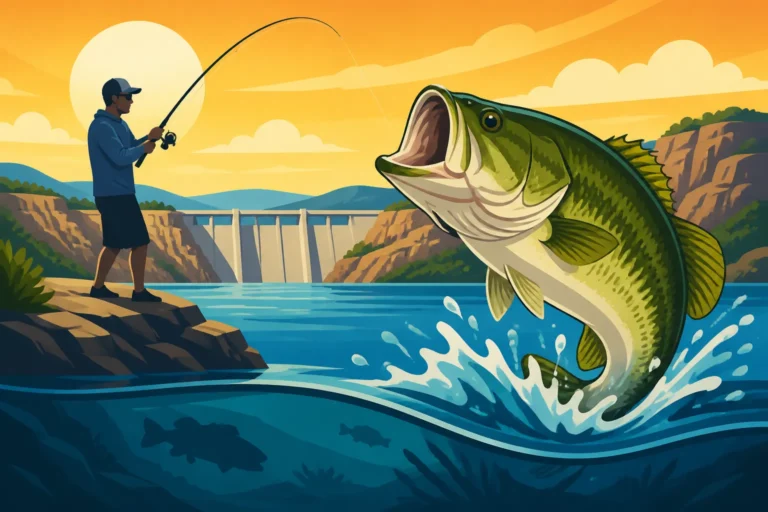
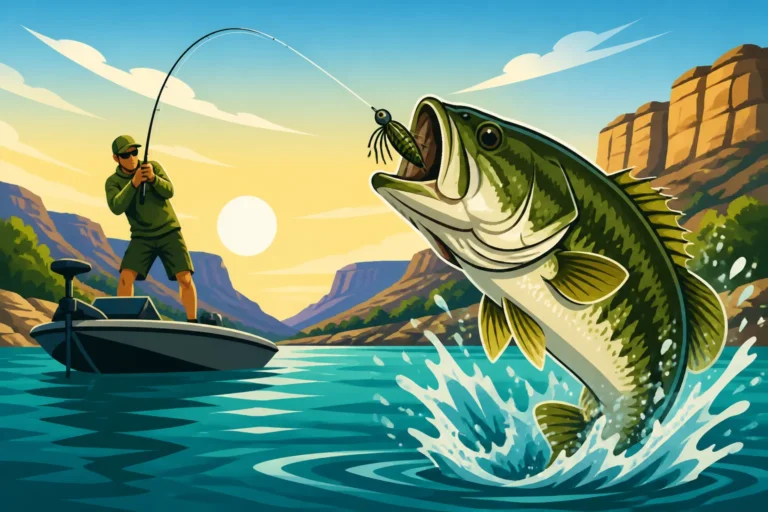
If there's one fish that defines Toledo Bend, it's the largemouth bass. This lake consistently produces some of the biggest and healthiest bass in the country. The abundance of submerged timber, vast hydrilla and coontail moss beds, and deep creek channels create perfect ambush points for these apex predators. Anglers frequently land bass in the 5-8 pound range, with double-digit giants always a possibility. The lake has been a significant contributor to the ShareLunker program, with many entries caught here, showcasing its trophy potential.
During the spring spawn, massive females move into the shallow pockets and coves, offering incredible sight-fishing opportunities. As the water warms in summer, bass often retreat to deeper structure, like ledges and humps, or seek refuge in dense hydrilla mats. Fall sees them scatter and feed aggressively, chasing baitfish in open water and around cover, while winter fishing typically means targeting deep structure with slower presentations. Understanding Texas Largemouth Bass Length Limits is crucial for any angler hoping to keep a fish or two for dinner, or perhaps more importantly, to correctly record a potential ShareLunker.
Abundant Crappie and Catfish Opportunities
While bass grab the headlines, Toledo Bend is also a phenomenal crappie fishery, often referred to as "sac-a-lait" by Louisiana locals. Both white and black crappie thrive here, providing excellent action, especially during the cooler months. In spring, crappie move into shallow brush piles and cypress trees to spawn, making them accessible to even bank anglers. During summer, they suspend over deeper brush piles or migrate to the main lake channels.
Catfish, including channel, blue, and flathead, are also plentiful and offer consistent action. The Sabine River channels, flooded timber, and deeper holes are prime catfish territory. Anglers often target them with traditional bottom-fishing techniques using a variety of baits. For those looking to fill a cooler with delicious fillets, crappie and catfish are excellent choices. Be sure to familiarize yourself with Texas Crappie Bag Limits and Texas Catfish Bag Limits to ensure you're fishing legally and sustainably.
Other Popular Catches: White Bass and Sunfish
Toledo Bend also offers fantastic opportunities for other species. White bass, known for their aggressive schooling behavior and strong fights, provide fast action, especially during their spring spawning runs up the major feeder creeks and rivers. These hard-fighting fish are a blast to catch on light tackle and are excellent table fare. You'll often find them chasing baitfish near the surface, indicated by diving birds or frenzied surface activity.
Sunfish, including bluegill and redear sunfish, are another family-friendly target. They're abundant in shallow, protected coves and around docks, making them perfect for kids or beginner anglers. A simple worm under a bobber is usually all it takes to entice a bite. While not as glamorous as a trophy bass, these panfish offer consistent entertainment and are a great way to introduce someone to the joys of fishing.
Here’s a quick overview of some of the main species and their general characteristics on Toledo Bend:
| Species | Primary Season | Typical Baits/Lures | Average Size (lbs) |
|---|---|---|---|
| Largemouth Bass | Year-round, Peak Spring/Fall | Plastic worms, crankbaits, jigs, topwaters | 2-8 |
| White Crappie | Spring, Fall, Winter | Live minnows, small jigs | 0.5-1.5 |
| Black Crappie | Spring, Fall, Winter | Live minnows, small jigs | 0.5-1.5 |
| Channel Catfish | Year-round, Peak Summer | Cut bait, stink bait, shrimp | 1-10 |
| Blue Catfish | Year-round, Peak Winter | Cut bait, shad | 5-30+ |
| Flathead Catfish | Year-round, Peak Summer | Live perch, sunfish | 10-50+ |
| White Bass | Spring, Summer | Small spoons, spinners, swimbaits, minnows | 1-3 |
| Bluegill/Sunfish | Spring, Summer | Worms, crickets, small artificial flies | 0.25-0.75 |
Essential Fishing Techniques for Toledo Bend
Toledo Bend's vastness and variety of habitats mean that a one-size-fits-all approach won't cut it. Adapting your techniques to the conditions, target species, and time of year is crucial for consistent success.
Mastering Bass Techniques on Toledo Bend
Toledo Bend is a laboratory for bass fishing techniques. The sheer amount of cover – from hydrilla fields to flooded timber and deep ledges – means you need a diverse arsenal.
- Soft Plastics: The Texas rig and Carolina rig are absolute staples here. For fishing dense hydrilla or thick brush, a Texas-rigged creature bait or worm (like a Berkley Power Worm or Zoom Speed Worm) with a heavy bullet weight is perfect for punching through cover. For fishing deeper points or ledges, a Carolina rig with a long leader allows your bait to float naturally above the bottom, mimicking a fleeing baitfish. Understanding how to fish a Texas rig is foundational for success on this lake.
- Crankbaits and Spinnerbaits: These are excellent for covering water quickly. Deep-diving crankbaits (think Strike King 6XD or Norman DD22) are deadly on offshore ledges and creek channels, especially when bass are schooling. Shallow-running crankbaits and spinnerbaits (such as those from Booyah or War Eagle) excel around grass lines and flooded timber. Match your retrieve to the fish's mood and the water depth.
- Topwater and Frogs: When bass are aggressive and feeding near the surface, especially in low light conditions or over hydrilla mats, topwater lures like Zara Spooks or Pop-Rs can trigger explosive strikes. Hollow-bodied frogs (like those from SPRO or Livetarget) are unbeatable for working over dense vegetation, where other lures would snag. The thrill of a bass blowing up on a frog bait is unmatched!
Successful Strategies for Crappie and Catfish
Crappie and catfish fishing require different approaches, but Toledo Bend offers excellent opportunities for both.
- Crappie: In spring, crappie congregate in shallow areas. Look for them around cypress trees, brush piles, and submerged timber. Vertical jigging with small tube jigs (1/16 to 1/8 oz) or live minnows under a bobber are highly effective. As summer heat sets in, crappie move deeper. "Spider rigging," where multiple rods are deployed from the front of the boat, presenting jigs or minnows at various depths, is a popular and productive method for covering water and finding schools. In winter, they often school up over deep structure in the main lake channels.
- Catfish: For channel and blue catfish, bottom fishing with cut bait (shad or potent stink baits like Catfish Charlie) is the most common and effective technique. Look for deeper holes, river bends, and areas with current. For flathead catfish, which prefer live bait, try fishing with live bream or perch near submerged timber or log jams, especially at night. Many local anglers also employ trotlines and juglines, but be sure to check specific regulations regarding the number of hooks and proper tagging before using these methods. The article on Texas Trotline and Jugline Rules provides more detailed information.
Adapting to Seasonal Patterns and Weather
Toledo Bend's fishing patterns are heavily influenced by the seasons and weather.
- Spring (March-May): This is prime time for trophy bass as they move to spawn. Look for them in shallow pockets, on beds, and around newly emerging hydrilla. Crappie also move shallow. Water temperatures are key indicators. Learn more about Texas Bass Spawning Season Guide.
- Summer (June-August): The heat pushes many fish, especially bass, to deeper water. Early mornings and late evenings offer topwater action, but during the day, focus on ledges, humps, and deep grass lines with Texas rigs, Carolina rigs, and deep crankbaits. Catfish action is excellent. Staying safe and productive in the heat is covered in How to Fish in Hot Texas Summers.
- Fall (September-November): Fish become highly active as they feed up for winter. Bass scatter, chasing baitfish in open water and around various types of cover. Crankbaits, spinnerbaits, and swimbaits are effective. Crappie fishing picks up in creek channels.
- Winter (December-February): This is often a tough but rewarding time. Bass hold tight to deep structure, requiring slow, precise presentations with jigs, spoons, and Alabama rigs. Big blue catfish can be caught on deep river bends with cut bait.
Always check the local weather forecast, especially for cold fronts, which can significantly impact fish behavior.
Best Fishing Spots and Access Points on Toledo Bend
With a lake this size, knowing where to start is half the battle. Certain areas consistently produce, while others offer excellent access for different types of fishing.
Key Bass Hotspots and Productive Coves
Toledo Bend is dotted with legendary bass fishing spots.
- Housen Bay (Texas Side): This is arguably the most famous area on Toledo Bend for a reason. Its vast hydrilla beds, scattered timber, and numerous creek channels make it a bass haven. From shallow spawning flats to deep water structure, Housen offers it all. Anglers often target the grass lines with spinnerbaits and crankbaits, or punch through matted hydrilla with heavy Texas rigs.
- Six Mile Creek (Texas Side): Another prolific area, especially during the spring and fall. Six Mile features extensive timber, brush piles, and points that hold bass year-round. It's a great area for crankbaits and jigs.
- Indian Mounds (Louisiana Side): This historical area offers unique structure with submerged mounds and old timber. It's known for holding schooling bass and can be excellent for deep cranking or working soft plastics on ledges.
- The Northern End: Further north, where the Sabine River enters the lake, the water can be more stained, and the fishing often revolves around river bends, oxbows, and flooded timber. This area can be fantastic for both bass and catfish.
- Deep Timber and Ledges: Throughout the main lake, particularly in the lower two-thirds, countless acres of standing timber and deep ledges hold fish. These require good electronics and precise boat positioning to effectively fish. Areas around the dam and main river channels are often productive.
Public Boat Ramps and Bank Fishing Access
Access to Toledo Bend is excellent, with numerous public ramps on both the Texas and Louisiana sides.
- Texas Side: Popular ramps include those at Pendleton Bridge, Six Mile, Huxley Bay Marina, and San Augustine Park. These often have ample parking, restrooms, and sometimes even bait and tackle shops.
- Louisiana Side: Good public access can be found at North Toledo Bend State Park, South Toledo Bend State Park, Cypress Bend Park, and numerous private marinas around Zwolle and Many. North Toledo Bend State Park, in particular, offers fantastic amenities including cabins, campgrounds, and fishing piers.
- Bank Fishing: While much of Toledo Bend fishing is boat-centric, there are opportunities for bank fishing, especially at the state parks and some public access points. Fishing piers are great for crappie and sunfish, and certain areas allow for wade fishing, especially in the northern reaches of the lake during low water, though this is less common than on smaller lakes.
When planning your trip, consider using services like FishingBooker to explore available fishing guides and boat rentals, which often includes information on launch points and local services.
Exploring the Reservoir's Unique Structure and Cover
Understanding Toledo Bend's underwater landscape is key to consistent success.
- Hydrilla and Other Vegetation: Massive hydrilla fields are perhaps the most iconic feature of Toledo Bend. These underwater forests provide incredible cover, oxygen, and forage. Learning to fish the edges, holes, and humps within these mats is crucial. Coontail moss and lily pads also offer excellent cover in shallower areas.
- Flooded Timber: Before the lake was impounded, much of the area was heavily forested. Thousands of acres of standing timber remain, especially in the upper and middle portions of the lake. This creates endless vertical cover for fish, but also presents significant navigation hazards. Always exercise extreme caution when navigating timbered areas, especially in low light or unfamiliar waters.
- Humps and Ledges: The old Sabine River channel and its tributaries carved out distinct humps, ledges, and points that become major fish highways and congregating areas, especially in deeper water. Electronic fish finders with good mapping capabilities are indispensable for locating these subtle but critical structures.
- Brush Piles: Both natural and man-made brush piles dot the lake, acting as magnets for crappie and bass. Local guides often maintain their own secret brush piles, and finding natural ones can be a game-changer.
- Roadbeds and Foundations: Old roadbeds, bridge abutments, and even foundations of old homesteads are submerged throughout the lake, offering unique hard structure that fish relate to.
Gear and Tackle Recommendations for Toledo Bend
Having the right gear for Toledo Bend can make all the difference, especially when you're targeting specific species or dealing with its unique challenges like heavy cover.
Rods, Reels, and Line for Different Species
Versatility is key, but specialized setups will put more fish in the boat.
- For Largemouth Bass:
- Heavy Cover (Flipping/Punching): A heavy to extra-heavy action baitcasting rod (7' to 7'6") paired with a high-speed baitcasting reel (7.1:1 or higher gear ratio) is essential for quickly getting fish out of thick hydrilla or timber. Spool up with 50-65 lb braided line for maximum strength and sensitivity.
- All-Around/Jig Fishing: A medium-heavy fast action baitcasting rod (6'10" to 7'4") with a versatile baitcasting reel (6.4:1 gear ratio) works well for jigs, Texas rigs, and medium crankbaits. Fluorocarbon line (15-20 lb) is a good choice for its low visibility and sensitivity.
- Topwater/Spinnerbaits: A medium to medium-heavy fast action rod (6'6" to 7'0") with a baitcasting reel spooled with 15-20 lb monofilament or braided line is ideal. Mono floats, which is great for topwaters, and braid allows for long casts and quick hooksets with spinnerbaits.
- For Crappie:
- Light Spinning Rods: A light to ultralight spinning rod (6' to 7') with a small spinning reel (1000-2500 size) spooled with 4-6 lb monofilament or braided line is perfect for delicate crappie bites.
- For Catfish:
- Heavy Action Rods: Medium-heavy to heavy action spinning or baitcasting rods (7' to 9') are needed for battling powerful catfish. Pair them with robust reels capable of holding 20-50 lb monofilament or braided line, depending on the size of catfish you anticipate. For trotlines or juglines, even heavier lines are often used. Consider the Best Rods for Texas Catfish Fishing for more specific recommendations.
Must-Have Lures and Baits for Toledo Bend
Your tackle box for Toledo Bend should be well-stocked.
- Bass Lures:
- Soft Plastics: Green pumpkin, junebug, black and blue, and watermelon red are perennial favorites for worms (Zoom Trick Worm, Berkley Power Worms), creature baits (Reaction Innovations Sweet Beaver), and senkos. Don't forget an array of weights (1/4 oz to 1 oz) for Texas and Carolina rigs.
- Crankbaits: Deep divers in shad, crawfish, and bright chartreuse patterns are crucial for ledges. Medium and shallow runners in similar colors are great for grass and timber.
- Jigs: Flipping jigs (black and blue, green pumpkin) with matching trailers are deadly in wood and grass. Football jigs are good for deeper rock.
- Topwaters: Spooks, Pop-Rs, and hollow-bodied frogs (black, white, green) are essential.
- Spinnerbaits/Chatterbaits: White, chartreuse, and shad patterns are effective.
- Crappie Baits: Live minnows are king. Small tube jigs (chartreuse, white, black/chartreuse), tiny curly tail grubs, and spider jigs are also highly productive.
- Catfish Baits: Cut shad, chicken liver, prepared stink baits (like CJ's Punch Bait or Catfish Pro), and live perch or sunfish are top choices. Our article on Best Bait and Lures for Texas Fishing offers more general tips.
Essential Electronics and Safety Equipment
Given Toledo Bend's size and hazards, reliable electronics and safety gear aren't optional; they're vital.
- Fish Finders and GPS: A quality fish finder with side imaging and down imaging is indispensable for locating structure, baitfish, and hidden brush piles. Integrated GPS with detailed lake maps (like those from Lowrance, Humminbird, or Garmin) will help you navigate safely through timber and return to productive spots. Toledo Bend has vast amounts of flooded timber, making GPS mapping a lifesaver.
- Trolling Motor: A reliable trolling motor (Minn Kota Ultrex or Garmin Force are popular choices) with spot-lock technology is a game-changer for precise boat positioning, especially when fishing deep structure or holding a position in the wind.
- Life Jackets: Texas law requires specific life jacket rules, including for children under 13. Always have enough U.S. Coast Guard-approved life jackets for everyone on board. It’s wise for everyone to wear them, especially in rough water or during high-speed travel. Check our guide on Texas Boat Safety Equipment Requirements for a full checklist.
- Other Safety Gear: A fully charged cell phone, first-aid kit, whistle/horn, fire extinguisher, paddle, anchor, and appropriate navigation lights are all mandatory or highly recommended. Tell someone your float plan before you go.
- Coolers and Livewells: A good cooler (like a YETI or RTIC) is essential for keeping drinks cold and your catch fresh in the Texas heat. For bass anglers, a well-aerated livewell is crucial for keeping fish healthy for weigh-ins or release.
Navigating Regulations and Licensing on Toledo Bend
Understanding the rules and regulations is paramount for a legal and enjoyable fishing trip on Toledo Bend. Since it's an interstate lake, there are unique considerations that blend both Texas and Louisiana laws.
Understanding Reciprocal Fishing License Rules
As mentioned, the reciprocal agreement between Texas and Louisiana is a huge convenience for anglers on Toledo Bend. Essentially, if you have a valid resident license from either state, you can fish the entire main body of the reservoir. The same applies to non-residents who purchase a non-resident license from either state.
However, it bears repeating: this reciprocity generally applies only to the main Toledo Bend Reservoir itself. If you decide to explore feeder creeks, rivers, or any other body of water that is wholly within the boundaries of either Texas or Louisiana and not considered part of the main lake, you will need the specific license for that state. Always double-check the latest regulations published by the Texas Parks and Wildlife Department (TPWD) and the Louisiana Department of Wildlife and Fisheries (LDWF) to ensure you are fully compliant. For detailed information, consult our guide on Texas-Louisiana Reciprocal Fishing License Rules. This article lays out the specifics of who needs what and when, preventing common misunderstandings.
Bag and Length Limits for Key Species
While the licensing is reciprocal, the bag and length limits for various species are typically consistent across the entire lake, but it is always vital to verify the most current regulations as they can change season to season. This ensures conservation and sustainable fishing practices.
- Largemouth Bass: Toledo Bend often has a protective slot limit or minimum length limit to promote the growth of trophy bass. For instance, common regulations might be a 14-inch minimum length limit with a daily bag limit of 5 fish. Any bass caught within a certain slot (e.g., 14-21 inches) might have to be immediately released, allowing only fish below or above that slot to be kept, or perhaps a one-fish-over-the-slot rule. Always check the current year's digest.
- Crappie: Generally, crappie (white and black combined) will have a daily bag limit of 25 fish, with a minimum length limit of 10 inches. This encourages anglers to keep larger, healthier fish.
- Catfish: Bag limits for channel and blue catfish are usually quite generous, often around 25 combined, with no minimum length. Flathead catfish typically have a smaller bag limit (e.g., 5 fish) and a minimum length (e.g., 18 inches).
- White Bass: These prolific fighters typically have a generous bag limit, often 25 fish, with a 10-inch minimum length.
These are general examples, and official regulations must always be confirmed through the latest TPWD Outdoor Annual or LDWF Fishing Regulations. Penalties for fishing without a license or violating limits can be significant, so understanding these rules is critical before you even cast a line. For information on how to obtain your license, our guide on How to Get a Texas Fishing License is a good starting point.
Boating Regulations and Safety Considerations
Toledo Bend is a large, busy lake, especially during peak fishing seasons and holidays. Adhering to boating safety regulations is not just about avoiding fines; it's about protecting yourself and others.
- Navigation: Pay close attention to navigation markers, especially when traversing timbered areas. Use your GPS and mapping diligently. Many areas, particularly in the northern reaches, are marked with "stump fields" or "no wake zones."
- Speed Limits: While much of the lake is open, there are speed limits in certain coves, marinas, and designated areas. Be aware of these and always operate at a safe speed, especially when visibility is low or boat traffic is heavy.
- Alcohol and Boating: Operating a boat under the influence of alcohol (Boating While Intoxicated – BWI) is illegal and carries severe penalties, similar to DWI on the road. Always have a sober operator.
- Required Equipment: Beyond life jackets, ensure your boat has all other legally required safety equipment: a whistle or horn, fire extinguisher, navigation lights, and a throwable flotation device. These are standard across both Texas and Louisiana waters.
- Weather Awareness: Toledo Bend can get rough quickly. High winds can turn a calm day into a white-knuckle ride on this massive reservoir. Always check the weather forecast before heading out, and be prepared to seek shelter if storms or high winds develop. A clear understanding of Texas Boat Safety Equipment Requirements will help you prepare thoroughly.
Planning Your Toledo Bend Fishing Trip
A successful trip to Toledo Bend isn't just about what happens on the water; it's also about good planning off the water. From accommodations to guides, a little preparation goes a long way.
Choosing Accommodations and Local Services
Toledo Bend offers a wide range of options, whether you're looking for rustic charm or modern amenities.
- Marinas and Lodges: Throughout the lake, especially on the Texas side around Six Mile and Pendleton, and on the Louisiana side near Zwolle and Many, you'll find numerous marinas that offer boat ramps, fuel, bait, tackle, and often lodging. Many resorts and fishing lodges cater specifically to anglers, providing cabins, guided trips, and even fish cleaning stations. Popular spots include Toledo Bend Resort, Cypress Bend Resort, and Fin & Feather Resort.
- RV Parks and Campgrounds: If you prefer camping, both North and South Toledo Bend State Parks on the Louisiana side, as well as several private RV parks on both sides, offer excellent facilities. These often include full hookups, bathhouses, and convenient access to fishing.
- Local Bait and Tackle Shops: Don't forget to visit local bait and tackle shops. Places like Toledo Town and Tackle or B&L Bait and Tackle are invaluable resources. Not only can you stock up on live bait and specialized lures, but the staff often provides the most up-to-date fishing reports and local tips – knowledge that can be priceless. They'll know what's biting, where, and on what.
Hiring a Professional Fishing Guide
For many, especially first-timers or those looking to learn the nuances of Toledo Bend, hiring a professional fishing guide is an excellent investment.
- Benefits of a Guide: A local guide brings years of experience and intimate knowledge of the lake. They know the current patterns, secret spots, and what baits are working. They can save you countless hours of searching and experimenting, putting you on fish quickly. Guides also provide all the necessary gear, meaning you don't have to worry about bringing your own extensive tackle. They often have top-of-the-line boats and electronics, providing an unparalleled fishing experience.
- What to Look For: When choosing a guide, look for someone with extensive experience on Toledo Bend. Ask about their specialties (bass, crappie, catfish), their rates, and what's included (tackle, bait, fish cleaning). Don't hesitate to ask for references or check online reviews. Websites like FishingBooker are a fantastic resource for finding reputable, licensed guides who specialize in Toledo Bend. They allow you to browse profiles, check availability, and read reviews from other anglers, making the booking process seamless. This is a great way to ensure you're getting a knowledgeable captain for your adventure.
- Learning Opportunity: Beyond just catching fish, a good guide will teach you about the lake, its structure, and effective techniques. This educational aspect can dramatically improve your skills for future trips.
Best Time of Year for a Memorable Trip
While Toledo Bend offers year-round fishing, certain seasons excel for specific species or experiences.
- Spring (March-May): Unquestionably the prime time for trophy largemouth bass, especially during the spawn. The weather is generally pleasant, and crappie fishing is also excellent as they move shallow. This is often the busiest time on the lake.
- Summer (June-August): While the heat can be intense, summer offers fantastic early morning and late evening topwater action for bass. Deep-water patterns are productive during the day. Catfishing is at its peak, and white bass are often schooling. Be prepared for the heat and stay hydrated.
- Fall (September-November): A fantastic season for active bass as they feed aggressively. Crappie fishing picks up again, and the cooler temperatures make for a more comfortable day on the water. The changing foliage around the lake adds to the scenic beauty.
- Winter (December-February): Often overlooked, winter can provide incredible fishing for big blue catfish and deep-water bass. The lake is far less crowded, offering a peaceful experience. While the weather can be chilly, bundled up anglers can be handsomely rewarded.
Ultimately, the "best" time depends on your target species and preferences. Regardless of when you visit, Toledo Bend Reservoir promises an exceptional angling experience, cementing its status as one of the best places to fish in Texas.
Disclaimer
Fishing conditions and regulations can change rapidly. While this guide provides comprehensive information based on current knowledge and typical patterns, it is crucial for anglers to always verify the latest rules and conditions before heading out. Always consult the official websites of the Texas Parks and Wildlife Department (TPWD) and the Louisiana Department of Wildlife and Fisheries (LDWF) for the most up-to-date regulations, fishing reports, and safety alerts. Fish responsibly, respect wildlife, and prioritize safety on the water.