Texas Bass Spawning Season Guide
There's nothing quite like the anticipation of spring fishing in Texas, but also nothing quite as frustrating as feeling like you've missed the boat on the bass spawn. Many anglers struggle to pinpoint the exact window when those lunker largemouths move shallow, creating a sense of urgency and sometimes, missed opportunities. This comprehensive guide is designed to cut through the guesswork, offering you a detailed look into the nuances of the Texas bass spawning season, from understanding the biological triggers to mastering the techniques that will help you find and catch those elusive big bass during this critical time.
Understanding the Texas Bass Spawning Cycle
The bass spawn isn't just an arbitrary event on the calendar; it's a fundamental part of the largemouth bass's life cycle, driven by an ancient instinct to reproduce and ensure the survival of their species. For us anglers, it's one of the most exciting times of the year, offering unique opportunities to target some of the biggest fish in the lake. But to truly capitalize on it, we first need to understand the 'why' and 'how' behind it all.
The Biological Imperative: Why Bass Spawn
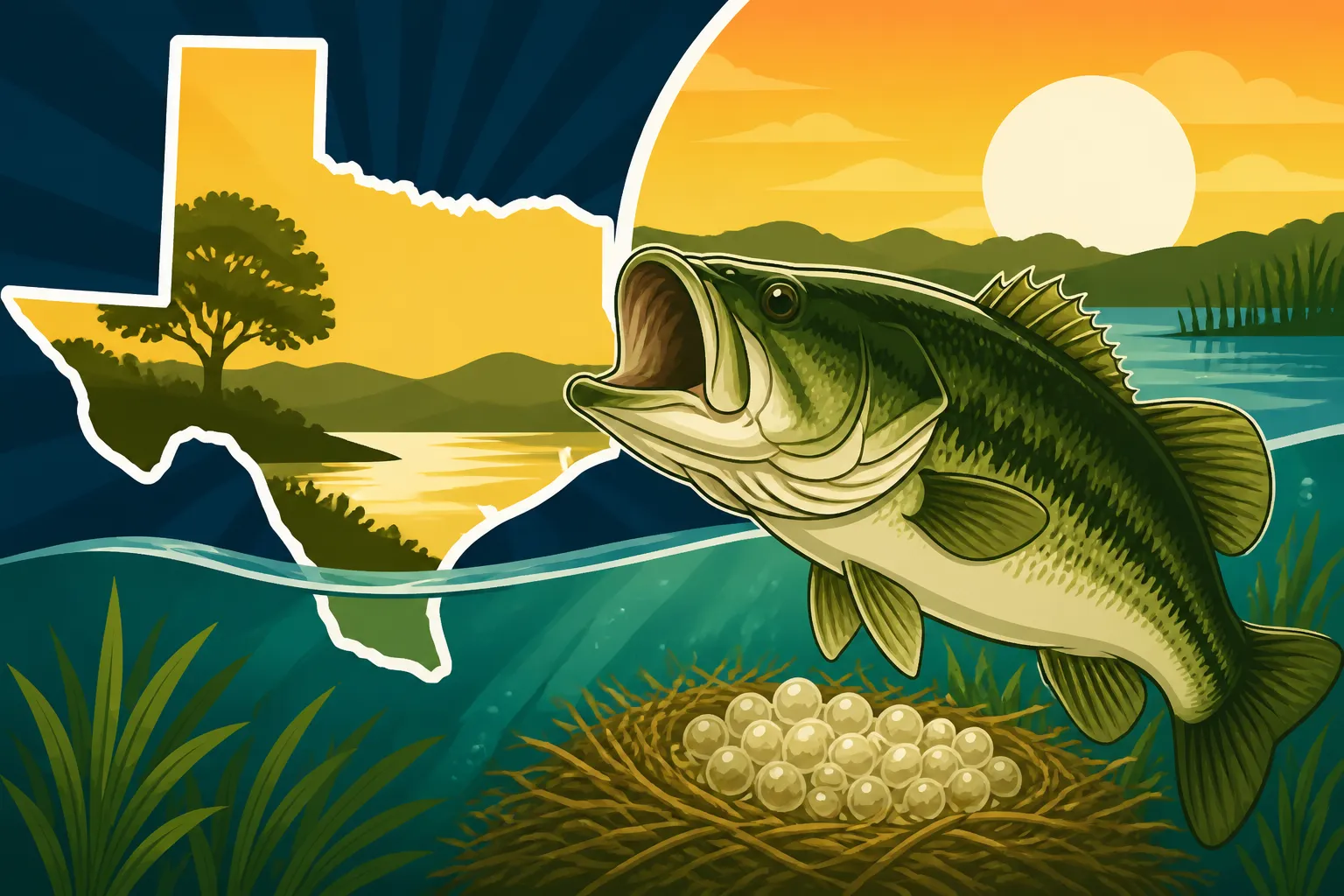
Think of the bass spawn as nature's ultimate family planning. When conditions are just right, male and female largemouth bass are compelled to reproduce. This isn't just about making more fish; it's about passing on their genetics and maintaining a healthy population. The process typically involves the male bass building a "bed" – a cleared, circular depression on the lake bottom, often near some form of cover. Once the bed is ready, he'll entice a female to lay her eggs there. She might lay tens of thousands of eggs, which the male then fertilizes. His job isn't done there, though; he's a fiercely protective father, guarding the eggs from predators until they hatch and even defending the fry for a short period afterward. This entire cycle is meticulously timed by environmental cues, ensuring the highest chance of survival for the new generation.
Life Cycle Overview: From Eggs to Fry
Once the eggs are laid and fertilized, the male bass stays vigilant, fanning the eggs to keep them oxygenated and free from silt, and chasing off any potential threats like bluegill or crawfish. Depending on the water temperature, the eggs typically hatch within 2 to 10 days. These newly hatched fish, called sac fry, are tiny and transparent, still getting their nutrients from a yolk sac. After a few more days, they become free-swimming fry, resembling miniature versions of adult bass. The male bass will continue to protect these small schools of fry for a week or two, sometimes even longer, until they're large enough to disperse and forage on their own. It's a remarkably intricate and crucial period, laying the groundwork for the future health of our favorite fisheries.
Impact on Angling: Why Anglers Care So Much
For many of us, the bass spawn represents the best chance of the year to catch a truly giant largemouth. Why? Because the biggest females, heavy with eggs, move shallow and become more predictable in their locations. They're often visible on their beds, offering a sight-fishing challenge that's both thrilling and infuriating. The pre-spawn period, leading up to this, sees bass gorging themselves, building energy reserves, making them extremely aggressive and willing to chase down a variety of baits. Even post-spawn, as the females recover and males guard fry, there are unique patterns to exploit. Understanding these phases means you're not just casting randomly; you're strategically targeting fish based on their natural instincts. It's a time when many anglers dream of landing that trophy bass, perhaps even one worthy of the Texas ShareLunker Program Explained.
When Does Bass Spawning Season Really Happen in Texas?
Ah, the million-dollar question: "When exactly is the spawn?" If only it were as simple as marking a single date on the calendar! The truth is, Texas is a massive state with diverse climates, and the bass spawn is a fluid event, highly dependent on specific environmental cues that can vary dramatically from one region to another, and even from one lake to the next. It's why one buddy might be catching bedded bass on Lake Fork while another is still throwing jerkbaits on a North Texas lake, hoping for a pre-spawn bite.
Geographical Variations: North vs. South Texas
Texas bass don't all get the same memo at the same time. The further south you go, the earlier the spawn typically begins. In extreme South Texas, particularly in reservoirs like Falcon Lake or Amistad Reservoir, you might see the very first signs of bass moving onto beds as early as late January or early February during a warm spell. These fish are usually triggered by sustained periods of warmer weather, leading to rising water temperatures. As you move north, through the central and eastern parts of the state, the spawn progressively shifts later. Lakes near Houston, Austin, or San Antonio might see their primary spawn in late February through March. Up in North Texas, around the Dallas-Fort Worth area, the main event often doesn't kick off until late March or even early April, extending into May in some years. This means if you're chasing the spawn, you could technically follow it north for months if you had the time and resources!
Typical Timing Windows: Early, Mid, and Late Spawn
Within each region, the spawn itself isn't a single "on-off" switch. It's usually a prolonged period that can be broken down into early, mid, and late phases.
- Early Spawn: This is when the first adventurous bass, often smaller males or pioneering females, move up to check out potential bedding areas during brief warm fronts. Water temperatures might be just kissing that critical range, maybe 58-62 degrees Fahrenheit. These fish are often shy and easily spooked, and the numbers are still relatively low. This phase is usually brief and can be interrupted by cold fronts.
- Mid-Spawn (The Main Event): This is the peak, when the majority of the bass population moves shallow to reproduce. Sustained warm weather and stable water temperatures, typically in the 62-70 degree range, get the party started. You'll see beds everywhere, and the activity is much more widespread. This is often when the biggest females are most vulnerable as they move up and down to lay eggs. This is the period most anglers think of when they talk about What month do bass spawn in Texas.
- Late Spawn: As the main event winds down, there are still some stragglers – often younger females or those who waited for more stable conditions – that haven't spawned yet. The water might be getting warmer, pushing into the 70s. These fish can be a bit harder to find, as many of the prime bedding areas might be vacated, but there are still opportunities for savvy anglers.
Historical Data and Forecasts: Using Resources Like TPWD
Given these variations, how can you know when to hit your favorite lake? The Texas Parks and Wildlife Department (TPWD) is an invaluable resource. They conduct regular fish surveys, monitor water temperatures, and often provide Texas fishing reports for various lakes. Many local tackle shops and fishing guides also keep incredibly accurate records year after year. Websites like Texas Fishing Forum or other dedicated fishing communities often have real-time reports from anglers on the water. Paying attention to these resources, alongside keeping an eye on long-range weather forecasts, can give you a significant advantage in predicting the spawn. Remember, while historical data gives you a good baseline, Mother Nature always has the final say. A sudden cold snap can delay the spawn by weeks, while an unusually warm winter can kick it off early.
Key Factors Influencing the Spawn
Beyond simply "springtime," several specific environmental cues act as the green light for bass to begin their annual reproductive ritual. Understanding these triggers isn't just academic; it's essential for anticipating bass movements and refining your fishing strategy. It’s what separates consistent anglers from those who only get lucky.
The Critical Water Temperature Trigger
This is, without a doubt, the single most important factor. Largemouth bass are cold-blooded creatures, meaning their metabolism and behavior are directly linked to water temperature. For bass to initiate spawning, the water temperature needs to reach a sustained range, generally between 60 to 70 degrees Fahrenheit. The sweet spot for peak spawning activity is often considered to be around 62 to 68 degrees. Below 60, most bass are still in pre-spawn mode, staging in deeper water. Above 70, you'll start seeing a transition into post-spawn patterns.
However, it's not just about hitting the temperature once. It needs to be sustained. A warm front that pushes water temps to 65 for a day, followed by a severe cold front, will often cause bass to pull back to deeper water, delaying the spawn. They're looking for stable, warming trends that signal consistent conditions for their eggs and fry to survive. This is why investing in a good fish finder with a reliable water temperature gauge is crucial, or even a simple thermometer on your kayak. Knowing the Best water temperature for bass fishing in Texas for different activities helps you adapt instantly.
Lunar Phases and Their Role
While water temperature is the primary trigger, many experienced anglers and scientific studies suggest that lunar phases also play a significant role, particularly the full moon and new moon cycles. It's often observed that major waves of bass move onto beds around these moon phases during the spawning window.
The theory goes that the gravitational pull of the moon influences tides (even in large lakes, to a lesser extent, or perhaps more significantly, the barometric pressure changes associated with these cycles) and fish behavior. Many anglers swear that the biggest push of spawning bass occurs during the full moon, as the increased nighttime illumination might help male bass guard their beds more effectively. The new moon also often sees a strong push. While it might not initiate the spawn if the water temperature isn't right, a full or new moon within the ideal temperature window can certainly amplify the spawning activity and trigger a major wave of fish moving shallow. It's worth consulting an almanac or fishing calendar to see how these phases align with your lake's typical spawn timing.
Weather Fronts and Stability
Texas weather can be famously fickle, especially in spring. A stable, warming trend for several days or even a week is what really gets the bass comfortable enough to commit to spawning. Clear skies, light winds, and a steady rise in air temperature translate to stable water temperatures, which is ideal.
Conversely, a sudden cold front, especially one that brings strong north winds, can completely shut down spawning activity. Water temperatures can plummet, and bass that were just starting to move shallow will retreat to deeper, more stable water. They might suspend over points or channel breaks, waiting for conditions to improve. Even if they're already on beds, cold fronts can make them extremely sluggish and difficult to catch, as their metabolism slows down, and they become less defensive. Rain can also impact the spawn, especially if it's heavy and causes significant runoff, muddying the water and cooling it. Anglers need to be flexible and constantly monitor weather patterns to predict fish behavior.
Water Levels and Clarity
The specific conditions of the lake's water itself also influence where and when bass choose to spawn.
- Water Levels: Stable or slowly rising water levels are generally favorable. If water levels are rapidly falling, bass might abandon shallower beds or struggle to find suitable cover, as their preferred spots become exposed. Conversely, rising water can open up new areas, flooding terrestrial vegetation that provides excellent cover and new bedding sites. A steady pool elevation during the spawn is a blessing.
- Water Clarity: Bass prefer moderate to clear water for spawning. They rely heavily on sight to select a suitable bed site, fan their eggs, and defend them from predators. In excessively muddy water, visibility is poor, making the process much harder. Bass in muddy lakes or areas affected by runoff might delay spawning or seek out the clearest water available, often gravitating towards hard-bottomed areas near main lake points or creek channels where sediment settles faster. Conversely, overly clear water can make bass more skittish and visible to predators, so they'll often pick deeper beds or seek out heavier cover. Understanding How water clarity changes lure choice is essential for all fishing, but especially critical during the spawn.
Identifying Spawning Activity
You've got the timing down, you know the conditions are right – now, how do you actually find these spawning bass? It’s not always as simple as seeing a fish on a bed. Often, it requires keen observation, a good pair of polarized sunglasses, and a patient approach.
Spotting Bass Beds: What Do They Look Like?
Bass beds are essentially cleared, circular depressions on the lake bottom, resembling small craters. A male bass creates these by fanning his tail to clear away silt, leaves, and debris, exposing harder bottom material like sand, gravel, or shell. They typically range from 1 to 3 feet in diameter, depending on the size of the fish.
When water clarity is good, these beds are highly visible from the surface, appearing as lighter, brighter spots against the darker lake bottom. You'll often see them clustered in relatively shallow water, typically 1 to 8 feet deep, sometimes even shallower if there's sufficient cover. They'll almost always be adjacent to some form of cover or structure, like a submerged log, a stump, a dock post, a rock, or the edge of a lily pad field. This cover provides protection for the bed and a reference point for the bass. The size and freshness of the bed can also give you clues: a bright, freshly fanned bed indicates recent or active spawning, while a silty, less defined bed might mean the fish has moved on or conditions were unfavorable.
Visual Cues of Active Bass: What Fish Behavior to Watch For
It’s not enough to just see a bed; you need to know if a bass is home and active. Here’s what to look for:
- The Guarding Male: If you spot a bed with a fish on it, it's almost always the male. He'll be actively hovering over the bed, fanning, or aggressively chasing off any smaller fish (like bluegill or sunfish) that dare to approach. He'll usually be facing towards the deeper water, acting as a sentinel. His fins might be flared, and he'll appear tense and focused.
- Cruising Females: The larger female bass will typically stage nearby, often in slightly deeper water or around heavier cover, occasionally moving onto the bed to lay eggs. You might see her cruise onto the bed, then quickly retreat. She'll appear significantly larger than the male, often quite plump with eggs. She's less committed to staying on the bed for extended periods.
- Flashy Movements: Bass actively spawning or guarding often make quick, darting movements, especially if they perceive a threat (like your boat). A sudden flash of white belly as a fish turns quickly can indicate an active bed or a fish reacting to its surroundings.
- Absence of Fish, but Fresh Bed: Sometimes you'll find a perfectly fanned bed with no fish on it. This could mean the male is temporarily away, or a female has just laid eggs and retreated. It's often worth waiting a few minutes to see if a fish returns. They might be spooked and just out of sight.
Prime Spawning Locations: Where to Find the Beds
Bass are particular about where they set up their nurseries. Knowing these preferred locations can save you a lot of time searching.
- Protected Coves and Pockets: These are classic spawning grounds. Coves offer protection from strong winds and currents, allowing the water to warm up faster and remain stable. They also tend to have softer bottom transitions, making it easier for bass to fan beds.
- North-Facing Banks: In Texas, north-facing banks receive the most direct sunlight throughout the day, which helps warm the water fastest in late winter and early spring. These are often the first spots to "turn on" for the spawn.
- Hard Bottom Areas: Bass prefer hard bottoms – sand, gravel, shell, or even rock – for their beds, as it provides a stable substrate for the eggs. Look for transitions where soft mud meets a harder bottom.
- Shallow Cover: As mentioned, beds are almost always near cover. Think submerged timber, laydowns, stumps, isolated clumps of vegetation (like hydrilla or pondweed), dock pilings, old roadbeds, or even large rocks. This cover provides security and a visual reference point for the bass. If you're using electronics, pay close attention to contour maps for these shallow, hard-bottomed areas with nearby cover. Consulting How to read lake contour maps for bass fishing can significantly improve your ability to locate these prime spots.
Fishing Strategies During the Pre-Spawn
The pre-spawn period is arguably one of the most exciting times to fish for trophy bass in Texas. These fish, especially the big females, are aggressively feeding, trying to pack on as much weight as possible before they dedicate their energy to reproduction. They're fat, feisty, and often concentrated in predictable areas, making them prime targets for a variety of techniques. Learning How to catch pre-spawn bass in early spring is key to success during this transitional phase.
Targeting Staging Areas: What Are They and How to Fish Them
Before bass move onto their shallow beds, they "stage" in slightly deeper water, often holding along the first available structure or cover adjacent to their eventual spawning grounds. Think of these as waiting rooms before the main event. Common staging areas include:
- Secondary Points: These points extend into protected coves or pockets. Bass will often hold on the edges or tops of these points, waiting for water temperatures to stabilize.
- Channel Swings and Breaks: Where a creek channel swings close to a shallow flat or a distinct depth change occurs, bass will often stack up.
- Deep Docks or Brush Piles: Any substantial cover in slightly deeper water (8-20 feet) leading into a spawning cove can be a magnet for staging bass.
- Roadbeds or Humps: Submerged roadbeds or isolated humps with nearby deep water offer ideal staging locations.
To fish these areas effectively, use your electronics to locate submerged brush, timber, or baitfish schools. Start by covering water methodically, casting to the edges of cover and along depth changes. Vertical presentations like drop-shots or jigs can be deadly if fish are tightly grouped, while cranking or throwing a Carolina rig can help you locate scattered fish.
Bait Selection for Hungry Bass: Big Meals Before the Fast
During the pre-spawn, bass are looking for substantial, protein-rich meals to fuel their spawning efforts. They're often less finicky about presentation and more focused on quantity. This is the time to throw bigger, more aggressive baits.
- Jigs: A heavy football or pitching jig (½ to ¾ ounce) with a bulky trailer (like a Strike King Rage Craw or a Netbait Paca Craw) is a perennial pre-spawn favorite. Flip it into brush piles, pitch it to boat docks, or slowly drag it along creek channel edges. The jig mimics crawfish, a primary food source for big bass. Knowing How to catch bass on a jig is crucial here.
- Lipless Crankbaits: Baits like the Bill Lewis Rat-L-Trap or the SPRO ArukuShad are fantastic for covering water quickly, especially over submerged grass or along points. Their loud rattle and erratic action can trigger aggressive reaction strikes from pre-spawn bass.
- Deep-Diving Crankbaits: For bass staging in deeper water, a crankbait that reaches 10-20 feet can be incredibly effective. Look for baits that "hunt" and deflect off structure. Brands like Strike King or Rapala offer excellent options, often found on Amazon.
- Spinnerbaits & Bladed Jigs: For fishing through submerged cover or in slightly stained water, a 3/8 to ¾ ounce spinnerbait or a bladed jig (like a ChatterBait) can draw powerful strikes from aggressive bass.
- Swimbaits: Both hard-bodied and soft-plastic paddle-tail swimbaits can imitate baitfish, which are also a key part of the pre-spawn diet. Use them to target bass suspended over points or around schooling bait.
Covering Water Effectively: Search Baits and Patterns
The pre-spawn can sometimes mean scattered fish, especially in the early stages, so covering water efficiently is important. Don't be afraid to experiment with different depths and retrieve speeds until you find a pattern.
- Fan Casting: Make casts in a fan-like pattern to cover a wide area around a point or structure.
- Trolling Motors & Electronics: Use your trolling motor to move slowly and quietly while constantly scanning your fish finder for baitfish and bass. Best fishing electronics for Texas anglers can make a huge difference in locating these staging fish.
- Focus on Transitions: Pay close attention to where shallow water meets deeper water, where hard bottom transitions to soft, or where different types of cover meet. These transition zones are often high-traffic areas for pre-spawn bass.
- Repetitive Runs: If you catch a fish in a specific area, don't leave immediately. There are often other bass, sometimes even larger ones, nearby. Make several more casts, approaching the area from different angles.
Fishing Strategies During the Spawn (Bed Fishing)
This is what many anglers wait for all year: the chance to see and target trophy bass actively engaged in their spawning ritual. Bed fishing can be incredibly rewarding, but it also demands a unique skill set, a lot of patience, and a strong commitment to ethical angling practices. It’s the time when many wonder How to catch bass during the spawn.
Approaching Spawning Bass: Stealth and Observation
The first rule of bed fishing is stealth. Spawning bass, especially the males, are highly defensive but can also be easily spooked.
- Quiet Approach: Use your trolling motor minimally and keep noise to a minimum. Avoid dropping things in the boat or banging against the hull. Ease into coves and shallow areas slowly.
- Polarized Sunglasses are Non-Negotiable: A good pair of polarized sunglasses is your most important tool. They cut glare and allow you to see into the water, spotting beds and fish that would otherwise be invisible. Brands like Costa or Oakley, readily available on Amazon, are highly recommended.
- Maintain Distance: Try to spot beds from a distance and keep your boat as far away as possible while still being able to make an accurate cast. The closer you get, the more likely you are to spook the fish. Start with longer casts and gradually work closer if necessary.
- Observe Behavior: Before you even cast, watch the bass. Is the male actively fanning? Is he swimming in circles? Is a female nearby? Understanding their current mood and routine will help you present your bait effectively. Sometimes, a fish that seems completely uninterested just needs a few minutes to settle back down after your approach.
Lure Choices for Bedded Bass: Triggering Strikes
Bed fishing isn't about natural feeding; it's about triggering a territorial or protective strike. You want baits that annoy the bass into striking, rather than appetizing them.
- Soft Plastics (Creature Baits and Lizards): These are absolute staples. Texas-rigged creature baits (like a Zoom Brush Hog, Strike King Rage Bug) or soft plastic lizards (such as a Zoom Lizard) are incredibly effective. The erratic action of the appendages mimics something invading the bed. Black and blue, green pumpkin, and white are common colors. The key is to repeatedly pitch the bait onto or just past the bed and let it sit. Nudge it with your rod tip, let it sit again. The goal is to aggravate the male bass until he grabs it and moves it away. This is where How to fish a Texas rig for bass truly shines.
- Weightless Worms: A weightless, wacky-rigged Senko or similar stick bait can be deadly. Its slow, tantalizing fall directly into the bed is often irresistible to an aggravated bass.
- Jigs: A small pitching jig (¼ to 3/8 ounce) with a craw-style trailer can also work. Bounce it gently on the bed.
- Flukes/Soft Jerkbaits: These can be effective for a slightly more aggressive fish, especially if they are coming off the bed and returning. A slow, erratic retrieve can entice them.
The presentation is often more important than the specific bait. You're trying to land the bait right in the bed, or just on the edge, and let it sit there. Repeated casts, subtly moving the bait, and allowing the bass to inspect it (and get annoyed by it) are key. Be prepared to spend significant time on a single fish.
Ethical Considerations for Bed Fishing: Catch and Release
While bed fishing offers thrilling opportunities, it also comes with ethical responsibilities. When bass are on their beds, they are vulnerable.
- Minimize Stress: If you decide to bed fish, handle fish minimally and return them to the water as quickly as possible. Avoid excessive fighting that exhausts the fish, especially the large females.
- Consider the Male: While catching a female off a bed might seem like the ultimate trophy, remember she's often only there for a short time to lay eggs. It's the male who does the vast majority of guarding. Removing the male from the bed, even for a short time, leaves the eggs and fry vulnerable to predators like sunfish, potentially impacting the successful hatch rate for that bed.
- Selective Harvest: For conservation purposes, many anglers practice catch and release for all bass during the spawn. If you choose to keep fish, adhere strictly to Texas Largemouth Bass Length Limits and consider only keeping smaller, non-spawning males for consumption. The goal is to protect the biggest, most productive fish that are critical for the gene pool.
- Enjoy the Experience: Sometimes, the greatest reward isn't the catch, but the observation. Watching a male bass diligently guard his bed, or a large female cruising in to check things out, can be just as fulfilling as landing a fish, and it helps you understand the species better.
Fishing Strategies During the Post-Spawn
Just like the pre-spawn and spawn, the post-spawn phase requires its own unique approach. Once the eggs have hatched and the fry have dispersed, bass transition into a recovery phase, then shift their focus back to feeding, albeit with a different mindset and in different locations than during the pre-spawn. Understanding this shift is crucial for continued success on the water.
The "Recovering" Bass: Where They Go and What They Do
After the arduous process of spawning, both male and female bass need a period of recovery. The females, especially, are often quite thin and exhausted. They typically retreat from the very shallow spawning flats to slightly deeper, transitional areas where they can rest and begin to regain their energy.
- Shallow Cover with Deeper Access: You'll find them holding in the first available cover just outside the spawning pockets – brush piles, laydowns, scattered hydrilla beds, or even the shady side of boat docks. The key is that this cover offers quick access to slightly deeper water (5-15 feet) where they can ambush baitfish without expending too much energy.
- Fry Guarders: As mentioned earlier, male bass will often stay with the fry for a week or two after hatching, guarding them fiercely. These fry balls, often visible as dark clouds of tiny fish, can be a dead giveaway for an aggressive male bass nearby.
- Reluctant Feeders: Initially, post-spawn bass can be a bit sluggish and less aggressive than pre-spawn fish. They're still feeding, but often prefer smaller, easier meals and might not chase a bait as far. As they recover, their aggression picks up.
Focusing on Fry Guarders: What to Look For
Spotting balls of bass fry can be a super effective way to locate aggressive, post-spawn male bass. These schools of tiny fry look like small, dark clouds moving just below the surface, often near shoreline cover. The male bass will be constantly patrolling around them, chasing off anything that gets too close.
- Targeting the Perimeter: Don't cast directly into the fry ball; cast to the edges or slightly past it. The male bass is less interested in eating his own offspring and more concerned with defending them. A bait presented as a threat to his babies will often get a quick, violent reaction strike.
- Small, Erratic Baits: Baits that mimic a small predator (like a sunfish) or an injured baitfish work well. A small spinnerbait, a swim jig, a lightweight fluke, or even a topwater popper can draw strikes. The key is to make it look like something trying to pick off the fry.
- Don't Overlook Them: Many anglers focus solely on the big females, but these fry-guarding males can be incredibly fun to catch and are often quite feisty.
Transition Baits and Locations: Adapting Your Approach
As bass move further into post-spawn and fully recover, they'll often migrate to more open-water structure or offshore humps, especially as water temperatures continue to rise into the summer months. Your bait selection should also reflect this transition.
- Topwater Lures: Once water temperatures are consistently in the mid-70s and above, topwater baits become incredibly effective, especially during low-light conditions. Wounded baitfish presentations like a Heddon Zara Spook or a smaller popper can entice explosive strikes. This is especially true for Best early morning fishing spots in summer.
- Soft Plastics for Deeper Water: As fish move deeper, a Texas-rigged worm (7-10 inches) or a shaky head worm can be deadly on offshore humps, ledges, and brush piles. Best soft plastics for Texas bass fishing includes a variety of options that shine during this phase.
- Deep Cranks and Jigs: For bass holding on main lake points, ledges, or shell beds, deep-diving crankbaits and football jigs can trigger bites. These fish are now actively feeding again and will often strike at larger baits.
- Look for Schooling Activity: Later in the post-spawn, especially during low-light periods or when baitfish are active, you might find bass schooling on the surface, chasing shad. Keep a topwater or a swimbait handy for these opportunities.
- The Transition Out: Remember, the post-spawn isn't a static event. It gradually leads into summer patterns. Keep an eye on water temperatures and baitfish movements to follow the bass as they transition out of their recovery zones and back into full-blown feeding modes.
Conservation and Ethical Angling During the Spawn
The bass spawning season is a truly special time of year for anglers, offering unparalleled opportunities to connect with some of Texas's biggest bass. However, with great opportunity comes great responsibility. Our actions during this critical reproductive period can have a direct impact on the health and sustainability of our beloved bass fisheries. Ethical angling isn't just a suggestion; it's a commitment to ensuring future generations of anglers can enjoy the same incredible fishing experiences we do.
Minimizing Stress on Spawning Fish: Best Practices
Catching a bass off a bed or during the pre-spawn puts stress on the fish. While bass are resilient, minimizing this stress is crucial, especially when they are focused on reproduction.
- Use Appropriate Gear: Ensure your rod, reel, and line are adequately matched to the size of fish you're targeting. This allows you to land the fish more quickly, reducing fight time and exhaustion. Overly light tackle might be fun, but it prolongs the fight and the stress on the fish.
- Handle with Care: When you land a bass, support its body horizontally, especially large females. Avoid holding them solely by the jaw (lip-grip) vertically, as this can damage their spine and internal organs, particularly when they are heavy with eggs. Cradle the fish with two hands.
- Quick Release: If you're practicing catch and release, which is highly recommended during the spawn, get the fish back in the water as quickly as possible. Have your camera ready for a quick photo, then return the fish. Avoid keeping fish out of water for extended periods.
- Wet Hands: Always wet your hands before handling a fish. Dry hands can remove the protective slime coat, making the fish more susceptible to disease.
- Revive If Needed: If a fish appears lethargic after the fight, hold it gently in the water, facing into any current, and allow water to flow over its gills until it swims away under its own power.
Selective Harvest vs. Catch and Release: Making Responsible Choices
The decision to keep or release a fish is a personal one, but during the spawn, responsible choices are paramount.
- Consider the Future: Large, mature female bass are the most prolific spawners, producing the most eggs. Removing these fish during the spawn can have a greater negative impact on the population's reproductive potential compared to removing smaller fish. Many anglers opt to release all large bass, particularly those over 5 pounds, at all times, but especially during the spawning period.
- Targeted Harvest: If you do decide to keep fish, consider targeting smaller, non-spawning males or fish within specific slot limits, if applicable, that are less critical to the immediate reproductive success of the lake. Always adhere strictly to Texas Fish Bag and Length Limits to ensure you are fishing legally and responsibly.
- Understand Local Regulations: Some lakes might have special regulations during certain times of the year, including the spawn, to protect bass populations. Always check the latest TPWD regulations for the specific body of water you're fishing.
Protecting Future Generations: The Long-Term Impact
Every fish we catch and release responsibly during the spawn contributes to the long-term health of the fishery. By allowing these bass to successfully complete their reproductive cycle, we're helping to ensure there will be plenty of fish for future seasons and generations.
- Support Conservation Efforts: Participate in or support local conservation groups, lake associations, and TPWD initiatives aimed at improving habitat and managing fish populations.
- Educate Others: Share your knowledge about ethical angling practices and the importance of conservation with fellow anglers, especially newer ones.
- Respect the Resource: Remember that fishing is a privilege, and the health of our fisheries depends on our collective stewardship. The bass spawn is a prime example of nature's delicate balance, and our actions as anglers play a vital role in maintaining that balance. By being thoughtful and responsible, we can continue to enjoy the incredible Texas Largemouth Bass Fishing Guide opportunities that this great state offers for years to come.
Disclaimer
The information provided in this guide is for general informational purposes only and should not be considered legal advice. Fishing regulations, seasons, and limits are subject to change by the Texas Parks and Wildlife Department (TPWD). Always consult the official TPWD outdoor annual or website for the most current and accurate regulations before engaging in any fishing activities. Adherence to all local, state, and federal laws is the responsibility of the angler.