Beginner Fishing Techniques for Texas Anglers
Stepping into the vast world of Texas fishing can feel incredibly overwhelming for beginners. You might be staring at aisles full of gear, wondering which rod to pick, what bait actually works, and where on earth to even cast a line without breaking a dozen unspoken rules. It's a common frustration, feeling like everyone else already knows the secret handshake, but don't worry, you're not alone. This comprehensive guide is designed to cut through the confusion, offering a friendly, realistic roadmap to help new anglers confidently navigate the diverse waters of the Lone Star State and reel in their first Texas catches.
Understanding the Texas Fishing Landscape
Texas isn't just big; it's a fishing paradise with an incredible variety of environments. From the tranquil freshwater lakes and rivers sprawling across its interior to the bustling saltwater bays and the vast Gulf of Mexico coastline, there's a unique adventure waiting around every bend. As a beginner, understanding this vastness is the first step, not to overwhelm you, but to help you decide where to focus your initial efforts. Don't feel like you need to conquer it all at once!
Freshwater vs. Saltwater: The Big Divide
When people talk about fishing in Texas, they're typically talking about two very different worlds: freshwater and saltwater. Each has its own ecosystem, its own popular species, and often, its own specific gear and techniques.
Freshwater fishing happens in our countless lakes, reservoirs, ponds, and rivers. Think about sprawling bodies of water like Lake Fork, Sam Rayburn Reservoir, or the Guadalupe River. These spots are usually home to species like largemouth bass, catfish, crappie, and sunfish. The beauty of freshwater for beginners is that it's often more accessible, with plenty of public parks, community ponds, and state parks offering easy bank access. The fishing can feel a little less intimidating, and you don't have to worry as much about corrosive salt on your gear or the complexities of tides. It's a fantastic place to learn the ropes of casting, retrieving, and handling fish.
Saltwater fishing, on the other hand, takes place in the bays, estuaries, and the open Gulf along Texas's 367 miles of coastline. Here, you'll encounter species like redfish, speckled trout, flounder, and various shark species further offshore. Saltwater fishing often involves different considerations, such as understanding tidal movements, dealing with stronger currents, and needing more robust gear to withstand the salt and the bigger, more powerful fish. While it can seem more daunting, the thrill of a big redfish pulling line off your reel is an experience unlike any other. For beginners, starting with pier fishing or easy-access jetties is a great introduction to the saltwater world before diving into boats or wade fishing.
Key Fish Species for Beginners
Texas boasts an incredible array of fish, but as a beginner, it's wise to focus on a few common, accessible species that are often willing to bite. This builds confidence and helps you learn the basics without getting frustrated by elusive targets.
In freshwater, largemouth bass are iconic, but they can sometimes be tricky for absolute beginners. A more consistent option might be catfish, particularly channel catfish, which are abundant in almost every lake and river and are usually quite eager to hit a variety of baits. Crappie and sunfish (like bluegill and redear sunfish) are also fantastic targets. Sunfish are especially good for kids or new anglers, as they are plentiful, bite readily, and provide constant action, often found in shallower areas near cover. Crappie can be a bit more finicky but are a beloved sport fish, especially in cooler months.
For saltwater, speckled trout and redfish are the two most popular game fish, and while they can be challenging, they're also widely available in Texas bays. For true beginners, fishing from a pier often yields smaller species like croaker, whiting, and sometimes even smaller speckled trout or redfish, which are perfect for getting a feel for saltwater angling. These smaller, more aggressive fish provide that immediate gratification that keeps new anglers hooked. Don't underestimate the fun of catching these "panfish" of the bay!
Where to Start Your Texas Fishing Adventure
With so many options, deciding where to go fishing can be the hardest part for a beginner. The good news is, you don't need a fancy boat or a remote wilderness location to start. Texas Parks and Wildlife Department (TPWD) has done an excellent job of making fishing accessible.
Many city and county parks across Texas offer community fishing ponds that are regularly stocked with catfish, rainbow trout (in winter), and often contain resident bass and sunfish. These ponds are perfect for a quick, low-pressure outing, and you can often fish from the bank. For a slightly bigger adventure, consider one of the numerous Texas State Parks that offer fishing access. Many even have fishing piers where a Texas Fishing License Requirements Explained may not be required if you're fishing strictly from the shore within the park. Look up state parks near you like Inks Lake State Park or Galveston Island State Park, which provide both freshwater and saltwater opportunities, respectively, along with other amenities.
For those looking to dip their toes into saltwater, public piers in towns like Galveston, Port Aransas, or South Padre Island are fantastic starting points. These piers often have bait shops, offer plenty of space, and let you get a taste of coastal fishing without needing a boat. Just remember to check the local regulations for the specific pier, as some may have their own rules in addition to state mandates. A great resource to find easy access spots is the TPWD's "Neighborhood Fishin'" program, which highlights urban lakes stocked for easy angler success.
Essential Gear for Your First Texas Fishing Trip
Walking into a sporting goods store for the first time as an aspiring angler can feel like deciphering ancient hieroglyphs. There are thousands of rods, reels, lures, and gadgets, and it’s easy to get talked into buying more than you need. The truth is, you don't need a truckload of expensive gear to start. Focus on the essentials, and you can always upgrade or expand your tackle box as you gain experience.
Choosing Your First Rod and Reel Combo
For beginners, a spinning rod and reel combo is almost universally recommended, and for good reason. They are incredibly user-friendly, forgiving of casting mistakes, and versatile enough for most common Texas freshwater and light saltwater applications.
When selecting your first combo, look for a "medium" or "medium-light" action rod, typically 6 to 7 feet long. This length offers a good balance between casting distance and maneuverability. The "action" refers to where the rod bends; a medium action is flexible enough to cast lighter baits but still has enough backbone to handle a decent-sized fish. Paired with a spinning reel in the 2000-3000 size range, spooled with 8 to 12-pound monofilament or braided line, you'll have a setup that can handle everything from panfish to decent bass and even smaller redfish or speckled trout. You can often find decent beginner combos for under $100. Brands like Daiwa, Shimano, and Penn offer reliable entry-level options that can be found at local tackle shops or even on Amazon. Don't feel pressured to buy the most expensive option; a reliable, affordable combo is perfect for learning. Check out our guide on Best Fishing Rods for Texas Anglers for more in-depth advice later on.
The Basic Tackle Box Essentials
Once you have your rod and reel, a few key items will round out your basic tackle box. Think of these as your indispensable toolkit for the water.
- Hooks: A variety of sizes is good. For freshwater, start with some smaller Aberdeen or Kahle hooks (sizes 6-2) for sunfish and crappie, and some larger circle or J-hooks (sizes 2/0-4/0) for catfish. For saltwater, similar sizes apply, but opt for more corrosion-resistant hooks.
- Weights: A small assortment of split shot weights and some egg sinkers (1/8 oz to 1 oz) will cover most needs. Split shot helps get small baits down, while egg sinkers are essential for bottom fishing for catfish or saltwater species.
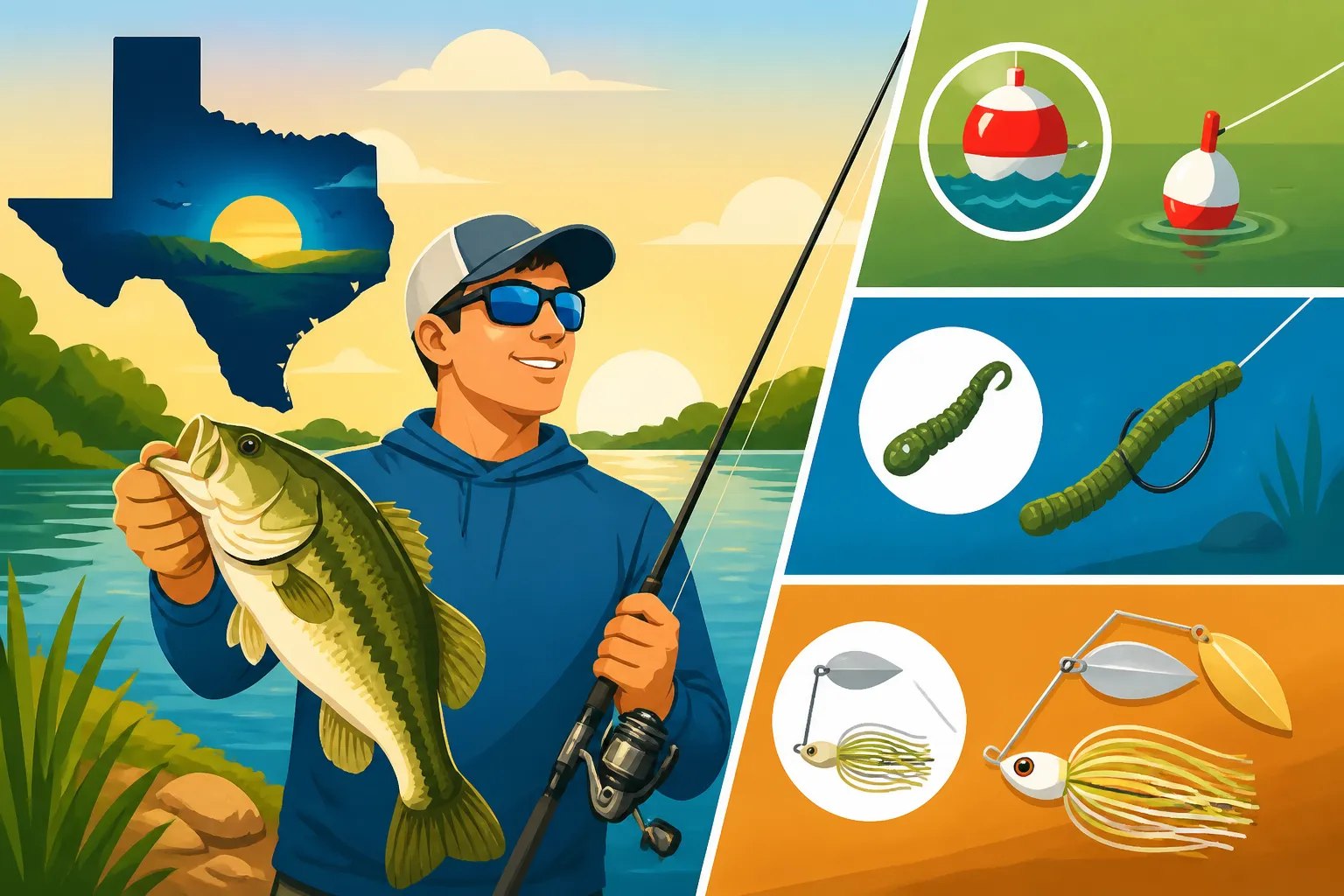
- Bobbers/Floats: These are fantastic for beginners, as they visually indicate a bite. Slip bobbers are versatile, allowing you to set your bait at different depths, while clip-on bobbers are simple for shallow water.
- Swivels and Leaders: Barrel swivels help prevent line twist, especially important with live bait. A few feet of fluorocarbon leader (15-20 lb test) tied to your main line can make your presentation more subtle and protect against abrasion, particularly in saltwater.
- Pliers/Forceps: Essential for removing hooks from fish safely and for cutting line.
- Line Clippers: Small scissors or nail clippers work wonders for trimming excess line.
- Measuring Tape/Scale: Useful for ensuring your catches meet legal Texas Fish Bag and Length Limits and for bragging rights!
- First Aid Kit: Always a good idea to have band-aids, antiseptic wipes, and pain relievers for minor scrapes or hook pokes.
You don't need hundreds of lures. A few simple options like plastic worms, small spinners, and perhaps a basic crankbait can be explored once you're comfortable. For a deeper dive, check out our article on Best Bait and Lures for Texas Fishing.
What to Wear and Carry for Comfort and Safety
Being comfortable and safe on the water is just as important as the right gear. Texas weather can be unpredictable, often swinging from cool mornings to scorching afternoons, so dressing in layers is always a smart move.
- Sun Protection: This is paramount in Texas. A wide-brimmed hat, sunglasses (polarized ones are a game-changer for seeing fish underwater), and long-sleeved, breathable UPF-rated clothing are highly recommended. Sunscreen is non-negotiable, even on cloudy days. Don't forget to protect your neck and ears!
- Footwear: Closed-toe shoes with good grip are essential, especially on slippery banks, piers, or boat decks. Water shoes or old sneakers are perfect for wade fishing or just keeping your feet comfortable and protected. Avoid open-toed sandals where hooks or fish spines can easily cause injury.
- Hydration: Always carry plenty of water, especially during the long, hot Texas summers. A cooler with ice is a wise investment, not just for drinks but also for keeping any fish you plan to harvest fresh.
- Rain Gear: A lightweight rain jacket or poncho is always a good idea, as pop-up showers are common. Nothing ruins a fishing trip faster than being soaked and cold.
- Bug Spray: Depending on the location and time of year, mosquitoes, gnats, and other biting insects can be a real nuisance. A good insect repellent can make your experience much more enjoyable.
- Valid License: Last but certainly not least, ensure you have your Texas Fishing License Cost for Residents and Nonresidents readily available, whether it's a physical copy or stored digitally on your phone via the TPWD Outdoor Annual app. Ignoring this can lead to costly fines.
Mastering Basic Casting Techniques
Now that you've got your gear, it's time for the fun part: learning to cast! Many beginners feel awkward at first, but with a little practice, you'll be sending your line out accurately and smoothly. Focus on form over distance initially, and the distance will come naturally.
The Overhead Cast for Spinning Reels
The overhead cast is the bread and butter for spinning reels and the first technique every beginner should master. It's straightforward and provides good accuracy and distance for most situations.
- Grip the Rod: Hold the rod with your dominant hand, just above the reel, with your index finger extended and resting on the rod blank.
- Open the Bail: Use your non-dominant hand to manually flip open the bail, the metal arm on the reel.
- Trap the Line: With your index finger, gently trap the fishing line against the rod handle. This prevents the line from flying off the spool prematurely.
- Position Your Lure: Let your lure or bait dangle about 6-12 inches from the rod tip. Too long, and it's hard to control; too short, and it can interfere with the cast.
- Look at Your Target: Turn your body slightly and aim your rod tip directly at where you want the lure to land.
- The Backswing: In a smooth motion, bring the rod tip up and back over your shoulder, stopping when the rod is just past vertical, around the 1 o'clock position (imagine the face of a clock). You should feel the rod "load" or bend slightly with the weight of the lure.
- The Forward Cast: Immediately, without pausing, bring the rod forward in a powerful, smooth motion, accelerating towards your target. As the rod passes about the 10 or 11 o'clock position, release your index finger from the line.
- Follow Through: Point the rod tip at your target as the lure sails through the air.
- Close the Bail: Once the lure hits the water or is about to, use your non-dominant hand to flip the bail closed. This prevents slack line and prepares you for retrieval.
Practice in an open yard without a hook, perhaps tying a small washer or practice plug to your line. Focus on smoothness and control, and aim for a consistent spot.
Sidearm Casting for Accuracy
While the overhead cast is great for general use, the sidearm cast is a fantastic technique for accuracy, especially when casting under overhanging trees, docks, or other obstacles. It keeps your cast low to the water, reducing the chance of snagging branches or spooking fish with a high-flying lure.
- Rod Position: Hold the rod as you would for an overhead cast, but this time, bring the rod back horizontally, parallel to the water, to your side. Your arm should be bent, and the rod tip should be pointing away from your body.
- Open Bail and Trap Line: Just like the overhead cast, open the bail and trap the line with your index finger.
- Target and Swing: Look at your target and, with a quick, horizontal swing motion, bring the rod forward.
- Release the Line: Release your index finger from the line as the rod tip points towards your target. The release point is crucial for accuracy and determines the height of your cast. A slightly earlier release will send the lure higher, a later release will keep it lower.
- Follow Through and Close Bail: Follow through by pointing the rod at your target, and close the bail as the lure splashes down.
This cast takes a bit more practice to master the timing of the line release, but it's an invaluable skill for fishing Texas's often brushy banks and structured waters. It's particularly useful when you're trying to sneak a lure under a low-hanging tree limb where a big bass might be hiding.
Understanding Reel Drag and Line Management
Casting is just one piece of the puzzle; managing your line and understanding your reel's drag system are critical for actually landing fish. The drag system is arguably the most important feature on your reel.
- What is Drag? The drag system is a set of washers that create friction, allowing the spool to turn and release line when a fish pulls hard enough. It's designed to prevent your line from breaking and your rod from snapping under sudden stress.
- Setting Your Drag: A good rule of thumb for setting drag is to pull line directly from the spool until it starts to release smoothly. You want it tight enough to set the hook firmly but loose enough that a strong fish can pull line without breaking it. A common starting point is to set the drag to about 25% of your line's breaking strength. So, if you're using 10-pound test line, your drag should engage when about 2.5 pounds of pressure are applied. Test this by having a friend pull on your line while you hold the rod, or by tying it to a fixed object and walking back.
- Adjusting During a Fight: During a fight with a strong fish, you might need to adjust your drag. If the fish is making powerful runs, you might loosen the drag slightly to prevent a break-off. If the fish is slowing down and you need to gain line, you might tighten it a bit. Always adjust in small increments.
- Line Management: After each cast, ensure your line is retrieved smoothly and evenly onto the spool. Avoid letting huge loops of slack line accumulate, as this can lead to tangles (often called "wind knots") on your next cast. Periodically check your line for nicks or abrasions, especially after fishing around rocks or heavy cover, and re-tie your knot if it looks frayed. A fresh knot is always stronger!
Mastering these basics will make your fishing trips much more enjoyable and successful, reducing frustrating snags and lost fish.
Common Baits and Lures for Texas Fish
You've got your gear and you can cast—awesome! Now, what do you put on the end of that line to entice a bite? The world of baits and lures is enormous, but for beginners, sticking to a few proven options will keep things simple and effective.
Natural Baits That Always Work
When in doubt, natural bait is often the most reliable choice, especially for beginners. Fish are naturally attracted to what they already eat, and it removes some of the complexity of learning to work an artificial lure.
- Worms: The classic. Earthworms (nightcrawlers, red wigglers) are irresistible to a wide range of freshwater species, including sunfish, crappie, and especially catfish. You can buy them at almost any bait shop, sporting goods store, or even on Amazon, and they're easy to rig on a hook under a bobber or on the bottom. For catfish, larger pieces of cut bait, like shad or perch, are often even more effective.
- Shrimp: A saltwater staple. Fresh dead shrimp (peeled or unpeeled) or even live shrimp are fantastic for nearly all common Texas saltwater species, including redfish, speckled trout, flounder, and croaker. You can find them at coastal bait shops. Just hook them through the tail or head.
- Corn: Surprisingly effective for carp and some panfish in freshwater. It’s cheap, easy to use, and readily available.
- Dough Balls/Prepared Baits: Many commercial "stink baits" or dough balls are specifically formulated to attract catfish. Brands like Catfish Charlie or Sure Shot are popular in Texas. They're often messy but incredibly effective when catfish are in a feeding mood.
The beauty of natural bait is that it does most of the work for you. The scent and natural movement attract fish, so your technique focuses more on presentation and waiting for a bite.
Beginner-Friendly Artificial Lures
While natural bait is a go-to, learning to use artificial lures opens up a whole new dimension of fishing. They allow you to cover more water, target specific species more aggressively, and feel more connected to the action.
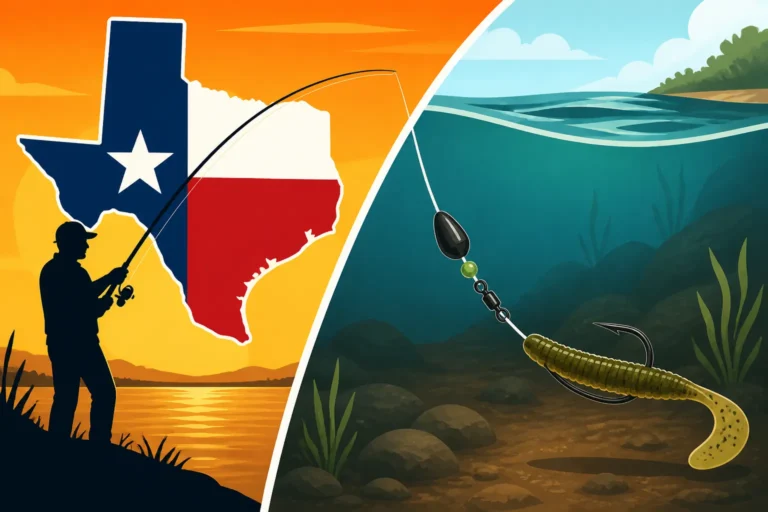
- Plastic Worms (Texas Rig): This is a must-learn for freshwater bass fishing. A Texas rig consists of a soft plastic worm, a bullet weight, and an offset hook. It's virtually weedless, making it perfect for fishing around cover. You simply cast it out, let it sink, and slowly drag or hop it along the bottom. The subtle movement of the worm is often irresistible to bass.
- Spinnerbaits: These lures feature one or more blades that spin, creating flash and vibration in the water. They're excellent for bass, white bass, and sometimes even crappie. Just cast them out and retrieve them steadily. They're relatively snag-free and very versatile in various water conditions.
- Jigs (Soft Plastic or Bucktail): Jigs are incredibly simple but deadly. A jig head (weighted hook) with a soft plastic tail (like a grub, paddle tail, or minnow imitation) is a go-to for crappie, white bass, and saltwater species like speckled trout. For crappie, a tiny jig under a bobber is often all you need. For saltwater, a heavier bucktail jig can imitate baitfish or shrimp.
- Spoons: Metal spoons wobble and flash when retrieved, mimicking injured baitfish. They're effective for a wide range of species, from freshwater bass and striped bass to saltwater redfish and trout. A simple cast-and-retrieve method works well.
Don't buy too many different lures at once. Start with a few proven options, learn how to work them effectively, and then gradually expand your collection as you gain confidence and understanding. Experiment with colors, but generally, natural colors work well in clear water, and brighter colors or black/blue can shine in stained or murky water.
Matching Your Bait to Your Target Species
The most effective strategy is to use baits and lures that mimic what your target fish naturally eat in their environment. This is called "matching the hatch" in fly fishing, but the principle applies to all types of fishing.
- For Panfish (Sunfish, small Crappie): Tiny hooks (size 8-10) with small pieces of worm, corn, crickets, or small jig heads (1/32 oz) with micro soft plastics are perfect. They have small mouths, so small baits are key.
- For Catfish: Bigger hooks (2/0-4/0) with cut bait (shad, perch, hot dogs), chicken liver, or commercial stink baits. Catfish are scavengers with a great sense of smell, so smelly baits are usually best.
- For Largemouth Bass: Larger worms (4-7 inches), spinnerbaits (1/4-1/2 oz), small crankbaits, or topwater frogs/poppers. Bass are predatory and often prefer larger meals.
- For Speckled Trout: Live shrimp, artificial shrimp imitations, soft plastic paddle tails on jig heads (1/8-1/4 oz), or topwater plugs. Trout are visual predators that love to ambush baitfish.
- For Redfish: Live or cut mullet, crab, or shrimp. Artificials like soft plastic paddletails, spoons, or weedless gold spoons are also highly effective, especially in shallow water.
Researching the specific diet of the fish you're targeting will dramatically increase your success rate. A quick search for "what do fish species eat in Texas" can give you a lot of useful information to guide your bait choices.
Targeting Popular Texas Freshwater Species
Texas freshwater fishing is where many anglers get their start, and for good reason. Our lakes and rivers are brimming with accessible and exciting species. Let's look at how beginners can find success with some of the most popular catches.
Catching Largemouth Bass in Texas Lakes
The largemouth bass is arguably the most sought-after freshwater game fish in Texas. While they can be challenging, they are also incredibly rewarding to catch. For beginners, it’s about understanding their basic habits.
Bass are ambush predators, which means they love to hide near "structure" or "cover" and wait for unsuspecting prey. This includes submerged timber, brush piles, rock formations, docks, lily pads, and creek channels. As a beginner, focus on fishing these areas. If you're bank fishing, look for overhanging trees, fallen logs, or rocky banks. From a boat, look for visible cover.
For bait, start with a simple Texas-rigged plastic worm in green pumpkin or junebug color. Cast it near cover, let it sink to the bottom, and then slowly drag or hop it back. Pay close attention to your line for any subtle "thump" or sideways movement—that's often a bass picking up your bait. Another easy-to-use lure is a spinnerbait; just cast it along weed lines or shorelines and retrieve it at a steady pace. Early mornings and late evenings are often the best times to find bass actively feeding, especially during the warmer months. For a comprehensive overview, explore our Texas Largemouth Bass Fishing Guide.
Simple Strategies for Texas Catfish
Catfish are the ultimate beginner-friendly target in Texas. They are abundant, fight hard, and are often willing to bite, making them a fantastic confidence builder. Three main species are common: channel, blue, and flathead catfish.
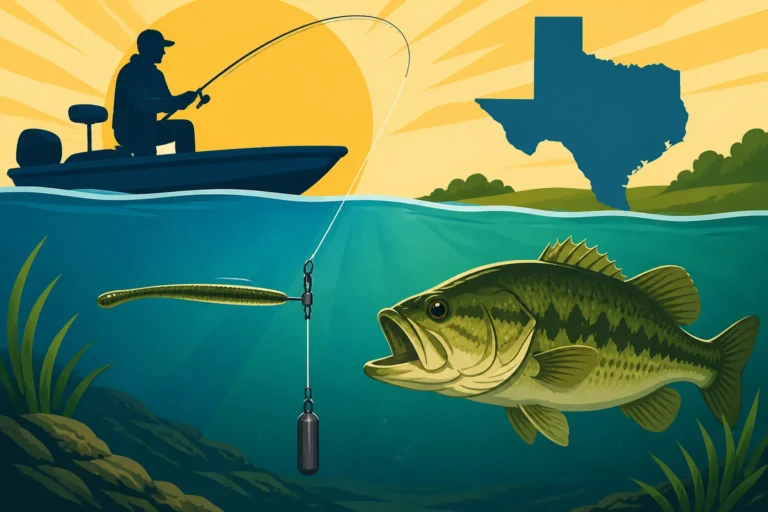
Channel catfish are found in almost every body of water and are generally the easiest to catch. They respond well to smelly baits. For a simple setup, use a slip sinker rig: slide an egg sinker (1/4 to 1 oz, depending on current) onto your main line, then tie on a barrel swivel. To the other end of the swivel, tie a 12-18 inch leader of fluorocarbon line, and then a 2/0 to 4/0 circle hook. Bait it with chicken liver, cut hot dogs, or a commercial stink bait. Cast it out, let it sink to the bottom, and wait. Catfish bites are often a subtle tug or a slow pull before they really take off.
Blue catfish can grow much larger and are often found in larger lakes and rivers. They prefer fresh cut bait, like shad or perch. Flathead catfish are ambush predators that prefer live bait, such as sunfish or small perch, and are often found near heavy cover like log jams. For beginners, focusing on channel catfish with prepared baits or chicken liver will yield the most consistent results. They're often found in deeper holes or along creek channels, but will move shallower to feed in low-light conditions. To dive deeper into catching these whiskered beauties, check out our How to Catch Catfish in Texas guide.
Finding Crappie and Sunfish for Family Fun
If you're looking for consistent action, especially with kids or new anglers, crappie and sunfish (like bluegill and redear sunfish, often called "bream") are perfect. They are often plentiful and eager to bite.
Sunfish are the easiest. Look for them in shallow, calm areas of lakes and ponds, especially around docks, lily pads, submerged brush, or other vegetation. They love to hang out in groups. A small hook (size 8-10) tipped with a tiny piece of worm, a cricket, or even a small piece of corn, suspended under a small bobber, is all you need. Cast it near cover and wait for the bobber to dip! You'll often catch them one after another.
Crappie are a bit more structure-oriented. They love brush piles, standing timber, submerged trees, and bridge pilings. They're often found deeper than sunfish, especially during the day. For beginners, a small jig (1/16 to 1/8 oz) tipped with a tiny soft plastic minnow imitation or a live minnow under a bobber is a deadly combination. Cast it near cover, let it sit for a moment, then twitch it gently. Crappie bites can be very subtle, sometimes just a slight "tap" or the bobber laying on its side. Early mornings and late evenings, or even night fishing under lights, can be prime times for crappie.
These panfish are not only fun to catch but also make excellent table fare, adding another layer of reward to your fishing efforts!
Getting Started with Texas Saltwater Fishing
The Texas coast offers a completely different, yet equally exciting, fishing experience. The salty air, the sound of waves, and the powerful runs of coastal fish are unforgettable. While it can seem complex with tides and estuaries, there are very beginner-friendly ways to get started.
Pier and Jetty Fishing Fundamentals
For many new saltwater anglers, public fishing piers and jetties are the perfect entry point. They provide access to deeper water without needing a boat and often have amenities like bait shops, restrooms, and cleaning stations.
When fishing from a pier or jetty, you'll want a slightly heavier rod and reel setup than for freshwater, something in the medium-heavy range with a 3000-5000 series reel spooled with 15-20 lb monofilament or braided line. You'll likely encounter a mix of species, including speckled trout, redfish, flounder, croaker, whiting, and even small sharks. Use a simple bottom rig with a pyramid sinker (1-3 oz, depending on current) and two snelled hooks (sizes 1/0-3/0) baited with fresh dead shrimp or cut bait. Cast out, let it sink to the bottom, and put your rod in a sand spike or rod holder. Watch for the rod tip to bend or twitch.
Key tips for pier/jetty fishing:
- Observe: Watch what successful anglers are doing and what they're catching.
- Tides: Fish often bite better during incoming or outgoing tides when water is moving, bringing food.
- Structure: Fish near the pilings or rocky edges of the jetty, as these provide cover and ambush points.
- Patience: Sometimes it takes a while for the fish to find your bait.
You can find many great public access points; consider checking out Best Texas Piers for Fishing Without a Boat for specific locations.
Wade Fishing the Texas Flats
Once you're comfortable with pier fishing, wade fishing is a fantastic next step for those seeking a more immersive and active saltwater experience. This involves walking through shallow bay waters, often casting to visible fish or prime habitat.
Wade fishing is popular for targeting redfish and speckled trout in the vast, shallow grass flats and sand potholes of Texas bays. For this, you'll need a good pair of sturdy wade fishing boots (to protect against shell and stingrays) and often a stringer or a wade basket to hold your catches. Your rod and reel should be a medium-light to medium power spinning combo, roughly 7 feet long, spooled with 15-20 lb braided line and a 20-30 lb fluorocarbon leader. Lures like soft plastic paddle tails on a jig head (1/8 to 1/4 oz) or weedless gold spoons are excellent choices.
The technique involves slowly wading, often against the current, scanning the water for signs of fish (like waking redfish or nervous baitfish). Cast your lure ahead of you, allowing it to sink briefly, and then retrieve it with a slow, steady twitching motion. The key is stealth and observation. Start in well-known public wade fishing areas like those in Galveston Bay or Corpus Christi Bay. It's a great way to enjoy the solitude and challenge of hunting fish in their natural environment. You can learn more about this active approach in our guide to Texas Saltwater Fishing Techniques.
Common Saltwater Baits and Rigs
Just like in freshwater, certain baits and rigs are universally effective for Texas saltwater species. Keeping your tackle simple will prevent frustration and ensure you're prepared for most situations.
- Fresh Dead Shrimp: As mentioned, this is the most versatile and effective bait for almost all bay species. Hook it through the tail for better casting or through the head for a more natural presentation.
- Cut Bait: Small chunks of fresh mullet, perch, or menhaden are excellent for redfish, black drum, and larger catfish that venture into brackish waters. The scent trail is a powerful attractant.
- Live Bait: Live shrimp, mullet, or mud minnows are often irresistible to speckled trout and redfish. They require a livewell or a bait bucket with an aerator to keep them fresh.
- Artificial Shrimp: Many companies make incredibly realistic artificial shrimp imitations (e.g., Gulp! Shrimp by Berkley). These offer the scent and look of live shrimp without the hassle of keeping them alive, and can be found on Amazon as well as local tackle shops.
- Carolina Rig (Saltwater Version): Similar to the freshwater version, this rig is excellent for bottom fishing with live or cut bait. It uses an egg sinker (1/2 to 1 oz) above a swivel, a 12-24 inch fluorocarbon leader, and a J-hook or circle hook (1/0 to 3/0). The weight keeps the bait on the bottom, while the leader allows it to move naturally.
- Popping Corks: These floats create a "popping" sound when twitched, mimicking feeding baitfish, which attracts trout and redfish. You tie your line to the top of the cork, and then a 12-24 inch leader with a jig or live shrimp underneath. Cast it out, let it sit, then give it a sharp twitch to make it "pop," and wait for the strike.
Don't overcomplicate your saltwater setup as a beginner. Start with shrimp, a simple bottom rig, and perhaps a popping cork with an artificial shrimp, and you'll be well on your way to catching coastal fish.
Reading the Water and Basic Fish Behavior
Fishing isn't just about casting; it's also about understanding the environment and how fish react to it. Learning to "read the water" is a skill that comes with time, but even beginners can start to notice patterns that lead to more successful outings.
Understanding Structure and Cover
Fish don't just swim around aimlessly; they orient themselves around features in the water. These features are generally categorized as "structure" or "cover."
- Structure refers to changes in the lake or river bottom contour, such as ledges, humps, points, creek channels, and submerged rock piles. These are permanent features. Fish use structure for travel lanes, feeding ambush points, or to escape current or heat. Even subtle changes in depth, like a small drop-off from a shallow flat into slightly deeper water, can hold fish. Learning to identify these areas, even from shore, is crucial. For example, a point extending into a lake will often attract fish that are moving along its edges.
- Cover refers to objects on or in the water that provide shelter, shade, or ambush points, such as docks, boat ramps, fallen trees, brush piles, lily pads, or thick aquatic vegetation (like hydrilla or submerged grass beds). Cover provides protection from predators, current, and harsh sunlight, as well as holding baitfish, which in turn attracts game fish. As a beginner, focus on visible cover: cast your bait or lure as close as possible without getting snagged. A dock piling might hold crappie, while a patch of lily pads could be a bass haven.
Developing an eye for these features will guide your casting decisions and significantly improve your chances of finding fish. Start by observing where baitfish are congregating, as larger game fish are rarely far behind.
The Impact of Weather and Water Conditions
Fish are cold-blooded creatures, and their behavior is heavily influenced by external factors like weather and water conditions. Paying attention to these can give you a significant advantage.
- Temperature: Water temperature is perhaps the most critical factor. Different species have preferred temperature ranges. For instance, bass become more active as water warms in spring and fall, but retreat to deeper, cooler water during the scorching Texas summers. Conversely, species like rainbow trout, often stocked in Texas lakes in winter, thrive in cold water. Knowing the optimal temperature range for your target fish helps you decide when and where to fish. You can often find water temperature reports online or even use a simple thermometer.
- Water Clarity: Clear water means fish can see better, so they might be more wary of your line or brightly colored lures. In clear water, opt for more natural bait colors and lighter lines. In murky or stained water, fish rely more on scent and vibration, so louder lures (like spinnerbaits with thumping blades) or smelly natural baits can be highly effective. Bright, contrasting colors (like chartreuse or black/blue) can also stand out better in dirty water.
- Wind: A moderate wind can be your friend, as it creates a "chop" on the water's surface that breaks up light penetration, making fish less wary. It also blows baitfish and creates current, concentrating food. However, extremely high winds make casting difficult and fishing uncomfortable.
- Rain: Light rain can sometimes trigger a good bite, as it washes insects and nutrients into the water, and the reduced light can make fish more aggressive. Heavy downpours, especially after a prolonged dry spell, can muddy the water and disrupt fishing for a while.
Understanding these variables helps you adjust your approach. For example, on a hot, sunny summer day, you might focus on deeper, shadier areas, whereas on a cloudy, mild day, fish might be shallower and more active. Our Best Time of Year to Fish in Texas and Texas Fishing Seasons Month by Month guides offer more detailed breakdowns.
Seasonal Patterns for Texas Fish
Just as the weather changes throughout the year, so do the habits and locations of fish. Recognizing these seasonal patterns is key to consistent success.
- Spring: This is often the most active time for many freshwater species as water temperatures rise. Bass move into shallow areas to spawn, and crappie gather around brush piles. White bass make their famous "runs" up rivers to spawn. This is a prime time for aggressive fishing.
- Summer: The heat of Texas summer drives many fish deeper into cooler, more oxygenated water during the day. Early mornings, late evenings, and night fishing become productive. Look for bass near deep structure or heavy shade. Catfish, however, can remain active throughout the summer, especially at night. Saltwater fishing can be excellent in the bays, with fish moving into guts and channels during the heat of the day.
- Fall: As temperatures cool, fish become very active, feeding heavily to bulk up for winter. This "fall feeding frenzy" makes for some of the best fishing of the year. Bass are often found schooling and chasing baitfish near the surface. Redfish and speckled trout are very active in the bays.
- Winter: Fishing slows down for some species, but others become prime targets. Crappie often school up in deep water around structure. Rainbow trout are stocked in many Texas lakes, providing excellent cold-weather opportunities. Saltwater fishing can be tough during cold fronts but excellent on sunny, calm days between them, with trout and redfish schooling in deeper bay channels.
Knowing these broad patterns helps you anticipate where fish might be and what baits they might prefer. It's about adapting your strategy to the conditions, rather than sticking to one method year-round.
Safety First: Enjoying Texas Waters Responsibly
Fishing is a wonderful pastime, but safety should always be your top priority. Texas waters can be beautiful but also hold potential hazards. A responsible angler is a safe angler, and that includes understanding and respecting the rules.
Navigating Regulations and Licenses
Before you even wet a line, you absolutely need a valid Texas fishing license. This isn't just a suggestion; it's the law. Fishing without one can lead to significant fines.
- Where to Buy: You can purchase a license online through the Texas Parks and Wildlife Department (TPWD) website, by phone, or in person at most sporting goods stores like Academy Sports + Outdoors or Walmart, and many local bait shops. The process is straightforward, and you'll typically receive a temporary license immediately if purchasing online. Be aware of the additional Texas Online License Purchase Fees.
- Exemptions: There are certain exemptions, such as for children under 17, those born before a certain date, or disabled veterans. However, it's always best to check the current regulations to ensure you qualify.
- Endorsements: For saltwater fishing, you'll need a "saltwater endorsement" in addition to your basic fishing license. This is often included in the "All-Water" package, which is generally the most convenient for beginners planning to fish both freshwater and saltwater.
- Regulations: Beyond the license, familiarize yourself with the specific bag and length limits for the species you plan to target. These limits are in place to ensure healthy fish populations for the future. The TPWD Outdoor Annual (available online or as a free app) is your bible for all fishing regulations in Texas. It covers everything from Texas Freshwater Fishing Regulations to Texas Saltwater Fishing Regulations. Ignorance of the law is not an excuse for violations.
Sun Protection and Hydration
We've touched on this, but it bears repeating: Texas sun and heat are no joke. Many beginners, excited to fish, overlook these basic safety measures, only to suffer the consequences later.
- UV Radiation: The sun's UV rays are intense, even on cloudy days. Prolonged exposure can lead to sunburn, heatstroke, and increase your risk of skin cancer. Always wear sunscreen (SPF 30+), reapply it every few hours, and wear protective clothing: long-sleeved shirts, pants, a wide-brimmed hat, and polarized sunglasses.
- Dehydration: Fishing, especially in summer, can be strenuous. It's easy to get dehydrated without realizing it. Carry more water than you think you'll need. Electrolyte drinks can also be beneficial. Sip water consistently, even if you don't feel thirsty, as thirst is a sign you're already starting to dehydrate. Avoid excessive alcohol consumption, as it accelerates dehydration.
- Recognize Symptoms: Be aware of the symptoms of heat exhaustion (heavy sweating, cold/clammy skin, nausea, dizziness) and heatstroke (hot/red/dry skin, throbbing headache, confusion). If you or a fishing buddy experience these, seek shade, cool down, and get medical help immediately.
These simple precautions will ensure you have an enjoyable day on the water and avoid dangerous health issues.
Handling Fish Safely and Practicing Catch and Release
Proper fish handling is crucial for both your safety and the health of the fish, especially if you plan to release them.
- Your Safety First: Fish have sharp fins, gill plates, and sometimes teeth. Always be careful when handling a fish. Use pliers or forceps to remove hooks, rather than sticking your fingers into a fish's mouth. If handling a fish with spines (like catfish or sunfish), grip it firmly behind the head and avoid the dorsal and pectoral fins. A fishing glove can offer added protection.
- Fish Health: If you intend to release a fish, minimize its time out of the water. Handle it gently with wet hands to protect its slime coat, which is a crucial barrier against disease. Avoid placing fish on dry, hot surfaces. If possible, remove the hook while the fish is still in the water or hold it gently over the water. If the hook is deeply embedded, it's often better to cut the line close to the hook than to try to remove it, as this can cause more internal damage.
- Proper Holding: When holding a fish for a photo, support its body weight, especially for larger fish. Avoid holding a heavy fish solely by its jaw, as this can cause serious internal injury. A firm grip near the tail and supporting the belly is ideal.
- Tools for Success: A landing net (rubberized mesh is gentler on fish than knotted nylon) can make landing and unhooking fish much easier, reducing stress on both you and the fish. For really large fish like big catfish or alligator gar, a large net or even a gaff might be needed, but these are advanced tools not for beginners.
Practicing responsible catch and release ensures that our incredible Texas fishing resources remain vibrant for generations to come. Many anglers choose to release most of their catches, only keeping a few for a meal, and that's a great ethos to adopt as a beginner.
Disclaimer
The information provided in this guide is for general informational purposes only and does not constitute legal advice. Fishing regulations in Texas can change, and it is the angler's sole responsibility to consult the most current Texas Parks and Wildlife Department (TPWD) Outdoor Annual or official TPWD resources for the latest rules, regulations, bag limits, and licensing requirements before engaging in any fishing activity. Always prioritize safety and adhere to all local, state, and federal laws.