How to catch flathead catfish at night
Anyone who's spent a sweltering Texas afternoon chasing after elusive flathead catfish knows the struggle. You might spend hours casting, trying every trick in the book, only to come up empty-handed. That's because these powerful, solitary predators are often most active when the sun dips below the horizon, transforming into formidable nocturnal hunters. This guide is your key to unlocking the secrets of night fishing for flatheads, giving you the strategies and gear you need to finally land one of these impressive Texas giants after dark.
Why Flathead Catfish Love the Night Shift
It’s not just an old wives’ tale that flatheads prefer the darkness. There are very real, biological reasons why these fish become more active at night, and understanding this behavior is your first step to consistent success. The frustration of fishing for them during the day and coming up short can be completely bypassed by shifting your efforts to after sunset.
Understanding Flathead Behavior Under the Stars
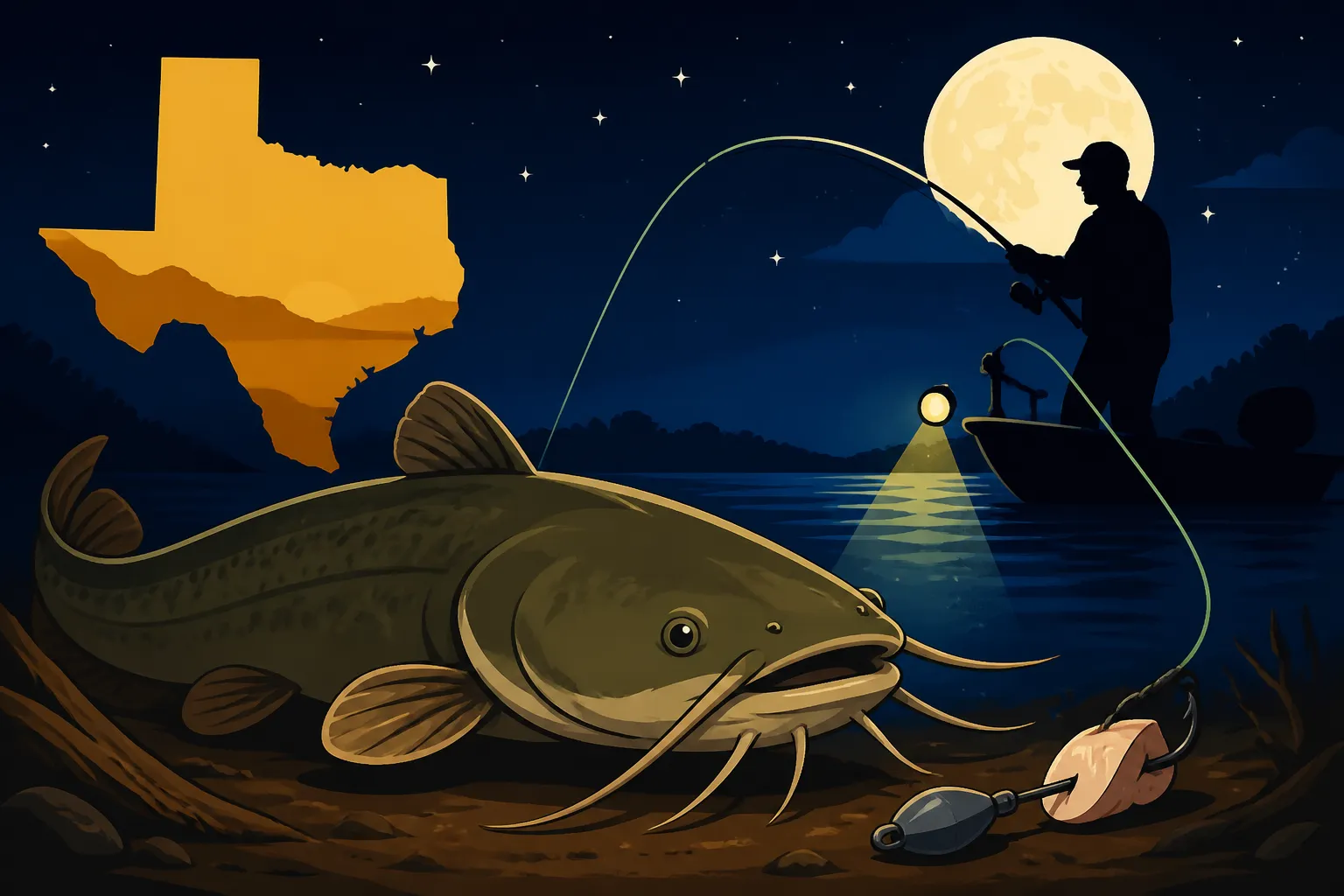
Flathead catfish ( Pylodictis olivaris) are true nocturnal predators, and unlike their blue and channel catfish cousins, they are primarily ambush hunters that prefer live bait. During the bright, often hot Texas daytime, flatheads tend to retreat to deep, shaded areas. Think submerged timber, undercut banks, deep holes, and dense brush piles where they can escape the sun and wait out the daylight hours. Their dark, mottled coloration provides excellent camouflage in these complex structures.
When night falls, several things change. The water temperature often cools slightly, especially in shallower zones, and the light levels drop, giving flatheads a significant advantage. Their keen sense of smell and lateral line system become even more potent tools in the darkness, helping them detect the distress signals of baitfish. They’re not just cruising aimlessly; they are actively seeking out unsuspecting prey. This shift in activity means that the fish you couldn’t entice with a perfectly presented bait at noon might aggressively strike the same offering at midnight.
The Clear Advantages of Fishing After Dark
Beyond the flathead's natural inclination, fishing at night offers several benefits that can significantly improve your chances of success and overall angling experience.
Firstly, you’ll often find less competition on the water. Many recreational boaters and anglers pack up once the sun sets, leaving you with quieter waters and less boat traffic to contend with. This can be a huge plus on popular lakes and rivers, allowing you to access prime spots without interruption. Imagine having a massive bend in the Trinity River or a timber-filled cove on Lake Fork all to yourself!
Secondly, the cooler evening temperatures are a welcome relief, especially during those scorching Texas summers. It makes for a much more comfortable and enjoyable fishing experience, allowing you to focus on the task at hand rather than battling the heat. Finally, there's a certain magic to fishing under the moonlight and stars – a unique tranquility and connection to nature that daytime angling just can't quite replicate. Plus, it's during these quiet, dark hours that the biggest, most cautious flatheads often let their guard down.
Assembling Your Night Flathead Arsenal
Catching large, powerful flatheads at night requires more than just a sturdy rod and a hopeful attitude. You need specialized gear that can stand up to the fight and help you navigate the darkness safely. Thinking about your tackle setup is crucial before you even hit the water.
Rods, Reels, and Line Built for Battle
Flatheads are notorious for their brute strength and their tendency to dive straight for the nastiest cover once hooked. Your gear needs to be up to the challenge. Forget light spinning setups; you'll want heavy-duty equipment.
- Rods: Look for robust, medium-heavy to heavy-action casting rods, typically 7 to 9 feet in length. The longer rod provides better leverage for casting heavy baits and controlling powerful fish. Brands like Ugly Stik and Berkley offer excellent options that are incredibly durable. When you’re choosing, think about how much backbone it has – you'll need it to pry a big flathead out of a log jam. If you're looking for strong, reliable options, you can often find great deals on these types of rods on Amazon. Consider what you’d use for a trophy blue catfish; that’s the kind of power you need. For a deeper dive into rod choices, check out our guide on the Best Rods for Texas Catfish Fishing.
- Reels: A sturdy baitcasting reel or a large conventional reel is essential. It needs to have a smooth, powerful drag system and a high line capacity (at least 200 yards of heavy line). Ambassadeur, Penn, or Shimano offer models that are well-regarded for their durability and cranking power. A good retrieve ratio will help you quickly pick up slack, but raw power is more important than speed when fighting a monster flathead.
- Line: This is not the place to skimp. You'll want strong, abrasion-resistant line. Many anglers prefer braided line in the 50-80 pound test range for its incredible strength, lack of stretch, and sensitivity. However, if you're fishing around a lot of sharp rocks or timber, a heavy monofilament (30-50 pound test) can offer better abrasion resistance, though with more stretch. A fluorocarbon leader (40-80 pound test) can be used for added invisibility if you find the fish are line-shy, but flatheads are rarely picky about line visibility at night. Make sure your line choice matches the habitat you plan to fish. For more on line selection, read our article on the Best Line for Texas Catfish Rigs.
Hooks, Sinkers, and Terminal Tackle Essentials
Your terminal tackle needs to be as robust as your rod and reel.
- Hooks: Flatheads have huge mouths, so don't be afraid to go big. Circle hooks are almost universally recommended for catfishing, especially when using live bait, because they tend to hook the fish in the corner of the mouth, leading to fewer gut-hooked fish and easier releases. Sizes 7/0 to 10/0 are standard for flatheads. Ensure they are strong, high-carbon steel hooks that won't bend under pressure. Find out more about appropriate hook sizes in our Best Hook size for Texas catfish fishing guide.
- Sinkers: You'll need enough weight to keep your live bait in place, especially if there's current. Egg sinkers or flat no-roll sinkers ranging from 1 to 5 ounces (or even heavier in strong current) are common. The exact weight will depend on your bait size, line test, and current conditions.
- Swivels: Heavy-duty barrel swivels or ball-bearing swivels (size 2/0 or larger) are crucial to prevent line twist, especially when using live bait that might spin.
- Leaders: A heavy monofilament or fluorocarbon leader (50-80 pound test) of 18-36 inches can be beneficial, connecting your main line to your hook via a swivel. This protects your main line from abrasive structure and the flathead's sandpaper-like mouth.
The Irresistible Live Bait Menu
This is where flatheads truly differ from other catfish species: they are overwhelmingly preferential to live bait. While blue and channel catfish will readily hit cut bait, stink baits, or even corn, a flathead almost always wants something alive and kicking.
- Preferred Baitfish: Small sunfish (bluegill, green sunfish), perch, bullheads, and even small carp or goldfish are excellent choices. The key is to use fresh, lively bait that's legal to use in Texas waters. Check the Texas Freshwater Fishing Regulations to ensure your chosen baitfish are legal for use as live bait and that you're not exceeding any possession limits.
- Size Matters: Don't be shy about using larger baits. A 4-6 inch live perch is not too big for a hungry flathead. Often, the bigger the bait, the bigger the flathead you'll attract.
- Keeping Bait Lively: This is critical. You'll need a good aerated livewell or a large bait bucket with an aerator to keep your baitfish frisky throughout the night. Stressed or dead bait is significantly less effective for flatheads. You can find portable aerators and bait buckets on Amazon that are perfect for night trips.
Decoding the Night Waters: Strategies for Success
Once you have your gear ready and your live bait squirming, the next challenge is putting it all together on the water. Flathead fishing at night is a game of patience, location, and proper presentation.
Locating Prime Flathead Real Estate
Flatheads are structure-oriented fish. They love cover and ambush points. At night, they often move from their deeper daytime sanctuaries into shallower feeding zones, but they don't stray far from their preferred cover.
- Rivers and Creeks: Look for deep bends with current, log jams, submerged trees, rock piles, and sharp drop-offs. The deeper, outside bends of river channels are classic flathead spots. Areas where smaller creeks or tributaries enter a larger river can also be hotspots, especially if they create current breaks or bring in new food sources.
- Lakes and Reservoirs: Focus on submerged timber, old creek channels, deep points, rock ledges, and areas with significant depth changes close to shallower flats. On lakes like Lake Livingston or Sam Rayburn, vast stretches of standing timber are flathead magnets. In summer, they might still be deeper, but they'll often venture out from those deep holes to adjacent structure. If you’re wondering How deep do you fish for catfish in summer, keep in mind flatheads will usually be found deeper during the day but move shallower at night, often congregating around structures between 10-30 feet.
- Scout Ahead: If possible, try to scout your chosen spots during the day. Use your electronics (fish finder, GPS) to mark submerged timber, old roadbeds, and creek channels. This will save you invaluable time and effort in the dark.
Setting Up Your Spread for the Strike
With flatheads, it's often a waiting game. You want to present your live bait naturally and let the fish come to it.
- Multiple Rods: Many successful flathead anglers use multiple rods (check your Texas Freshwater Fishing Regulations for the maximum number of rods allowed per angler). This increases your chances of covering different depths and spots. Use sturdy rod holders firmly planted in the bank or mounted on your boat.
- Rigging:
- Carolina Rig: This is a popular choice. Thread an egg sinker onto your main line, then tie on a heavy-duty barrel swivel. To the other end of the swivel, tie a 18-36 inch monofilament or fluorocarbon leader, and then your circle hook. Hook your live bait through the back, just behind the dorsal fin, or through the lips. This allows the bait to swim freely and naturally.
- Three-Way Swivel Rig: Another effective method, especially in current. Tie your main line to one eye of a three-way swivel. To the second eye, tie a short leader (6-12 inches) with a heavy sinker. To the third eye, tie a longer leader (18-36 inches) with your live bait on the hook. This rig keeps your bait off the bottom and allows it to swim freely, often with a more controlled presentation.
- Patience is Key: Once your lines are out, be patient. Flatheads don't always strike immediately. They might mouth the bait or move it around before committing. When you get a bite, resist the urge to set the hook aggressively. Remember, you're using circle hooks. Let the fish take the bait, and as it swims away, slowly reel down and let the rod load up. The circle hook will do its job and set itself in the corner of the fish's mouth.
Safety and Illumination: Light Up Your Night
Night fishing, while rewarding, comes with inherent risks. Safety should always be your top priority.
- Lighting: You'll need good light sources. A powerful headlamp is essential for hands-free tasks like tying knots, baiting hooks, and unhooking fish. A larger lantern (battery-powered or propane, but be careful with propane around flammables) is great for illuminating your general fishing area. If you're on a boat, ensure all your navigation lights are functioning correctly. You can find reliable headlamps and lanterns for your night excursions on Amazon.
- Personal Safety Gear: Always tell someone where you're going and when you expect to return. Bring a fully charged cell phone. A well-stocked first-aid kit is a must, as are insect repellents, especially in Texas, where mosquitoes can be relentless. Wear appropriate clothing – long sleeves and pants can protect against bugs and minor scrapes.
- Navigational Awareness: If boating, know your waterways intimately. Hidden stumps or submerged hazards that are easily visible during the day become treacherous obstacles at night. Keep your speed down and use GPS and sonar cautiously.
Respecting the Rules and the Resource
Even under the cloak of darkness, all Texas fishing regulations apply. Being a responsible angler means understanding and adhering to these rules and practicing good stewardship of our natural resources. For a comprehensive overview, start with our How to Catch Catfish in Texas guide.
Navigating Texas Fishing Regulations
Before you even think about casting a line, ensure you have a valid Texas fishing license. You can find all the details on Texas Fishing License Requirements Explained. Violations can lead to hefty fines and loss of fishing privileges, which nobody wants.
- Bag and Length Limits: While flathead catfish generally have very generous or no statewide bag and length limits in Texas, it is absolutely critical to check the current Texas Parks and Wildlife Department (TPWD) Outdoor Annual for any specific regulations pertaining to the body of water you plan to fish. Some specific lakes or river segments may have special rules. Ignorance of the law is never an excuse. Always double-check Texas Fish Bag and Length Limits before your trip.
- Gear Restrictions: Pay attention to any gear restrictions for the waterbody. For example, some areas might have restrictions on trotlines or juglines, although rod and reel fishing for flatheads is typically permissible. If you're considering using other methods, ensure you're aware of Texas Trotline and Jugline Rules.
Here’s a quick overview of common Texas catfish regulations (always verify with the latest TPWD Outdoor Annual):
| Catfish Species | Statewide Daily Bag Limit | Statewide Minimum Length | Special Notes |
|---|---|---|---|
| Channel Catfish | 25 (in any combination) | 12 inches | Some community fishing lakes have different rules. |
| Blue Catfish | 25 (in any combination) | 12 inches | Only one blue cat over 30 inches may be retained. |
| Flathead Catfish | No Limit | No Minimum | Always check local/site-specific regulations. |
Note: This table provides general statewide regulations. Always consult the most current Texas Parks and Wildlife Department Outdoor Annual for specific local regulations before fishing, as rules can change.
Practicing Responsible Angling and Conservation
Catching a trophy flathead is an incredible experience, but it comes with the responsibility of ensuring these magnificent fish continue to thrive.
- Fish Handling: Large flatheads are strong and can be difficult to handle. If you plan to release a fish, do so quickly and carefully. Use a large net or lip grippers to control the fish, avoid dragging it on the ground, and support its body horizontally when holding it for a photo. Minimize its time out of the water. For more on identifying your catch, refer to our Texas Flathead Catfish Identification Guide or the broader Texas Catfish Species Guide.
- Leave No Trace: Pack out everything you pack in. Dispose of all trash, including discarded fishing line, properly. Leave your fishing spot cleaner than you found it. This respects both other anglers and the environment.
- Know When to Keep and When to Release: While flatheads are delicious, consider releasing larger, older breeding fish. The biggest flatheads are often females vital for population sustainability. Keep smaller, eater-sized fish if you plan to clean them, and release the giants to fight another day.
Night fishing for flatheads in Texas is a thrilling and highly rewarding experience. With the right gear, a solid understanding of their nocturnal habits, careful planning, and a commitment to responsible angling, you'll be well on your way to battling some of the most powerful freshwater fish Texas has to offer under the peaceful canopy of the night sky.
Disclaimer
Fishing conditions and regulations in Texas can change. Always consult the latest Texas Parks and Wildlife Department (TPWD) Outdoor Annual and local advisories before heading out. This guide is for informational purposes only and does not supersede official regulations. Stay safe and happy fishing!