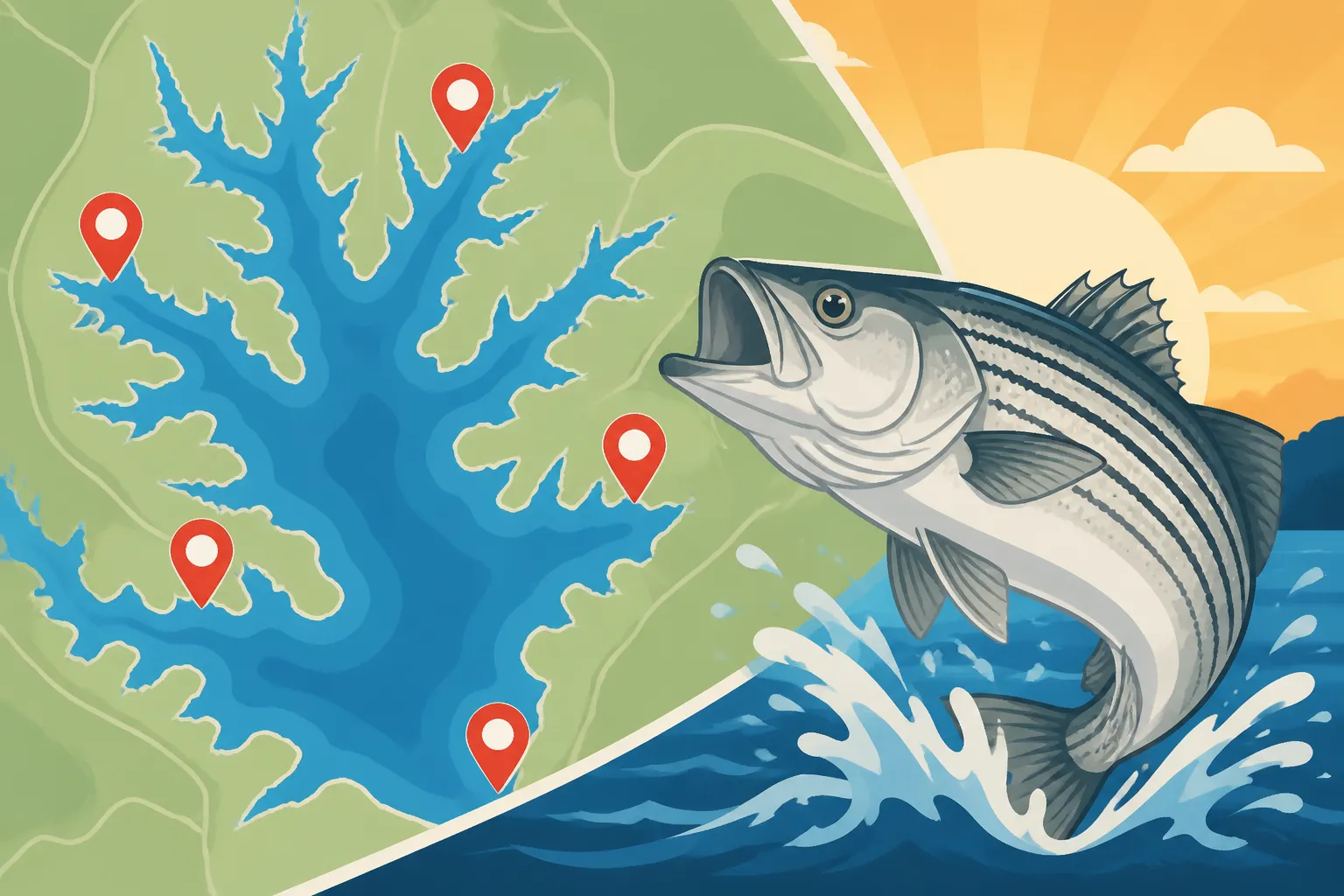
Where to catch striped bass on Lake Texoma
Lake Texoma is an absolute gem for anglers, but its sheer size can be incredibly daunting, especially when you're targeting a specific species like the mighty striped bass. It’s easy to feel overwhelmed, staring at miles of water and wondering where on earth the fish might be hiding. This guide is here to cut through that confusion, helping you pinpoint the prime locations and effective strategies for catching striped bass on this fantastic Texas fishery.
Understanding Lake Texoma's Striped Bass Ecosystem
Lake Texoma isn't just any lake; it's practically legendary for its striped bass fishing. This massive reservoir, straddling the border between Texas and Oklahoma, holds a special place in the hearts of striper enthusiasts, and for good reason. Understanding what makes it such a powerhouse fishery is the first step to successful angling.
Why Texoma is a Striper Paradise
First off, let's talk about why Texoma is such a unique and prolific striper lake. Unlike most landlocked reservoirs where striped bass populations are maintained solely through stocking, Lake Texoma boasts one of the very few naturally reproducing populations of stripers in the entire country. This incredible phenomenon is thanks to its primary tributaries, the Red and Washita Rivers, which mimic the long, flowing river systems stripers typically use for their spawning runs in coastal areas. These rivers provide the necessary current and length for the stripers' eggs to remain suspended and hatch successfully. This natural reproduction means a robust, healthy, and self-sustaining population, translating to fantastic fishing opportunities year after year. The lake itself is expansive, deep, and offers a diverse range of habitats, from rocky bluffs and submerged timber to vast open waters, all teeming with the baitfish—primarily gizzard shad and threadfin shad—that stripers absolutely feast on. It's truly a freshwater ocean for these powerful, hard-fighting fish.
Seasonal Movements of Striped Bass
Striped bass are highly migratory, even within a large lake like Texoma, and their movements are largely dictated by water temperature and the availability of bait. Understanding these seasonal patterns is crucial for knowing where to cast your line. In the cooler months of spring, especially around April and May, stripers begin their annual spawning migration up the Red and Washita River arms. This is a prime time to target them in these shallower, current-heavy areas as they congregate. As summer heats up, typically from June through September, stripers seek refuge in deeper, cooler, more oxygenated waters. They’ll often suspend over main lake channels, humps, and points, especially during the middle of the day. Early mornings and late evenings might see them push shallower to feed. Come fall, usually October and November, as water temperatures begin to drop, stripers become incredibly active, often schooling up and chasing baitfish aggressively in shallower to mid-depth waters across the main lake. This can lead to some truly epic topwater action. Even in winter, from December through March, you can find them. They tend to school tightly and often suspend over deep structure or in the river channels, still feeding actively, albeit often more slowly. Knowing these general patterns allows you to adapt your approach and seek out the fish in their most likely haunts. If you're looking for even more detail on how these patterns change throughout the year, our guide on the Best Time to Catch Striped Bass in Texas offers a deeper dive into these seasonal shifts.
Prime Locations for Striped Bass Action
While stripers are literally everywhere in Lake Texoma, certain areas consistently produce better results due to their structure, current, or proximity to baitfish. Knowing these hotspots can dramatically increase your chances of a successful outing.
Key River Mouths and Tributaries
During the spring, the Red River and Washita River arms become absolute magnets for striped bass. These major tributaries are the striper highways leading to their spawning grounds. Anglers will find stripers congregating heavily in the main channels of these rivers, especially where they begin to neck down and present stronger currents. Areas like Catfish Bay, located on the Oklahoma side near the Washita arm, or the numerous creek mouths and bends within the lower sections of both river systems, can be incredibly productive. As the fish move upriver, look for submerged timber, rocky banks, and current seams where baitfish are swept along, creating easy feeding opportunities. The key here is to target areas with moving water and structure, as these combine to create ideal ambush points for hungry stripers. The concentration of fish during this period is phenomenal, but it’s crucial to respect private property and access points, often found through public boat ramps or designated fishing areas.
Main Lake Humps, Points, and Deep Water Structure
Once the spring spawn is over and temperatures climb, the main body of Lake Texoma becomes the primary hunting ground. Striped bass will spread out, often suspending over significant underwater structures. Look for main lake humps, which are elevated areas on the lake bottom that rise sharply, creating prime ambush points. Long, tapering points that extend far into the lake are also excellent, as stripers will cruise these edges, pushing baitfish into shallower water before retreating to deeper safety. The main river channels that snake through the lake’s depths, particularly where they make sharp bends or intersect with other structures, are critical.
For instance, the waters around Eisenhower State Park on the Texas side offer diverse structure, including points and ledges that drop into the main lake. Similarly, the deeper sections of the lake closer to the Denison Dam are notorious for holding large schools of stripers, especially during the summer. These areas often require good electronics to locate baitfish schools and the stripers lurking beneath or around them. You'll typically find fish suspended anywhere from 20 to 60 feet deep, sometimes even deeper. If you're just starting out on this vast lake, our comprehensive Lake Texoma Fishing Guide provides a wealth of information to get you oriented and on the fish.
Dam Area and Below the Dam Fishing
The area directly around and below the Denison Dam is another legendary striper spot on Lake Texoma. Above the dam, the deep water leading up to the dam structure itself can hold massive schools of stripers, especially in cooler months or when the gates are closed, creating a barrier. The depths here offer consistent temperatures and often funnel baitfish, attracting large predators. Below the dam, in the tailrace of the Red River, the outflow from the lake creates incredibly strong currents and highly oxygenated water. This attracts an abundance of baitfish, which in turn draws in huge numbers of striped bass, particularly when water is being released from the dam.
Fishing below the dam offers a completely different experience. It's riverine fishing, demanding different techniques and presenting unique challenges, especially regarding safety due to the powerful currents. Anglers here often target the eddy lines, current seams, and deeper holes created by the turbulent water. It's a spot where trophy stripers are frequently caught, but always be aware of changing water levels and current speeds. Remember, whether you're above or below the dam, always check local regulations for any specific rules pertaining to fishing near power generation or dam structures.
Essential Techniques and Tackle for Texoma Stripers
Catching striped bass on Lake Texoma often means adapting your approach based on the season, time of day, and where the fish are holding. While these fish are aggressive, they can also be finicky, making a versatile skill set essential.
Live Bait Strategies
When it comes to consistently putting big stripers in the boat, live bait is incredibly hard to beat on Lake Texoma. The preferred baits are gizzard shad and threadfin shad, which are the natural forage for Texoma stripers. You can catch your own using a cast net, often in shallower coves or around marinas at dawn, or sometimes purchase them from local bait shops.
Once you have your bait, there are several effective rigging methods. Free-lining is excellent when stripers are chasing bait on the surface or suspended in the upper water column. Simply hook a lively shad through the nose or back and let it swim freely behind the boat. For deeper fish, downrigging is highly effective, allowing you to present live bait at precise depths. A downrigger uses a heavy ball and cable to carry your bait down, releasing it when a fish strikes. Another popular method, especially for those targeting suspended schools, is balloon fishing, where a balloon is attached to your line at a predetermined depth, suspending the live bait over a desired area. When the stripers are deep over structure, Carolina rigs with a weight and a long fluorocarbon leader can present live bait effectively on the bottom. Remember, using a strong enough hook and line is crucial – these fish fight hard! For more specific information on what baits and lures work best across Texas, be sure to check out our guide on Best Bait and Lures for Texas Fishing.
Artificial Lures and Trolling Tactics
While live bait is king, artificial lures can be incredibly productive, especially when stripers are actively chasing baitfish or when you need to cover a lot of water. Slabs are a Texoma staple. These heavy metal jigs, often weighing 1 to 3 ounces, are deadly when jigged vertically over schooling fish or dropped into deep striper haunts. Colors like chrome, white, or chartreuse are often effective. Swimbaits, both soft plastic and hard-bodied, are excellent for casting to breaking fish or retrieving through submerged structure. Brands like the Sassy Shad are classic choices, offering a paddle tail action that stripers find irresistible.
For surface action, especially at dawn or dusk, topwater lures like poppers, walking baits, or prop baits can trigger explosive strikes when stripers are busting bait on the surface. These are exhilarating to fish! For covering vast stretches of water and finding actively feeding fish, trolling is a go-to method. Anglers often use umbrella rigs armed with multiple swimbaits or smaller lures to mimic a school of baitfish. Deep-diving crankbaits are also effective, especially when trolled along main lake channels or over humps. Vary your trolling speed and depth until you find what the fish are responding to. When selecting your gear, considering the powerful fight of a striper, a robust Best Fishing Rods for Texas Anglers setup is absolutely necessary.
Finding and Following the Birds
One of the most exciting and effective ways to locate actively feeding striped bass on Lake Texoma is by finding and following the birds. When large schools of stripers push baitfish to the surface, gulls and terns quickly gather overhead, diving and swooping to snatch the disoriented shad. These "bird plays" are a clear signal that a striper feeding frenzy is underway.
When you spot birds diving, approach cautiously and quietly to avoid spooking the fish. Once you're within casting distance, quickly cast topwater lures, slabs, or swimbaits into the commotion. The key is to get your lure into the feeding zone as fast as possible, as these surface blitzes can be short-lived. Often, even after the birds have moved on, stripers might still be holding deeper directly beneath where the activity occurred, so it's worth dropping a slab or swimbait down to explore the water column. Observing the birds is not just about finding fish; it's about finding active fish, and that makes all the difference for a productive day on Texoma.
Navigating and Maximizing Your Texoma Striper Trip
Lake Texoma is a big body of water, and making the most of your striper fishing trip requires a bit of preparation and smart decision-making. Whether you're a seasoned angler or a first-timer, there are ways to ensure a more successful and enjoyable experience.
Hiring a Professional Guide
For many anglers, especially those visiting Lake Texoma for the first time or wanting to drastically improve their chances, hiring a professional fishing guide is an invaluable investment. A local guide brings years of experience and up-to-the-minute knowledge of where the fish are biting, what baits they prefer, and what techniques are working best. They have the right boat, all the specialized gear, and the understanding of current conditions and patterns that would take you days, weeks, or even years to acquire on your own.
Guides can navigate the vast waters efficiently, lead you directly to productive spots, and teach you the nuances of striper fishing on Texoma. They're also often plugged into real-time information from other guides, ensuring you're always on the best bite. Websites like FishingBooker are excellent resources for finding reputable, experienced Lake Texoma striper guides, allowing you to compare options, read reviews, and book a trip with confidence. This can transform a potentially frustrating day of searching into a memorable day of catching.
Essential Gear and Electronics
Tackling Lake Texoma's striped bass demands robust gear. For rods, consider medium-heavy to heavy action rods in the 7 to 8-foot range, capable of handling strong fish and heavy baits. Pair these with conventional baitcasting reels or stout spinning reels spooled with 20-30 lb braided line, often with a fluorocarbon leader of 15-25 lb. Having a good Texas Striped Bass Fishing Guide on your boat will surely help you land your catch.
Perhaps even more critical than rods and reels are modern electronics. A high-quality fish finder with GPS and detailed mapping is practically a necessity. Side-imaging and down-imaging sonar can help you locate schools of baitfish and stripers holding close to structure or suspended in open water. GPS mapping allows you to mark productive spots, navigate safely, and quickly return to hotspots. Don't forget safety equipment! Given the lake's size and potential for rough water, always have enough life jackets, a marine radio, and other essential Texas Boat Safety Equipment Requirements onboard. A sturdy cooler or livewell for keeping your catch or bait fresh is also a must-have for those long days on the water.
Understanding Regulations and Conservation
Before heading out on Lake Texoma, it is absolutely essential to familiarize yourself with the current fishing regulations for striped bass, as these can vary slightly between the Texas and Oklahoma sides, and are subject to change by the Texas Parks and Wildlife Department (TPWD) and Oklahoma Department of Wildlife Conservation (ODWC). These regulations typically include daily bag limits and minimum length limits. For instance, there may be specific rules about the number of large stripers you can keep within your bag limit. Always carry your valid Texas fishing license – or an Oklahoma license if you'll be fishing on that side of the border. Information on securing one can be found in our guide on Texas Fishing License Requirements Explained and details on costs in Texas Fishing License Cost for Residents and Nonresidents.
Beyond simply following the rules, practicing good conservation habits is vital to maintaining Texoma's incredible fishery. Consider catch and release for larger trophy fish, especially during warmer months when fish can be more stressed. Use proper handling techniques to minimize harm to released fish. Knowing and respecting the Texas Fish Bag and Length Limits not only keeps you legal but also contributes to the sustainability of this truly exceptional striped bass fishery for future generations of anglers.
| Season | Primary Locations | Best Techniques | Target Depth (Approx.) |
|---|---|---|---|
| Spring | Red & Washita River arms, creek mouths, current seams | Live shad (free-lined), swimbaits, Slabs (jigged) | 5-25 feet |
| Summer | Main lake humps, deep channels, dam area | Live shad (downrigged/balloon), Slabs, trolling | 20-60+ feet |
| Fall | Main lake points, open water (following birds) | Topwater lures, live shad, Slabs, trolling | 10-40 feet |
| Winter | Deep river channels, major humps, dam area | Live shad (slow trolled/downrigged), Slabs (jigged) | 25-70+ feet |
Disclaimer
The information provided in this guide is for general informational purposes only and is subject to change. Always consult the official regulations published by the Texas Parks and Wildlife Department and the Oklahoma Department of Wildlife Conservation before engaging in any fishing activities. Fishing conditions, fish behavior, and regulations can vary, so staying informed is crucial for a safe and legal fishing experience.