Best gaff for landing big fish
There's nothing quite as gut-wrenching as battling a massive fish for what feels like an eternity, feeling that primal surge of adrenaline, only to watch it shake the hook or slip away right at the boat or bank. When you’re targeting true trophies or species that simply won’t fit in a standard landing net, a reliable gaff isn't just a luxury—it’s an essential tool for securing your catch. This guide will walk you through everything you need to know to choose the best gaff for landing those big, tough Texas fish, ensuring your next encounter with a monster doesn't end in heartbreak.
The Indispensable Role of a Fishing Gaff in Texas Angling
Let's face it, not every fish is destined for a gentle scoop into a rubber net. When you're dealing with truly large, powerful fish that could easily trash a net, bend a hook, or even injure an angler, a gaff becomes your best friend. It’s designed to quickly and securely embed into the fish, allowing you to lift it aboard with authority. In Texas, where we chase everything from monster blue catfish in our rivers to giant alligator gar and offshore species like tuna or kingfish, a gaff is often the safest and most efficient way to seal the deal on a trophy.
When a Gaff is Your Go-To Tool
Imagine reeling in a colossal blue catfish from Lake Livingston, easily tipping the scales at 50 pounds or more. A standard bass net simply won't cut it, and trying to hoist it by hand can lead to lost fish, torn fins, or painful scrapes. This is where a gaff shines. It’s primarily used for fish you intend to keep, especially those that are too large or dangerous to handle otherwise. Think about offshore battles with powerful tuna or amberjack, where getting a strong hookset into the fish and quickly bringing it over the rail is paramount. For species like the majestic Texas Alligator Gar Fishing Guide, which can grow to immense sizes and possess formidable armor, a gaff provides the leverage needed to control and land them safely.
It’s about control and efficiency. A struggling, thrashing fish next to the boat can cause chaos, damage gear, and even put anglers at risk. A well-placed gaff shot minimizes the fight at the boat, reducing stress on both the fish (if you decide to release it, though this is rare with gaffed fish) and the angler. This is particularly true when fishing from larger boats where bringing a fish alongside might require reaching over higher gunwales.
Ethical Considerations and When Not to Gaff
While invaluable for trophy catches, gaffs are not for every situation or every fish. It's crucial to understand the ethical implications. A gaff creates a puncture wound, making catch-and-release highly improbable and often fatal for the fish. Therefore, you should only use a gaff on fish that you are absolutely certain you intend to harvest.
For species like Texas Largemouth Bass Fishing Guide or Texas Speckled Trout Fishing Guide, which are often targeted for sport and conservation, a landing net or lip gripper is the preferred method, ensuring they can be released unharmed. Using a gaff on smaller fish, or those you might change your mind about keeping, is generally frowned upon and can be illegal depending on local regulations or tournament rules. Always check the specific bag and length limits for your target species in Texas before heading out. The goal is responsible angling: use the right tool for the right job, and respect the resource.
Choosing Your Weapon: Types of Fishing Gaffs for Texas Anglers
Just like fishing rods or reels, gaffs come in a variety of styles, each designed for specific situations and fish sizes. Understanding these differences is key to picking the best gaff for your Texas fishing adventures, whether you’re battling beasts in freshwater lakes or chasing pelagics off the Gulf Coast.
Fixed Gaffs: The Workhorse of Many Anglers
The fixed gaff is perhaps the most common type you’ll encounter. It consists of a sturdy handle, typically made of fiberglass, aluminum, or carbon fiber, with a sharp, curved hook permanently attached to one end. These are reliable, straightforward, and generally less expensive than their flying counterparts.
Fixed gaffs come in various lengths, from short, handy models (around 2-4 feet) perfect for smaller boats or when targeting fish relatively close to the water, to longer models (6-12 feet or more) ideal for reaching fish from high gunwales on offshore boats. The hook size also varies, with smaller hooks for lighter offshore species or larger freshwater fish, and massive hooks designed for true giants. For most inshore Texas Redfish Fishing Guide or larger catfish, a 4-6 foot fixed gaff with a moderately sized hook often does the trick. You'll find many popular options at major retailers like Bass Pro Shops, offering a range of materials and lengths to suit different fishing styles and budgets.
Flying Gaffs: For the Ultimate Battle
When you're chasing truly enormous, boat-destroying fish like bluefin tuna, marlin, or swordfish, a fixed gaff might not offer enough security. That's where the flying gaff comes into play. A flying gaff features a detachable hook head. The hook is attached to a heavy rope, and when it's driven into the fish, the hook detaches from the gaff handle, allowing the fish to be tethered directly to the boat via the rope. The gaff handle then floats free, preventing it from being ripped from your hands or becoming a dangerous projectile if the fish makes a sudden, powerful run.
Flying gaffs are serious pieces of equipment, designed for offshore big-game fishing where the fish can be hundreds of pounds and possess incredible power. They require proper technique and a strong crew to manage the rope once the gaff is deployed. While less common for typical Texas freshwater or inshore saltwater fishing, if you plan on deep-sea expeditions targeting record-breaking fish, a flying gaff is an absolute necessity.
Telescoping Gaffs: Versatility on the Water
For anglers who value versatility and compact storage, telescoping gaffs offer a compelling option. These gaffs can extend to various lengths and then collapse down for easy stowage in rod lockers or boat compartments. This is particularly handy for smaller boats or kayak anglers who need to conserve space but still want the option of a longer gaff when needed.
While convenient, telescoping gaffs can sometimes have slight play in the extended sections compared to solid fixed gaffs, and they might not be as robust for truly massive fish. However, for many larger freshwater species or inshore saltwater fish, they provide an excellent balance of utility and portability. When researching options, you might check online marketplaces like Amazon, where many brands offer different telescoping models with varying levels of extension and hook configurations.
Here's a quick comparison of common gaff types:
| Gaff Type | Description | Pros | Cons | Ideal Use Cases |
|---|---|---|---|---|
| Fixed Gaff | Solid handle with permanently attached hook. | Simple, reliable, durable, generally more affordable. | Less flexible for varied reach, can be bulky to store. | General purpose, large freshwater (catfish, gar), inshore saltwater. |
| Flying Gaff | Detachable hook head with rope, handle floats free. | Maximum security for giant fish, handles extreme power. | Complex, expensive, requires specific technique and crew. | Offshore big-game (tuna, marlin, swordfish). |
| Telescoping Gaff | Extends for reach, collapses for storage. | Versatile length, easy storage, good for smaller spaces. | Potentially less rigid/strong than fixed for extreme fish. | Medium to large freshwater, inshore saltwater, kayaks. |
What to Look For: Essential Features of a Quality Gaff
A gaff is an investment in successfully landing that fish of a lifetime. Skimping on quality can lead to bent hooks, snapped handles, or worse—a lost fish and potential injury. When you're looking to purchase a gaff, consider these crucial features to ensure you're getting a tool that stands up to the demands of big Texas fish.
Material Matters: Strength and Durability
The materials used in a gaff's construction are paramount. The handle needs to withstand significant torque and bending forces.
-
Handle Materials:
- Fiberglass: A popular choice, offering a good balance of strength, flexibility, and affordability. It's resistant to corrosion, making it suitable for both fresh and saltwater.
- Aluminum: Lightweight and strong, often found in higher-end fixed gaffs. Look for anodized aluminum for enhanced corrosion resistance, especially for saltwater use.
- Carbon Fiber: The lightest and strongest option, often seen in premium gaffs. It's incredibly stiff, providing excellent control, but comes with a higher price tag.
- Wood: Less common now, but traditional wooden handles can be very strong, though heavier and requiring more maintenance against rot and splintering.
-
Hook Material: The hook itself is usually made from stainless steel for corrosion resistance and strength. Look for marine-grade stainless steel to prevent rust and ensure longevity, especially in the corrosive environment of the Texas Gulf Coast. A well-constructed gaff will have the hook securely fastened, often epoxied and pinned, into the handle, ensuring it won't twist or pull out under pressure.
Hook Design and Sharpness: Getting a Solid Grab
The gaff hook is the business end, and its design dictates how effectively and humanely (if harvesting) it penetrates.
- Hook Size and Gap: Gaff hooks come in various sizes, measured by the gap (the distance between the point and the shank). A larger gap is better for bigger-bodied fish, ensuring a solid hookset without just tearing the skin. Conversely, too large a hook on a smaller fish can cause excessive damage. Match the hook size to your target species. For a big blue catfish or an offshore kingfish, you’ll want a substantial hook.
- Point and Barb: A needle-sharp point is non-negotiable. Many quality gaffs come with points that are meticulously sharpened. Some gaffs have a barb, which helps prevent the fish from slipping off once gaffed, similar to a fishing hook. While effective, a barbed gaff can be harder to remove from the fish, which isn't usually an issue if you're keeping it.
- Hook Bend: The curve of the hook affects how easily it penetrates and holds. A well-designed curve will ensure the point drives deep and locks into the fish's flesh rather than glancing off.
Handle Grip and Length: Control and Reach
The handle is what gives you control. A good grip is crucial, especially when your hands are wet and slimy, and a proper length ensures you can reach your target safely and effectively.
- Grip: Look for handles with textured, non-slip grips made from EVA foam, rubber, or even cord wrapping. This prevents your hands from slipping, which is critical when a large, powerful fish is on the other end. A comfortable grip also reduces fatigue during prolonged fights or multiple gaff attempts.
- Length: The ideal gaff length depends heavily on your fishing platform and target species.
- Short Gaffs (2-4 feet): Great for kayak fishing, smaller skiffs, or when fishing from a low gunwale where the fish is close. They are easy to maneuver and store.
- Medium Gaffs (4-8 feet): The most versatile length for many Texas lake and bay boats. They offer good reach without being cumbersome.
- Long Gaffs (8-12+ feet): Essential for larger offshore sportfishing boats with high freeboards, allowing you to reach fish further from the transom or side.
Consider your primary fishing environment. If you're on a bass boat, a shorter gaff might be all you need for Texas Striped Bass Fishing Guide. For a center console on the Gulf, a longer, more robust gaff is a must. Don't forget to consider storage space on your vessel; a long gaff can be awkward on a smaller boat if not properly stowed, potentially violating Texas Boat Safety Equipment Requirements.
Mastering the Gaff: Techniques and Safety Tips for Landing Big Fish
Possessing the best gaff is only half the battle; knowing how to use it safely and effectively is the other. A misplaced gaff shot can lead to a lost fish, a damaged boat, or worse, an injured angler. Practice makes perfect, but understanding the fundamentals beforehand is critical.
The Art of the Gaff Shot
Landing a big fish with a gaff is a team effort and requires precision and timing. Here’s a breakdown of the general technique:
- Bring the Fish Close: The angler should work the fish close to the boat, ideally alongside, with its head up and gills exposed. The goal is to control the fish's movements and minimize thrashing. For truly big fish, keep the boat moving slowly to minimize the fish's ability to dive or surge.
- Position the Gaff Man: The person wielding the gaff (the "gaff man") should be in a stable position, out of the way of the angler and any other lines. Communication between the angler and gaff man is crucial.
- Target the Sweet Spot: For most game fish you intend to keep, the ideal gaffing spot is the shoulder, just behind the head, or anywhere along the upper back, above the lateral line. This area offers solid flesh for the hook to penetrate securely, avoids damaging edible meat (if you’re harvesting fillets), and, critically, avoids internal organs. Never gaff a fish in the belly, head, or tail, as this can cause the hook to pull out or result in a lost fish.
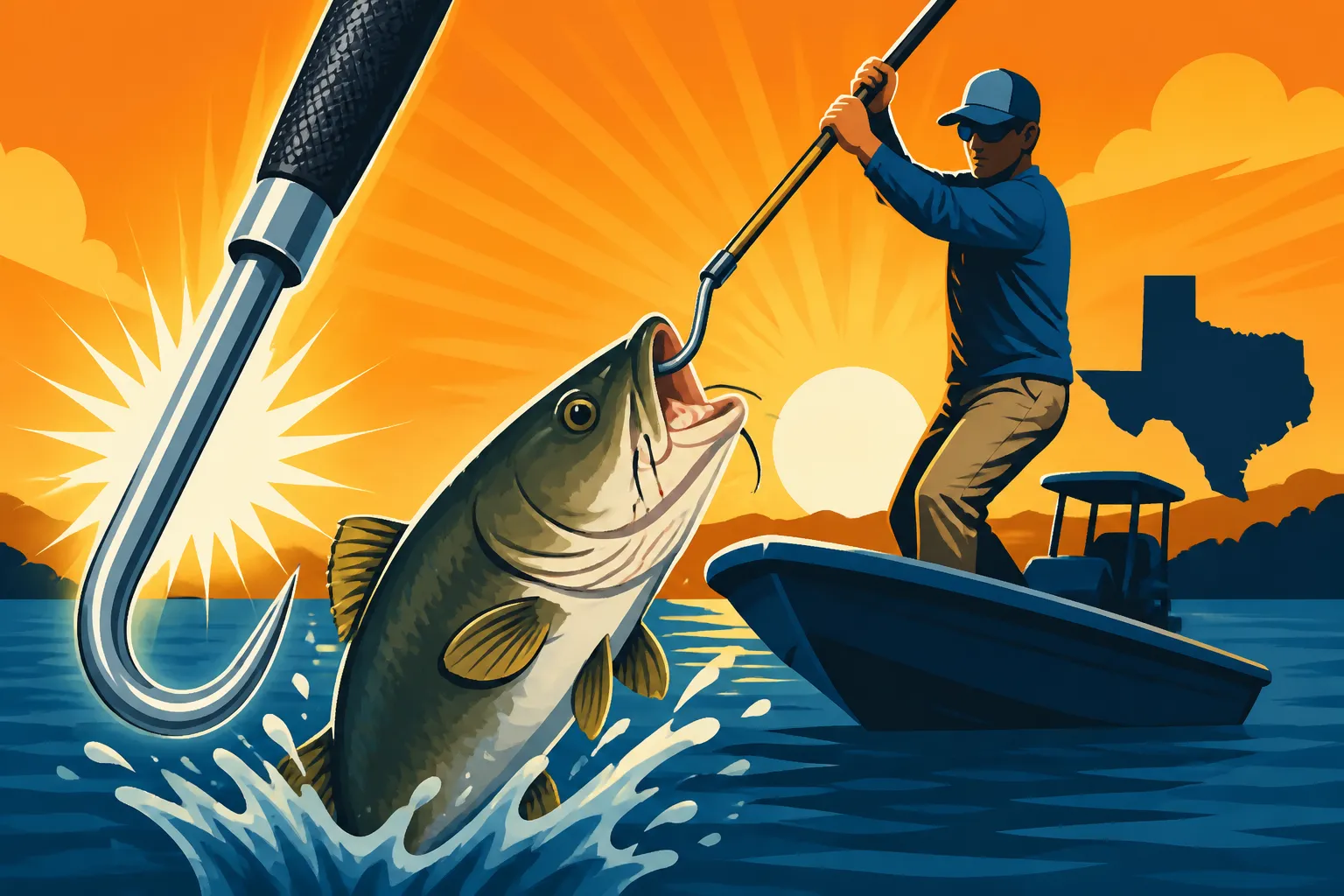
- The Strike: Wait for the fish to be calm and steady, ideally just below the surface. Make a swift, decisive strike with a downward and inward motion, driving the gaff hook deep into the target area. Don't jab; instead, execute a smooth, powerful thrust. The gaff should be held firmly with both hands, using your body weight to drive the hook home.
- The Lift: Once the gaff is securely set, swiftly lift the fish into the boat in one continuous motion. For very large fish, this might require two people or specialized lifting techniques, especially with flying gaffs. Get the fish into a cooler or on deck as quickly as possible to prevent it from thrashing and causing damage or injury. Having a large cooler ready, perhaps one of the robust options discussed in Best Coolers and Live Wells for Texas Fishing, will make this transition smoother.
Prioritizing Safety: Protect Yourself and Your Crew
A gaff is a dangerous tool if not handled with respect. Sharp points and powerful fish are a recipe for disaster without proper precautions.
- Always Be Aware of the Point: The gaff hook is incredibly sharp. When not in use, keep it covered with a gaff guard or secure it in a rod holder where it won't accidentally snag clothing or skin. Never swing a gaff wildly or point it at people.
- Maintain a Secure Grip: As mentioned earlier, a non-slip grip is vital. When making the gaff shot, ensure you have a firm, two-handed grip. A wet gaff handle can easily slip from your grasp.
- Clear the Deck: Before gaffing, ensure the deck is clear of any obstacles, loose lines, or other gear that could trip you or get tangled with the fish. A clean deck allows for free movement and a safer landing.
- Boater Education: Understanding general boat safety is critical when handling any equipment, especially a gaff. If you're new to boating or have younger crew members, completing a boater education course can make everyone safer on the water. This also ties into overall safe boating practices that are essential, whether you're on Best Boats for Texas Lake Fishing or Best Boats for Texas Saltwater Fishing.
- Practice Dry Runs: If you’re new to gaffing, practice the motions without a fish. Get a feel for the weight, balance, and reach of your gaff. This will build muscle memory and confidence for when the real moment arrives.
- Know Your Limitations: If a fish is too large, too powerful, or too erratic, sometimes it's safer to cut the line and live to fight another day. Don't risk injury or property damage for a single fish. For example, trying to gaff a monster alligator gar without the proper technique and a robust gaff could lead to serious problems. If you're specifically targeting these leviathans, review resources like How to Catch Alligator Gar in Texas for specialized advice.
By choosing the right gaff, understanding its purpose, and mastering safe techniques, you'll be well-equipped to land those incredible Texas fish that challenge both your skill and your gear.
Disclaimer
This article is for general informational purposes only and does not constitute professional advice. Laws, prices and regulations vary by location and change over time. Consult a qualified professional for guidance on your specific situation.