Texas Redfish Fishing Guide
There’s nothing quite like the thrill of a hard-fighting redfish pulling line off your reel, especially here in Texas. But navigating the vast coastal waters, understanding the ever-changing regulations, and figuring out the right gear can feel overwhelming, especially for newcomers or even seasoned anglers trying a new bay. This comprehensive guide will equip you with all the knowledge you need to successfully target, catch, and appreciate the magnificent redfish that call our Texas waters home.
Understanding the Texas Redfish
Redfish, also known as red drum, are one of the most iconic and sought-after game fish along the Texas coast. Their vibrant coppery scales, powerful runs, and often aggressive strikes make them a favorite among anglers of all skill levels. But before we dive into catching them, it’s helpful to understand a bit more about these incredible creatures. Knowing their habits, preferred environments, and life cycle can dramatically increase your chances of success on the water.
What is a Redfish?
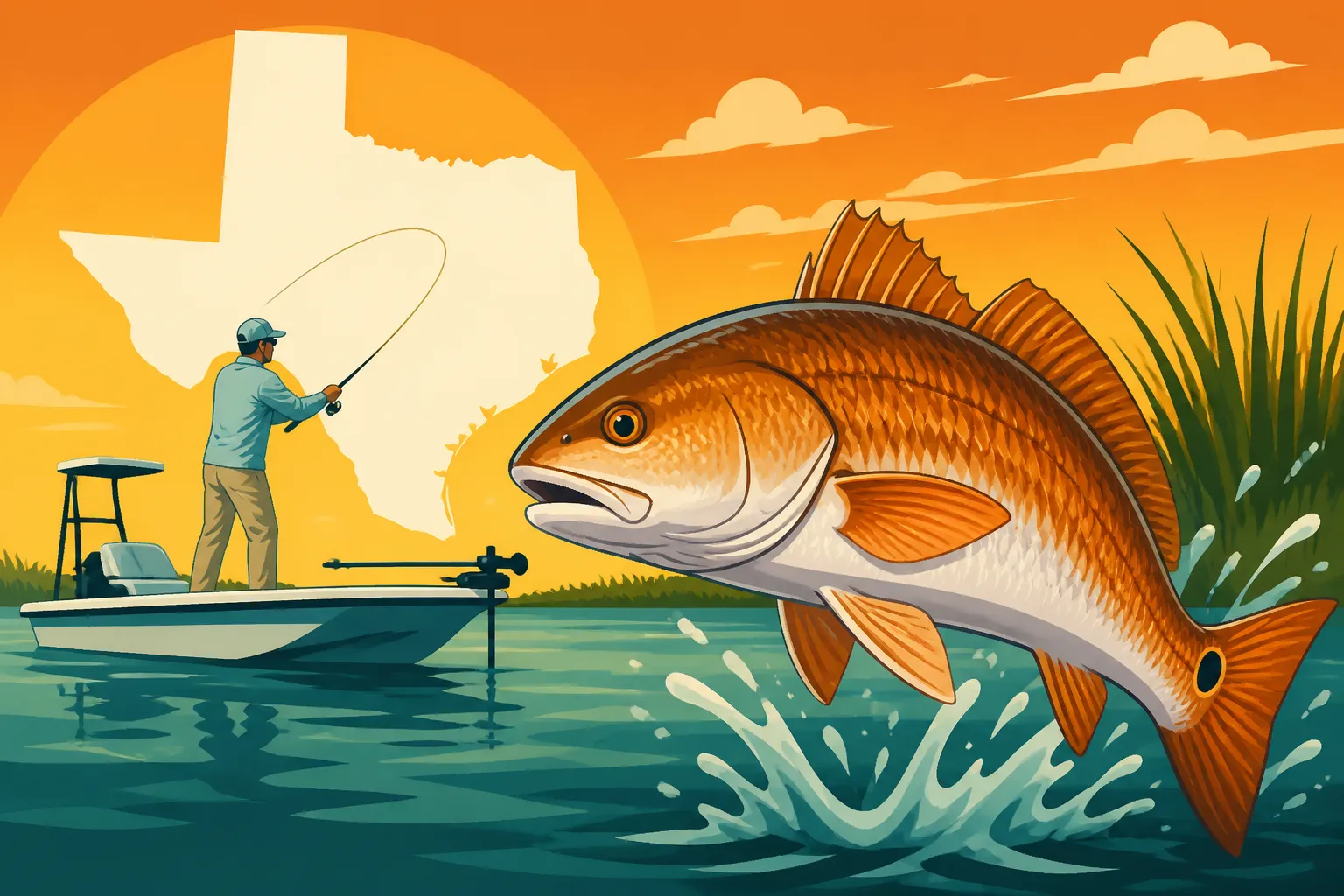
A redfish, or red drum (Sciaenops ocellatus), is a member of the drum family, known for its distinctive coppery-red coloration that can range from a pale rose gold to a deep, rich bronze, often depending on its habitat. The most distinguishing feature, and perhaps the one that gives them their allure, is the prominent black spot (or spots) on the tail. While most redfish have one spot, it's not uncommon to find fish with multiple spots, or even none at all – nature loves to keep us on our toes! These spots are believed to mimic eyes, potentially confusing predators. They possess a powerful, muscular body built for speed and fighting, with a slightly downturned mouth adapted for bottom-feeding.
They are known for their delicious, firm white meat, making them a popular target not just for sport but also for the table. However, due to conservation efforts and the importance of preserving the breeding stock, many anglers now practice catch and release, especially for the larger "bull reds." Understanding their characteristics helps us appreciate them and contribute to their sustainability in our beloved Texas bays.
Redfish Habitat and Behavior in Texas Waters
Texas redfish thrive in the shallow, brackish waters of our expansive bay systems, estuaries, and along the Gulf Coast. They absolutely love areas with oyster reefs, seagrass beds, mudflats, and marsh edges – basically anywhere baitfish, shrimp, and crabs can hide. These environments provide both ample food sources and protection from larger predators. You'll often find them "tailing" in super shallow water, where their tails break the surface as they nose-down to root around in the mud for crabs, a truly exhilarating sight for any angler trying to spot them.
Their behavior changes with the seasons and water conditions. In warmer months, they might be more active and spread out across the flats, while in cooler weather, they tend to group up in deeper channels or around structures like jetties and passes. They are opportunistic feeders, meaning they'll eat just about anything that crosses their path, from live shrimp and mullet to various crabs and even small fish. Their adaptability to different salinities and temperatures makes them resilient and widespread throughout our coastal regions.
Redfish Life Cycle and Spawning Habits
The redfish life cycle is a fascinating journey that highlights the importance of protecting our estuaries. Redfish typically mature between 3-5 years of age, and once they reach maturity, they begin to migrate from the shallow bays to the passes and nearshore Gulf waters to spawn. This spawning usually occurs in the late summer and fall, from August through October, when conditions are just right. Large aggregations of mature redfish, often called "bull reds," gather in these deeper, more open waters to release their eggs and milt.
After fertilization, the microscopic eggs hatch into larvae, which are then carried by tides and currents back into the protective nursery grounds of the shallow bays and estuaries. These marshy areas, with their abundant food and shelter, are crucial for the survival and growth of juvenile redfish. As they grow, they move into slightly deeper bay waters, eventually completing the cycle by returning to the Gulf to spawn themselves. This migratory pattern and reliance on both bay and Gulf habitats underscore why a holistic approach to conservation is so vital for their continued abundance.
Texas Redfish Regulations: What You Need to Know
Fishing in Texas is a fantastic experience, but it comes with a responsibility to understand and follow the rules. When it comes to redfish, ignoring the regulations can lead to hefty fines and can also negatively impact the future of this incredible fishery. It's not just about avoiding trouble; it's about being a responsible steward of our natural resources. Trust me, the game wardens know their stuff, and ignorance is rarely an excuse.
Size and Bag Limits for Redfish
The Texas Parks and Wildlife Department (TPWD) sets specific size and bag limits for redfish to ensure a healthy population. These limits can change, so it's always critical to check the most current regulations before you head out, but generally, there's a slot limit in place. For redfish, this usually means you can only keep fish within a certain length range, and often, only one fish over the maximum length per annual fishing year with a special tag. The idea behind the slot limit is to protect the smaller, growing fish and the large, mature breeding stock (the "bull reds"), allowing them to reproduce and sustain the population.
For instance, you'll typically find a daily bag limit of three redfish per angler, and a slot limit somewhere around 20 to 28 inches. Fish smaller than the minimum or larger than the maximum must be released immediately. There are often provisions for an annual "trophy tag" or "oversize tag" which allows you to keep one redfish over the maximum slot limit for the entire year. Always carry a measuring device and know how to properly measure your fish – from the tip of the jaw to the tip of the tail, with the tail compressed. This ensures you're staying within the legal bounds and doing your part to keep our redfish population thriving. For the latest specifics, consult Texas Redfish Size and Bag Limits.
Identifying Redfish: Avoiding Look-alikes
While redfish are distinct, especially with their signature tail spot, there are a few other species along the Texas coast that can be confused with them, particularly when they're smaller. The most common mix-up is with black drum, which are closely related. Juvenile black drum often have vertical bars and can sometimes even have a spot or two, leading to mistaken identity. The key differences lie in their mouth shape, overall body profile, and typically, the number and clarity of spots. Redfish have a more pointed snout and a single, distinct spot, whereas black drum have a blunter snout with whisker-like barbels under their chin and often multiple, less defined spots.
Another less common but possible confusion could be with oversized speckled trout, though their body shape and coloration are usually quite different. Speckled trout have canine teeth and silvery bodies with distinct spots all over, not just on the tail. Taking a moment to properly identify your catch is crucial not only for compliance with regulations but also for understanding the species you're encountering. A quick glance at a reputable fish identification guide or the TPWD regulations booklet (which often has illustrations) can save a lot of headaches. You can find more detailed identification tips in Texas Redfish Identification Guide.
Texas Fishing License Requirements for Redfish
Before you even think about casting a line for redfish in Texas, you absolutely need to make sure your fishing license is in order. It's a non-negotiable requirement for almost all anglers, with very few exceptions. For anyone 17 years of age or older, a valid Texas fishing license is a must. If you're targeting saltwater species like redfish, you'll also need a Texas saltwater endorsement, which is usually purchased as an add-on or is included in an all-water package. Think of it as your passport to enjoying our incredible coastal waters.
The license year runs from September 1st to August 31st, so many anglers purchase their new license in late summer. You can buy them online through the TPWD website, over the phone, or in person at many sporting goods stores, bait shops, and even some grocery stores. Make sure you have it on you, or at least a digital copy accessible on your phone, when you're out on the water. Fishing without one can result in fines and legal trouble, which is definitely not the memory you want from a fishing trip. You can learn more about how to get yours in Texas Fishing License Requirements Explained and understand the specifics of the Texas Saltwater Endorsement Explained.
Best Places to Find Redfish in Texas
Texas boasts an incredible stretch of coastline, from the upper reaches near Sabine Pass all the way down to the Lower Laguna Madre, and redfish can be found almost everywhere in between. Knowing where to cast your line can be half the battle, and different locations offer unique fishing experiences, from shallow water sight-casting to battling bull reds in the surf.
Top Texas Bays and Flats for Redfish
Our extensive bay systems are the bread and butter of Texas redfish fishing. These shallow, nutrient-rich estuaries are prime habitat for redfish throughout much of their life cycle. Bays like Galveston Bay, Matagorda Bay, Aransas Bay, and the expansive Laguna Madre are legendary for their redfish populations. In these bays, you'll want to focus on shallow flats, especially those with seagrass beds, oyster reefs, and muddy bottoms. These areas hold abundant baitfish, shrimp, and crabs, which are redfish staples.
Wade fishing these flats, either on foot or from a kayak, is a hugely popular and effective way to target them. Look for signs of activity like "nervous water," baitfish scattering, or the telltale "redfish tailing" as they feed. Knowing the tides is critical here, as redfish will push into the shallowest areas with incoming tides to feed and then retreat as the water falls. The beauty of bay fishing is the diversity – one day you might be in a wide-open flat, the next you're tucked into a marshy cut. Check out resources like Galveston Bay Fishing Spots, Matagorda Bay Fishing Spots, and Aransas Bay Fishing Spots for more specific locations and tips.
Jetty and Pass Fishing for Redfish
When redfish mature and prepare to spawn, or when they're simply seeking deeper water and abundant food sources, they often congregate around jetties, passes, and tidal inlets. These areas are natural funnels where strong currents bring in a constant buffet of baitfish and crustaceans from the Gulf. Famous jetties like those at Galveston, Freeport, Port Aransas, and Port O'Connor are prime locations to catch larger "bull reds" and even keeper-sized fish. Fishing from a boat near these structures, or even directly from the rocks, can be incredibly productive.
The key to jetty fishing is understanding the current and knowing where the fish will hold. Redfish will often position themselves in eddies or behind rocks, waiting for food to be swept by. Live or cut bait is particularly effective here, fished on the bottom or suspended under a popping cork. Artificial lures like spoons, jigs, and soft plastics can also draw strikes, especially during outgoing tides when bait is being flushed out. Be prepared for a strong fight, as these fish are often larger and use the current to their advantage.
Nearshore and Offshore Redfish Opportunities
While most redfish action happens in the bays or at the jetties, don't overlook the nearshore and even some offshore possibilities. During their spawning migrations in late summer and fall, large schools of "bull reds" can be found just off the beaches, in the surf, and around nearshore oil rigs and structures. Surf fishing for redfish can be incredibly rewarding, battling powerful fish right from the sand. Look for deeper guts, troughs, and areas with baitfish activity. Cut mullet, cracked crab, or whole shrimp are excellent choices for surf fishing.
Further offshore, particularly around structure, you might encounter large redfish mixed in with other species. While not a primary target for true offshore trips, they are a welcome bonus. Keep an eye on local fishing reports, as conditions and concentrations of fish can change quickly, especially along the open coast. These areas require robust tackle and a good understanding of ocean conditions, but the rewards can be truly spectacular, offering a chance at a true trophy redfish.
Essential Gear for Texas Redfish Fishing
Having the right gear makes all the difference when targeting redfish. It's not just about having any rod and reel; it's about having equipment that can stand up to the powerful fight of a redfish, the corrosive saltwater environment, and the specific techniques you'll be employing. Investing in quality gear, even if it's budget-friendly, will greatly enhance your fishing experience and your success rate.
Rods, Reels, and Line for Redfish
For redfish, you need a setup that offers both strength and sensitivity. A medium to medium-heavy spinning rod, typically in the 7 to 7'6" range, is a versatile choice for most bay and jetty fishing. This length allows for long casts on the flats and good leverage for fighting fish. Pair this with a 3000-4000 series saltwater-rated spinning reel that has a smooth drag system. A good drag is paramount when a bull red decides to make a blistering run. Brands like Penn, Shimano, and Daiwa offer excellent options that are built to withstand the saltwater environment. You can often find great deals on reliable combos online from retailers like Amazon.
For line, braided line is a popular choice for its incredible strength-to-diameter ratio and sensitivity, allowing you to feel even the slightest tap. A 15-30 lb test braided line is a good all-around option. Since braid is visible and has no stretch, you'll want to add a fluorocarbon leader of 20-30 lb test, typically 18-36 inches long, tied to your main line with a strong knot like an FG knot or a Double Uni knot. Fluorocarbon is nearly invisible in the water and offers good abrasion resistance against rough oyster shells and fish teeth. For detailed recommendations, you can consult Best Saltwater Rods for Texas Redfish.
Baits and Lures That Redfish Can't Resist
Redfish are not particularly finicky eaters, which makes them a fun target, but certain baits and lures consistently outperform others. When it comes to natural bait, live shrimp are always a top producer. They're like candy to redfish! Live mullet, mud minnows, and fingerling perch are also excellent choices, especially for larger fish. For cut bait, fresh mullet, croaker, or even a piece of crab will attract hungry redfish, especially when fished on the bottom.
On the artificial side, spoons are classic redfish killers. A gold or silver spoon, like a Johnson Silver Minnow, is incredibly effective, especially when worked over grass flats. Soft plastics rigged on jig heads are perhaps the most versatile artificial lure. Padden's Down South Lures, Z-Man, and MirrOlure offer a huge variety of shapes and colors. Paddle tails, shrimp imitations, and jerkbaits in natural colors (like root beer or chartreuse) or bright colors (like new penny or limetreuse) can be deadly. Topwater lures, particularly during calm mornings or evenings, can provide explosive strikes that will get your heart pounding. Don't forget popping corks when fishing live shrimp or soft plastics – the "pop" draws attention, and the suspended bait is irresistible.
Terminal Tackle and Essential Accessories
Beyond your rod and reel, having the right terminal tackle and accessories is crucial for a successful redfish trip. You'll need an assortment of jig heads, ranging from 1/8 oz to 1/2 oz, depending on depth and current. Circle hooks (size 2/0 to 4/0 for bait fishing) are excellent for ensuring fish are hooked in the corner of the mouth, making catch and release easier and healthier for the fish. Barrel swivels help prevent line twist, especially when using live bait. Leader material, as mentioned before, is also a must-have.
Beyond the essentials, consider these accessories:
- Pliers: For cutting line, bending hooks, and removing hooks. Get a good pair of saltwater-resistant pliers.
- Fish Grips: To safely handle toothy fish without damaging them or yourself.
- Measuring Device: A tape measure or ruler is vital for checking those size limits.
- Polarized Sunglasses: Absolute game-changers for sight fishing redfish on the flats. They cut the glare and allow you to spot fish.
- Sun Protection: Hat, long-sleeved shirts, and sunscreen are non-negotiable in the Texas sun.
- Cooler: For keeping your drinks cold, and if you plan to keep fish, for icing them down quickly. Consider a high-quality cooler for durability, many are available on Amazon. Take a look at Best Coolers for Texas Summer Fishing Trips for some ideas.
- Wading Belt/Bag: If wade fishing, this keeps your tackle, water, and phone secure and dry.
- Tackle Box or Bag: To keep all your lures, hooks, and weights organized. A compact waterproof tackle bag is ideal for kayak or wade fishing.
Effective Techniques for Catching Texas Redfish
Catching redfish isn't just about showing up with a pole and bait; it's about understanding how they feed, where they hold, and how to present your offering effectively. From the stealthy approach of wade fishing to covering vast areas from a boat, each technique has its own nuances that can make or break your day.
Wade Fishing and Sight Casting for Redfish
Wade fishing is arguably one of the most rewarding ways to target redfish in the Texas bays. It's a truly immersive experience that connects you directly with the environment. The key to successful wade fishing is stealth and observation. You'll be walking through shallow water, often knee-deep or less, casting to visible fish or to areas where you anticipate them to be. This technique is particularly effective on calm days with good water clarity, which allows for sight casting. Look for "nervous water," the subtle wakes of cruising fish, the distinct "tailing" of feeding reds, or the flash of their coppery sides as they turn.
When you spot a fish, the goal is to make a soft, accurate cast well ahead of the fish, allowing your lure or bait to settle naturally before the fish reaches it. Avoid casting directly on top of them, as this will often spook them. Once your lure is in the strike zone, a slow, methodical retrieve is usually best. Many anglers prefer soft plastics or weedless spoons for wade fishing, as they can be worked through grassy areas without snagging. Remember to shuffle your feet to avoid stepping on stingrays, and always be aware of your surroundings. For more in-depth advice, check out How to Wade Fish for Redfish in Texas.
Boat Fishing Strategies for Redfish
Fishing for redfish from a boat offers the advantage of covering more water and accessing areas that might be too deep or far for wading. Depending on your boat type, you can fish deep channels, explore remote marsh systems, or drift across expansive flats. For shallow water fishing, a bay boat or a shallow-drafting skiff is ideal, often equipped with a trolling motor to move quietly and stealthily across the flats.
When boat fishing, you can employ various strategies. Drifting with the wind or current across a flat, while fan-casting artificials, is a popular method. Using your trolling motor to slowly work marsh edges or around oyster reefs can also be highly productive. If you're targeting deeper areas or structure, anchoring upcurrent and casting live or cut bait to the desired spot is often the way to go. Pay close attention to your fish finder for submerged structure or bait schools, and always consider how the current and wind will affect your boat's drift and your lure presentation.
Jetty and Pier Techniques
Fishing for redfish from jetties and piers presents a different set of challenges and opportunities. These locations often provide access to deeper water and stronger currents, where large redfish, especially the "bull reds," are frequently found. The primary technique here is often bottom fishing with live or cut bait. A sturdy surf rod or a heavy-action spinning rod, capable of handling heavy weights and strong fish, is typically preferred.
When using bait, a Carolina rig or a fish-finder rig is common, allowing the bait to sit on the bottom while the line runs freely, signaling a bite. Cast your bait out into the current or near the rocks, and be prepared for a strong, often immediate strike. Don't be afraid to experiment with different depths – sometimes fish are holding deeper, other times they might be closer to the surface if baitfish are present. Artificial lures like heavy spoons or large jigs can also be effective, especially during periods of heavy bait migration. Always be mindful of other anglers on crowded jetties or piers, and be ready to battle a strong fish without tangling lines.
Understanding Redfish Seasons and Tides
The ebb and flow of the seasons and the relentless push and pull of the tides are paramount when it comes to consistently catching redfish in Texas. These environmental factors dictate where redfish will be, what they'll be eating, and how actively they'll be feeding. Ignoring them is like trying to drive blindfolded – you might get lucky, but you're not likely to reach your destination.
Best Times of Year to Target Redfish
While you can catch redfish year-round in Texas, certain seasons definitely stand out. Fall (September to November) is arguably the best time for redfish, particularly for those looking for trophy "bull reds." This is when the spawning migration peaks, and large schools move into the passes, jetties, and nearshore Gulf waters. The cooler temperatures also make wade fishing more comfortable, and redfish are often aggressively feeding to bulk up for the winter.
Spring (March to May) is another fantastic time. As water temperatures rise, redfish become more active in the bays, moving onto the shallow flats to feed. This is excellent for sight casting. Summer (June to August) can be productive, especially during early mornings or late evenings when water temperatures are cooler. Redfish will often seek deeper pockets or shaded areas during the heat of the day. Winter (December to February) can be tough due to cold fronts, but during warmer spells, redfish will group up in deeper, muddier bottoms where the water is slightly warmer, offering opportunities for concentrated catches. They may be less active, but a slow presentation can still entice a bite.
How Tides Influence Redfish Behavior
Tides are the lifeblood of our coastal fisheries, and understanding their influence is critical for redfish success. Redfish are highly cued into tidal movements, using them to their advantage for feeding and movement.
- Incoming (Rising) Tide: As water pushes into the bays and over the flats, redfish will follow it. This is often an excellent time for wade fishing shallow flats, as redfish move in to root for crabs and shrimp that become accessible with the higher water. The moving water also brings in fresh bait.
- Outgoing (Falling) Tide: As water recedes, redfish will often stage in deeper guts, channels, or around oyster reefs at the edges of the flats, waiting for bait to be flushed out. This can be a prime time to fish these transition areas with artificials or live bait, as redfish are often positioned to ambush prey.
Slack tide, the period between an incoming and outgoing tide, can sometimes be slower, but not always. Strong tidal flow is generally preferred, as it signals feeding activity. Always consult a local tide chart for your specific fishing area. Even a small difference in tide timing can drastically impact where the fish are holding.
Weather Considerations for Redfish Fishing
Texas weather is famously unpredictable, and it plays a huge role in redfish activity.
- Wind: Wind is a major factor on the Texas coast. Too much wind can make casting difficult, dirty the water, and create uncomfortable boating conditions. However, a moderate breeze can be beneficial, creating "chop" on the water that breaks up your silhouette, making it easier to approach fish without spooking them. Wind also pushes baitfish, concentrating them in certain areas. Understanding wind direction in relation to your chosen spot is key.
- Temperature: Redfish are cold-blooded, so water temperature directly impacts their metabolism and activity levels. In extreme heat, they might be lethargic and seek deeper, cooler water. In cold fronts, they'll become sluggish and hunker down. Post-cold front fishing can be challenging, as fish are often in shock and less willing to bite.
- Rain: Light rain can sometimes improve fishing, as it darkens the water and can wash bait into the bay. Heavy rains, however, can significantly drop salinity levels in the upper bays, pushing redfish further towards the Gulf. Murky water after a heavy rain can also make sight fishing impossible, requiring different tactics like using scent-enhanced baits or noisy lures. Always be aware of approaching storms, especially lightning, which poses a serious danger on the water.
Conservation and Responsible Redfish Angling
As enthusiastic as we are about catching redfish, it's equally important to be passionate about protecting them. Texas has an incredible redfish fishery, and its continued health depends on all of us practicing responsible angling. We want future generations to experience the same thrill of a redfish fight that we do. Conservation isn't just about following the rules; it's about adopting a mindset that prioritizes the well-being of the fish and their environment.
Catch and Release Best Practices
Many anglers, myself included, choose to release most, if not all, of the redfish they catch, especially the larger "bull reds" that are so crucial for spawning. Practicing proper catch and release techniques significantly increases a fish's survival rate.
- Minimize Fight Time: Bring the fish in as quickly as possible to reduce exhaustion.
- Handle With Care: Avoid touching the fish's gills or eyes. If possible, keep the fish in the water while unhooking it.
- Use Proper Tools: Long-nosed pliers or de-hookers make it easier to remove hooks quickly and cleanly. Consider using circle hooks when bait fishing, as they often result in mouth-corner hookups, reducing gut hooking.
- Support the Fish: If you must take the fish out of the water for a photo, support its body horizontally, especially heavier fish, to avoid damaging its internal organs or spine. Never hold a large fish vertically by its jaw.
- Revive If Necessary: If a fish seems sluggish before release, gently hold it upright in the water, facing into the current, allowing water to flow over its gills until it swims away strongly on its own.
By following these simple steps, you contribute directly to the health and sustainability of the redfish population.
Protecting Redfish Habitats
Redfish rely heavily on the health of our coastal ecosystems – the seagrass beds, oyster reefs, marshlands, and estuaries are their homes and nurseries. Protecting these habitats is fundamental to having a thriving redfish fishery.
- Avoid Prop Scarring: When running your boat in shallow water, be mindful of seagrass beds. Prop scarring destroys these vital habitats that provide food and shelter for juvenile fish. Use your trolling motor or pole in extremely shallow areas.
- Proper Waste Disposal: Never litter on the water or along the shoreline. Fishing line, plastic baits, and other trash can harm marine life and degrade habitats. Pack out everything you pack in, and perhaps even a little extra.
- Respect No-Wake Zones: These zones are often in place to protect sensitive shorelines and calm waters, which are crucial for wildlife. Adhering to them helps preserve the integrity of the ecosystem.
- Support Conservation Efforts: Be aware of local and state conservation initiatives. Organizations working to restore oyster reefs or seagrass beds are directly benefiting redfish.
Our actions on and off the water have a direct impact. A healthy habitat means more redfish for everyone.
Understanding Environmental Factors Affecting Redfish
Beyond direct human impact, various environmental factors naturally influence redfish populations. Being aware of these helps us understand the bigger picture of conservation.
- Hurricanes and Storms: Major storms can significantly alter coastal landscapes, destroying habitats, changing salinity levels, and sometimes causing massive fish kills. The ecosystem can take years to recover from such events.
- Drought and Rainfall: Prolonged droughts can lead to higher salinity in the bays, potentially pushing freshwater-tolerant species out. Conversely, excessive rainfall can dramatically lower salinity, impacting fish that prefer higher salt content.
- Water Quality: Runoff from land-based activities, pollution, and harmful algal blooms can all degrade water quality, affecting fish health, food sources, and overall ecosystem balance.
- Climate Change: Long-term shifts in temperature, sea level, and weather patterns can have complex and far-reaching effects on fish populations and their habitats.
Understanding these broader environmental influences reminds us that our individual conservation efforts, combined with larger-scale ecological management, are all part of safeguarding the future of Texas redfish. It's a continuous learning process, but a crucial one for ensuring these magnificent fish continue to thrive.
| Feature / Factor | Ideal for Redfish (General) | Less Ideal for Redfish (General) |
|---|---|---|
| Water Temperature | 65-80°F (18-27°C) | Below 55°F or Above 88°F |
| Tide Phase | Strong moving tides (incoming/outgoing) | Slack tide, no movement |
| Water Clarity | Clear to slightly stained | Very muddy (post-storm), super clear (can be spooky) |
| Wind Conditions | Light chop (10-15 mph) | Dead calm (easy to spook), very high wind (20+ mph) |
| Habitat Focus | Seagrass beds, oyster reefs, marsh edges, jetties, passes | Open, featureless deep water (unless schooling bull reds) |
| Bait Activity | Abundant baitfish, shrimp, crabs | Sparse bait, no signs of feeding |
| Season (Bay) | Spring, Fall | Mid-Summer, Deep Winter |
| Season (Gulf/Jetties) | Late Summer, Fall | Early Spring, Mid-Winter |
Disclaimer
This article is for general informational purposes only and does not constitute professional advice. Laws, prices and regulations vary by location and change over time. Consult a qualified professional for guidance on your specific situation.