Best tackle box organization for a Texas boat
There's nothing quite like the feeling of hitting the water in your Texas boat, rod in hand, ready for a day of fishing. But that feeling can quickly sour when you're fumbling through a chaotic mess of lures, hooks, and line, wasting precious minutes while the fish are biting. A truly organized tackle box isn't just about neatness; it's about efficiency, extending the life of your gear, and ultimately, making your time on the water more enjoyable and productive. This guide will help you craft a tackle organization system that stands up to the demands of Texas fishing, ensuring you spend less time searching and more time reeling in that next big catch.
Why a Well-Organized Tackle System is Crucial on a Texas Boat
Let's be honest, we've all been there: the frantic search for that one specific lure that's "somewhere in this pile," while a school of white bass busts on the surface or redfish tails just out of reach. Disorganization on a boat isn't just an aesthetic problem; it’s a genuine impediment to successful fishing and can even be a safety concern.
The Cost of Chaos: Missed Opportunities and Wasted Time
Imagine you're out on Lake Fork, and you spot a bass busting shad near a submerged timber line. You know exactly which chartreuse crankbait they're hitting, but it’s buried under a tangle of soft plastics, spinnerbaits, and forgotten snacks. By the time you dig it out, tie it on, and make your cast, that school has moved on, and the moment is gone. This isn't just frustrating; it's a missed opportunity for a trophy catch.
In Texas, where weather can change quickly and bite windows can be narrow, speed and efficiency are paramount. Whether you're chasing speckled trout in Galveston Bay or largemouth bass on Sam Rayburn, having your gear logically arranged means you can react instantly. Swapping out a lure, retying a leader, or grabbing your pliers should be a fluid motion, not a treasure hunt. Every second you spend fumbling is a second you're not fishing, and in the competitive world of Texas fishing, those seconds add up. Your goal should be to make sure you have everything at your fingertips, whether you're changing a hook or looking for a different bait from your Best Bait and Lures for Texas Fishing arsenal.
Protecting Your Investment: Gear Longevity and Safety
Texas conditions, especially along the coast, are tough on gear. Saltwater is a relentless enemy, causing hooks to rust and reels to seize up if not properly cared for. Even on freshwater lakes, humidity and sun exposure can degrade soft plastics and fade expensive lures. When your tackle is just tossed into a pile, it's far more susceptible to damage. Hooks can tangle, causing kinks in your line or chipping the paint off your favorite topwater plug.
Proper organization, such as keeping tackle in separate, dedicated containers, helps protect your investment. Waterproof boxes keep moisture out, preventing rust on metal components. Storing soft plastics separately prevents them from melting together or reacting with other lures, a common issue in the Texas heat. Beyond protection, there's a significant safety aspect. Exposed hooks lying around are a hazard, potentially leading to painful punctures for you or your passengers. A clear deck and organized compartments reduce tripping hazards and ensure that sharp objects are stowed safely. Don't forget, having the right boat safety equipment is crucial for every trip, and a tidy boat contributes to a safer environment overall.
Mental Clarity and Enjoyment
Let's face it: fishing is supposed to be relaxing. Constantly battling a messy boat and a disorganized tackle system can quickly erode that peace. When you know exactly where everything is, and you can access it effortlessly, your mental energy is freed up to focus on what really matters: reading the water, feeling the bite, and enjoying the camaraderie with your fellow anglers.
There's a quiet satisfaction that comes from a well-organized boat. It allows for a smoother, less stressful experience, letting you fully immerse yourself in the pursuit. No more grumbling under your breath as you search for a specific weight or the right pair of pliers. It creates a more professional and prepared feeling, boosting your confidence and allowing you to simply enjoy the beauty of Texas's incredible fishing grounds.
Choosing the Right Tackle Storage for Your Texas Fishing Style
Before you can organize, you need the right tools for the job. The best tackle storage solution for you will depend heavily on your fishing style, the type of boat you have, and the species you typically target. What works for a bass angler on a big reservoir might not be ideal for a wade fisherman on a saltwater flat.
Hard-Sided Utility Boxes (Plano-style)
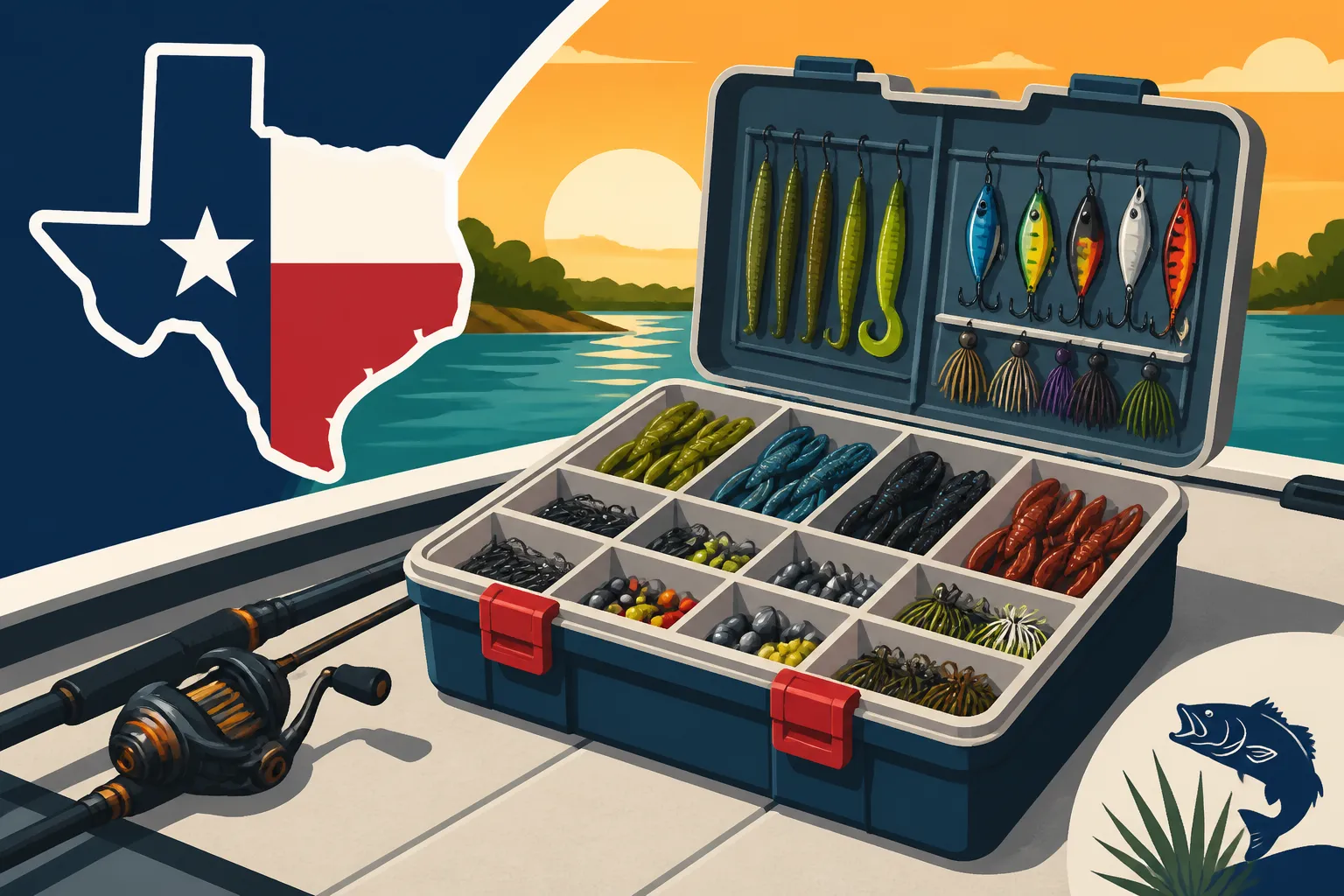
These are the workhorses of the fishing world, and for good reason. Companies like Plano have perfected the art of the customizable, durable plastic utility box. They typically come with adjustable dividers, allowing you to create compartments of various sizes for different lures, terminal tackle, or even specific types of soft plastics.
Pros:
- Durable: Made from rigid plastic, they protect contents from crushing and impact.
- Stackable: Their uniform shapes make them easy to stack in boat compartments or garages.
- Customizable: Dividers allow for precise organization of many small items.
- Visibility: Many models feature clear lids, letting you quickly see what's inside without opening.
Cons:
- Weight and Bulk: Can be heavy when fully loaded and take up significant space.
- Limited Flexibility: Once dividers are set, changing configurations on the fly isn't always easy.
- Noise: Hard plastic lures rattling around can create noise, which some anglers believe spooks fish, especially in shallow water.
Most serious Texas anglers will have a collection of these, often dedicated to specific lure types (e.g., one for crankbaits, one for jigs, one for saltwater leaders). You can find a huge selection of these at Bass Pro Shops, where you can physically handle different sizes and configurations to see what fits your boat and your gear. They are fantastic for sorting everything from Texas Largemouth Bass Length Limits jigs to Texas Redfish Size and Bag Limits hooks.
Soft-Sided Tackle Bags and Backpacks
For anglers who prefer more portability or have less dedicated boat storage, soft-sided bags and backpacks are a fantastic option. These bags typically come with several hard-sided utility boxes that slide into dedicated compartments, plus additional pockets and pouches for tools, line, and other essentials.
Pros:
- Portable: Easy to carry from your vehicle to the boat, or even from one boat to another.
- Flexible Storage: External pockets and pouches offer quick access to tools, sunscreen, snacks, and extra line.
- Protection: Often padded, offering good protection for delicate gear.
- Comfort: Backpack styles allow for hands-free transport, ideal for long walks to a remote spot or when carrying other gear.
Cons:
- Less Rigid Protection: While padded, they don't offer the same crush protection as hard boxes.
- Can Sag: If not fully packed, they can lose their shape, making access a bit more cumbersome.
- Water Resistance Varies: While some are highly water-resistant, few are truly submersible or fully waterproof, so check the specific model.
These are particularly popular for anglers who might fish from a variety of boats, from their own to a friend's, or for those who do a lot of bank fishing. You'll find a massive array of styles and brands on Amazon, often with detailed reviews that can help you gauge their durability and practical features for Texas fishing. When looking for storage, consider your Beginner Fishing Gear Checklist for Texas and expand from there.
Specialty Storage Solutions
Beyond the main categories, there are several specialized storage solutions that can greatly enhance your organization:
- Worm Binders/Soft Plastic Files: These are glorified three-ring binders with zippered plastic pages designed to hold soft plastic baits in their original packaging. This prevents different plastic formulations from reacting and melting together, a huge problem, especially in Texas heat. They keep plastics neat, organized by color or style, and easily accessible.
- Waterproof Dry Boxes: For items you absolutely cannot get wet—like your phone, car keys, wallet, or important documents like your Texas Fishing License Requirements Explained—a dedicated, fully waterproof dry box is essential.
- Jig Boxes: Specific boxes with foam inserts are designed to hold jigs securely by their hooks, preventing them from tangling and keeping skirts pristine.
- Rod Racks/Holders: Built-in or aftermarket rod holders keep your rods secure, prevent damage, and free up valuable deck space.
- Tool Caddies: Small, convenient caddies that attach to consoles or sit in cup holders can keep essential tools like pliers, line cutters, and measuring devices within arm's reach.
The key is to mix and match these solutions to create a system that addresses all your gear and fishing habits. A typical setup for a Texas bass boat, for instance, might involve several large utility boxes for main lure categories, a soft-sided bag for terminal tackle and extras, a worm binder for plastics, and a smaller waterproof box for electronics.
Practical Strategies for Organizing Your Texas Boat Tackle
Once you have your storage containers, the real work (and fun!) begins: filling them thoughtfully. This isn't just about putting things away; it's about creating a logical flow that supports your fishing process.
Categorization is King: The "Like with Like" Principle
The most fundamental rule of tackle organization is to group similar items together. This might sound obvious, but it's where many anglers fall short. Instead of a general "lure box," think about creating hyper-specific categories that make sense for how you fish.
- Lure Types: Dedicate separate utility boxes or compartments to distinct lure categories.
- Crankbaits: Group by diving depth (shallow, medium, deep) or color pattern.
- Spinnerbaits/Chatterbaits: Keep these in a box where blades won't get bent or skirts crushed.
- Topwater Lures: Pencils, poppers, frogs – these often require larger compartments.
- Jigs: Separate by weight or style (flipping, football, swim jigs).
- Soft Plastics: Use worm binders or smaller, dedicated utility boxes. Organize by shape (worms, creature baits, flukes) and then by color.
- Terminal Tackle: This is where things can get messy fast. Dedicate smaller compartments or even entire small utility boxes to specific items.
- Hooks: Organize by size and style (worm hooks, treble hooks, circle hooks for Texas Catfish Bag Limits).
- Weights: Separate by type (bullet, drop-shot, punching) and weight.
- Swivels, Snaps, Beads: Keep these tiny but crucial items contained.
- Leaders: Premade leaders, or spools of leader material, should have their own spot. Consider having a specific box for Texas Saltwater Endorsement Explained leader materials, which are often heavier than freshwater leaders.
- Tools and Accessories:
- Pliers/Cutters: Essential and should be quickly accessible.
- Scales/Measuring Tape: For verifying legal limits and documenting catches. Texas Fish Bag and Length Limits are important to remember.
- First Aid Kit: Always a good idea to have a small, easily reachable kit.
- Sunscreen/Bug Spray: Keep these separate from tackle to prevent contamination.
When you're targeting specific areas, like the famed waters of Lake Fork Fishing Guide, having your bass tackle sorted by technique or depth allows for quick adjustments based on what the fish are doing. Similarly, for coastal adventures, your Galveston Bay Fishing Spots tackle will benefit from being clearly defined for specific targets like redfish or trout.
Labeling and Visual Cues
Once you've categorized, make it obvious! Clear labeling is the next critical step. This is especially true for hard-sided utility boxes, where the contents might not be immediately visible.
- External Labels: Use a permanent marker or a label maker to clearly label the outside of each utility box. Examples: "Deep Cranks 8-15 ft," "4/0 EWG Worm Hooks," "Saltwater Leaders 20-40lb." This saves you from opening multiple boxes to find what you need.
- Clear Lids: Opt for utility boxes with clear lids whenever possible. This visual cue lets you see the general contents without having to open the box, even if it's labeled.
- Color-Coding: Some anglers use different colored boxes for different categories (e.g., all red boxes for saltwater, blue for freshwater). Or, if using soft plastic binders, they might organize pages by dominant plastic color.
The goal is instant identification. When the bite is on, or a storm is rolling in (common in Texas!), you don't have time to hesitate. A well-labeled system means you grab exactly what you need, every time.
Maximizing Boat Storage: Built-in vs. Aftermarket
Your boat itself is a massive tackle box. Smartly utilizing its existing storage and supplementing with aftermarket solutions can make a huge difference.
- Built-in Compartments: Take stock of all the storage available on your boat.
- Rod Lockers: These are ideal for keeping multiple rods secure and out of the way. Make sure your rods are properly stored to prevent damage to guides and tips.
- Dry Boxes/Compartments: Use these for items that absolutely cannot get wet, like electronics or the spare change of clothes you might need after a How to Fish in Hot Texas Summers session.
- Under-Seat Storage: Often great for bulkier items like rain gear, spare life jackets, or even larger tackle bags.
- Console Storage: Keep your most frequently used items like keys, phone, and maybe a small tackle tray with your current setup here.
- Aftermarket Solutions:
- Rod Holders: If your boat lacks enough rod holders, add them. Vertical holders save space.
- Net Holders: Keep your landing net secure and easily accessible.
- Tool Organizers: Adhesive or screw-in tool holders can keep pliers, scissors, and other small items right where you need them.
- Deck Organizers: Small trays or bins designed to keep frequently used items from sliding around on the deck.
Consider the type of boat you have. A Best Bass Boats for Texas Reservoirs will have different storage configurations than a Best Bay Boats for the Texas Coast. Tailor your organization to your specific vessel. Remember to keep all your boat's registration and titling information organized and safe, too; you can learn more about this in Texas Boat Registration Requirements.
Maintaining Your Organized Tackle System for Texas Conditions
Organization isn't a one-time event; it's an ongoing process, especially with the wear and tear of Texas fishing. A system only works if it's maintained.
Regular Inventory and Cull
After a few trips, things inevitably get out of place, lures get broken, and hooks get rusty. Schedule a regular tackle clean-out.
- Discard the Damaged: Be ruthless. Rusty hooks are not worth losing a fish over. Cracked lure bodies, bent spinnerbait arms, or shredded soft plastics that are beyond repair should be tossed. Don't be a hoarder of junk.
- Tangle Patrol: Untangle any birds' nests of lures. If a lure is consistently getting tangled, consider moving it to a different compartment or adding foam inserts to keep hooks secure.
- Replenish: Notice you're running low on your favorite Texas Largemouth Bass Fishing Guide soft plastics or a particular jig head size? Make a list and restock before your next trip. This is also a good time to ensure your Texas Fishing License Renewal Rules are up to date!
This regular inventory not only keeps your tackle neat but also ensures you're always prepared with fresh, reliable gear.
Battling the Elements: Rust, Heat, and Moisture
Texas weather is a force to be reckoned with. High humidity, scorching heat, and the corrosive nature of saltwater all conspire against your tackle.
- Rust Prevention: This is crucial for anything metal.
- Silica Gel Packs: Toss these into your utility boxes to absorb moisture. They can often be "recharged" by baking them in a low oven.
- Rust-Inhibiting Strips: Products like Zerust VCI (Vapor Corrosion Inhibitor) strips release a protective vapor that forms a shield on metal surfaces. They're excellent for protecting hooks, weights, and even the tiny components of reels stored in tackle boxes.
- Freshwater Rinse (Saltwater Tackle): After every saltwater trip, give your saltwater lures, hooks, and terminal tackle a thorough rinse with fresh water. Let them air dry completely before putting them back in their sealed boxes.
- Heat Management: Soft plastics are particularly susceptible to melting and warping in extreme heat.
- Shade Storage: Store soft plastics in shaded areas of your boat, or even consider bringing them off the boat between trips, especially in the peak of summer.
- Original Packaging: Keeping soft plastics in their original bags helps prevent them from reacting with other plastics or the tackle box material itself. Worm binders excel at this.
- Moisture Control: Beyond rust, excessive moisture can lead to mildew and unpleasant smells.
- Ventilation: Allow tackle boxes to air out occasionally, especially if they've been wet.
- Desiccants: Again, silica gel or other moisture absorbers can help.
Post-Trip Rituals for Lasting Organization
The best way to keep your tackle organized is to adopt a consistent post-trip routine.
- Wipe Down and Dry: Before putting everything away, wipe down your tackle boxes and any wet gear. Let everything air dry if necessary to prevent mildew and rust.
- Return to Designated Spots: The golden rule: everything has a home. Make it a habit to put every lure, every tool, every piece of terminal tackle back into its assigned spot after you're done using it, not just at the end of the day. This prevents things from migrating to the "miscellaneous" pile.
- Replenish and Restock: As part of your post-trip check, note what you used heavily. Did you go through a lot of specific hooks or a particular color of soft plastic? Add it to your shopping list immediately. This ensures you're always ready for the next adventure.
Consistency is key. A few minutes of effort after each trip will save you hours of frustration and potentially costly gear replacements in the long run.
Here's a quick comparison of hard-sided vs. soft-sided tackle storage:
| Feature | Hard-Sided Utility Boxes (e.g., Plano) | Soft-Sided Tackle Bags/Backpacks (e.g., Bass Pro Shops, Amazon) |
|---|---|---|
| Protection | Excellent against crushing, impact | Good against impact (often padded), less against crushing |
| Durability | Very high, rigid plastic resists wear | Varies by material, susceptible to tears/abrasions over time |
| Organization | Highly customizable internal dividers for small items | Comes with multiple utility boxes, many external pockets for tools/misc. |
| Portability | Less portable due to bulk and weight, typically stacked | Very portable, often with shoulder straps or backpack design |
| Water Resistance | Often good seals, some truly waterproof models available | Varies widely, usually water-resistant, few truly waterproof |
| Visibility | Many have clear lids for quick viewing | Contents of internal boxes visible, bag pockets may be opaque |
| Typical Use | Main storage for lures, terminal tackle, inside boat hatches | Mobile storage, carrying to different spots, bank fishing, general purpose |
By implementing these organization strategies, you'll transform your boat into an efficient fishing machine, ready to tackle any of Texas's diverse waters, from the quiet creeks to the expansive Gulf.
Disclaimer
This article is for general informational purposes only and does not constitute professional advice. Laws, prices and regulations vary by location and change over time. Consult a qualified professional for guidance on your specific situation.