How to catch blue catfish in Texas lakes
It can be incredibly frustrating to head out to your favorite Texas lake, armed with what you think is the perfect setup for blue catfish, only to come up empty-handed while hearing stories of others landing monsters. Blue cats are legendary for their size and fighting power, but they can be elusive. This guide is dedicated to breaking down the mystery, providing you with practical, actionable advice to consistently hook into those big Texas blue catfish.
Understanding Texas Blue Catfish and Their Habitat
When you're chasing blue catfish in Texas, it's not just about throwing a line in the water and hoping for the best. These aren't your average pond dwellers; they're apex predators in many of our freshwater systems, and understanding their habits is key to putting them in the boat or on the bank.
Identifying Texas Blue Catfish
First things first: you need to know what you're looking for. Blue catfish are easily distinguishable from their channel and flathead cousins, especially once they get some size on them. They typically have a deeply forked tail, a relatively straight anal fin with 30-35 rays, and a noticeable hump on their back when mature. Their color often ranges from slate blue to gray on the back, fading to white on their belly, without the spots you often see on channel cats or the mottled patterns of flatheads. What truly sets them apart, though, is their sheer size potential. Texas is home to some truly massive blue catfish, with fish regularly caught weighing over 50 pounds, and the state record pushing well over 100 pounds! Knowing how to identify them ensures you're targeting the right species and adhering to the specific Texas Blue Catfish Identification Guide regulations.
These impressive fish are built for power and endurance. Their robust bodies and strong tails allow them to navigate strong currents and fight ferociously once hooked. This is why having the right gear is so important – you're not just reeling in a fish; you're often battling a freshwater freight train. It’s an exhilarating experience that keeps anglers coming back for more.
Preferred Habitats and Behavior in Texas Lakes
Blue catfish are primarily river fish, but they thrive in the large reservoirs and lakes of Texas, particularly those with good current flow and an abundance of baitfish. Think about the old river channels that were flooded when the lake was created—these are prime blue cat highways. They love deep water, often congregating around submerged humps, ledges, points, and structural elements like old creek beds, roadbeds, or timber lines. They use these features as ambush points or resting areas before moving to feed.
In a large lake like Lake Livingston or Richland Chambers Reservoir, identifying these deep-water structures is crucial. You might find them suspended over the old river channel at 30 feet, or hugging the bottom of a deep ledge at 50 feet. Their behavior is often tied to current, even subtle currents created by wind or reservoir drawdowns, which concentrate baitfish. If you can locate schools of shad or carp, you’re often just a stone’s throw away from a hungry blue cat.
What Blue Catfish Eat
Blue catfish are opportunistic feeders, but as they grow, their diet shifts significantly towards other fish. While smaller blues might snack on insects, crawfish, or even vegetation, a trophy blue cat is almost exclusively a piscivore. Their favorite meal? Shad, hands down. Gizzard shad and threadfin shad are like candy to them, and finding schools of these baitfish is a surefire way to find hungry blue cats.
However, they won't turn their nose up at other easily accessible meals. Smaller carp, sunfish, drum, or even tilapia can all end up on a blue cat's menu. This strong preference for fish is why fresh cut bait is overwhelmingly the most effective bait for them. They're drawn to the scent and oil slick that fresh-cut fish puts into the water, signaling an easy meal. This understanding forms the foundation of successful blue cat fishing in Texas.
Essential Gear and Bait for Targeting Blue Catfish
Okay, so you understand what you're up against and where they like to hang out. Now, let's talk about the tools of the trade. You wouldn't bring a butter knife to a steak dinner, and you certainly shouldn't bring ultralight gear when you're targeting a potential state-record blue catfish.
Rods, Reels, and Line for Heavy Hitters
When it comes to blue catfish, "heavy-duty" is the name of the game. These fish have incredible pulling power, especially in open water or when they're trying to dive back into cover. You'll want a medium-heavy to heavy action rod, typically 7 to 9 feet long, with a strong backbone and a sensitive tip. The longer rod helps with casting distance, fighting powerful fish, and keeping your line clear of snags. A quality fiberglass or composite rod can absorb the shock of a hard strike and handle the sustained pressure. For specific recommendations, check out our guide on Best Rods for Texas Catfish Fishing.
Pair that rod with a robust baitcasting reel designed for heavy line and big fish. Look for reels with a strong drag system and a good line capacity. Many anglers prefer conventional reels for their power and ease of cranking in heavy fish. Brands like Penn, Abu Garcia, or Shimano offer excellent options that can withstand the abuse. You can often find fantastic deals on these reliable workhorses on Amazon, making it easy to stock up on dependable gear. As for line, don't skimp! Thirty to fifty-pound test monofilament or braided line is standard. Braid offers superior sensitivity and strength for its diameter, but mono is more forgiving and abrasion-resistant. Many anglers will use braid as their main line and then tie on a shorter, heavier monofilament or fluorocarbon leader to provide a bit of stretch and abrasion resistance.
Choosing the Right Bait and Rigging
This is where the rubber meets the road. As we discussed, fresh cut bait is king for blue catfish. Forget the stink baits and dough balls for these giants; they want protein. The absolute best bait is fresh-caught shad – gizzard shad, threadfin shad, or even skipjack herring if you can find them. Other effective options include cut carp, drum, or even perch. The key is freshness. A fresh slab of oily fish bleeds scent into the water, acting like a dinner bell for hungry blues.
When it comes to rigging, a Carolina rig (also known as a slip sinker rig) is incredibly popular and effective. It allows the fish to pick up the bait and run without feeling the weight of the sinker immediately. You'll typically use a large egg sinker (1-4 ounces or more, depending on current and depth), a barrel swivel, and a leader of 12 to 24 inches tied to a strong circle hook. Circle hooks are paramount for catfish; they are designed to hook in the corner of the fish's mouth, minimizing gut hooks and making for easier, safer releases. If you need a variety of sinkers or sturdy circle hooks, Amazon is a great place to pick up tackle in bulk. For more detailed insights on what baits work best, explore our article on Best Catfish Bait for Texas Lakes.
Key Accessories for Blue Catfish Anglers
Beyond the core rod and reel setup, a few essential accessories can make your blue cat fishing experience much more enjoyable and successful. First, sturdy rod holders are a must, especially if you're fishing multiple lines from the bank or a boat. When a big blue hits, it can easily yank an unsecured rod into the water. Next, invest in a very large, strong landing net. A standard bass net simply won't cut it for a 50-pound blue. Look for nets with heavy-duty frames and rubberized mesh to protect the fish.
Other useful tools include long-nosed pliers for hook removal, a good pair of fish grippers (like BogaGrip or similar brands) to handle larger fish safely, and a large cooler with plenty of ice to keep your catch fresh if you plan on harvesting it. You'll also want comfortable seating if bank fishing, and plenty of water and snacks for those long waits between bites. Patience is definitely a virtue when targeting trophy blue catfish!
Effective Techniques for Catching Blue Catfish in Texas Lakes
Now that you're geared up, let's talk strategy. Blue cats can be found in a variety of situations, and adapting your technique to their location and mood is crucial for consistent success.
Fishing Deep Structure and Channels
This is classic blue cat territory. Many Texas lakes are old riverbeds, and the main river channel, along with its associated bends, humps, and ledges, are magnets for blue catfish. These deep-water areas offer stable temperatures, current, and often hold large schools of baitfish. To effectively fish these spots, a good fish finder or sonar unit is invaluable. You're looking for baitfish schools, individual large fish (often appearing as large arcs on your screen), and significant changes in bottom contour. Learning How to fish deep structure in Texas reservoirs can truly elevate your game.
Once you've located a promising spot, you have a couple of options. You can anchor your boat directly over or slightly upcurrent from the structure, deploying multiple lines with fresh cut bait on Carolina rigs. Let the scent trail drift down to where the fish are holding. This is a patience game; sometimes it takes a while for the fish to find your bait. Alternatively, if the fish are scattered along a longer stretch of channel, drift fishing can be more effective.
Drift Fishing for Active Blues
Drift fishing allows you to cover a lot of water and present your bait to a wider area, which is especially effective when blue cats are actively roaming for food or when you're unsure of their precise location. In Texas lakes, this often means setting up at the upwind side of a large flat, hump, or channel and letting the wind or a very slow troll move your boat across the desired area. You can use drift socks (also known as sea anchors) to slow your drift down to an ideal speed, usually between 0.5 and 1.5 miles per hour, depending on the current and wind.
When drift fishing, you'll still use those trusty Carolina rigs, but you'll need to pay close attention to the depthfinder and your rod tips. As you drift, your baits will move across different depths and structures, increasing your chances of encountering a feeding blue cat. Many anglers find this technique particularly effective during the warmer months when fish might be more spread out or suspended over open water, chasing baitfish.
Anchoring on Productive Spots
While drift fishing covers ground, sometimes anchoring is the best approach, particularly when you've pinpointed a specific, high-percentage area. This could be a submerged hump where baitfish are schooling, a sharp bend in an old river channel, or a prominent ledge. The beauty of anchoring is that it allows you to saturate a smaller area with scent and bait, giving fish time to find your offerings.
When anchoring, try to position your boat slightly upcurrent from the target area. This allows your scent and any chum you might deploy (though chumming is generally less common for blues than for channel cats) to drift naturally into the holding zone. Deploy several rods at varying depths and distances from the boat to cover the water column thoroughly. Patience is key here. Let your baits sit for a good 20-30 minutes before considering a move. Sometimes, it takes time for the blue cats to home in on your scent trail.
Seasonal Adjustments for Success
Blue catfish behavior changes with the seasons, and adapting your tactics accordingly is vital.
- Spring (Pre-spawn and Spawn): As water temperatures rise into the 60s Fahrenheit, blue cats become highly active, feeding aggressively to bulk up for the spawn. They'll often move shallower, into 10-30 feet, near spawning areas like rocky banks, log jams, or undercut banks. This is a fantastic time for trophy fish.
- Summer: The Texas summer heat can push blue cats deeper, seeking cooler, more oxygenated water. They'll often be found in the deepest parts of the lake, particularly in or near the main river channel. Early morning, late evening, and night fishing become highly effective. If you're wondering How deep do you fish for catfish in summer, expect to target depths of 30-60 feet or even more in large reservoirs.
- Fall: As water temperatures drop, blue cats become incredibly active again, aggressively feeding to build fat reserves for winter. They'll follow baitfish into shallower flats, humps, and secondary creek channels. This can be one of the most productive times of year.
- Winter: While activity slows, blue cats still feed, often schooling tightly in deep holes, bends in the river channel, or around power plant discharges if available. They might be sluggish, but they're still catchable, especially on warmer winter days. This time of year, they're often concentrated, making them easier to locate once found. Understanding Best time of day to catch catfish can really pay off during these cooler months, with mid-day often being productive.
Mastering the Catch and Handling Your Trophy
Landing a trophy blue catfish is an experience you won't soon forget. But it's not just about the fight; it's also about knowing how to handle these powerful fish safely and responsibly.
Reading the Bite and Setting the Hook
Blue catfish bites can vary widely, from a subtle tap to a rod-bending, line-stripping drag scream. Often, especially with larger fish, it starts as a slow, deliberate pull, almost like your bait is being picked up and carried away. Then, the rod tip will steadily bend, and line will start peeling off the reel. This is where those circle hooks shine. Unlike traditional J-hooks where you'd set the hook with a mighty sweep, with circle hooks, you simply let the fish take the bait, and as it swims away, the hook rotates and sets itself in the corner of its mouth.
Resist the urge to yank! Just let the fish load up the rod, and gently lift the rod tip while reeling steadily. The hook will do the work for you. This results in far fewer deep-hooked fish, which is much better for the fish's survival if you plan to release it. Patience and a smooth, steady retrieve are your best friends here.
Fighting and Landing Big Blue Catfish
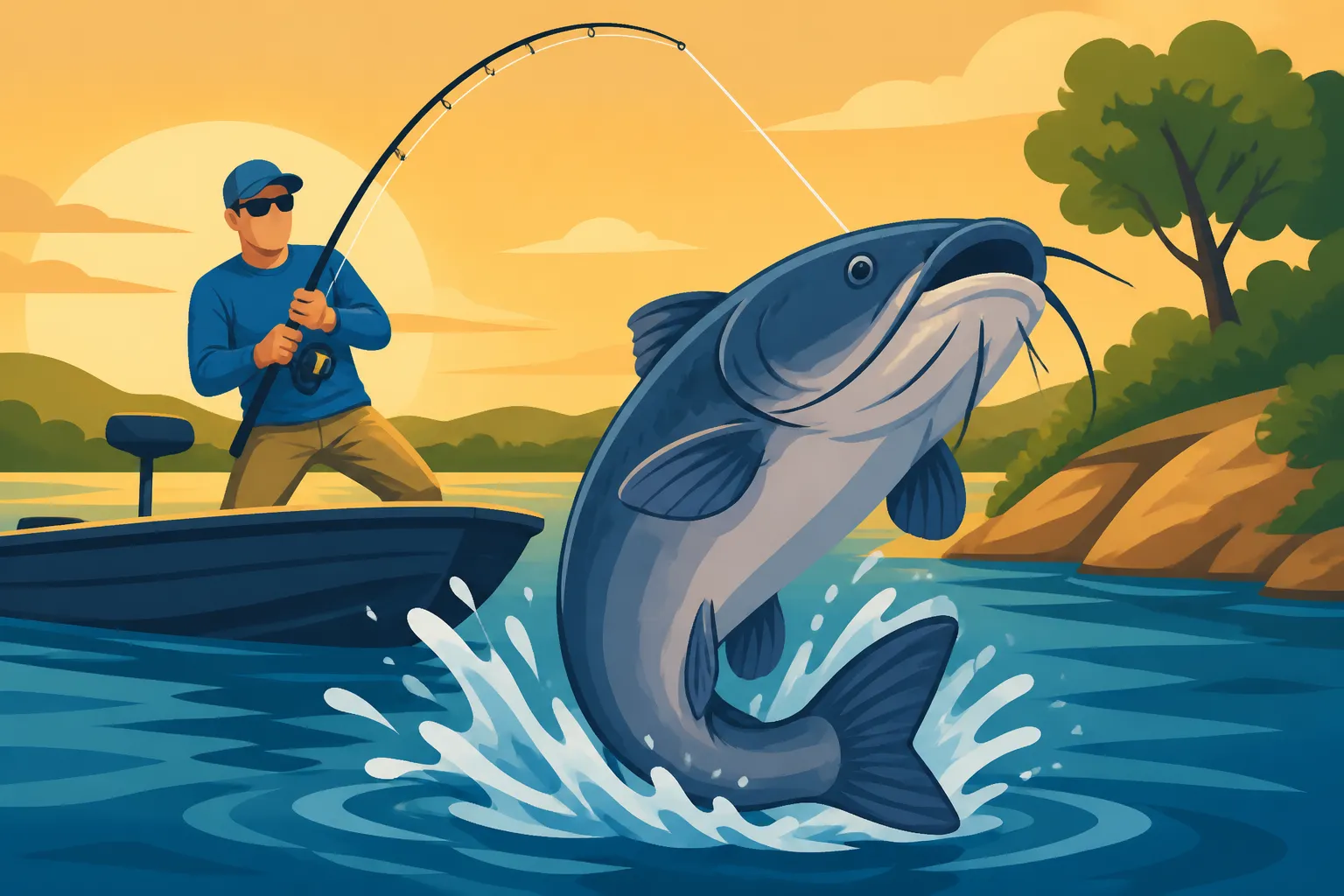
Once that hook is set, prepare for a battle. Big blue cats are incredibly powerful, and they'll make strong, determined runs, often diving for the deepest water or trying to use structure to break your line. Keep your drag set appropriately – tight enough to apply pressure but loose enough to allow the fish to take line when it makes a strong run. Pumping the rod (lifting the rod tip to gain line, then dropping it while reeling in the slack) is a classic technique that wears the fish down.
Keep the rod tip up, maintain constant pressure, and try to steer the fish away from any snags or obstacles. When the fish gets close to the boat or bank, have your large landing net ready. Never try to horse a big blue cat into the net; let it glide in headfirst. If you're targeting truly massive fish, a lip gripper can be helpful, but always support the fish's belly if lifting it for photos to prevent internal injury.
Regulations and Responsible Angling
Before you even cast a line, make sure you understand the rules. Texas Parks and Wildlife Department (TPWD) sets specific bag and length limits for blue catfish, which can vary by water body. For instance, in many lakes, there's a 25-fish daily bag limit, and often specific length limits or slot limits (e.g., only one fish over a certain length may be kept). It's crucial to check the current Texas Blue Catfish Length and Bag Limit regulations for the specific lake you're fishing.
Responsible angling also means having a valid Texas Fishing License Requirements Explained and adhering to all Texas Freshwater Fishing Regulations. If you plan to release fish, handle them with care: minimize time out of water, use wet hands, and support their body weight. Consider practicing catch and release, especially for the largest breeder fish, to help sustain the population for future generations. While a delicious meal, those monster blues are often old and crucial for spawning.
| Cut Bait Type | Pros | Cons | Ideal Situation |
|---|---|---|---|
| Gizzard Shad | High oil content, strong scent, readily available via cast net. | Can be fragile, sometimes hard to keep alive if using whole. | Most situations, especially when fresh. |
| Carp | Tougher bait, stays on hook well, good oil content. | Can be harder to catch/acquire than shad. | Strong currents, prolonged fishing sessions. |
| Tilapia | Readily available at grocery stores, decent oil content. | Can be expensive, less "natural" than fresh wild bait. | When wild bait isn't an option, convenience. |
| Drum (Freshwater) | Excellent scent, very oily, tough texture. | Can be harder to catch, legal to keep can vary. | Anytime you can get it, very effective. |
| Sunfish/Perch | Easily caught, good size for smaller blues. | Less oily than shad/carp, may attract smaller fish. | When targeting average-sized blues or for live bait. |
Disclaimer
Fishing conditions and regulations in Texas can change. Always consult the latest Texas Parks and Wildlife Department (TPWD) official resources for current rules, regulations, and licensing requirements before heading out on the water. This guide is for informational purposes only and should not be considered a substitute for official guidance.