Texas Longnose Gar vs Alligator Gar
If you've spent any time fishing the lakes and rivers of Texas, you've undoubtedly encountered a gar, or at least heard tales of these ancient, toothy predators. But for many anglers, distinguishing between the different gar species can be a real head-scratcher. It’s easy to look at a long, scale-armored fish with a mouthful of teeth and simply call it "a gar," but knowing the specific differences, especially between the formidable Alligator Gar and the more common Longnose Gar, is crucial for both identification and understanding the regulations surrounding them. This guide will meticulously break down the unique characteristics, habitats, and fishing nuances of these two iconic Texas fish.
The Tale of Two Texas Titans: Basic Identification
When you first see a gar, especially a big one, it's easy to be a little intimidated. Their prehistoric look, torpedo-shaped bodies, and menacing rows of teeth certainly make an impression. However, there are some very distinct features that set the Alligator Gar apart from the Longnose Gar. Learning these visual cues is the first step in properly identifying which species you've hooked or spotted.
Distinctive Rostrum (Snout) Features
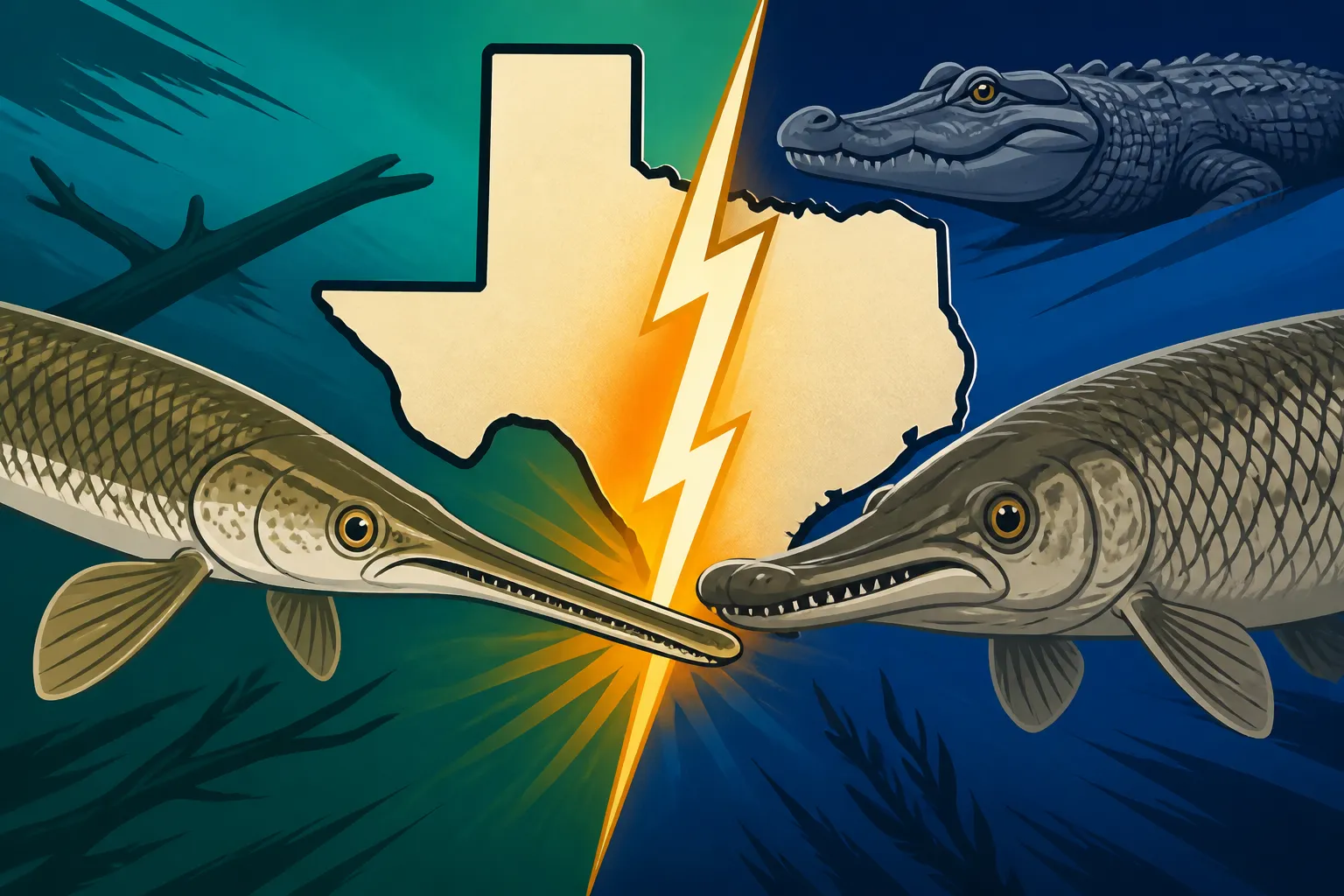
The most defining characteristic that differentiates a Longnose Gar from an Alligator Gar is right there on their face: the snout, or rostrum. This feature alone is often enough to make a positive identification. The Longnose Gar, as its name cleverly suggests, possesses a remarkably long, slender snout, often two to three times the length of its head. Imagine a thin, elongated tube, almost like a thin pipe, ending in a sharp point. This narrow snout is packed with a single, even row of needle-sharp teeth on each side, perfectly adapted for snatching smaller, fast-moving fish.
In stark contrast, the Alligator Gar has a broad, flattened, and much shorter snout, resembling the powerful jaws of an alligator, which is precisely how it earned its name. This wide, robust snout is less than twice the length of its head and is equipped with a formidable double row of large, dagger-like teeth on its upper jaw. These teeth are designed for gripping and holding larger prey, giving the Alligator Gar an undeniable advantage when tackling bigger meals. Just by looking at the width and length of the snout, even a novice angler can usually tell these two apart.
Body Shape, Size, and Coloration
While the snout is the primary giveaway, the overall body shape and coloration also offer clues. Longnose Gar tend to have a more slender, elongated body, often appearing quite streamlined. Their scales are typically an olive-green to brownish color on their backs, fading to a lighter, sometimes yellowish, belly. They often have distinct dark spots along their body and fins, which can be quite pronounced, giving them a dappled appearance. These spots aren't uniform but can vary in size and intensity.
The Alligator Gar, on the other hand, possesses a much more robust and powerful physique. They are heavy-bodied, thick, and muscled, built for brute strength rather than agility. Their coloration is usually a dark olive-brown or gray on the dorsal side, transitioning to a white or yellowish belly. Unlike the Longnose, the Alligator Gar usually has fewer, larger, and less defined spots, sometimes appearing as blotches, particularly on its upper half. Their massive size contributes to their imposing presence, making them look like underwater logs when spotted in murkier waters. You can often see examples of both with a quick search on Amazon for fishing identification guides, which helps visualize these differences.
Dorsal Fin Placement as a Key Indicator
Beyond the snout and body, there's another subtle but reliable indicator: the placement of the dorsal fin. This might sound like a minor detail, but it's a consistent anatomical difference that can help confirm your identification, especially when you're looking at a fish in the water or from a distance where the snout isn't perfectly clear.
For a Longnose Gar, the dorsal fin (the fin on its back) is located relatively far back on its body, positioned almost directly above the anal fin. If you were to draw an imaginary line down from the dorsal fin, it would align closely with the anal fin underneath. This rearward placement contributes to its sleek profile, aiding in rapid bursts of speed when chasing prey.
The Alligator Gar’s dorsal fin is also located far back on its body, but typically further back than that of the Longnose Gar, sitting directly over the anal fin or even slightly behind it. While this might seem similar, the overall robust nature of the Alligator Gar's body and its sheer size often make this a less crucial identification point than the snout, but it is still a valid anatomical difference. The key is to look at the relationship between the dorsal and anal fins – for both species, they are positioned posteriorly, but the Longnose's overall sleeker build often makes this more noticeable in contrast to its longer snout.
Where They Roam: Habitat and Geographic Distribution
Understanding where each gar species prefers to live in Texas can be a huge help in identifying them, as their preferred environments sometimes overlap but also have distinct tendencies. Both species are incredibly adaptable, a testament to their ancient lineage, but they do have their sweet spots.
Alligator Gar's Preferred Haunts
The Alligator Gar is truly a king of the deep, slow-moving waters and brackish environments. In Texas, you'll primarily find these giants in the large rivers, bayous, and coastal estuaries. Think of major river systems like the Trinity River, the Brazos River, and the lower sections of the Colorado River and Guadalupe River. They thrive in areas with extensive floodplains, oxbow lakes, and backwater sloughs where they can ambush prey from cover. These fish are incredibly tolerant of varying water conditions, from clear freshwater lakes to murky, brackish bayous near the Gulf Coast. Their ability to gulp air at the surface – a process called aerial respiration – allows them to survive in oxygen-depleted waters where other fish would perish, giving them an advantage in stagnant backwaters during hot Texas summers.
While they are found throughout much of East and South Texas, the highest concentrations and the largest specimens are often reported from the slow, deep stretches of rivers that flow into the Gulf. Anglers seeking a true monster gar often focus on these large river systems and their associated lakes. How to catch alligator gar in Texas is a popular search for a reason, as these fish challenge even experienced anglers.
Longnose Gar's Adaptable Territories
The Longnose Gar is a much more widespread and common species across Texas, exhibiting remarkable adaptability to various freshwater habitats. You can find them in virtually every major river basin and reservoir in the state, from the Panhandle down to the Gulf Coast. They are comfortable in a broader range of environments compared to the Alligator Gar, including clear lakes, turbid rivers, creeks, and even smaller ponds. Their slender body and rapid bursts of speed make them highly effective hunters in both open water and areas with moderate vegetation.
While they might not reach the colossal sizes of their alligator counterparts, their prevalence means you're far more likely to encounter a Longnose Gar on a typical fishing trip in a diverse range of Texas waters. They are often seen cruising just below the surface in calm areas, making them visible targets for those with a keen eye. Whether you're fishing a sprawling reservoir like Lake Fork, a smaller community pond, or a flowing river, there's a good chance Longnose Gar are present.
| Feature | Alligator Gar | Longnose Gar |
|---|---|---|
| Snout Shape | Broad, flattened, alligator-like, less than 2x head length | Long, slender, pipe-like, 2-3x head length |
| Teeth Arrangement | Double row of large teeth on upper jaw | Single row of needle-like teeth on each side |
| Body Build | Robust, heavy-bodied, thick | Slender, elongated, streamlined |
| Coloration/Spots | Dark olive/gray, fewer/larger blotchy spots | Olive/brown with distinct, smaller dark spots |
| Max Size (Typical) | 6-8+ feet, 100-300+ lbs | 3-6 feet, 10-50 lbs |
| Preferred Habitat | Large, slow rivers, bayous, coastal estuaries, oxbow lakes | Widespread in rivers, lakes, creeks, ponds (freshwater) |
| Air Breathing | Highly adapted, frequent | Less frequent, but can gulp air |
| Regulations | Highly regulated, harvest tag often required | More lenient, often part of general limits |
Giants vs. Speedsters: Size, Growth, and Longevity
The sheer size difference between these two gar species is perhaps the most awe-inspiring distinction and plays a huge role in the angling experience. Both are impressive in their own right, but the Alligator Gar truly stands in a league of its own when it comes to raw dimensions.
Alligator Gar: The True Texas Leviathan
When we talk about the Alligator Gar, we're talking about one of North America's largest freshwater fish, a true living fossil that can grow to astonishing proportions. It's not uncommon for Alligator Gar in Texas to exceed 6 feet in length and weigh over 100 pounds. Some specimens have been documented pushing 8 to 10 feet and tipping the scales at over 300 pounds. Imagine trying to reel in a fish the size of a small person, with a mouth full of razor-sharp teeth! This incredible Texas Alligator Gar Size and Growth means they are at the top of the food chain in many ecosystems, having few natural predators once they reach adulthood.
Their growth rate is significant, especially in their early years, but they are also incredibly long-lived. Alligator Gar can live for 50 years or even longer in the wild, maturing slowly and continuing to grow throughout their lives. This longevity, combined with their potential maximum size, makes them a highly sought-after trophy fish for serious anglers who understand the commitment involved in targeting such a powerful creature. The opportunity to catch a fish this large and ancient is a unique thrill in Texas fishing.
Longnose Gar: A More Moderate Length
While still impressive, the Longnose Gar rarely reaches the same colossal dimensions as its Alligator Gar cousin. Typically, Longnose Gar in Texas will range from 3 to 6 feet in length, with most adult fish falling into the 10 to 30-pound range. Occasionally, a truly exceptional specimen might push 50 pounds, but these are far less common. They are still powerful fish for their size, capable of strong runs and aerial acrobatics, making them a fun challenge on lighter tackle.
Like Alligator Gar, Longnose Gar can also be long-lived, though generally not to the same extreme extent. They might live for 15 to 20 years, sometimes longer, allowing them to reach their maximum size over time. Their more moderate size, combined with their abundance, makes them a much more accessible target for anglers of all skill levels. You don't need specialized heavy-duty gear to catch a good-sized Longnose Gar, making them a popular choice for those looking for a unique freshwater fight without the logistical challenges of pursuing a giant. To learn more about other species, check out our Texas Largemouth Bass Fishing Guide or Texas Catfish Species Guide.
What's on the Menu: Diet and Feeding Strategies
Both gar species are apex predators in their respective environments, but their differing physical attributes lead to distinct hunting and feeding strategies. Their diets reflect the prey available in their preferred habitats and the tools evolution has given them.
Alligator Gar's Opportunistic Carnivory
The Alligator Gar is an opportunistic and formidable carnivore, and its diet is as diverse as the waters it inhabits. With its wide, powerful jaws and double rows of teeth, it is perfectly equipped to ambush and consume a wide array of prey. Primary food sources include various species of fish, such as carp, buffalo, shad, and even other gar species. They are known to be particularly fond of larger, slow-moving fish that make for a substantial meal. However, their diet isn't limited to just fish.
These apex predators will also consume waterfowl, small mammals like rodents that venture too close to the water's edge, and even turtles. They are ambush predators, often lurking motionless in submerged vegetation, near logs, or in deep holes, waiting for an unsuspecting meal to pass by. When prey comes within striking distance, the Alligator Gar executes a swift, sideways lunge, snatching its victim with incredible speed and power. Their massive size means they can go for extended periods without eating if necessary, making them incredibly efficient hunters in their ecosystems. A strong fishing line found on Amazon is a must if you're targeting these beasts.
Longnose Gar's Active Pursuit of Prey
The Longnose Gar, with its slender snout and single row of needle-like teeth, is more specialized in its feeding habits. Their primary diet consists of smaller, fast-swimming fish, which they can snatch with impressive precision. Minnows, shad, sunfish, and small rough fish are common targets. Their elongated body and streamlined shape allow for quick bursts of speed, making them active pursuit predators rather than solely ambush hunters.
You'll often see Longnose Gar cruising just below the surface, slowly stalking schools of baitfish. When they decide to strike, they make a quick lateral lunge, grabbing their prey with their long snout and holding it with their sharp teeth before maneuvering it to swallow headfirst. While primarily piscivorous, they might occasionally consume large aquatic insects or crustaceans if the opportunity arises. Their more active hunting style and preference for smaller fish make them a different challenge for anglers compared to the heavy-hitting Alligator Gar.
Landing a Legend: Fishing Techniques and Gear
Catching either an Alligator Gar or a Longnose Gar is an exhilarating experience, but the techniques and gear you'll need differ significantly due to their size, strength, and feeding behaviors. It's a testament to their unique adaptations that they require distinct approaches.
Targeting the Mighty Alligator Gar
If you're aiming for an Alligator Gar, be prepared for a serious battle. These fish are incredibly strong, durable, and can put up a fight that will test your tackle and your endurance. The primary method for targeting large Alligator Gar is typically heavy-duty rod and reel setups or traditional trotline/jugline fishing. For rod and reel, think saltwater-grade equipment: stout rods with heavy action, powerful conventional reels spooled with at least 80-100 lb braided line, and heavy wire leaders. Large circle hooks (8/0 to 12/0 or even bigger) are generally preferred, as they tend to hook the fish in the corner of the mouth, which is safer for both the fish and the angler, and harder for the gar to shake.
Live or cut bait is almost exclusively used, with large carp, buffalo, or shad being popular choices. You'll want to place these baits in deep holes, along river bends, or near submerged structure where gar are known to congregate. Patience is key, as is a strong leader, usually made of heavy-duty steel wire or thick fluorocarbon, to withstand their powerful jaws and sharp teeth. Remember, these fish have extremely hard, bony mouths, so a solid hookset is critical. Many anglers even use specially designed gar hooks or cable leaders, which you can often find on Amazon alongside heavy-duty fishing line. If you're using trotlines, be sure to check Texas Trotline and Jugline Rules as regulations can be specific.
Pursuing the Nimble Longnose Gar
Longnose Gar, while not reaching the leviathan status of their cousins, still offer a fantastic fight and are much more accessible to recreational anglers. You can target them with medium-heavy to heavy freshwater tackle, often the same gear you might use for large catfish or striped bass. A stout spinning or baitcasting rod, spooled with 20-30 lb monofilament or braided line, is usually sufficient.
For bait, Longnose Gar respond well to live bait like shiners, minnows, or small bream. Cut bait, particularly strips of shad or carp, can also be effective. Unlike Alligator Gar, Longnose Gar are often taken on artificial lures, especially slender spoons, inline spinners, or soft plastic jerkbaits retrieved erratically near the surface or along weed lines. One unique and effective technique for Longnose Gar is using a frayed nylon rope lure (often called a "gar getter"). The nylon strands entangle in their numerous tiny teeth, holding the fish without needing a hook, making for a safe and often catch-and-release friendly method. No matter the method, remember that their bony mouths make hooksets tricky, so sharp hooks are essential. If you want to know How to catch gar on rod and reel, focus on their feeding patterns.
Rules of the Water: Regulations and Conservation
Texas Parks and Wildlife Department (TPWD) manages gar populations carefully, especially for the Alligator Gar, given their slow growth and long lifespan. Understanding these regulations is not just about compliance, but also about contributing to the conservation of these magnificent fish for future generations.
Alligator Gar: Strict Management and Tagging
The Alligator Gar is subject to much stricter regulations in Texas due to its conservation status and the desire to protect trophy-sized fish. Historically, Alligator Gar were viewed as "trash fish," but their ecological importance and unique appeal have led to significant conservation efforts. Currently, statewide regulations for Alligator Gar generally impose a one-fish-per-day bag limit, and often, specialized harvest tags are required for retaining a fish, particularly if you're keeping a trophy-sized one. These regulations can change, and specific lakes or river sections might have additional restrictions or slot limits. For instance, some areas may have a maximum size limit to protect the largest breeding females, while others might have periods where retention is prohibited entirely.
It is absolutely crucial to consult the most current Texas Parks and Wildlife Outdoor Annual or their website before targeting Alligator Gar. Failing to comply with these rules can result in significant fines and penalties. Many anglers choose to practice catch-and-release for Alligator Gar to support conservation, especially for the largest specimens, recognizing their immense value as a living piece of history. Knowing Is it legal to keep an alligator gar in Texas and the precise rules is paramount.
Longnose Gar: More Lenient, But Still Regulated
Longnose Gar are much more abundant and widespread across Texas, and as such, their regulations are generally more lenient than those for Alligator Gar. Statewide, there is often a much higher daily bag limit for Longnose Gar, sometimes without a specific length limit, allowing anglers to keep multiple fish. However, this doesn't mean they are entirely unregulated. Standard statewide freshwater fishing regulations, including general gear restrictions and license requirements, still apply. For more general information, check out Texas Freshwater Fishing Regulations and Texas Fishing License Requirements Explained.
While you might not need a special tag to keep a Longnose Gar, it's still vital to confirm the specific regulations for the body of water you're fishing, as local rules can sometimes supersede general statewide guidelines. The more flexible regulations reflect their healthy population numbers and reproductive rates, allowing for more recreational harvest. Many anglers enjoy keeping Longnose Gar for their firm, white meat, which, despite common misconceptions, is quite palatable when properly prepared, though it does contain a good number of small bones. So, while you have more freedom with Longnose Gar, a quick check of the regulations is always a smart move before heading out.
Disclaimer
This article is for general informational purposes only and does not constitute professional advice. Laws, prices and regulations vary by location and change over time. Consult a qualified professional for guidance on your specific situation.